


HERMAN LEGAL GROUP · KNOW YOUR RIGHTS · UPDATED OCTOBER 2026
Since September 2025, agents of U.S. Immigration and Customs Enforcement (ICE) and U.S. Customs and Border Protection (CBP) have pointed to a single Supreme Court concurrence to justify stopping people who look Latino, speak Spanish or work at certain jobs. Here is what the law actually allows, what is still being fought in court, and what to do if you are stopped on the street, in your car, at work or at home, including in Ohio.
“Kavanaugh stop” is the name critics and journalists gave to an immigration stop in which federal agents rely on a person’s apparent race or ethnicity together with a few other characteristics. The term comes from Justice Brett Kavanaugh’s concurring opinion in Noem v. Vasquez Perdomo, the Los Angeles case over the 2025 immigration sweeps at car washes, Home Depot parking lots, bus stops and farms.
The four factors at issue in that case were:
The trial judge found that agents were stopping people based on these factors alone and ordered them to stop. The Ninth Circuit agreed that the four factors describe only “a broad profile” and do not add up to reasonable suspicion (Ninth Circuit order, Aug. 1, 2025). The Supreme Court then paused that order. In his concurrence supporting the pause, Justice Kavanaugh wrote that “apparent ethnicity alone cannot furnish reasonable suspicion,” but that under the Court’s case law it can be a relevant factor together with other salient factors. Taken together, he wrote, the factors can amount to “at least reasonable suspicion of illegal presence” in an area where, by the federal government’s estimate, roughly one in ten people are undocumented immigrants. He called that conclusion common sense. Southern California residents, immigrant rights groups and the dissenting justices saw it as approval of a demographic profile.

The September 8, 2025 decision in Noem v. Vasquez Perdomo, No. 25A169, was an emergency (interim) order on the Court’s application docket, not a decision after full briefing and argument. Understanding its limits matters. Many headlines described a Supreme Court ruling that gave ICE a green light for racial profiling. In fact, the Supreme Court lifted a temporary order while the Trump administration’s appeal continued, and the order the Supreme Court issued contains no legal reasoning at all. It did not legalize racial profiling.
| Question | Answer |
|---|---|
| What did the Court do? | By a 6-3 vote, it stayed (paused) the district court’s July 11, 2025 temporary restraining order while the appeal continued. |
| Did the majority explain why? | No. The order has no majority opinion. Justice Sotomayor’s dissent called it entirely unexplained. |
| Who wrote in support? | Only Justice Kavanaugh, writing for himself. He argued the plaintiffs likely lacked standing under City of Los Angeles v. Lyons and that the factors together could support reasonable suspicion in the Los Angeles area. |
| Who dissented? | Justice Sotomayor, joined by Justices Kagan and Jackson. She wrote that no one should live in a country where the government can seize anyone who looks Latino, speaks Spanish and appears to work a low-wage job. |
| Is it binding precedent? | No. An unexplained stay order and a one-justice concurrence do not create Fourth Amendment law. Brignoni-Ponce remains the controlling Supreme Court case (UNC Civil Rights Law Journal). |
| What happened next? | The Fourth Amendment order was dissolved, and the Ninth Circuit dismissed the appeal as moot in November 2025 (docket 25-4312). The case returned to the trial court, where it is still active. |
In December 2025, in Trump v. Illinois, the National Guard case, Justice Kavanaugh added a footnote stating that officers “must not make interior immigration stops or arrests based on race or ethnicity.” Commentators disagree about how far that walks back the September concurrence, and the word “interior” is undefined. What is clear is that no member of the Court has endorsed stops based on race alone.
Immigration stops are governed by the Fourth Amendment’s ban on unreasonable searches and seizures, the federal immigration statute and DHS regulations. These are the cases and rules courts actually apply:
| Authority | What it holds | Why it matters |
|---|---|---|
| Terry v. Ohio (1968) | A stop requires specific and articulable facts that reasonably warrant the intrusion. | The reasonable-suspicion standard began with a Cleveland street stop. |
| United States v. Brignoni-Ponce (1975) | Roving Border Patrol stops require reasonable suspicion. Mexican appearance may be a relevant factor but, standing alone, does not justify a stop. | The controlling rule: race alone is never enough. |
| United States v. Martinez-Fuerte (1976) | Brief stops at fixed border checkpoints need no individualized suspicion, even if referrals rest largely on apparent ancestry. | Checkpoints are treated differently from roving patrols. Searches still need consent or probable cause. |
| INS v. Delgado (1984) | Questioning workers about citizenship during a factory survey was not a seizure. | Agents may ask; you may decline. Questioning becomes a detention when a reasonable person would not feel free to leave. |
| INS v. Lopez-Mendoza (1984) | The exclusionary rule generally does not apply in deportation hearings, except possibly for egregious violations. | The basis for motions to suppress evidence from race-based stops. |
| Florida v. Bostick (1991) | Refusing to cooperate, without more, does not justify a detention. | Staying silent cannot be the reason you are held. |
| Whren v. United States (1996) | An officer’s subjective motive does not invalidate a stop supported by probable cause; intentional discrimination is challenged under equal protection. | Race-based targeting is attacked under the Fifth or Fourteenth Amendment, not only the Fourth. |
| United States v. Arvizu (2002) | Courts look at the totality of the circumstances, not each factor in isolation. | The government’s main argument for combining ethnicity with other factors. |
| 8 U.S.C. 1357(a) | Officers may question persons believed to be noncitizens and may arrest without a warrant only with reason to believe the person is removable and likely to escape. | Many 2025 and 2026 court losses for DHS have involved warrantless arrests made without that escape finding. |
| 8 CFR 287.8 | Detention for questioning requires reasonable suspicion based on specific articulable facts; threats and coercion are prohibited. | DHS’s own rules, which agents must follow. |
Two written federal policies have historically limited race-based enforcement. DHS’s 2013 nondiscrimination policy says race and ethnicity may not be considered except in the most exceptional circumstances (CBP policy page), and the Justice Department’s 2023 guidance barred profiling in routine enforcement but excluded border interdiction (archived DOJ guidance). Neither has been publicly rescinded, but the 2023 guidance now sits in DOJ’s archives and there is little evidence either is being enforced. Policies are not laws; the constitutional rules above apply regardless.
Your rights depend on which of three situations you are in. Agents often blur them, so it helps to know the legal standard for each.
The practical test is the question every person may ask: “Am I free to leave?” If the answer is yes, you may calmly walk away. If the answer is no, you are being detained, and the officer must be able to point to specific facts, not your appearance, accent or job, to justify it.
Immigration officers, like other law enforcement officers, can approach anyone in a public place and ask questions, including about citizenship (8 CFR 287.8(b)(1)). That is a consensual encounter, and you are not required to answer. To detain you on the sidewalk, at a bus stop or in a parking lot, the officer needs reasonable suspicion that you are unlawfully present or committing a crime. Reasonable suspicion means more than a hunch: the officer must be able to point to specific, articulable facts suggesting that you, personally, are illegally present. Under Brignoni-Ponce, your appearance alone cannot supply it, and neither can simply being at certain locations where immigrants work.
In practice, the street encounters reported in Los Angeles, Chicago and Minneapolis often involved masked agents, unmarked vehicles and immediate handcuffing, which courts later found went far beyond what agents described as a brief encounter. Our guide to ICE citizenship checks in Minneapolis describes what these street stops look like and how residents responded.
ICE does not enforce traffic laws, but there are three ways a drive can turn into an immigration encounter:
When lawfully stopped for a traffic violation, the driver must produce a license, registration and proof of insurance under state law. Passengers generally do not have to answer questions about immigration status. For longer trips, see our guide to traveling inside the United States by car, bus, plane or train.
Lake Erie is an international boundary with Canada, which puts most of northern Ohio inside the 100-mile zone. Border Patrol’s Detroit Sector patrols Ohio through the Sandusky Bay Station in Port Clinton, whose area covers western and central Lake Erie and corridors including Interstates 80 and 90 (CBP Detroit Sector).
Being inside the zone expands Border Patrol’s authority to board vehicles and run checkpoints. It does not eliminate the reasonable-suspicion requirement for a roving stop or the probable-cause requirement for an arrest (ACLU border zone explainer).
Agents may enter areas of a business open to the public. Entering non-public areas, such as a kitchen, warehouse floor or office, requires a judicial warrant or the employer’s consent (8 CFR 287.8(f)(2)). Farms and outdoor agricultural operations have added protection under 8 U.S.C. 1357(e). Under INS v. Delgado, agents may question workers during a workplace operation, but workers keep the right to remain silent. Employers should have a plan for who speaks to agents and how warrants are reviewed.
The Fourth Amendment draws its firmest line at the front door (Payton v. New York). You do not have to open the door. Ask agents to slide any warrant under the door or show it through a window. An ICE administrative warrant (Form I-200 or I-205) is signed by an immigration officer, not a judge. A May 2025 ICE memo claimed authority to force entry on an I-205 removal warrant; DHS said in May 2026 that the practice was paused, not rescinded, and it is being challenged in court (policy tracker).
Ohio, Michigan, Kentucky and Tennessee are in the U.S. Court of Appeals for the Sixth Circuit. Its decisions bind federal courts in Ohio and shape how Ohio immigration judges and the Board of Immigration Appeals handle suppression motions.
In a published July 28, 2026 opinion arising from a Perry Township stop in northeast Ohio, the court wrote: “We assume without deciding that a stop based solely on race is an egregious violation of the Fourth Amendment.” The petitioner lost because the officer saw him litter, which supplied a non-racial reason for the stop.
Hispanic permanent residents stopped on an Ohio highway and questioned about status could pursue equal protection claims, and the court held that keeping their green cards for four days without probable cause violated the Fourth Amendment (opinion).
Farmworker groups alleged that agents from the Sandusky Bay Station targeted Hispanic-appearing people along Lake Erie. After a bench trial, the court found no proven policy of racial targeting, and the Sixth Circuit affirmed (opinion).
In July 2026, Chief Judge Sarah Morrison found a pattern of illegal warrantless arrests in Ohio, including during Columbus’s Operation Buckeye, but dismissed the class case because the plaintiffs could not show imminent future harm (ACLU of Ohio).
Unlike the Ninth Circuit, which held in United States v. Montero-Camargo (2000) that Hispanic appearance generally may not be considered at all (opinion), the Sixth Circuit has never decided whether ethnicity can be one factor in an immigration stop. That leaves room to argue the question in Ohio cases, and it makes the facts of each stop critical. For context on enforcement here, see community responses to Operation Buckeye and Northeast Ohio’s role as an ICE flight hub.
The pattern across these cases is consistent: trial courts keep finding that agents made unlawful stops and arrests, while the government often wins on standing, arguing that no individual plaintiff can prove they will be stopped again. That standing barrier comes from City of Los Angeles v. Lyons (1983).
Race-based stops do not only affect noncitizens. ProPublica identified 506 U.S. citizens detained by immigration agents between January 2025 and September 2026. More than 100 were held after agents questioned their citizenship, nearly all of them people of color, at least 70 were children or teenagers, and 36 were held a day or more without access to a lawyer or family (ProPublica, Oct. 6, 2026). In Ohio, the Columbus lawsuit described two Puerto Rico-born citizens held for four days. Our reports on why ICE arrests U.S. citizens and the Senate investigation into detained Americans document more cases.
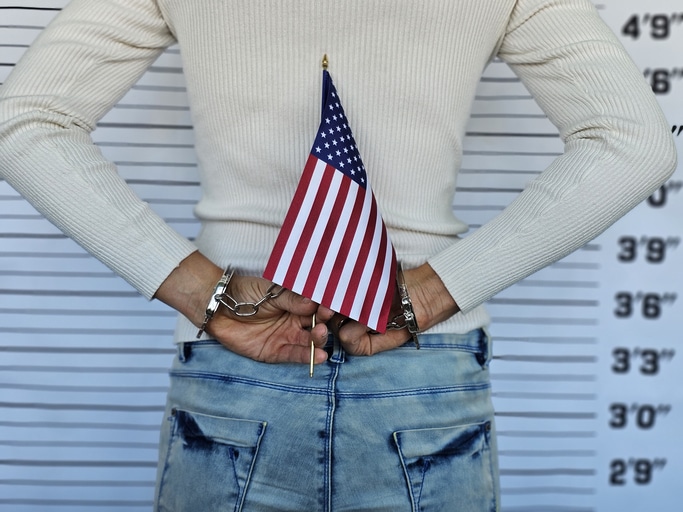
When agents single people out because of race, the constitutional claim is equal protection. For federal officers, that protection comes from the Fifth Amendment’s Due Process Clause; for state and local police, from the Fourteenth Amendment. A challenger must usually prove both a discriminatory effect and a discriminatory purpose, which can be shown through statistics, the sequence of events, departures from normal procedure and officers’ own statements. Body-camera footage, agents’ text messages and deposition testimony have become central evidence in the 2026 cases.
| Remedy | What it does | Key limits |
|---|---|---|
| Motion to suppress or terminate in immigration court | Asks the judge to exclude statements and evidence obtained through the stop and, if nothing else proves alienage, to end the case. | Requires an egregious violation. Your identity and records the government already has generally are not suppressible. |
| Bond and habeas corpus | Seeks release from ICE custody. Federal judges have ordered release of people arrested without lawful warrants. | Depends on detention authority. See our Ohio immigration bond guide. |
| Federal Tort Claims Act | Damages for false arrest, false imprisonment, assault or battery by federal officers under state law. | An administrative claim must be filed with the agency within two years (28 U.S.C. 2401(b)). The Supreme Court’s 2025 decision in Martin v. United States kept FTCA claims against federal officers available. |
| Bivens suit against individual agents | Constitutional damages against the officer personally. | Nearly unavailable after Egbert v. Boule (2022). |
| Injunction or class action | Court order limiting future stops or arrests. | Often defeated by standing rules unless a plaintiff faces a real risk of being stopped again. |
| Administrative complaint | Complaints to the DHS Office of Inspector General create an official record (8 CFR 287.10). | No damages; DHS civil rights oversight offices were sharply cut in 2025. |
If a stop led to a Notice to Appear and further immigration proceedings, the facts of the stop may matter for every later stage, from bond to cancellation of removal, a motion to reopen or a petition for review to the Sixth Circuit. If the stop led to criminal charges, talk to a crimmigration lawyer before entering any plea. A FOIA request for your records can show what agents wrote about the encounter.
Herman Legal Group has represented immigrants and their families since 1995, with offices in Cleveland and Columbus and remote consultations nationwide. Our deportation defense attorneys handle ICE detention and bond, motions to suppress, removal defense and federal court review, with consultations available in Spanish, Arabic, Russian, Dari, Pashto, Chinese and other languages.

$245 one hour
Review what happened during a stop or arrest, a family member’s detention, or a Notice to Appear.
Book a consultationCourt & ICE
Bond hearings, motions to suppress or terminate, cancellation of removal and appeals.
Learn more$245 or $595 review
Already have a lawyer? Get an independent review of your case strategy.
Learn moreFamily member detained right now? Call 216-696-6170.
A Kavanaugh stop is the popular name for an immigration stop in which agents rely on a person's apparent race or ethnicity together with factors such as speaking Spanish or accented English, being at a bus stop, car wash or day-labor site, or doing a certain kind of work. The name comes from Justice Brett Kavanaugh's September 8, 2025 concurrence in Noem v. Vasquez Perdomo, which said ethnicity alone cannot justify a stop but can be a relevant factor among others.
Not settled. A stop based only on race or ethnicity is unlawful under United States v. Brignoni-Ponce (1975). Whether race may count as one factor alongside location, language and work has not been decided on the merits. The Supreme Court's 2025 order was an unexplained emergency stay, not a ruling, and in December 2025 Justice Kavanaugh wrote that officers must not make interior immigration stops or arrests based on race or ethnicity.
ICE officers may approach anyone and ask questions, and you may decline to answer and walk away if you are not being detained. To detain you, even briefly, an officer needs reasonable suspicion based on specific, articulable facts that you are unlawfully present or committing a crime (8 CFR 287.8(b)(2)). To arrest you without a warrant, the officer needs probable cause that you are removable and likely to escape before a warrant can be obtained (8 U.S.C. 1357(a)(2)).
ICE does not enforce traffic laws, but federal agents can stop a vehicle if they have reasonable suspicion of an immigration violation, and local police in 287(g) jurisdictions can stop you for a traffic offense and then refer you to ICE. Within 100 air miles of the border, Border Patrol may also run fixed checkpoints that briefly stop cars without individualized suspicion. A search of the car still requires consent or probable cause.
Federal regulations define a reasonable distance from the border as 100 air miles (8 CFR 287.1), and Lake Erie is an international boundary. Cleveland, Toledo, Sandusky, Akron and Youngstown are inside that zone. Columbus is roughly 120 air miles from the Lake Erie boundary by our measurement, outside the default zone. Even inside the zone, a roving patrol stop requires reasonable suspicion.
Ohio law requires a person to give only a name, address or date of birth, and only when an officer reasonably suspects you committed a crime or witnessed a serious felony (R.C. 2921.29). Federal law separately requires registered noncitizens 18 and older, such as green card holders and visa holders, to carry proof of registration (8 U.S.C. 1304(e)). U.S. citizens have no duty to carry proof of citizenship. No one should ever show false documents.
ICE has no authority to hold U.S. citizens for immigration purposes, but it happens. ProPublica identified 506 U.S. citizens detained by immigration agents from January 2025 through September 2026, including more than 100 held after agents questioned their citizenship, nearly all of them people of color. Citizens who are wrongly detained may have damages claims under the Federal Tort Claims Act.
No. Everyone in the United States, regardless of status, has the right to remain silent. You can say you wish to remain silent and want to speak with a lawyer. Do not lie, do not run and do not physically resist. A refusal to answer is not, by itself, a lawful reason to detain you (Florida v. Bostick).
In Noem v. Vasquez Perdomo (September 8, 2025), the Supreme Court voted 6-3 to pause a Los Angeles order that had barred stops based only on race, language, location and type of work. The Court gave no reasons, so the order is not a precedent. Justice Kavanaugh wrote alone in support; Justice Sotomayor, joined by Justices Kagan and Jackson, dissented. The 1975 Brignoni-Ponce decision remains the controlling law.
Intentional racial discrimination by state and local police violates the Equal Protection Clause of the Fourteenth Amendment. Federal agents such as ICE and CBP are bound by the equal protection component of the Fifth Amendment's Due Process Clause. A plaintiff must generally show both discriminatory effect and discriminatory purpose, as the Sixth Circuit applied in an Ohio Highway Patrol case involving Hispanic drivers.
Usually the exclusionary rule does not apply in removal proceedings, but evidence may be suppressed for egregious constitutional violations (INS v. Lopez-Mendoza). In July 2026 the Sixth Circuit, which covers Ohio, assumed without deciding that a stop based solely on race is an egregious violation. Your identity and records the government already has generally cannot be suppressed.
Recording federal agents performing their duties in public is widely recognized as protected by the First Amendment, as long as you do not interfere, block them or get physically close. Keep a safe distance, follow lawful orders to step back, and do not touch officers or their vehicles. We have not found a published Sixth Circuit decision clearly establishing the right to record officers, so extra caution is wise in Ohio.
Write down the date, time, place, agency, officer names or badge numbers, vehicle descriptions, what was said and what reason, if any, was given. Save any video and witness contact information. If you or a family member is detained or receives a Notice to Appear, contact an immigration attorney quickly, because suppression motions, bond and FTCA deadlines all depend on early evidence.
Where to go next
This guide provides general information as of October 21, 2026, and is not legal advice. Immigration enforcement law is changing quickly; speak with an attorney about your situation. Reviewed by Richard T. Herman, Esq.