


HERMAN LEGAL GROUP · RESOURCE GUIDE · UPDATED NOVEMBER 10, 2026
How to prepare for a green card, marriage, employment-based or naturalization interview with U.S. Citizenship and Immigration Services: what to bring, the questions officers ask, real-world scenarios, and what happens after the interview.
“USCIS interview” covers several different proceedings. The form you filed decides what the officer must decide, who has to attend and which questions are likely. A green card interview is the last step toward lawful permanent residence for most applicants inside the U.S.: an adjustment of status interview for Form I-485; a naturalization interview is for Form N-400 and adds an English test and civics test. Interviews for an immigrant visa abroad are run by the State Department at a U.S. embassy, not by USCIS.
| Interview | Forms | Who usually attends | What the officer focuses on |
|---|---|---|---|
| Marriage green card | I-130, I-130A, I-485 | Both spouses | Whether the marriage is real (bona fide), legal validity, prior marriages, admissibility. Marriage interview help |
| Other family green card | I-130, I-485 | Applicant; petitioner often | The family relationship, entry and status history, affidavit of support |
| Employment-based green card | I-140, I-485 (I-485J if ported) | Applicant and derivatives | Job offer, intent to take the job, status maintenance, unauthorized work. See our I-140 guide |
| Naturalization (citizenship) | N-400 | Applicant | Continuous residence, physical presence, good moral character, taxes, English and civics tests |
| Removal of conditions | I-751 | Often both spouses, if interviewed | Whether the marriage was entered in good faith and the evidence of shared life since the green card |
| Asylum and refugee adjustment | I-589, I-485 | Applicant; interpreter rules differ | Identity, admissibility and, for asylum, credibility of the claim |
Is USCIS still waiving interviews in 2026? Sometimes. The USCIS Policy Manual still lists discretionary interview waiver categories, such as parents of U.S. citizens and unmarried children under 21 of U.S. citizens, and the adjustment regulation lets USCIS waive an interview. But a waiver is never guaranteed, an officer may require an interview in any category, and USCIS expanded interview criteria for refugee and asylee adjustment in August 2025. Prepare as if you will be interviewed.
Your interview appointment notice is a Form I-797C, Notice of Action. It arrives by mail and usually also appears in your USCIS online account. Read the whole notice, front and back, the day it arrives.
Not sure what a notice means? Use our USCIS case status guide and the USCIS notices resource hub.
Most interview notices give three to six weeks’ warning. This is how to use that time.
Your appointment notice controls. Use these lists to make sure nothing important is missing. Bring originals and one copy of each document. Foreign-language documents need a complete English translation with the translator’s certification under 8 CFR 103.2(b)(3).

More: naturalization services
Need a filing checklist instead? See HLG’s marriage and family filing checklists.
Officers do not weigh documents by the pound. A small, organized set of records that answers the question in front of them beats a binder of duplicates. Use this table to choose what to bring.
| What you need to show | Stronger evidence | Weaker on its own |
|---|---|---|
| You live together | Lease or deed in both names, both names on utilities, mail to both at the address, driver’s licenses with the same address | A letter from a friend saying you live together |
| You share finances | Joint bank account with real activity (paychecks in, bills out), joint credit card, each other as beneficiary | A joint account opened right before filing with only a small deposit |
| The relationship is real over time | Dated photos across years, travel bookings together, messages, family events, children | Wedding photos only |
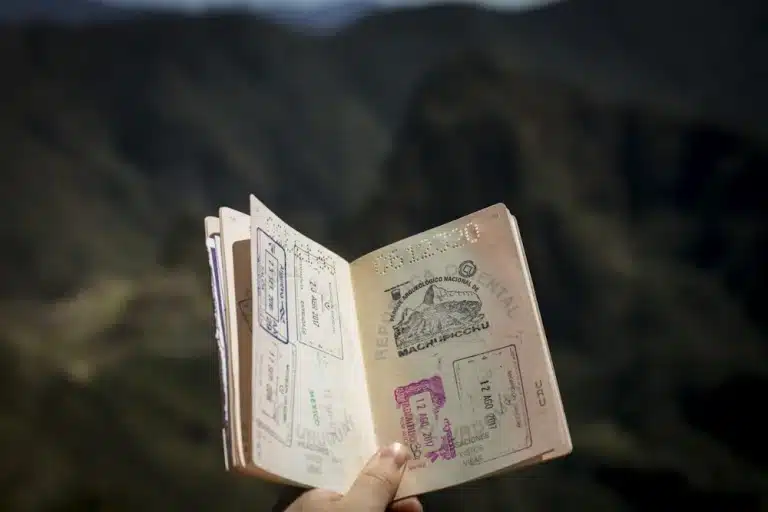
| You entered lawfully | Passport stamp, I-94, visa, parole document | Your own statement without records |
| A criminal matter is resolved | Certified court disposition, police report, proof of completed sentence or program | “The case was dismissed” with no paperwork |
| Good moral character (N-400) | Tax transcripts, child support records, employment history, community involvement | Character letters alone |
| The job offer is still open (employment) | Recent signed employer letter with title, duties, salary; recent pay stubs | An old offer letter from years ago |
If a document is missing, do not invent one or substitute something misleading. Bring what exists and be ready to explain what doesn’t. An attorney can help prepare a short written explanation with secondary documentation.
There is no official list of green card interview questions, and no answer key. The officer works from your file. Most questions fall into the categories below. Answer only what is asked, from your own memory. “I don’t remember” or “I don’t understand the question” are acceptable answers when true. Guessing is not.
The officer will often walk through the yes/no eligibility questions on your form. Know your answers and why you gave them.
These are the most-searched USCIS interview questions. The goal is to see whether the marriage is genuine, not to trick you with trivia.

In a second interview, sometimes called a “Stokes interview,” the officer may question spouses separately and compare answers. Details on preparation: Marriage Green Card Interview Lawyer.
The naturalization interview also includes the English test (speaking, reading one of three sentences, writing one of three sentences) and the civics test, unless you qualify for an age or disability exception. If you fail any part, USCIS gives a second chance, generally 60 to 90 days after the first interview, under 8 CFR 312.5. Practice with our civics test questions and answers. USCIS may also investigate your background in your local community; see USCIS neighborhood investigations.
Questions are hardest when the true answer is uncomfortable: “Why did your first marriage end two months before you met your spouse?”, “Why does your lease list a different address?”, “Why didn’t you list this arrest?”, “Why did you enter on a tourist visa and marry three weeks later?” These need a truthful, documented explanation prepared in advance, not an improvised one.
How long does a USCIS interview take? Many interviews last about 20 minutes to an hour. Separate marriage interviews, interviews with an interpreter and cases with complicated history can run longer. Waiting time before you are called is extra.
These are hypothetical illustrations based on common situations, not HLG case results.
What it looks like: each spouse is questioned alone about the same events, home and routines.
What to do: answer from your own memory. If you don’t know, say so. Never guess to match what you think your spouse said. After the interview, write down what you were asked.
Get help when: you received a second-interview notice or your earlier answers conflicted.
What it looks like: an arrest you forgot to list, an old DUI, or a sealed or expunged case.
What to do: get certified court records before the interview. Expungement does not erase an arrest for immigration purposes, and the FBI background check will likely show it.
Get help when: any arrest or conviction exists. See our crimmigration lawyer page.
What it looks like: a status gap, an old visa overstay, or a removal order you may not know about from a missed court hearing.
What to do: adjustment applicants who are immediate relatives and entered lawfully may still qualify to adjust, but ICE arrests at interviews have been reported. A removal order changes everything. Get your records and talk to a lawyer before you attend.
Get help when: before the interview, always. See Ohio enforcement data.
What it looks like: a wrong date, a missing prior address, a trip you forgot.
What to do: tell the officer at the start of the review and bring the correct document. Correcting an honest error is routine. Hiding it can look like misrepresentation. See inconsistent answers and AI vetting.
Get help when: the mistake involves an arrest, a prior marriage, a prior immigration filing or unauthorized work.
What it looks like: in a marriage case, an officer may ask to see photos or messages with your spouse.
What to do: decide in advance, with your lawyer, what you are comfortable showing. Do not delete messages before the interview to hide them. Remember USCIS can also review your social media and digital footprint.
Get help when: your messages or posts contain anything that conflicts with your forms. Read Can USCIS use your digital footprint against you?
What it looks like: the marriage ended or is ending before the interview.
What to do: do not attend and pretend nothing changed. Depending on the case, options can include a waiver, a different category or withdrawing. In abuse situations, other protections may apply.
Get help when: immediately, before the interview date.
What it looks like: a legal term, a fast speaker, or a compound question.
What to do: say “I don’t understand, can you rephrase?” If you speak only basic English, request an interpreter instead of struggling. A wrong answer to a misunderstood question is still recorded.
Get help when: you think a misunderstanding caused an inconsistency.
What it looks like: work before your EAD, work on the wrong visa, or cash jobs.
What to do: immediate relatives of U.S. citizens are generally forgiven past unauthorized work for adjustment, but employment-based applicants face different rules. Answer truthfully.
Get help when: you are in an employment-based category or misstated your work history.
For most field office interviews, the applicant must bring their own interpreter if they are not fluent in English. USCIS rules (Policy Memorandum PM-602-0125.1 and Form G-1256, Declaration for Interpreted USCIS Interview) require that:
In naturalization cases, USCIS can provide a replacement interpreter if yours is disqualified (8 CFR 312.4), but the English test itself is never interpreted. Asylum interviews have their own interpreter rules; check your notice. HLG attorneys consult in Spanish, Russian, Bulgarian, Serbian, Croatian, Dari and Pashto, and Arabic-, French- and Chinese-speaking paralegals can join preparation sessions. Our attorneys cannot interpret at your interview.
Ask as early as possible, before the interview date, and only for good cause such as a medical emergency, death or serious illness in the family, or a notice that arrived too late. Use the method on your notice: typically a request through the USCIS Contact Center (800-375-5283) or online account, or a written request to the field office. Keep proof of the request and the reason. A new date can take weeks or months, and USCIS can refuse the request. Biometrics appointments have a separate online rescheduling tool.
If USCIS cancels or deschedules your interview, it will send a new notice. Check your online account and keep your address current.
What should you wear to a USCIS interview? There is no official dress code. Dress as you would for a job interview or a court date: clean, neat, business casual. Jeans are not prohibited, but avoid clothing with slogans, offensive images or anything you would not wear in front of a judge.
Can you bring a phone? Usually yes, but keep it silent and off the desk unless the officer asks. Do not record the interview without the officer’s permission.
Who can come with you? People listed on the notice, your attorney with a Form G-28 on file, and a qualified interpreter. Bring children only if the notice requires them or you have no childcare, and bring a family member to watch them in the waiting area.
What if you need an accommodation? Request disability accommodations through USCIS in advance, using the process on your notice or the USCIS Contact Center.
Can a lawyer attend with you? Yes, if your attorney has filed Form G-28 and attends in person under the current policy (8 CFR 292.5(b)). A lawyer can clarify questions, object to improper questioning and help get a fair record. Your lawyer cannot answer for you.
| Outcome | What it means | What to do |
|---|---|---|
| Approved | Green card: you become a lawful permanent resident as of the approval date, and the card is produced and mailed. N-400: you are scheduled for (or take same-day) the oath ceremony. | Watch your online account for “card is being produced.” Do not travel on an expired document while waiting. |
| Continued / more evidence needed | The officer needs a document. You may get a Form N-14 or an RFE at the interview or by mail. | Note the deadline the day you receive it. Submit exactly what is asked, organized and complete. |
| Second interview | The officer has unresolved questions, often about the marriage. | Prepare carefully with counsel. A second interview is not a denial. |
| NOID | USCIS intends to deny and is giving you a chance to respond. | Respond within the deadline (30 days, plus 3 if mailed, at most). Get legal help. |
| Denied | USCIS denied the case. Under PA-2026-05 this may come without an RFE or NOID. | Check the decision for motion, appeal or N-336 hearing options and deadlines. Check status and removal risk right away. |
How long after the interview do you get a green card? If the officer approves at or soon after the interview, the card often arrives by mail within several weeks. If the case is continued or an RFE is issued, the decision waits until USCIS reviews your response. Track progress with our case status guide.
Received an adverse notice? See I-485 RFE, NOID and denial help, marriage green card RFE and denial help or N-400 denial help.
Richard T. Herman founded Herman Legal Group in Cleveland in 1995. HLG attorneys prepare clients for USCIS interviews in Ohio and nationwide, from offices in Cleveland and Columbus (Worthington), and represent clients at field office interviews by written agreement. Full service details: USCIS Interview Preparation Lawyer.

$245 / one hour
Talk through your notice, your history and what could come up. Decide how much help you need.
Book a consultation$595 / one hour
Live practice with an HLG attorney using the forms you filed, or a review of your interview documents.
Book a $595 sessionQuoted in writing
An HLG attorney prepares you and appears with you in person at the USCIS field office.
Ask about attendanceAlready have a lawyer and want an independent look? See our second opinion case review. Consultations are available in English, Spanish, Russian, Bulgarian, Serbian, Croatian, Dari and Pashto. Call 216-696-6170.
Officers ask about your identity, address, work and travel, your immigration history and entry, the yes or no eligibility questions on Form I-485, and the basis of your case. Marriage cases add questions about how you met, the wedding, your home and daily life. There is no official list; the questions come from your own file.
Read the interview notice, re-read every form you filed, gather originals of identity, status, civil and relationship or employment records, list anything that changed since filing, and practice answering truthfully from memory. Get legal advice first if you have an arrest, overstay, removal order or inconsistent filing.
Bring the interview notice, a government photo ID, all passports and travel documents, copies of everything you filed, original civil documents such as birth and marriage certificates, certified court records for any arrest, updated evidence for your case type, and certified English translations of foreign documents.
Many USCIS interviews take about 20 minutes to an hour once you are called in. Marriage interviews with separate questioning, interviews with an interpreter, and cases with complicated history can take longer.
Sometimes. The USCIS Policy Manual still lists discretionary waiver categories, such as parents of U.S. citizens and unmarried children under 21 of U.S. citizens, but officers can require an interview in any case and waivers are never guaranteed. Prepare as if you will be interviewed.
USCIS has no official dress code. Business casual, clean and neat clothing, like you would wear to a job interview or court, is a safe choice. Jeans are not prohibited, but avoid clothing with slogans or offensive images.
Yes, for good cause such as a medical emergency or a family death, if you ask before the interview date. Request it through the method on your notice, usually the USCIS Contact Center at 800-375-5283, your online account or a written request to the field office, and keep proof. A new date can take weeks or months.
USCIS may deny a green card or other application as abandoned under 8 CFR 103.2(b)(13). For naturalization, the case is administratively closed and treated as abandoned if you do not ask to reopen within one year. A motion to reopen on Form I-290B is generally due within 30 days of a denial.
Not everyone does. A lawyer is most useful if you have an arrest or conviction, a visa overstay, a removal order, unauthorized work, a prior denial, an inconsistent filing or a second marriage interview. Since May 18, 2026, attorneys generally must attend field office interviews in person.
Yes. For most field office interviews you must bring your own interpreter if you are not fluent in English. The interpreter must be fluent, impartial, show government photo ID and sign Form G-1256. Your attorney cannot interpret, children under 14 cannot interpret, and the officer can disqualify an interpreter.
An officer may ask to see photos or messages, especially in marriage cases. Decide with your lawyer beforehand what you will show, and never delete messages to hide them. USCIS can also review public social media.
The officer may approve the case, recommend approval, continue it for more evidence with Form N-14 or an RFE, schedule a second interview, issue a notice of intent to deny or deny it. Naturalization applicants receive Form N-652 with the result at the end of the interview.
If the case is approved at or soon after the interview, the card often arrives by mail within several weeks. If an RFE is issued or the case is continued, it waits until USCIS reviews your response. Your USCIS online account shows when the card is being produced and mailed.
It has happened. Since late 2025, applicants with visa overstays or prior removal orders have been detained at or after interviews, including in San Diego and Cleveland. If you have a removal order or a past immigration violation, speak with an immigration attorney before you attend.
There is no pass or fail score for a green card interview. If the officer has concerns, you may get an RFE, a second interview or a notice of intent to deny. A denial can sometimes be challenged by motion, and some applicants can refile or present the case in immigration court.
Small differences in memory are normal. Do not change a truthful answer to match your spouse. Explain what you actually remember and bring records that show the facts. Significant inconsistencies can lead to a second interview or a notice of intent to deny, so get legal help.
At the N-400 interview, an officer reviews your application and tests your English reading, writing and speaking and your civics knowledge. Applicants who filed on or after October 20, 2025 take the 2025 civics test: up to 20 questions from 128, with 12 correct answers needed. If you fail a part, you get one retest, usually 60 to 90 days later.
Updated October 18, 2026. This guide is general information, not legal advice, and does not create an attorney-client relationship. No preparation guarantees approval.
Reviewed by Richard T. Herman, Esq. Last attorney review: October 18, 2026.