


Deportation & Immigration Court
Cancellation of Removal Lawyer
If you are facing deportation, cancellation of removal lets an immigration judge end the case and allow you to remain in the United States as a lawful permanent resident. It is decided in immigration court on the evidence you present, and it can be granted only once.
Herman Legal Group reviews your Notice to Appear, your time in the United States, your record and your family’s circumstances. We determine which form of cancellation your case can support, if any, and tell you what it will take to prove eligibility.
If you have a hearing date, a filing deadline or a family member in ICE custody, say so when you book. Booking a consultation does not change a court date or a deadline.
Short answer: cancellation of removal is a defense you raise before an immigration judge. There are two main versions, and their requirements are very different.
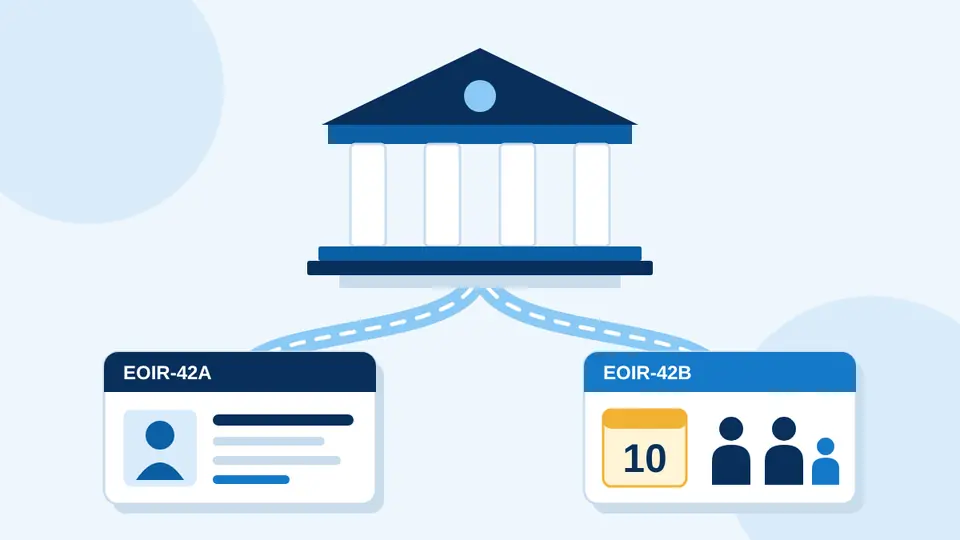
- Green card holders (Form EOIR-42A): five years as a lawful permanent resident, seven years of continuous residence after admission, and no aggravated felony conviction.
- People without a green card (Form EOIR-42B): ten years of continuous physical presence, good moral character, no disqualifying conviction, and exceptional and extremely unusual hardship to a U.S. citizen or permanent resident spouse, parent or child.
- Only in court: there is no cancellation application at USCIS. You must be in removal proceedings.
- Never automatic: the judge has discretion, the government can appeal a grant, and only 4,000 non-permanent resident grants are available each fiscal year.
What is cancellation of removal?
For the full rules on eligibility, hardship, the stop-time rule and 2026 decisions, see our guide to cancellation of removal.
Cancellation of removal is a form of relief under U.S. immigration law that only an immigration judge can grant. It is one of the few ways to stop deportation once a case has started. If the judge grants it, the removal case ends. A lawful permanent resident keeps the green card. A person without legal status becomes a lawful permanent resident.
Congress created it in the Illegal Immigration Reform and Immigrant Responsibility Act of 1996. The rules are in section 240A of the Immigration and Nationality Act, 8 U.S.C. 1229b.
It is a defense, not a benefit you can apply for on your own. You must already be in removal proceedings, which begin when the Department of Homeland Security (DHS) files a Notice to Appear with the immigration court.
| Requirement | Permanent residents (LPR cancellation) | Non-permanent residents (non-LPR cancellation) | VAWA special rule |
|---|---|---|---|
| Form | EOIR-42A | EOIR-42B | EOIR-42B |
| Time in the U.S. | 5 years as a permanent resident and 7 years of continuous residence after admission in any status | 10 years of continuous physical presence | 3 years of continuous physical presence |
| Record | No aggravated felony conviction | Good moral character for 10 years and not convicted of an offense listed in the criminal grounds | Good moral character for 3 years, no aggravated felony and no specified criminal or security grounds |
| Hardship | None required. The judge weighs the equities. | Exceptional and extremely unusual hardship to a qualifying relative | Extreme hardship to you, your child or your parent |
| Annual limit | None | 4,000 grants per fiscal year | Counted in the same 4,000 |
The VAWA special rule is for a person who was battered or subjected to extreme cruelty by a U.S. citizen or permanent resident spouse or parent. A Notice to Appear does not stop the three-year clock in those cases.
The statute also excludes certain crewmen and exchange visitors, people removable on security grounds, and anyone who has already received cancellation, suspension of deportation or the former section 212(c) waiver. Cancellation can be granted once.
Cancellation of removal for permanent residents (Form EOIR-42A)
A green card holder placed in removal proceedings, usually because of a criminal conviction, can ask the judge to cancel removal and keep lawful permanent resident status. Lawyers call this LPR cancellation. The statute sets three eligibility requirements, which the Executive Office for Immigration Review (EOIR) summarizes in its guide for permanent residents:
- Five years as a lawful permanent resident.
- Seven years of continuous residence in the United States after being admitted in any status. Time in a lawful status before the green card can count.
- No aggravated felony conviction.
The seven-year clock can stop early
Under the stop-time rule, continuous residence ends on the earlier of two events: service of a Notice to Appear, or the commission of certain criminal offenses.
In Barton v. Barr (2020), the Supreme Court held that an offense listed in the criminal inadmissibility grounds, committed during the first seven years, stops the clock even when DHS is seeking removal for a different offense. Counting this correctly is often the whole case.
“Aggravated felony” is a legal term, not a description
The immigration definition covers offenses that are neither aggravated nor felonies under state law, including some misdemeanors. Whether a conviction fits depends on the statute of conviction, the sentence and the court record. Our crimmigration service explains how HLG analyzes a criminal record.
Meeting the requirements is not the same as approval
LPR cancellation is discretionary. A permanent resident who meets all three requirements must still persuade the judge to grant relief. The judge weighs family ties, length of residence, work history, community service and proof of rehabilitation against the seriousness and recency of the criminal history and the circumstances of the offense.
Cancellation of removal for non-permanent residents (Form EOIR-42B)
Non-LPR cancellation of removal is the relief people call the “10-year green card.” A person without lawful status who is facing removal proceedings must prove all four eligibility requirements below, and then show the case deserves a favorable exercise of discretion. EOIR lists them in its guide for nonpermanent residents.
The four requirements for non-LPR cancellation
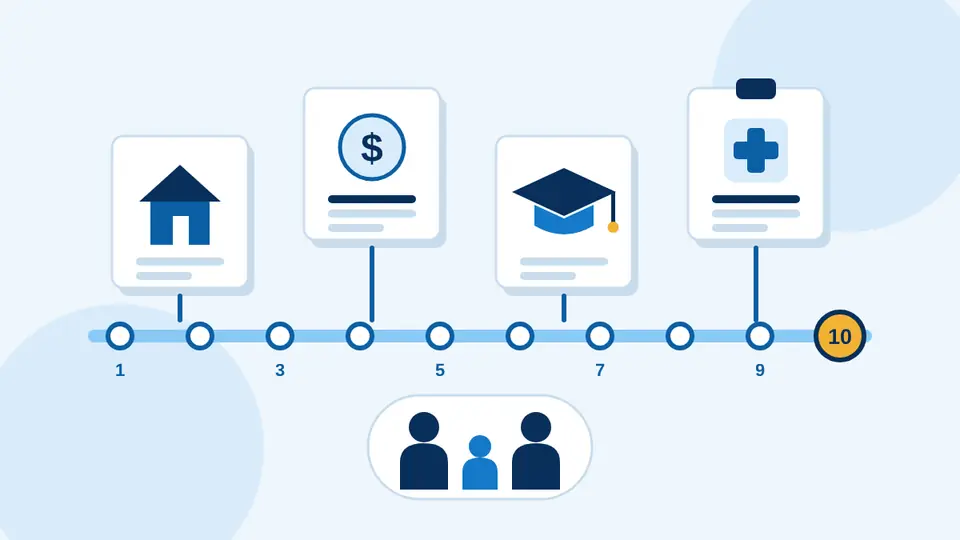
- Ten yearsContinuous physical presence in the United States before you apply.
- Good moral characterFor the same ten-year period.
- Clean on the listed crimesNo conviction under the criminal grounds of inadmissibility or deportability.
- HardshipExceptional and extremely unusual hardship to a qualifying relative.
1. Ten years of continuous physical presence
You must have been physically present in the United States for the ten years before you apply. Two rules can cut that period short.
- The stop-time rule. The clock stops when DHS serves a Notice to Appear or when you commit certain criminal offenses, whichever comes first. In Niz-Chavez v. Garland (2021), the Supreme Court held that only a single notice containing all the required information, including the time and place of the hearing, stops the clock. Many older notices left that out.
- Absences. One trip abroad of more than 90 days, or trips totaling more than 180 days, breaks continuous presence.
2. The good moral character requirement
You must show good moral character for the same ten years. The statute rules it out for anyone who, during that period, was confined for 180 days or more as a result of a conviction, gave false testimony to obtain an immigration benefit, or falls within other listed categories.
Under Matter of Castillo-Perez, a 2019 Attorney General decision, two or more convictions for driving under the influence during the period create a presumption against good moral character.
3. No disqualifying criminal convictions
A conviction for an offense listed in the criminal grounds of inadmissibility or deportability bars this relief. That covers most drug offenses, many crimes involving moral turpitude, firearms offenses, and domestic violence and child abuse offenses. Certain document-fraud convictions are also bars.
The test is stricter than many people expect. A single crime involving moral turpitude can be a bar when the offense carried a possible sentence of one year or more, even if the sentence actually imposed was short. Get legal guidance on the immigration consequences before pleading to anything in criminal court.
4. A qualifying relative
Non-LPR cancellation depends on a family member. The hardship must fall on your spouse, parent or child who is a United States citizen or lawful permanent resident. Hardship to you does not count.
A child must be unmarried and under 21. In Matter of Arevalo-Vargas (BIA 2026), the applicant’s children turned 21 while the government’s appeal was pending. The Board held they were no longer qualifying relatives, and he lost eligibility.
How strict is the hardship standard in 2026?
Very strict, and stricter in practice than it was two years ago. Exceptional and extremely unusual hardship means hardship substantially beyond what a family ordinarily suffers when a parent or spouse is deported. Lost income, separation and fewer opportunities abroad are treated as the ordinary result of removal.
Since mid-2025 the Board of Immigration Appeals has issued a series of precedent decisions on this standard. In each case below, an immigration judge had granted cancellation, DHS appealed, and the Board vacated the grant.
| Decision | What the Board held | What it means for your evidence |
|---|---|---|
| Matter of Buri Mora (2025) | Three children with autism, anxiety and developmental delays would stay in the United States with their mother and keep their school services and Medicaid coverage. Financial loss and separation were not enough. | Show how removal would change the relative’s care, not only that a condition exists. |
| Matter of Arevalo-Vargas (2026) | Economic loss, reduced educational opportunities and emotional hardship do not meet the standard. Children who turn 21 before the case is final no longer qualify. | Track every child’s 21st birthday. Build the case on more than money and separation. |
| Matter of Pelagio Mendoza (2026) | Testimony alone about a medical or mental health condition is generally not enough when records or expert opinions could reasonably have been obtained. | Obtain the records, a letter from the treating provider and, where needed, a professional evaluation. |
| Matter of Lopez-Davila (2026) | Leaving a U.S. citizen child in the United States without a parent does not, by itself, establish the hardship. Care by another adult can be sufficient. The Board sent the case back for more fact-finding. | Document who could care for the child and why that care would or would not be adequate. |
Evidence of hardship that carries weight
- Medical records and a treating physician’s letter explaining the diagnosis, the treatment and what happens without it.
- Psychological evaluations and therapy records.
- School records, including an individualized education program (IEP).
- Country evidence on whether the same care is available where the family would live.
- Financial records showing who supports the household and what would change.
- A specific family plan: who would stay, who would leave and who would care for the children.
- Witnesses with firsthand knowledge, such as teachers, doctors, clergy and employers.
If the judge and the Board deny the claim, a federal court of appeals can review whether the hardship standard was correctly applied to the established facts. The Supreme Court confirmed that in Wilkinson v. Garland (2024). The court cannot re-decide the facts or the judge’s final discretionary choice. See our petition for review service.
Can you apply for the “10-year green card” on your own?
No. There is no cancellation of removal application at USCIS, and no form that awards a green card for ten years in the country. The only way to request it is as a defense in immigration court.
Some consultants and notarios sell a “10-year visa” or “10-year law” package. EOIR’s Fraud and Abuse Prevention Program calls this the 10-Year Green Card Scam: people are asked to sign a form that is really the signature page of an asylum application, and can end up in removal proceedings. That is a serious gamble.
- You are placed in deportation proceedings. If the judge denies cancellation, the result can be a removal order.
- A knowingly frivolous asylum application carries a permanent bar to immigration benefits.
- The odds are not what was advertised. The hardship standard is the one described above, and only 4,000 grants are available nationwide each fiscal year.
If someone has already filed an application in your name, bring a copy of everything you signed. Fraud can be reported to the EOIR program, and USCIS describes notario fraud and other common immigration scams.
How does a cancellation of removal case move through immigration court?
The case is built over several hearings, and missing a step can end it. The applicant carries the burden of proof on every requirement.
Four stages of a cancellation of removal case
- Master calendar hearingYou answer the charges in the Notice to Appear and tell the judge which relief you will seek. The judge sets a filing deadline.
- FilingThe application and evidence are filed with the court, the fee is paid, DHS is served and you complete biometrics.
- Individual hearingYou and your witnesses testify. The DHS attorney cross-examines. The judge reviews the documents.
- DecisionThe judge grants or denies. Either side has 30 days to appeal to the Board of Immigration Appeals.
- Deadlines are enforced. An application that is not filed by the judge’s deadline can be treated as waived. Failing to complete biometrics can be treated as abandonment.
- DHS can appeal a grant. A win before the judge is not final until the appeal period passes or the Board rules. See our Form EOIR-26 immigration appeals service.
- The appeal deadline is 30 days. A 2026 rule that would have cut it to 10 days was set aside by a federal court, and EOIR confirmed the 30-day deadline in Policy Memorandum 26-02. Check the deadline stated in your own decision.
- The annual cap can delay a grant. Once the 4,000 non-LPR cancellation grants for the fiscal year are used, judges reserve decisions until a number is available.
- Work authorization. After the application is properly filed, you may apply to USCIS for a work permit under category (c)(10).
- No single timeline. How long a case takes depends on the court’s docket, whether you are detained and whether there is an appeal.
Most people go through this process without a lawyer. TRAC, which compiles immigration court records, reports these figures.
Immigration court in numbers
If a judge has already ordered removal and you never had the chance to apply, a motion to reopen may be the next question. Strict deadlines apply.
How much does cancellation of removal cost?
The government filing fees below apply to applications filed on or after October 1, 2026. EOIR fees now adjust for inflation every October 1, so confirm the amount on the EOIR forms and fees page before you pay.
| Filing | Fee |
|---|---|
| Form EOIR-42A, cancellation for permanent residents | $730 |
| Form EOIR-42B, cancellation for non-permanent residents | $1,690 |
| Biometrics | $30 per person |
| Form EOIR-26, appeal to the Board | $1,060 |
Fees are paid electronically through the EOIR Payment Portal. An immigration judge may waive an application fee for a person who shows an inability to pay.
Attorney fees are separate. HLG’s fee for a cancellation case depends on the work the case requires: the number of hearings, the criminal and immigration history, and how much hardship evidence has to be developed. We set the scope and the fee in a written agreement after reviewing your documents.
How HLG prepares a cancellation of removal case
We test eligibility before anyone invests in a hearing. A case that fails on the clock or on a conviction cannot be saved by sympathetic facts.
- Notice to Appear review: the charges, the service date and whether the notice stopped the clock.
- Time calculation: admission, residence and presence dates, and every trip abroad.
- Criminal record analysis: every arrest, charge and disposition, measured against the statutory bars.
- Qualifying relative and hardship assessment: which family members qualify, until when, and what the evidence can show under the 2025 and 2026 Board decisions.
- Evidence plan: records, evaluations, declarations and witnesses.
- Hearing preparation: your testimony, cross-examination practice and the pre-hearing brief.
- Other defenses: asylum, adjustment of status and other relief that can be pursued alongside cancellation or instead of it.
Three ways to work with HLG
Consultation: $245
One hour with an HLG immigration attorney to review your Notice to Appear, your eligibility and your next deadline.
A consultation does not include preparing or filing an application.
Document review: $595
A one-hour attorney review of an application and evidence you prepared yourself, before you file it.
On the booking page, choose “Document Review: Online” and open “See Details” for the scope and preparation steps.
Representation
HLG prepares and files the application, develops the evidence and represents you at your hearings.
The scope and fee are set in a written agreement after we review your documents.
No attorney can promise that a judge will grant cancellation of removal. A Board appeal, a bond or custody matter and federal-court review are separate pieces of work and may require separate engagements.
HLG’s removal-defense team includes Richard T. Herman, whose practice includes removal defense and federal immigration litigation; Vania Stefanova, who heads the firm’s Immigration Litigation Division and handles removal cases and Board appeals; Luis Villarroel, who leads the Columbus-area office in Worthington and works in English and Spanish; and Tameem Ansari, whose practice includes removal defense. Richard founded Herman Legal Group in Cleveland in 1995 and has practiced immigration law for more than 30 years. Read why clients trust Richard T. Herman. The attorney handling your matter is confirmed when you engage the firm.
Consultations are available in Spanish, Russian, Bulgarian, Serbian, Croatian, Dari and Pashto. Paralegals who speak Arabic, French and Chinese can join an attorney consultation.
Where does HLG handle cancellation of removal cases?
Ohio removal cases are heard at the Cleveland Immigration Court, and HLG appears there regularly. The court is at 801 W. Superior Avenue, Suite 13-100, in downtown Cleveland. Herman Legal Group was founded in Cleveland and has offices in Cleveland and in Worthington, serving the Columbus area.
Our guide to the Cleveland Immigration Court explains what to expect, and our Columbus removal-defense page covers central Ohio.
If your case is in another immigration court, start with a video or phone consultation. We will tell you whether HLG can represent you there.
What should you bring to the consultation?
Bring the Notice to Appear and everything the court or DHS has sent you. If a hearing is close or you are calling about someone in detention, say so when you book.
- The Notice to Appear and every hearing notice, with the envelopes if you kept them.
- Your passport, I-94 record and any visa or entry documents.
- Your green card and the date you became a permanent resident, if you have one.
- A list of every trip outside the United States, with dates.
- Proof of where you lived and worked each year: leases, tax returns, pay stubs, school and medical records.
- Certified court records for every arrest, charge or conviction, including dismissed cases.
- Birth and marriage certificates and proof of status for your spouse, parents and children.
- Medical, psychological and school records for those family members.
- Copies of every immigration application ever filed for you, including anything a consultant or notario filed.
Is this the right HLG service for your problem?
This service is for people in removal proceedings who may qualify for LPR cancellation or non-LPR cancellation of removal. If your situation is different, another page will fit better.
- You are in court and do not know which defenses you have: see deportation defense.
- Someone is in ICE custody: see immigration detention and bond hearings.
- You have a pending criminal charge or an old conviction: see crimmigration.
- You fear harm in your home country: see asylum.
- You were abused by a U.S. citizen or permanent resident spouse or parent: see VAWA self-petitions.
- A family member or employer can petition for you: see adjustment of status.
- The judge already denied your case: see the Form EOIR-26 BIA appeal service. The deadline is 30 days.
- You already have a removal order: see motions to reopen in immigration court.
Many long-time Mexican residents the Consulate refers to us are screened for cancellation of removal. En español: cancelación de deportación.
Common questions about cancellation of removal
What is the difference between Form EOIR-42A and Form EOIR-42B?
Form EOIR-42A is the application for LPR cancellation: lawful permanent residents in removal proceedings who want to keep their green cards. It requires five years as a permanent resident, seven years of continuous residence after admission and no aggravated felony conviction. Form EOIR-42B is the application for non-LPR cancellation, for people without permanent resident status. It requires ten years of continuous physical presence, good moral character, no disqualifying conviction and exceptional and extremely unusual hardship to a qualifying relative.
Can I get a green card after 10 years in the United States?
Not by filing an application. Ten years of presence is one of four requirements to qualify for cancellation of removal as a non-permanent resident, and that relief can be requested only by a person already in removal proceedings before an immigration judge. You must also prove good moral character, have no disqualifying conviction and show exceptional and extremely unusual hardship to a U.S. citizen or permanent resident spouse, parent or child.
Can I apply for cancellation of removal if I am not in immigration court?
No. Cancellation of removal is a defense to deportation, and only an immigration judge can grant it. USCIS does not accept the application. Anyone who offers to file for a 10-year green card outside of court is describing something that does not exist, and may be planning to place you in removal proceedings on purpose.
What crimes make you ineligible for cancellation of removal?
For permanent residents, an aggravated felony conviction is a bar, and certain offenses committed during the first seven years stop the residence clock. For non-permanent residents the bar is wider: a conviction listed in the criminal grounds of inadmissibility or deportability, which covers most drug offenses, many crimes involving moral turpitude, firearms offenses and domestic violence offenses. The statute of conviction and the court record decide the question, so a criminal record needs a careful legal review.
Does a DUI disqualify me from cancellation of removal?
A single conviction for simple driving under the influence is generally not a statutory bar by itself, but the judge will weigh it in discretion. Two or more DUI convictions during the ten-year period create a presumption against good moral character under Matter of Castillo-Perez. Confinement of 180 days or more as a result of a conviction also rules out good moral character.
What counts as exceptional and extremely unusual hardship?
Hardship to a qualifying relative that is substantially beyond what a family ordinarily experiences when a member is deported. Loss of income, separation and reduced opportunities are not enough on their own. The strongest cases document a serious medical, psychological or educational need with records and professional opinions, and show how the applicant’s removal would change that relative’s care.
How hard is it to win cancellation of removal?
Non-LPR cancellation is one of the more demanding forms of relief in immigration law. The applicant carries the burden on every requirement, the hardship standard is high, the judge has discretion and DHS can appeal a grant. HLG does not quote a success rate, because a national average says nothing about your case. The useful questions are whether you meet each requirement and what your evidence can prove.
How much does it cost to file for cancellation of removal?
For applications filed on or after October 1, 2026, the EOIR filing fee is $730 for Form EOIR-42A and $1,690 for Form EOIR-42B, plus a $30 biometrics fee per person. Fees adjust each October 1 and are paid through the EOIR Payment Portal. A judge may waive the application fee on proof of inability to pay. Attorney fees are separate and are set in a written agreement.
Can I get a work permit while my cancellation case is pending?
You can apply for one. Once the cancellation application has been properly filed with the immigration court, you may apply to USCIS for employment authorization under category (c)(10). The work permit depends on the pending application, so it does not give you legal status by itself.
What happens if the judge grants cancellation of removal?
For a permanent resident, the removal case ends and the green card stays in place. For a non-permanent resident, the judge cancels removal and adjusts the person to lawful permanent resident status, subject to the annual limit of 4,000 grants. DHS has 30 days to appeal, so a person granted cancellation does not have a final decision until that period passes or the Board of Immigration Appeals rules.
Can I appeal if the judge denies cancellation of removal?
Yes. An appeal to the Board of Immigration Appeals on Form EOIR-26 must be received within 30 days of the judge’s decision. A 2026 rule that would have shortened this to 10 days was set aside by a federal court. If the Board denies the appeal, a petition for review can be filed with the federal court of appeals within 30 days. Federal courts can review legal questions, including how the hardship standard was applied to the facts, but not the judge’s fact-finding or final discretionary decision.
How long does a cancellation of removal case take?
There is no reliable single answer. A detained case can be decided in weeks or a few months. A non-detained case can take much longer, depending on the court’s docket, the annual cap and whether either side appeals. Plan around your next hearing date and the judge’s filing deadline, not around an estimate.
Official sources
- 8 U.S.C. 1229b: cancellation of removal
- EOIR: Cancellation of Removal for Permanent Residents
- EOIR: Cancellation of Removal for Nonpermanent Residents
- EOIR forms and fees
- 8 CFR 1240.21: the annual limit of 4,000 grants
- 8 CFR 1003.24: immigration court fees and fee waivers
- 8 CFR 1003.31: filing deadlines set by the immigration judge
- 8 CFR 1003.47: biometrics and abandonment of an application
- 8 CFR 274a.12(c)(10): work authorization while a cancellation application is pending
- Matter of Buri Mora, 29 I&N Dec. 186 (BIA 2025)
- Matter of Arevalo-Vargas, 29 I&N Dec. 519 (BIA 2026)
- Matter of Pelagio Mendoza, 29 I&N Dec. 542 (BIA 2026)
- Matter of Lopez-Davila, 29 I&N Dec. 763 (BIA 2026)
- Matter of Castillo-Perez, 27 I&N Dec. 664 (A.G. 2019)
- Wilkinson v. Garland (U.S. 2024)
- Niz-Chavez v. Garland (U.S. 2021)
- Barton v. Barr (U.S. 2020)
- EOIR: Cleveland Immigration Court
- EOIR Policy Memorandum 26-02: the 30-day deadline to appeal to the Board
- EOIR Fraud and Abuse Prevention Program
- 8 U.S.C. 1158(d)(6): frivolous asylum applications
This page gives general information, not legal advice for your case. Fees, forms and case law change. The requirements that apply to you depend on your record and your circumstances.
Legal content reviewed by Richard T. Herman, Esq. Last attorney review: October 12, 2026.