 By
By
By Richard T. Herman, Esq.
Immigration Lawyer (30+ Years), Herman Legal Group
Schedule a consultation:
Schedule a Consultation (https://www.lawfirm4immigrants.com/book-consultation/)
QUICK ANSWER
A federal judge has upheld New York’s Protect Our Courts Act, confirming that ICE cannot conduct civil immigration arrests in or around New York state courthouses unless it has a judge-signed criminal warrant. This landmark decision is known as the New York courthouse ICE arrest ruling, which emphasizes that the New York courthouse ICE arrest ruling closes the door on years of courthouse targeting, strengthening due process, victim safety, and access to justice. Moreover, the New York courthouse ICE arrest ruling serves as a pivotal case for many.
This case has national implications, offering powerful new defense strategies for immigrants fighting removal—even in states like Ohio, which do not have similar protections.
This case has national implications, offering powerful new defense strategies for immigrants fighting removal—even in states like Ohio, which do not have similar protections. The New York courthouse ICE arrest ruling is an essential reference for these defense strategies.
Key Sources:
- Reuters coverage of the ruling
- AP News coverage of the dismissal of DOJ’s challenge
- Times Union reporting + access to the judge’s order
- PACER docket citation to the federal court case
- New York State’s official Protect Our Courts Act pages
All links appear below and throughout the article.

FAST FACTS
| Topic | Summary |
|---|---|
| Law | New York’s Protect Our Courts Act |
| Legal Question | Can states block federal civil immigration arrests in state courthouses? |
| Ruling | YES. Judge upheld the state law. |
| Judge | Hon. Mae A. D’Agostino (U.S. District Court, N.D.N.Y.) |
| Key Impact | ICE must have a judge-signed criminal warrant for courthouse arrests. |
| Primary Sources | Reuters, Times Union, AP News, PACER |
1. What New York’s Protect Our Courts Act Actually Says
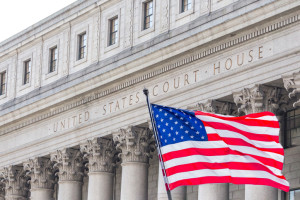
New York’s Protect Our Courts Act (POCA) prohibits ICE and CBP from making civil immigration arrests of people who are:
Many have questioned the impact of the New York courthouse ICE arrest ruling and its implications for immigrant rights.
- arriving at a state courthouse
- inside the courthouse
- leaving a courthouse
- or in the immediate vicinity of the courthouse
unless ICE has a criminal warrant signed by a judge.
Links
- Text & Summary of the Protect Our Courts Act (NY Senate)
https://www.nysenate.gov/legislation/bills/2019/S425/A2081 - NY Office for the Prevention of Domestic Violence—POCA Overview
https://opdv.ny.gov/protect-our-courts-act - Immigrant Defense Project — POCA FAQ (PDF)
https://www.immigrantdefenseproject.org/wp-content/uploads/2020/10/Community-FAQ-POCA-EN-1.pdf
The law was enacted after years of documented ICE courthouse arrests that deterred victims, witnesses, and litigants from seeking justice.
The New York courthouse ICE arrest ruling reflects a significant step toward protecting immigrant rights.

2. What the Federal Judge Ruled — And Why It Matters
The U.S. Department of Justice sued New York, arguing the state law interfered with federal immigration powers.
Judge Mae A. D’Agostino dismissed the challenge.
The ruling is a clear indication of the consequences of unlawful ICE actions, highlighting the importance of the New York courthouse ICE arrest ruling.
Confirmed by:
- Reuters:
https://www.reuters.com/world/us/us-judge-upholds-new-york-law-barring-immigration-agents-courthouses-2025-11-18/ - Times Union:
https://www.timesunion.com/capitol/article/judge-dismisses-doj-challenge-ny-law-banning-21194198.php - AP News:
https://apnews.com/article/0fbeadb881da5a4c1a7e871784f09545
Judge’s Key Findings
✔ New York has sovereign power to regulate conduct in its courthouses.
✔ The law does not conflict with federal statutes because ICE can still execute criminal warrants.
✔ Protecting the integrity of courts is a legitimate state interest.
✔ Civil immigration arrests at courthouses create a chilling effect on due process.
3. Link to the Judge’s Order
A. Public Access Copy
Times Union – Embedded Judge’s Order
The Times Union page contains a link to the judge’s full decision in PDF form.
https://www.timesunion.com/capitol/article/judge-dismisses-doj-challenge-ny-law-banning-21194198.php
B. Official Federal Court Citation (PACER)
U.S. District Court, Northern District of New York
United States v. State of New York
Case No. 1:25-cv-00677-MAD
Searchable via PACER: https://pacer.uscourts.gov
The New York courthouse ICE arrest ruling has been pivotal in shaping the conversation around immigration law and enforcement.

4. Due Process Impact: Why Courts Must Be Safe
Civil immigration arrests at courthouses undermine:
- victims seeking restraining orders
- witnesses asked to testify
- defendants who need to appear in criminal or family court
- unrepresented immigrants who must appear for minor matters
Reuters documented extensive ICE courthouse operations:
The judge emphasized that POCA enhances access to justice, not obstruction of federal law.
Understanding the details of the New York courthouse ICE arrest ruling is crucial for legal practitioners.
5. Does This Ruling Apply Nationwide?
Not automatically.
However, it provides:
1. A blueprint for other states
California, New Jersey, Illinois, Massachusetts, Washington, and Colorado may follow.
2. A powerful argument for motions to suppress or terminate
If ICE arrests violate local law, federal judges and immigration judges may view the arrest as:
- unconstitutional
- unlawful
- or grounds to suppress evidence
3. A clear model for future state-level legislation
This ruling strengthens the legal foundation for similar laws nationwide.
Legal experts are closely monitoring the repercussions of the New York courthouse ICE arrest ruling.
6. Ohio Has NO Courthouse Protections — Making Immigrants Vulnerable
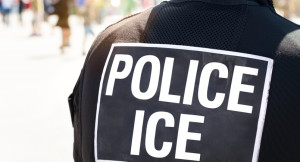
Unlike New York, Ohio has no statute restricting civil immigration arrests in or around state courthouses.
This means ICE may still:
- wait in courthouse parking lots
- target individuals leaving criminal or family court
- identify immigrants through docket information
- coordinate with local law enforcement
- arrest based solely on civil immigration warrants
Ohio Immigrants MUST:
- coordinate every court appearance with an immigration attorney
- never attend court alone
- plan safe arrival and departure routes
- carry a Know-Your-Rights card
- prepare an emergency family plan
Herman Legal Group links:
- Removal Defense: https://www.lawfirm4immigrants.com/removal-defense/
- Deportation Defense: https://www.lawfirm4immigrants.com/deportation-defense/
- Know Your Rights: https://www.lawfirm4immigrants.com/know-your-rights/
- Ohio Offices:
-
- Cleveland: https://www.lawfirm4immigrants.com/cleveland-office/
- Columbus: https://www.lawfirm4immigrants.com/columbus-office/
- Cincinnati: https://www.lawfirm4immigrants.com/cincinnati-office/
- Dayton: https://www.lawfirm4immigrants.com/dayton-office/
-
7. Strategic Defense Uses in Removal Proceedings
✔ Suppression Motions
Argue ICE violated state law → evidence should be suppressed.
✔ Motions to Terminate
If the arrest was unlawful or violated due-process rights.
✔ Federal Court Appeals
POCA now strengthens federalism-based arguments.
✔ Interplay with Criminal Courts
Coordinate criminal defense, family law, and immigration defense strategies.
The New York courthouse ICE arrest ruling serves as a reference for future legal challenges.
8. Expert Commentary — Richard T. Herman, Esq.
“Courthouse arrests are among the most dangerous tools ICE uses to target vulnerable immigrants. New York’s law — and the federal court ruling — restore dignity and fairness to the justice system.”
“For people in Ohio, this ruling is a wake-up call. Without protections like New York’s, every court appearance is a high-risk situation. Preparation is everything.”
“In immigration court, we now use decisions like this to challenge unlawful arrests, suppress evidence, and fight for our clients’ right to due process.”
9. Frequently Asked Questions
Does this ruling protect immigrants in Ohio?
No. It applies only in New York—but offers persuasive authority elsewhere.
Can ICE still arrest people in New York courthouses?
Yes—but only with a judge-signed criminal warrant.
Does POCA protect undocumented immigrants?
Yes. It protects all people attending or traveling to a state courthouse.
Can this ruling help my removal case?
Yes. It strengthens defenses involving:
-
- unlawful arrests
- due-process violations
- suppression arguments
- termination arguments
The ruling is a foundational piece of evidence in cases involving ICE arrests.
Will other states adopt similar laws?
Many likely will. This ruling gives them a legal basis to act.
10.) More: What the Judge Actually Said — Detailed Breakdown of the Ruling
Judge Mae A. D’Agostino’s Key Legal Findings
In dismissing the DOJ challenge, the judge made several pivotal conclusions about New York’s authority to restrict ICE’s civil immigration activity at courthouses:
🔹 1. States Have Sovereign Power Over Their Own Courthouses
The judge held that New York’s law was a valid exercise of state authority:
“New York retains the unquestioned authority to regulate conduct within its own courthouses and to ensure those courts remain open and accessible to the public.”
This is the core of the ruling — and the part most likely to be cited by other states and legal advocates.
The implications of the New York courthouse ICE arrest ruling extend beyond state lines.
🔹 2. The Law Does NOT Conflict With Federal Immigration Statutes
DOJ argued the state law violated the Supremacy Clause.
The judge rejected that argument:
“The Protect Our Courts Act does not stand as an obstacle to federal immigration enforcement. Federal agents remain free to execute valid criminal warrants.”
In other words:
- The law limits civil immigration arrests
- Federal criminal authority is untouched
- Therefore: no conflict, no preemption
🔹 3. Protecting Access to the Courts Is a Legitimate and Compelling State Interest
The ruling repeatedly acknowledged that ICE courthouse arrests produce a “chilling effect” on the justice system.
The judge wrote:
“The chilling effect created by civil immigration arrests in and around courthouses undermines the administration of justice and deters the public from accessing courts.”
And:
“This harm is neither speculative nor abstract. It is supported by substantial evidence.”
This is extremely important for due process arguments in immigration court.
🔹 4. ICE Cannot Use Civil Administrative Warrants to Conduct Courthouse Arrests
The judge confirmed that civil immigration warrants (Form I-200, I-205) do not provide sufficient judicial authority for courthouse arrests under the New York law.
“Administrative immigration warrants are not judicial warrants, and therefore do not authorize civil arrests within or around New York’s courthouses.”
This cleanly draws a line between civil and criminal authority.
🔹 5. New York Is Not Interfering With Federal Enforcement — It Is Simply Not Assisting It
The judge clarified that states are not required to:
- volunteer facilities
- facilitate arrests
- or act as immigration enforcement partners
This aligns with Supreme Court precedent (Printz v. United States) limiting federal commandeering of state resources.
Judge’s language:
“The federal government cannot compel New York to assist in the enforcement of federal civil immigration law.”
The New York courthouse ICE arrest ruling reinforces the state’s rights in immigration matters.
This quote is extremely valuable for defense attorneys nationwide.
🔹 6. ICE Still Has Options — but NOT at Courthouses Without a Judicial Warrant
Future cases will cite the New York courthouse ICE arrest ruling as a precedent.
The judge emphasized that the decision does not obstruct all ICE activity:
“Federal agents remain free to enforce immigration law through means consistent with both federal statutes and the restrictions lawfully imposed by the State of New York.”
Meaning:
- ICE may make arrests elsewhere
- ICE may use criminal warrants
- ICE may conduct operations that do not violate state authority
🔹 7. The State Demonstrated Real Harm — and the Federal Government Did NOT
The judge noted that:
- New York provided evidence of harm
- ICE did not provide evidence that POCA hindered federal enforcement
“The State has demonstrated a concrete impairment to its court system. The Department of Justice has not shown that the statute meaningfully obstructs federal enforcement.”
This will be cited in litigation involving courthouse arrests in other states.
The New York courthouse ICE arrest ruling is critical in establishing immigrant protections.
Summary of the Judge’s Ruling
The court held that:
-
- New York has the sovereign power to regulate courthouse safety & conduct.
- ICE civil immigration arrests are prohibited inside and around courthouses without a judicial criminal warrant.
- Administrative ICE warrants (I-200, I-205) DO NOT qualify.
- The statute does NOT conflict with federal immigration law.
- The law does NOT obstruct federal enforcement; it sets location-based limits.
The New York courthouse ICE arrest ruling demonstrates the ongoing struggle for immigrant rights.
-
- Courthouse arrests create a proven and serious “chilling effect” on access to justice.
- Protecting access to courts is a compelling state interest.
- Federal government cannot force states to participate in civil immigration enforcement.
As discussions continue, the New York courthouse ICE arrest ruling remains a focal point.
11. Resource Directory
GOVERNMENT
- USCIS — https://www.uscis.gov
- EOIR — https://www.justice.gov/eoir
- ICE — https://www.ice.gov
- DHS — https://www.dhs.gov
- DOJ — https://www.justice.gov
- NY State Attorney General — https://ag.ny.gov
- NY Unified Court System — https://www.nycourts.gov
MEDIA
- Reuters — https://www.reuters.com/world/us/us-judge-upholds-new-york-law-barring-immigration-agents-courthouses-2025-11-18/
- Times Union — https://www.timesunion.com/capitol/article/judge-dismisses-doj-challenge-ny-law-banning-21194198.php
- AP News — https://apnews.com/article/0fbeadb881da5a4c1a7e871784f09545
LAW & ADVOCACY
- Protect Our Courts Act (NY Senate) — https://www.nysenate.gov/legislation/bills/2019/A2176
- OPDV POCA Summary — https://opdv.ny.gov/protect-our-courts-act
- Immigrant Defense Project FAQ — https://www.immigrantdefenseproject.org/wp-content/uploads/2020/10/Community-FAQ-POCA-EN-1.pdf
- PACER (official docket) — https://pacer.uscourts.gov
HERMAN LEGAL GROUP
(all verified)
Advocacy groups are rallying around the implications of the New York courthouse ICE arrest ruling.
- Removal Defense — https://www.lawfirm4immigrants.com/removal-defense/
- Deportation Defense — https://www.lawfirm4immigrants.com/deportation-defense/
- Know Your Rights — https://www.lawfirm4immigrants.com/know-your-rights/
- Consultation — https://www.lawfirm4immigrants.com/book-consultation/
- Marriage Green Cards — https://www.lawfirm4immigrants.com/marriage-green-card/
11. Key Takeaways
- New York’s Protect Our Courts Act survived a federal challenge.
- ICE cannot conduct civil immigration arrests at NY courthouses without a criminal warrant.
- This strengthens due process, victim protection, and access to justice.
- Ohio and many other states do not have similar protections.
- The ruling provides powerful defense tools in immigration court.
- Herman Legal Group stands ready to strategize, protect, and defend immigrants facing courthouse risks.