


Updated June 13, 2026
On June 12, 2026, U.S. Citizenship and Immigration Services issued a significant announcement titled Court Order on Hold Policies that may affect thousands of immigration applicants whose cases were delayed, frozen, or subjected to enhanced review over the past several months.
The announcement follows a federal court decision in Dorcas International Institute of Rhode Island v. USCIS and represents the first official confirmation from USCIS regarding how the agency will respond to the ruling.
The most important language appears in the middle of the announcement.
USCIS states:
“With entry of final judgment this order is effective immediately, and pursuant to the court-ordered vacatur, applies agency-wide.”
The agency then makes an even more significant statement:
“Thus, the vacatur applies to PM 602-0192, PM 602-0194, and PA 2025-26, which should be treated as if they are not in effect.”
For immigration lawyers, employers, universities, healthcare systems, and affected applicants, those two sentences may be among the most important immigration policy developments of 2026.
Because USCIS is acknowledging that three major policies that had been used to freeze, delay, or subject immigration applications to enhanced review must now be treated as though they do not exist.
The announcement affects policies linked to:
In practical terms, USCIS is telling adjudicators throughout the agency that the policies invalidated by the Rhode Island federal court can no longer serve as the basis for delaying or withholding immigration decisions. This is USCIS Court Order Vacating Immigration Hold Policies
The June 12 announcement contains another important sentence that should not be overlooked.
USCIS states:
“USCIS strongly disagrees with the Court’s order but will follow its terms pending possible further judicial review.”
That sentence accomplishes two things simultaneously.
First, USCIS confirms that it is currently complying with the court’s order.
Second, USCIS signals that additional litigation is likely.
The phrase “pending possible further judicial review” strongly suggests that an appeal to the First Circuit Court of Appeals is under consideration.
As a result, applicants should understand that the legal landscape could continue to evolve over the coming months. On June 12, 2026, a Notice of Appeal to the U.S. First Circuit Court of Appeals has been filed by USCIS.
For now, however, USCIS has publicly acknowledged that the challenged policies must be treated as though they are not in effect.
That is the operative fact.
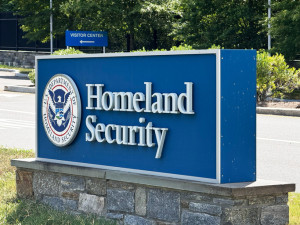
The June 12 announcement identifies three specific policies.
Official memorandum:
This memorandum established broad adjudication holds and enhanced review procedures affecting immigration benefits involving nationals from designated countries.
For additional background, see:
Official memorandum:
This memorandum expanded the hold framework and broadened enhanced-review procedures following the December 2025 Presidential Proclamation.
For additional background, see:
Official memorandum:
The court also vacated USCIS Policy Alert PA-2025-26, which directed officers to treat nationality-based concerns identified in the Presidential Proclamations as discretionary adjudication factors.
Together, these policies formed the backbone of USCIS’s nationality-based hold and enhanced-review framework.
According to USCIS’s own June 12 announcement, all three policies must now be treated as though they are not in effect.

Court decisions are important.
But agency implementation is what ultimately affects applicants.
The June 12 USCIS announcement is significant because it tells field offices, service centers, asylum offices, adjudicators, supervisors, and immigration officers how the agency intends to proceed.
Without this announcement, applicants might have faced uncertainty regarding whether USCIS would narrowly interpret the court’s ruling.
Instead, USCIS acknowledged that:
Those statements are likely to become central citations in future litigation involving delayed immigration benefits, federal mandamus lawsuits, and Administrative Procedure Act challenges.
The significance of the Dorcas litigation extends far beyond travel bans.
At its core, the case asks a simple but profound question:
Can USCIS effectively suspend adjudications for large groups of immigrants through internal policy memoranda without clear statutory or regulatory authority?
The Rhode Island federal court answered that question by vacating the challenged policies.
USCIS has now acknowledged that ruling and instructed officers nationwide to treat the policies as though they are not in effect.
For potentially thousands of applicants whose cases were delayed, frozen, or subjected to enhanced review, that development could be transformative.

The next questions are equally important:
Those questions are examined in the next section.
One of the most common questions following USCIS’s June 12, 2026 announcement is:
Who was actually affected by the now-vacated USCIS hold policies?
The answer is broader than many people realize.
The challenged policies did not merely affect visa issuance overseas.
They reached deep into the domestic immigration system and affected green card applicants, citizenship applicants, asylum seekers, workers, physicians, researchers, students, families, and other immigrants already living in the United States.
Many affected individuals had already filed applications, paid filing fees, completed biometrics appointments, attended interviews, and complied with every USCIS requirement.
Yet their cases were delayed, frozen, or subjected to enhanced review because of policies linked to the Administration’s travel-ban framework.
The challenged USCIS policies were implemented pursuant to Presidential Proclamation 10949 and Presidential Proclamation 10998.
Together, those proclamations formed the basis for PM-602-0192 and PM-602-0194.
The resulting USCIS hold framework ultimately affected nationals from approximately 39 countries, as well as certain individuals traveling on Palestinian Authority-issued or endorsed travel documents.
Nationals of the following countries were subject to the most significant restrictions:
These countries formed the core group subject to the most restrictive portions of the travel-ban and enhanced-vetting framework.
Additional countries were subject to partial restrictions and enhanced scrutiny:
An important point frequently overlooked in discussions of the travel-ban framework is that the challenged policies extended beyond nationals of listed countries.
Under Presidential Proclamation 10998, restrictions also applied to certain individuals traveling on:
As a result, some Palestinians were subjected to the same adjudication holds, re-review procedures, and enhanced scrutiny applied to nationals of the designated countries.
For that reason, the affected population should be understood as including:
This distinction is important because many Palestinians do not appear on the country list itself but were nevertheless affected by the policies challenged in Dorcas.
A common misconception is that the policies affected only visa issuance abroad.
That is incorrect.
The challenged policies reached deeply into the domestic immigration system.
Perhaps the most significant category involved permanent residence applications.
Affected applications included:
Many applicants had already completed biometrics and interviews before their cases entered extended review.
The policies also affected work authorization requests.
This included:
For many applicants, delayed EAD adjudications immediately threatened employment and financial stability.
The hold policies also affected citizenship applicants.
This included:
For lawful permanent residents who had waited years to become eligible for citizenship, additional delays often carried significant consequences.
One of the most controversial aspects of the litigation involved affirmative asylum adjudications.
The challenged framework reportedly prevented USCIS from issuing decisions in many asylum cases involving affected applicants.
For asylum applicants, delayed decisions can affect:
The policies also extended beyond pending cases.
Certain approved immigration benefits were reportedly subjected to re-review procedures.
In some situations, USCIS reopened scrutiny of cases that had already received favorable decisions.
The Rhode Island court viewed these re-review procedures as part of the challenged framework.
The court also vacated guidance directing officers to treat nationality-based concerns as negative discretionary factors in adjudications.
As a result, officers may no longer rely upon the vacated guidance as a basis for discretionary decisions.
One of the most frequently asked questions is:
How many immigration cases were frozen under PM-602-0192 and PM-602-0194?
The honest answer is that no definitive public number currently exists.
USCIS has not released a comprehensive accounting of:
However, several facts suggest the impact was substantial.
The policies:
As a result, the number of affected applicants may ultimately reach into the hundreds of thousands.
A central theme of the Dorcas litigation was that the challenged policies created real-world hardship.
The case was not merely about agency procedure.
It was about people.
According to the court, many affected applicants had:
Yet many remained unable to obtain decisions.
Delayed adjudications threatened:
Researchers, physicians, scientists, and other professionals faced significant uncertainty because USCIS simply stopped making decisions.
Delayed green card adjudications often affected entire families.
Applicants frequently postponed:
For many families, uncertainty became the greatest hardship.
Universities, laboratories, hospitals, and research institutions also experienced consequences.
Immigration delays can interrupt:
These effects extend beyond individual applicants and can impact entire institutions.
For asylum applicants and humanitarian beneficiaries, delayed adjudications often create profound instability.
Many applicants remained unable to:
Chief Judge McConnell repeatedly recognized the uncertainty created by indefinite delays.
Perhaps the most memorable line in the decision is:
“Plaintiffs and their members are stuck waiting.”
For many affected immigrants, that phrase accurately captures the practical impact of the challenged policies.
The issue was not denial.
The issue was the absence of any decision at all.
One reason the Dorcas decision has resonated so strongly is that many affected applicants were precisely the people policymakers often tell to “follow the law” and “get in line.”
According to the court, they did.
The Rhode Island court repeatedly returned to a simple principle:
Immigration agencies possess broad authority to adjudicate applications.
They do not possess unlimited authority to leave applicants in indefinite limbo after those applicants have complied with the law.
That principle may ultimately become one of the most important legacies of the Dorcas decision.
Next, we examine:
The Dorcas decision has attracted national attention not merely because the court vacated USCIS policies, but because of the unusually direct language used by Chief Judge John J. McConnell Jr.
Readers can review the complete opinion here:
Dorcas International Institute of Rhode Island v. USCIS
Throughout the decision, the court repeatedly returned to a simple theme:
People who follow the immigration rules should receive decisions on their applications.
That principle ultimately drove much of the court’s analysis.
One of the most memorable passages appears near the beginning of the opinion.
Judge McConnell wrote:
“If people wish to immigrate to the United States, they ought to ‘follow the law’ and ‘do things the right way.'”
The court then observed that the plaintiffs and their members had done exactly that.
According to the court, affected applicants had:
Yet many remained unable to obtain decisions because of the challenged policies.
That fact became central to the court’s analysis.
The case was not about individuals attempting to bypass the immigration system.
The case involved individuals who had already entered the system and complied with its requirements.
Perhaps the most quoted sentence in the opinion is also one of the simplest.
Judge McConnell wrote:
“Plaintiffs and their members are stuck waiting.”
The court viewed this as more than a bureaucratic inconvenience.
Many applicants had already invested years in the immigration process.
Some depended on pending applications for:
The court repeatedly emphasized that the challenged policies prevented many applicants from receiving the decisions Congress contemplated when creating immigration benefit programs.
A recurring concern throughout the opinion was the concept of indefinite delay.
The court repeatedly noted that immigration statutes generally contemplate adjudication.
The court was troubled by policies that effectively prevented decisions from being made.
As a practical matter, many applicants found themselves trapped in what commentators have described as:
“indeterminate legal limbo.”
The court viewed those consequences as real and substantial.
Another significant statement appears early in the opinion.
Judge McConnell wrote:
“The rule of law has to apply to everyone equally.”
That sentence reflects one of the broader themes running throughout the decision.
The case was not merely about immigration.
It was about administrative power.
The court examined whether USCIS could implement sweeping immigration-benefit restrictions through internal memoranda without adequate legal authority.
The court ultimately concluded that the challenged policies could not stand.
The government argued that the plaintiffs lacked standing and had not shown sufficient injury.
The court disagreed.
The opinion describes numerous harms suffered by affected applicants.
These included:
The court concluded that these harms were neither speculative nor hypothetical.
They were occurring in real time.
That finding may become important in future immigration litigation because standing often represents one of the most significant barriers to federal court review.
Every immigration lawyer knows that USCIS processing delays occur.
The court recognized that reality.
But the court viewed the challenged policies differently.
The issue was not routine case processing.
The issue was whether USCIS had adopted policies that systematically prevented adjudications for broad groups of applicants.
According to the court, the challenged policies went beyond ordinary agency delay.
Instead, they created a framework under which many applicants could remain without decisions for extended and uncertain periods.
That distinction may become important in future litigation involving:
Perhaps the most powerful theme in the opinion is one that many Americans intuitively understand.
For years, policymakers have often told immigrants to:
According to the court, many of the affected applicants did exactly that.
They complied with the rules.
They entered the process.
They waited.
Yet they remained unable to obtain decisions.
The court repeatedly returned to the idea that people who follow the legal process should not be left indefinitely waiting for the government to act.
That concept may ultimately become one of the most enduring aspects of the Dorcas decision.
The most important lesson from Dorcas is not that the court disagreed with USCIS.
The most important lesson is that the court insisted on accountability.
The plaintiffs were not asking the court to order approval of their cases.
They were asking for decisions.
According to the court, many had already done everything required of them.
They filed applications.
They paid fees.
They attended interviews.
They completed background checks.
They followed the rules.
The court repeatedly returned to a simple proposition:
People who comply with the law should receive answers.
Whether those answers are approvals or denials is a separate question.
But according to the court, indefinite limbo was not an acceptable substitute for adjudication.
For that reason, the language in Dorcas is likely to be cited in future litigation involving USCIS delays, mandamus actions, Administrative Procedure Act challenges, asylum adjudications, naturalization cases, and Adjustment of Status applications for years to come.
Next, we examine:
This structure is more AI-friendly because it directly answers:
The Rhode Island court vacated PM-602-0192, PM-602-0194, and PA-2025-26.
USCIS has now publicly acknowledged that those policies must be treated as though they are not in effect.
For affected applicants, however, the most important question is no longer whether the policies were lawful.
The question is:
What happens next?
The answers will vary from case to case, but several important observations can already be made.
On June 12, 2026, a Notice of Appeal to the U.S. First Circuit Court of Appeals has been filed by USCIS.
This was not a surprise. USCIS included an important statement in its June 12, 2026 announcement:
“USCIS strongly disagrees with the Court’s order but will follow its terms pending possible further judicial review.”
That language is difficult to interpret as anything other than a signal that appellate review is being considered.
The government will likely challenge:
Immigration lawyers should therefore assume that the litigation may be protracted.
Yes.
One of the most important issues moving forward is whether the government seeks a stay pending appeal.
A stay would temporarily suspend the effect of the district court’s order while appellate litigation continues.
In practical terms, a stay could dramatically alter the landscape.
Without a stay:
With a stay:
the government could argue that USCIS should once again be permitted to rely upon some or all of the challenged policies while the appeal proceeds.
The precise effect would depend upon the wording of any stay order.
Not necessarily.
This is an important point.
Even if the First Circuit grants a stay, USCIS would still have discretion regarding how aggressively it implements the challenged policies.
Several practical realities may discourage a complete return to the prior framework:
The litigation has already generated significant public scrutiny.
Reinstating the policies may create additional operational complications.
USCIS now faces pressure to address delayed cases.
Restarting the hold process could further complicate agency operations.
Even if a stay is granted, additional lawsuits could follow.
The government may therefore seek narrower approaches rather than full reinstatement.
For these reasons, a stay would create uncertainty, but it would not automatically guarantee a return to the exact conditions that existed before the district court’s ruling.
Perhaps the most important practical consequence of the decision is the backlog.
The challenged policies remained in effect for months.
During that time:
Some cases may now be ready for immediate adjudication.
Others may require additional review.
Still others may remain subject to ordinary background checks unrelated to the vacated policies.
The critical point is that many applicants who previously received little movement may now begin seeing activity.
That could include:
Applicants should therefore closely monitor their USCIS accounts and correspondence.
For some applicants, the answer may be yes.
USCIS maintains an expedite process that remains available in appropriate circumstances.
Official USCIS guidance is available here:
USCIS may consider expedite requests involving:
The Dorcas decision itself does not automatically create eligibility for expedited processing.
However, applicants whose cases were delayed and who now face significant hardship should carefully evaluate whether they satisfy one of the existing expedite criteria.
Potential examples include:
Healthcare staffing shortages may strengthen government-interest arguments.
Projects involving grant deadlines, public health, or critical research may support expedite requests.
Applicants who risk losing employment or significant income may have stronger arguments.
Medical emergencies, family crises, or other urgent circumstances may support expedited review.
If an applicant can demonstrate that a case was improperly delayed because of a now-vacated policy, that argument may deserve careful consideration.
Every case is different.
Applicants should consult experienced counsel before relying on an expedite strategy.
This may be the most important strategic question arising from the decision.
A federal mandamus action seeks a court order compelling USCIS to act on a delayed application.
The answer depends heavily on the facts.
Some applicants have already experienced substantial delays.
The Dorcas ruling strengthens the argument that USCIS cannot indefinitely avoid adjudicating applications.
Applicants with lengthy delays may wish to move aggressively.
Advantages may include:
Other applicants may benefit from patience.
USCIS may now begin adjudicating many delayed cases voluntarily.
Filing litigation immediately could:
Some applicants may wish to observe agency behavior over the next several weeks before deciding whether litigation is necessary.
Yes.
Waiting carries both potential benefits and potential risks.
USCIS may begin rapidly adjudicating cases now that the challenged policies have been vacated.
If that occurs, litigation may become unnecessary.
If the government obtains a stay, the legal landscape could change quickly.
Applicants who delay action may lose valuable time.
This does not mean every applicant should immediately file suit.
It does mean that applicants should think strategically about timing rather than simply assuming the situation will resolve itself.
For most affected applicants, the best immediate strategy is relatively straightforward.
Review your USCIS online account regularly.
Watch for:
If delays have caused hardship, begin documenting:
That evidence may become important for expedite requests or litigation.
Review the USCIS expedite criteria and determine whether your circumstances may qualify.
Applicants with significant delays should discuss:
Additional guidance from USCIS and further court proceedings are likely.
The legal landscape may continue evolving rapidly.
The biggest unanswered question is not whether the policies were unlawful.
The court has already answered that question.
The biggest unanswered question is operational:
How quickly will USCIS move?
The agency now faces the difficult task of processing applications that may have been delayed for months.
Some applicants may see movement quickly.
Others may continue experiencing delays.
The June 12 announcement represents an important victory for affected immigrants.
But for many applicants, the ultimate measure of success will be simple:
Receiving a decision.
Whether that decision is an approval or a denial, most applicants simply want the government to finally act.
That issue—more than the litigation itself—will determine the real-world significance of the Dorcas decision.
Next, we examine:
The June 12, 2026 USCIS announcement and the Rhode Island federal court’s decision in Dorcas International Institute of Rhode Island v. USCIS have generated significant confusion.
Many applicants are asking the same questions:
Below are answers to the most common questions.
No.
The decision does not require USCIS to approve any application.
The court did not order approvals.
The court ordered USCIS to stop relying on the challenged policies and to treat those policies as though they are not in effect.
Applicants must still satisfy all substantive eligibility requirements.
USCIS may:
What USCIS generally may not do under the vacated policies is continue relying upon PM-602-0192, PM-602-0194, and PA-2025-26 as the basis for delaying adjudications.
Potentially yes.
The decision may be particularly significant for applicants whose:
were delayed under the challenged policies.
Many applicants reported extended delays despite having already completed biometrics, interviews, and other requirements.
Potentially.
Naturalization applicants were among the groups reportedly affected by the challenged policies.
The decision may help applicants whose:
were delayed because of nationality-based review procedures or related hold policies.
Potentially yes.
One of the most controversial aspects of the litigation involved affirmative asylum adjudications.
The challenged policies reportedly prevented USCIS from issuing decisions in many asylum cases.
The Rhode Island court’s ruling may therefore have important implications for applicants whose asylum cases were affected by those policies.
Potentially.
The challenged framework affected:
For applicants whose work authorization was delayed because of the challenged policies, the decision may help move cases toward adjudication.
Yes.
An important point frequently overlooked is that the challenged framework extended beyond nationals of the 39 designated countries.
The December 2025 Presidential Proclamation also applied restrictions to certain individuals traveling on:
As a result, some Palestinians were subjected to enhanced review, adjudication holds, and related procedures challenged in Dorcas.
Possibly.
The answer depends on why the application was denied.
Applicants should carefully review:
If a denial appears directly connected to a now-vacated policy, applicants should discuss potential options with experienced counsel.
Possible remedies may include:
The appropriate strategy will depend upon the specific facts.
Not necessarily.
Some cases may move quickly.
Others may remain subject to:
Applicants should not assume that USCIS will immediately issue decisions in every affected case.
However, the court’s ruling removes a significant obstacle that previously prevented adjudication.
Many applicants ask whether the decision affects approved cases.
For most individuals, the answer is probably no.
However, one aspect of the challenged framework involved re-review procedures affecting certain approved benefits.
The Rhode Island court vacated those policies as well.
As a result, the decision may provide reassurance to some applicants whose approved benefits had been subjected to additional scrutiny.
Employers should pay close attention to the ruling.
The challenged policies reportedly affected:
Many employers experienced disruptions when immigration benefits were delayed.
The decision may help reduce uncertainty for organizations relying upon foreign talent.
Employers should nevertheless continue monitoring:
Universities were among the organizations most affected by the challenged policies.
Delays can impact:
The Dorcas ruling may help alleviate some of these concerns, particularly if USCIS begins adjudicating delayed cases more quickly.
No.
This is one of the most important distinctions.
The Dorcas case challenged USCIS hold policies and adjudication procedures.
The decision did not invalidate Presidential Proclamations 10949 or 10998 themselves.
The litigation focused on how USCIS implemented those proclamations through agency policies.
As a result, applicants should not assume that all travel-ban-related issues have disappeared.
On June 12, 2026, a Notice of Appeal to the U.S. First Circuit Court of Appeals has been filed by USCIS.
This was not a surprise,
USCIS has already stated that it:
“strongly disagrees with the Court’s order”
and may seek further judicial review.
Applicants should therefore continue monitoring developments closely.
Future proceedings may affect how the ruling is implemented.
The most important practical lesson is simple:
The court did not order USCIS to approve applications.
The court ordered USCIS to resume adjudicating applications without relying on the challenged policies.
For many immigrants, that distinction is critical.
The goal is not guaranteed approval.
The goal is a fair decision.
For applicants who have spent months waiting for USCIS to act, that may be the most important development of all.
The Dorcas decision is likely to become one of the most frequently cited immigration cases of 2026.
Not because it guarantees approvals.
Not because it eliminates travel restrictions.
Not because it resolves every delay.
But because it reinforces a basic principle:
People who comply with the immigration process should receive decisions.
According to the Rhode Island court, applicants should not be left indefinitely waiting because of agency-created policies that exceed the agency’s legal authority.
That message is likely to resonate far beyond the specific facts of this case.
It may influence future litigation involving USCIS delays, immigration adjudications, mandamus actions, Administrative Procedure Act challenges, and agency authority for years to come.
Next, we provide:
The Rhode Island federal court’s decision in Dorcas International Institute of Rhode Island v. USCIS and USCIS’s June 12, 2026 announcement do not automatically resolve every delayed immigration case.
However, applicants whose cases may have been affected by PM-602-0192, PM-602-0194, or PA-2025-26 should consider taking several practical steps immediately.
The goal is simple:
Be prepared if USCIS suddenly begins moving previously delayed cases.
Applicants should regularly review:
Watch carefully for:
Official resource:
Many applicants affected by the hold policies may see movement before USCIS issues broader public guidance.
Applicants should begin organizing documentation demonstrating how the delay affected them.
Examples include:
This evidence may later support:
Some applicants may benefit from requesting expedited processing.
Official USCIS guidance is available here:
USCIS may consider expedited processing involving:
The Dorcas decision does not automatically create expedite eligibility.
However, applicants who have experienced substantial hardship because of delayed adjudication should carefully evaluate whether they satisfy one or more expedite criteria.
Congressional casework remains an underutilized resource.
A U.S. Senator or Member of Congress may be able to:
Congressional intervention does not guarantee approval.
However, it may provide useful information and sometimes helps move stagnant cases.
For some applicants, litigation may be worth discussing.
Potential options include:
The proper strategy depends on:
Applicants should consult experienced immigration counsel before pursuing federal litigation.
The litigation is probably not over.
USCIS has already stated that it:
“strongly disagrees with the Court’s order”
and may seek further judicial review.
Future developments may include:
Applicants should therefore continue monitoring developments closely.
Court Order on Hold Policies
https://www.uscis.gov/newsroom/alerts/court-order-on-hold-policies
Dorcas International Institute of Rhode Island v. USCIS
https://www.govinfo.gov/content/pkg/USCOURTS-rid-1_26-cv-00132/pdf/USCOURTS-rid-1_26-cv-00132-0.pdf
PM-602-0192
PM-602-0194
Presidential Proclamation 10949
Presidential Proclamation 10998
https://www.uscis.gov/forms/filing-guidance/expedite-requests
The significance of Dorcas extends far beyond the 39 designated countries.
The case is not merely about travel bans.
It is not merely about screening procedures.
It is not merely about administrative delay.
At its core, the case concerns a fundamental principle:
When immigrants comply with the law, file applications, pay fees, complete biometrics, attend interviews, and satisfy agency requirements, they should receive decisions.
That principle appears repeatedly throughout Judge McConnell’s opinion.
It also explains why the court repeatedly emphasized that applicants were:
“stuck waiting.”
The decision does not guarantee approval of any immigration application.
USCIS retains authority to:
What the court rejected was the notion that applicants could be placed into indefinite limbo through agency-created policies lacking sufficient legal support.
The most important question moving forward is operational rather than legal:
How quickly will USCIS act?
The agency now faces the challenge of processing a potentially substantial backlog of delayed applications.
Some applicants may see movement immediately.
Others may continue experiencing delays.
Appeals may follow.
Stay requests may follow.
New guidance will almost certainly follow.
Nevertheless, one fact remains clear.
As of June 12, 2026, USCIS has formally acknowledged that PM-602-0192, PM-602-0194, and PA-2025-26 must be treated as though they are not in effect.
That alone makes this one of the most consequential immigration developments of 2026.
If your immigration application was delayed, frozen, subjected to enhanced review, or affected by PM-602-0192, PM-602-0194, the travel-ban framework, or related USCIS policies, the immigration attorneys at Herman Legal Group may be able to help.
We represent clients nationwide in:
Schedule a consultation:
https://www.lawfirm4immigrants.com/book-consultation/
Call: +1-216-696-6170
Every case is different. Before making strategic decisions regarding expedite requests, mandamus litigation, appeals, or refiling, obtain individualized legal advice regarding your circumstances.
The Dorcas decision may ultimately be remembered as more than a travel-ban case.
It may be remembered as a case about accountability.
The Rhode Island court repeatedly returned to a simple proposition:
People who follow the rules should receive answers.
For thousands of immigrants who have spent months waiting for USCIS to act, that principle may prove transformative.
The court order on USCIS hold policies is part of a broader wave of litigation that also includes the challenge to the 75-country immigrant visa pause.
Herman Legal Group (HLG) has recently handled cases involving the USCIS Chicago Asylum Office where asylum applicants received a letter stating they “failed to appear” for their asylum interview — yet they insist they never received the original scheduling notice.
If you’ve missed your asylum interview at the USCIS Chicago office, understanding the implications is crucial. A missed asylum interview USCIS Chicago could lead to severe consequences for your case.
This is not a minor administrative issue. A missed interview can lead to:
It’s essential to know the steps to take if you face a missed asylum interview USCIS Chicago to avoid complications.
Dismissal or “abandonment” of Form I-589
Referral to Immigration Court
Stoppage of the asylum EAD clock
Denial of a pending or future work permit
Months (or years) of procedural delay
This comprehensive guide explains:
Understanding what to do after a Missed asylum interview USCIS Chicago is crucial for applicants.
Failure to address a missed asylum interview USCIS Chicago promptly may lead to unfavorable outcomes.
What USCIS says happens when you miss your asylum interview
How to request rescheduling (with USCIS quotes and links)
How to prepare and submit a strong rescheduling packet
What happens if USCIS denies your request
Detailed EAD consequences (before and after 150 days)
Impact on one-year filing deadline and court strategy
For more info, see below and our short video.

According to the USCIS Affirmative Asylum Frequently Asked Questions page:
USCIS warns of the potential challenges faced after a missed asylum interview USCIS Chicago, including delays in your case.
“If you fail to appear at your scheduled interview without prior authorization or without good cause, we may refer your Form I-589 to an immigration judge, and you will be ineligible for employment authorization based on your pending Form I-589.”
USCIS further explains:
“If you do not appear at your interview and do not provide a written explanation within 45 days after the scheduled interview date, and you do not have lawful immigration status, we will refer your case to immigration court.”
This 45-day window is critical.

USCIS’s page Preparing for Your Affirmative Asylum Interview states:
“To reschedule your interview before the scheduled appointment, you must mail, fax, or email a letter to the asylum office where your interview is scheduled to be held.”
USCIS also states:
“A request to reschedule an asylum interview must include the reason for the request and any relevant evidence.”
Most importantly for non-receipt cases, USCIS states:
“If the interview notice was not mailed to the most recent address you provided to USCIS, then the asylum office will reschedule the interview without requiring that you show good cause or exceptional circumstances.”
In cases of a missed asylum interview USCIS Chicago, ensure you have the necessary documentation to support your claim.
This language is powerful and should be quoted directly in your rescheduling request.

Under 8 C.F.R. § 208.10, failure to appear may result in dismissal or referral — but it must be excused if:
The notice was not mailed to the applicant’s current address (if properly reported); or
The applicant demonstrates exceptional circumstances.
Regulatory text available at:
https://www.ecfr.gov/current/title-8/section-208.10
This regulation reinforces USCIS’s own public guidance.
USCIS policy distinguishes:
Within 45 days → “good cause” standard
After 45 days → “exceptional circumstances” required
If you respond within 45 days and provide a written explanation with evidence, you preserve stronger arguments for:
Rescheduling
Protecting your asylum EAD clock
Work authorization for asylum applicants is governed by 8 C.F.R. § 208.7:
https://www.ecfr.gov/current/title-8/section-208.7
In order to address a missed asylum interview USCIS Chicago, you might also want to consult with legal experts.
Key principles:
150 days must accrue before filing Form I-765 (category c)(8).
USCIS cannot approve until 180 days have accrued.
Applicant-caused delays stop the clock.
Failure to appear is considered applicant-caused unless excused.
Once you realize a missed asylum interview USCIS Chicago has occurred, gathering your paperwork is essential.
If:
The asylum clock has not reached 150 days; and
USCIS dismisses the I-589 for failure to appear;
Then:
The clock stops permanently at USCIS.
You cannot file I-765.
You have no EAD eligibility based on that asylum filing.
If referred to Immigration Court:
The clock will restart only when you appear before the Immigration Judge and indicate you are pursuing asylum.
There may be a long delay before your first hearing.
This can result in months without work authorization.
If:
150 days accrued;
You filed I-765;
USCIS dismisses the asylum case for abandonment;
Then:
USCIS will likely deny the I-765.
Accrual alone is not enough — the asylum application must remain pending.
If the I-589 is no longer pending, eligibility collapses.
If the case is referred to Immigration Court:
New EAD eligibility depends on the Immigration Court clock.
If:
EAD was issued;
USCIS later dismisses the asylum case;
Then:
The EAD generally remains valid until expiration.
Renewal will not be possible unless asylum is pending again (for example, in court).
Immigration Judges review asylum applications de novo.
A USCIS dismissal does NOT bar asylum in court.
If the I-589 was filed within one year of arrival:
That filing date is preserved.
Referral does not reset the deadline.
The case transitions from affirmative to defensive asylum.
DHS attorneys may question diligence.
To mitigate the effects of a missed asylum interview USCIS Chicago, it’s critical to document your case thoroughly.
Thorough documentation of non-receipt protects credibility.
Treat this as a formal legal filing.
Include:
Full name
A-number
Receipt number
Interview date
Date of missed interview notice
Statement of non-receipt
Quote directly from USCIS website language about rescheduling.
Cite:
8 C.F.R. § 208.10
USCIS FAQ rescheduling language
Request:
Immediate rescheduling
Written confirmation
Remember that a missed asylum interview USCIS Chicago could drastically alter the timeline of your case.
Reinstatement of asylum clock
Include:
Address history
Confirmation no move occurred
Mail delivery conditions
No email notification received
Date first learned of missed interview
Chronology matters.
Attach:
Lease
Utility bills
AR-11 confirmation
USCIS account screenshot
Email search results
USPS inquiry documentation
Police report (if theft suspected)
Director
USCIS Chicago Asylum Office
181 W. Madison Street, Suite 3000
Chicago, IL 60602
Send by certified mail or trackable courier.
In your correspondence, make sure to reference your missed asylum interview USCIS Chicago to ensure clarity.
Subject line:
URGENT – Request to Reschedule – I-589 – A# XXXXXXX
Attach the packet as one PDF.
Always mail a hard copy as well.
Chicago Asylum Office contact information:
https://www.uscis.gov/about-us/find-a-uscis-office/asylum-offices
If denied:
USCIS issues Notice to Appear (NTA).
Case goes to Immigration Court.
Removal proceedings begin.
At the first Master Calendar Hearing:
Confirm intent to pursue asylum.
Ensure asylum clock starts.
Preserve original filing date.
You may argue improper service if facts support it.
Act within 45 days (the quicker, the better)
Quote USCIS website language directly.
Cite 8 C.F.R. § 208.10.
Preserve EAD eligibility if possible.
Prepare for court referral strategically.
The consequences of a missed asylum interview USCIS Chicago can be managed with timely intervention.
A missed asylum interview is a high-risk procedural event.
It can:
Collapse work authorization
Trigger removal proceedings
Cause months of financial instability
Strategic and immediate response is essential.
If you received a missed interview notice from the USCIS Asylum Office, schedule a consultation immediately:
https://www.lawfirm4immigrants.com/book-consultation/
Time is critical.
Below are clear, direct answers to the most searched and most important questions about missed asylum interviews, rescheduling, EAD eligibility, and Immigration Court consequences.
If you miss your affirmative asylum interview:
USCIS may dismiss (consider “abandoned”) your Form I-589; or
If you are not in lawful status, USCIS will refer your case to Immigration Court.
USCIS states:
“If you fail to appear at your scheduled interview without prior authorization or without good cause, we may refer your Form I-589 to an immigration judge, and you will be ineligible for employment authorization based on your pending Form I-589.”
If you do not provide a written explanation within 45 days, USCIS may proceed with referral.
If you did not receive the interview notice:
You must immediately submit a written request to reschedule.
Include proof that your address was correct.
Submit within 45 days if possible.
USCIS states:
“If the interview notice was not mailed to the most recent address you provided to USCIS, then the asylum office will reschedule the interview without requiring that you show good cause or exceptional circumstances.”
This language should be quoted directly in your request.
You have 45 days from the interview date to submit a written explanation under the “good cause” standard.
After 45 days, you must demonstrate “exceptional circumstances,” which is a higher legal standard.
Failing to respond within 45 days increases the risk of referral to Immigration Court and EAD problems.
According to USCIS:
“To reschedule your interview before the scheduled appointment, you must mail, fax, or email a letter to the asylum office where your interview is scheduled to be held.”
Your request must include:
Full name
A-Number
Receipt number
Interview date
Explanation for missing the interview
Supporting evidence
For Chicago:
Email: Chicago.Asylum@uscis.dhs.gov
Mail:
USCIS Chicago Asylum Office
181 W. Madison Street, Suite 3000
Chicago, IL 60602
Always send both email and certified mail.
Yes — potentially very seriously.
Under 8 C.F.R. § 208.7:
Failure to appear is considered an applicant-caused delay.
Applicant-caused delays stop the asylum EAD clock.
Regulation:
https://www.ecfr.gov/current/title-8/section-208.7
If your asylum case is dismissed:
You cannot obtain or renew an EAD based on that I-589.
Any pending I-765 will likely be denied.
If already approved, it may remain valid until expiration, but renewal is unlikely without a pending asylum case.
If 150 days have not accrued:
You cannot file Form I-765.
The asylum clock stops.
No EAD eligibility exists at USCIS.
If referred to Immigration Court:
The clock may restart when you appear before the judge and pursue asylum.
There may be months of delay before that hearing.
This can create a prolonged period without work authorization.
If:
150+ days accrued;
You filed Form I-765;
USCIS dismisses the asylum case;
Then:
USCIS will likely deny the EAD.
Accrual alone is not sufficient.
The I-589 must remain pending to maintain eligibility.
If referred to court, you must rely on the Immigration Court asylum clock.
No.
Immigration Judges review asylum cases de novo (fresh review).
A USCIS dismissal does not bar you from seeking asylum in court.
However:
DHS attorneys may question diligence.
Documentation of non-receipt protects credibility.
No — if your original I-589 was filed within one year of arrival, that filing date is preserved.
Referral to Immigration Court does not reset the one-year clock.
You are not filing a new asylum application — you are continuing the same one in defensive posture.
They may deny if they believe:
The notice was properly mailed to your address;
You failed to update your address;
You did not act within 45 days.
But USCIS policy clearly states they will reschedule if the notice was not mailed to your most recent address.
Strong documentation is critical.
The strongest rescheduling packets include:
AR-11 confirmation
Lease and utility bills
USCIS account screenshot
Email inbox search results
USPS inquiry confirmation
Sworn affidavit
Police report (if mail theft suspected)
Chronology and detail matter.
No.
USCIS sends official notices by mail.
Online account “pings” are not legally required and are not guaranteed.
Failure to receive an email alert does not excuse a missed interview — but it strengthens a non-receipt argument when combined with proof of address compliance.
If you are not in lawful status and USCIS does not excuse your failure to appear, your case will likely be referred to Immigration Court.
You will receive a Notice to Appear (NTA).
At your first Master Calendar Hearing:
Indicate your intent to pursue asylum.
Ensure the asylum clock starts.
Yes — in certain circumstances you may:
Argue improper service;
Move to terminate proceedings;
Demonstrate due process concerns;
Continue asylum defensively.
Strategy depends on facts.
Act immediately.
Submit a written request within 45 days.
Cite USCIS website language.
Attach evidence.
Send by email and certified mail.
Keep proof of delivery.
Delay significantly weakens your position.
If you missed your asylum interview with USCIS — especially at the Chicago Asylum Office — and never received the notice:
You may still reschedule.
You must act within 45 days.
Your work permit eligibility may be at risk.
Referral to Immigration Court does not automatically destroy your asylum case.
Proper documentation and strategic action are critical.
If you need help preparing a legally strong rescheduling packet or defending your case after referral, schedule a consultation immediately:
https://www.lawfirm4immigrants.com/book-consultation/
Time is critical.