
By Richard T. Herman, Immigration Attorney for Over 30 Years – This is an Immigration lawyer’s response to Trump’s State of the Union.
President Trump’s recent State of the Union address was long, combative, and politically calibrated. It leaned heavily into themes of border control, crime, and national threat. It spotlighted individual crimes committed by non-citizens. It invoked disorder. It framed immigration as a central risk to American safety.
In this article, we provide an Immigration lawyer’s response to Trump’s State of the Union, examining the impact of his statements on the immigrant community.
But what it emphasized — and what it omitted — are equally important.
The speech highlighted dramatic anecdotes. It did not highlight national crime data. It stressed enforcement. It did not address enforcement failures. It celebrated economic strength. It did not discuss slowing indicators or long-term demographic pressures. It invoked national security threats. It did not mention controversies that complicate the administration’s credibility.
This article examines:
Policy must be grounded in facts, not fear.
For more, see below as well as our short video.
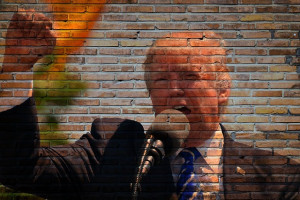
During the speech, several violent crimes involving non-citizens were highlighted as examples of systemic immigration failure.
Tragedies deserve attention. Victims deserve justice.
But policymaking requires context.
If immigration were a driver of violent crime, areas with larger immigrant populations would consistently have higher crime rates. That is not what peer-reviewed research shows.
A major study published in the Proceedings of the National Academy of Sciences analyzed Texas conviction data — one of the few state datasets that includes immigration status — and found:
Read the study here:
Proceedings of the National Academy of Sciences Study
Independent analysis by the Cato Institute reviewing the same data reached similar conclusions: immigrants are convicted and incarcerated at lower rates than U.S.-born citizens.
Research from the National Bureau of Economic Research similarly found no evidence that immigration increases violent crime nationwide.
National Bureau of Economic Research Paper
The American Immigration Council summarizes decades of research confirming the same pattern.
American Immigration Council Research Summary
The data is consistent across ideological institutions.
Yet crime anecdotes remain politically powerful because they are emotionally vivid. Psychologists call this availability bias: dramatic events feel statistically common even when they are rare.

The speech emphasized threat. It did not emphasize:
Nor did it acknowledge that enforcement errors occur — including wrongful detention of U.S. citizens and lawful residents.
NBC News has reported on cases where U.S. citizens were mistakenly detained by ICE.
NBC News Report on U.S. Citizens Detained by ICE
Aggressive enforcement without precision increases such risks.
The State of the Union praised enforcement intensity.
It did not mention mounting controversies over ICE operations in Minneapolis and surrounding communities.
One of the most consequential outcomes of Trump’s intensified interior immigration enforcement — sometimes called Operation Metro Surge — has been in Minneapolis, Minnesota. Minneapolis, a city already known internationally for the murder of George Floyd, has now become a focal point for debates over federal immigration enforcement, use of force, civil liberties, and community response.
On January 7, 2026, Renée Nicole Good, a 37-year-old U.S. citizen and Minnesota resident, was fatally shot by an ICE agent in Minneapolis during an enforcement operation. According to reporting, Good was a community member who monitored and documented federal immigration activity and was shot multiple times as she attempted to drive away.
See the historical summary of the killing of Renée Good.
Good’s death, ruled a homicide by the Hennepin County Medical Examiner, triggered widespread protests, public outrage, and demands for accountability from local leaders and civil rights advocates. Federal officials characterized the shooting as self-defense, a narrative that was widely challenged by eyewitnesses and analysts.
Good’s case became a flashpoint in the national debate over immigration enforcement and use of force. Multiple cities across the U.S. saw demonstrations in solidarity with Minneapolis in the wake of the shooting.
Anti-ICE protests have been documented across the country, with demonstrators calling for policy change and accountability in federal operations.
On January 24, 2026, Alex Jeffrey Pretti, a 37-year-old ICU nurse and U.S. citizen, was fatally shot in Minneapolis by federal agents during an immigration enforcement operation. According to eyewitness accounts, Pretti was unarmed and at times attempting to help other protesters when federal agents shot him multiple times.
See the killing of Alex Pretti.
Local reporting indicates Pretti was shot during a high-tension encounter between protesters and federal agents, marking the second fatal shooting of a U.S. citizen by immigration agents in the city in three weeks. The incident prompted further protests, legal challenges, and local and federal scrutiny.
These two shootings are part of a broader pattern documented by observers: an increase in use-of-force incidents during interior immigration enforcement since the start of Trump’s second term, leading to at least eight deaths associated with immigration enforcement operations in 2026 alone.
See The Week’s running list of ICE deaths and shootings during Trump’s second term.
The fallout has extended beyond monuments and memorials:
Minneapolis has seen large protests and marches to mark the pretti killing.
Minnesota Public Radio coverage.
Supporters have organized mutual aid networks in response to raids and enforcement operations.
Ms. Magazine coverage.
Grassroots protests, strikes, and demonstrations have taken place across the city, with some businesses closing in solidarity.
January 23, 2026 Minnesota protests against ICE.
Benefit concerts, such as one led by musician Brandi Carlile, have raised hundreds of thousands for families affected by enforcement actions.
The Guardian coverage of the benefit concert.
Political figures such as Rep. Ilhan Omar have highlighted traumatized constituents and called for accountability.
New York Post covering the invitation of ICE-impacted Minnesotans to the address.
The Minneapolis cases have become symbols for critics of enforcement tactics and touchpoints in national discourse on law enforcement, civil liberties, and executive power.
The Minneapolis controversies are part of widespread reactions across the U.S. Trump failed to address this in the State of the Union.
Recent polling from sources such as PBS NewsHour/NPR/Marist found that nearly two-thirds of Americans say ICE has gone too far in the immigration crackdown and that many believe ICE’s actions have made the country feel less safe.
PBS polling on immigration enforcement.
This indicates a significant segment of the public is uneasy with aggressive enforcement tactics, especially when they intersect with civil liberties and use-of-force concerns.
The killing-linked demonstrations have expanded beyond Minneapolis. The national coverage notes anti-ICE protests in San Francisco, New York, Boston, and Los Angeles, with activists calling for accountability and policy reform.
2026 Anti-ICE protests in the United States.
Local solidarity actions and community organizing have drawn attention to enforcement tactics and their human costs.
In response to enforcement policies and due process concerns, federal judges have criticized aspects of the administration’s tactics. For example, a federal judge accused the administration of “terrorizing immigrants” and violating legal procedures by limiting access to bond hearings and ignoring prior rulings, referencing both Good’s and Pretti’s deaths.
AP News coverage of federal judge ruling.
These judicial interventions reflect broader constitutional concerns about enforcement priorities and respect for legal protections.
The speech did not mention growing public demonstrations across major cities in response to ICE operations and deportation policy.
Public protest is a constitutional right. It is also a political signal.
Polling shows immigration remains one of the most polarizing issues in the country.
Recent national polling from Gallup and Pew Research Center shows Americans are divided on immigration levels but broadly support pathways to legal status for long-term undocumented residents.
Pew Research Center Immigration Data
Enforcement-only messaging does not reflect the full complexity of public opinion.
The speech projected confidence.
Public polling paints a more nuanced picture.
Recent national surveys show approval ratings fluctuating, with immigration policy generating both strong support and strong opposition.
No administration governs in a vacuum. Public sentiment shapes political durability.
Refugees were portrayed as potential vulnerabilities.
That framing ignores the extraordinary rigor of the U.S. refugee admissions process.
According to U.S. Citizenship and Immigration Services, refugees undergo:
Processing can take 18–24 months or longer.
USCIS Refugee Processing Overview
Refugees are among the most vetted entrants into the United States.
The speech framed immigration primarily as cost.
It did not reference federal data showing fiscal contribution.
A report from the U.S. Department of Health and Human Services found that refugees and asylees generated a net positive fiscal impact between 2005 and 2019.
Refugees work, pay taxes, start businesses, and integrate into American communities.
Immigration was described primarily as a burden.
The data tells a different story.
Nearly half of Fortune 500 companies were founded by immigrants or their children.
American Immigration Council Report
These companies employ millions of Americans.
The Institute on Taxation and Economic Policy estimates undocumented immigrants contribute billions annually in state and local taxes.
The Social Security Trustees Report highlights demographic pressures from an aging population. Immigration helps sustain workforce growth.
Social Security Trustees Report
Without immigration, demographic decline accelerates.
The address painted a picture of economic strength.
It did not address:
Nor did it discuss the economic impact of aggressive deportation policies, which multiple economists warn could:
Economic complexity was reduced to slogans.
The speech also avoided mention of broader controversies that complicate public trust — including renewed scrutiny of figures connected to the Jeffrey Epstein scandal.
Credibility matters in leadership. When difficult issues are omitted from national addresses, critics argue transparency suffers.
While the State of the Union is not designed as a forum for addressing all controversies, silence on high-profile issues can influence public perception.
At its core, the immigration debate is constitutional — involving equal protection, due process, and the limits of executive power.
The deaths of U.S. citizens, questions about enforcement tactics, and judicial criticism of policy overreach underscore that immigration enforcement cannot be divorced from fundamental legal principles.
Should immigration policy be driven primarily by fear narratives?
Or by empirical data, constitutional safeguards, and long-term national interest?
History shows that every major immigrant wave has faced suspicion:
Over time, integration prevailed.

The State of the Union emphasized crime, legality, enforcement, and the rule of law. It did not address ongoing public scrutiny surrounding allegations of corruption, conflicts of interest, and financial entanglements involving President Trump, his family members, and close associates.
Whether one views these matters as politically motivated or deeply concerning, they remain part of the national governance conversation — and they shape public trust.
Throughout his presidency and beyond, media outlets have reported on concerns regarding the intersection of President Trump’s business holdings and public office.
For example:
The New York Times published a major investigation into Trump’s tax records, reporting that he paid little to no federal income tax in certain years and detailing extensive financial losses and liabilities.
New York Times Investigation on Trump’s Taxes
The Washington Post tracked spending by foreign governments and political groups at Trump-owned properties during his presidency, raising questions about potential conflicts of interest.
Washington Post Report on Foreign Spending at Trump Properties
ProPublica has reported on business dealings and financial relationships tied to Trump-affiliated entities and political influence.
ProPublica Coverage of Trump Business and Political Ties
These investigations did not always result in criminal convictions. However, they fueled sustained public debate about ethical boundaries and presidential financial transparency.
In 2023–2024, New York civil proceedings resulted in findings against the Trump Organization for fraudulent business practices related to asset valuations.
Major outlets covered the decision:
Reuters reported on the New York civil fraud ruling and financial penalties imposed.
Reuters Coverage of New York Civil Fraud Ruling
The Wall Street Journal detailed the court’s findings and financial implications.
Wall Street Journal Coverage of Civil Fraud Case
These were civil, not criminal, proceedings. Still, they represent formal court findings concerning business practices.
The State of the Union did not reference these outcomes.
Media outlets have also reported on financial activities involving family members, including international business ventures and advisory roles.
For example:
The Washington Post reported on foreign investments connected to Trump family ventures.
Washington Post Report on Family International Business Dealings
The New York Times reported on business relationships and international financial ties involving family members.
New York Times Coverage of Kushner Investment Fund
These reports reflect ongoing public scrutiny — not criminal findings in all cases — but they contribute to perceptions of enrichment or conflict of interest.
The State of the Union framed immigration enforcement as a matter of law, order, and accountability.
When an administration emphasizes strict legal compliance for immigrants — including aggressive detention, deportation, and enforcement — it invites comparison with how legal and ethical standards are applied within political leadership.
Public trust in enforcement depends on consistency.
If voters perceive:
Harsh enforcement of immigration violations
Silence regarding alleged financial misconduct or enrichment
Limited discussion of court findings or investigative reporting
then questions of fairness and double standards arise.
Whether one agrees with those perceptions or not, they shape the political climate.
Immigration enforcement requires cooperation:
From local communities
From employers
From schools
From law enforcement partners
Institutional legitimacy depends on trust.
When major corruption allegations or civil findings go unmentioned in national addresses emphasizing rule of law, critics argue that credibility gaps widen.
Supporters may view such matters as politically motivated. Critics may see them as evidence of selective accountability.
Either way, the omission becomes part of the narrative.
Immigration policy does not exist in isolation. It is part of a broader governance framework that includes:
Ethical standards
Financial transparency
Conflict-of-interest rules
Independent oversight
Presidents are not obligated to address every controversy in a State of the Union address. But when themes of legality and accountability dominate the speech, silence on well-publicized allegations can influence public perception.
The strength of democratic institutions depends on the consistent application of law — not selective emphasis.
No. Multiple peer-reviewed studies consistently show that immigrants — including undocumented immigrants — commit crimes at lower rates than native-born citizens.
A landmark study in the Proceedings of the National Academy of Sciences analyzing Texas conviction data found:
Other analyses from the Cato Institute and the National Bureau of Economic Research confirm there is no evidence that immigration increases violent crime.
Individual crimes committed by immigrants do occur — as crimes committed by native-born citizens do — but broad statistical data does not support the claim that immigrants drive crime trends.
Crime stories are emotionally powerful. Political messaging often highlights rare but tragic incidents because they are memorable and generate strong reactions.
Psychologists call this availability bias — dramatic examples can feel common even when they are statistically rare.
Policy, however, should be based on aggregate data, not isolated anecdotes.
Yes. In January 2026, two U.S. citizens — Renée Nicole Good and Alex Jeffrey Pretti — were fatally shot during immigration enforcement operations in Minneapolis.
These incidents were widely reported by national and local media outlets and triggered protests, investigations, and calls for accountability.
Federal authorities described the shootings as justified under their policies. Community members and civil rights advocates have challenged those characterizations and raised serious concerns about use-of-force practices.
The deaths became a turning point in the national conversation about immigration enforcement tactics.
Yes. There are documented cases where U.S. citizens have been detained or questioned during immigration enforcement operations due to mistaken identity, database errors, or profiling.
Major media outlets, including NBC News and others, have reported on such cases.
While these incidents are not the majority of enforcement actions, they demonstrate the risks of aggressive, large-scale enforcement without careful safeguards.
ICE detainee deaths have fluctuated over the years. Advocacy organizations and media reports have noted increases in deaths in custody during periods of expanded detention.
Official data from ICE and oversight reports from the Department of Homeland Security Inspector General document deaths in custody, medical neglect allegations, and detention condition concerns.
While exact numbers vary year to year, concerns about detention conditions and medical care have been ongoing across administrations.
Yes. Refugees undergo one of the most rigorous screening processes of any entrants to the United States.
The process includes:
The process can take 18–24 months or longer.
Claims that refugees are admitted without vetting are not supported by official USCIS procedures.
Long-term data indicates that refugees and immigrants contribute significantly to the economy.
A U.S. Department of Health and Human Services study found that refugees and asylees generated a net positive fiscal impact between 2005 and 2019.
Immigrants:
Economic impact depends on many factors, but broad claims that immigrants are purely a fiscal drain are not supported by the data.
Immigrants are vital to economic growth.
Nearly half of Fortune 500 companies were founded by immigrants or their children. Immigrants fill key roles in healthcare, agriculture, construction, technology, and education.
With declining birth rates and an aging workforce, immigration helps stabilize the labor market and supports programs like Social Security.
State of the Union addresses traditionally focus on policy and national priorities rather than ongoing legal or political controversies.
However, critics argue that when a speech emphasizes law and order, silence on ethics investigations or civil fraud findings may raise questions about consistency in accountability.
Major media outlets have extensively reported on business and financial controversies involving President Trump and his family members. Those issues remain politically debated and legally contested.
No. Polling from Pew Research Center and Gallup shows that Americans hold complex and sometimes contradictory views.
Many Americans support:
At the same time, many also support:
Immigration remains one of the most polarizing issues in American politics.
Effective immigration policy should prioritize:
Fear-based policy can create instability and unintended harm. Evidence-based policy fosters security and growth.
Anyone facing potential immigration enforcement should seek qualified legal counsel immediately.
Early intervention can:
Consulting an experienced immigration attorney is critical when dealing with detention, removal proceedings, or status uncertainty.
President Trump’s State of the Union employed compelling rhetoric and dramatic imagery. But effective policy must be anchored in data, constitutional norms, economic reality, and human dignity.
The evidence is clear:
Immigrants commit crime at lower rates than native-born citizens.
Refugees undergo rigorous vetting and contribute economically.
Immigrants are essential to economic growth and demographic stability.
Aggressive enforcement has led to documented deaths, protests, and constitutional questions.
Public opinion on immigration is complex and not reducible to fear.
Policy grounded in evidence — not anecdote — strengthens democracy and fosters resilience.
For trusted guidance on deportation defense, immigration status issues, work visas, naturalization, or humanitarian relief, consult experienced immigration counsel who understand both the law and the human stakes.