By Richard T. Herman, Esq., Immigration Attorney (30+ years)
Quick Answer
Yes — in 2025, working in content moderation, fact-checking, or Trust & Safety can create real immigration risk.
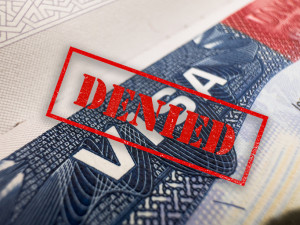
New State Department guidance allows consular officers to deny visas to people they believe have “censored Americans,” and recent reporting from the Washington Post and Reuters confirms cases involving tech workers, especially in H-1B and O-1 categories.
Understanding the implications of the H-1B visa blacklist for content moderation is crucial for tech workers in today’s climate.
What matters now is not just your nationality — but your job title, online presence, and LinkedIn profile.
If your work involves moderation around elections, misinformation, or platform policy, you may now face visa denials, re-screening, or prolonged administrative processing.

What’s New in 2025
The “Censoring Americans” Visa Policy
The risk of the H-1B visa blacklist for content moderation has raised concerns among tech professionals.
In May 2025, the State Department announced a visa restriction framework aimed at foreign nationals who “censor U.S. persons” online. The language is vague, and although initially framed around foreign officials, it has already been applied to private sector tech staff in moderation and Trust & Safety roles.
The official policy is published on the U.S. Department of State U.S. Visas overview, and journalists have documented how it has expanded into tech visa adjudications.
It Isn’t a Law — It’s Discretion
This is not a new statute from Congress. It is consular discretion, using a broad national security clause to say:
“We believe your work harmed U.S. free expression.”
That single sentence is enough to block a visa.

Who’s Asking This Question
The panic is real. Here’s who is currently reaching out to immigration lawyers:
- Trust & Safety staff at Meta, Reddit, Google, YouTube, TikTok, X, and Amazon
- Independent fact-checkers and misinformation researchers
- Content moderators employed through third-party vendors
- Data analysts labeled “policy enforcement” or “integrity”
- UX researchers working on harmful content systems
- Cybersecurity staff working on extremist speech, fraud, or political militancy
Their employers are also calling:
“Do we need to reassign H-1B staff so they’re not moderating political content?”
The answer in 2025 is: possibly yes.

Why This Is Under-Reported
1. Free Speech vs. Immigration Law
The First Amendment usually applies to government regulation of speech. But visa denials are administrative decisions, not court rulings. They are almost impossible to challenge.
Immigration law is now being used as a proxy battlefield for free expression:
- Instead of litigating moderation in court, consular officers simply deny entry.
2. Employer Risk
Tech companies are quietly:
As this situation evolves, it is vital for workers to stay informed about the H-1B visa blacklist for content moderation.
- Renaming roles (e.g., “data quality analyst” instead of “content moderator”)
- Moving foreign nationals off political projects
- Deleting internal job descriptions referencing “U.S. election integrity”
No one wants a headline saying they “censor U.S. speech using foreign workers.”
3. Safety Paradox
Discouraging Trust & Safety roles can actually:
- Increase child exploitation
- Increase online fraud
- Reduce anti-terrorism detection
- Reduce multilingual extremist content monitoring
This policy may weaken online safety while claiming to protect “free speech.”
Which Visas Are Most Affected
H-1B (High-Risk)
Primary risk: Job titles and public content making it look like you “removed political posts.”
Core rules for H-1B are still explained on the USCIS H-1B Specialty Occupations page, but consulates can override USCIS when issuing visa stamps.
Useful government sources:
O-1
O-1 risk: Published research or conference talks about misinformation, extremism, or political content moderation.
J-1
J-1 risk: Academic research on disinformation, terrorism, radicalization, or online hate speech.
TN
TN risk: Canadians and Mexicans in policy, data, research, or content analysis could get flagged.
B-1/B-2
Yes, even tourists can be questioned:
CBP officers can pull up your LinkedIn in secondary inspection.
If they see “moderation of U.S. election misinformation,” you may be turned around.
New 2025 Phenomenon: LinkedIn = National Security Evidence
The most dangerous thing for foreign tech workers right now is your LinkedIn profile.
Consular officers are:
- Searching for job titles like “fact-checker” or “Trust & Safety”
- Looking for words like “election,” “misinformation,” “Trump,” or “political speech”
- Comparing LinkedIn descriptions with DS-160 answers
If they see contradictions or “political censorship,” that can trigger denial.
Important:
Do NOT delete your LinkedIn suddenly before a visa interview — it creates suspicion.
Instead, rewrite descriptions in neutral, harm-based language, for example:
GOOD:
“Monitored content involving financial scams, safety threats, and criminal activity.”
BAD:
“Removed misinformation and political disinformation about U.S. election.”
Algorithmic Immigration: How Visa Officers Now “Profile” Trust & Safety Workers Digitally
Ten years ago, consular officers looked at:
- DS-160 answers
- Employer letters
- University degrees
Today, they also quietly look at:
- GitHub
- ResearchGate
- Twitter/X
- Conference bios
- YouTube talks
Visa officers (and possibly contracted analysts) are using search language that looks eerily similar to Trust & Safety keyword scanning used by major platforms.
In 2025, the State Department began publicly describing “online behavior analysis” as part of visa adjudications for security screening. This dovetails with existing social-media vetting frameworks created in earlier USCIS and DOS security rules that require reviewing visa applicants’ public digital activity.
What officers are specifically scanning for:
- “Election misinformation”
- “Fact-checking political content”
- “Political speech removal”
- “U.S. election integrity”
- “Disinformation on Trump”
- “Censorship of Americans”
- “Platform policy enforcement”
This is exactly the “machine-readable metadata scanning” approach documented by journalists at Reuters technology, Washington Post business, and legal analysts tracking digital surveillance.
Resource links
- U.S. Department of State — U.S. Visas Overview
- USCIS — H-1B Specialty Occupations
- Center for Democracy & Technology — Content Moderation Reports
- Electronic Frontier Foundation — Surveillance & Immigration
Takeaway for Trust & Safety workers:
Even if you never moderated political content, keyword scanning can mislabel you as a political actor.
The fix:
Rewrite public content using safety, abuse, and harm language rather than political language.
LinkedIn Rewrite Protocol
HR departments in 2025 are quietly creating LinkedIn rewrite guidelines for foreign nationals in moderation roles.
Example rewrite rules you should encourage:
DON’T SAY:
“Removed political misinformation during U.S. election season.”
DO SAY:
“Assessed high-risk content patterns to protect users from security threats, fraud, and abuse.”
DON’T SAY:
“Fact-checked content targeting conservative voters.”
DO SAY:
“Conducted safety risk evaluation for harmful influence content.”
DON’T SAY:
“Censored posts supporting Trump administration policies.”
DO SAY:
“Reviewed digital risk factors related to online harm incidents.”
Why this works:
Consular officers respond to semantic triggers.
Remove those triggers and you reduce your flag probability dramatically.
Clean resource links to include in section:
- DOL — H-1B Program Overview
- USCIS — FAQs for H-1B Workers
- Herman Legal Group — Why ICE Is Now Waiting at USCIS Interviews
Mental Health Fallout: Trust & Safety + Visa Anxiety is Making People Sick
The neuroscience argument:
- Content moderators regularly experience PTSD-like symptoms.
- Studies from digital trauma researchers show elevated cortisol and amygdala activation in moderators exposed to violent or extremist material.
- The brain begins to anticipate threat, even outside of work.
Now add immigration uncertainty:
- Fear of border inspections
- Fear of secondary questioning
- Fear of losing status because of job title
- Fear of a single word on LinkedIn ruining your life
That becomes chronic anticipatory stress — the most damaging neurological form.
Mental health sources (clean, high-authority links):
- Center for Democracy & Technology — Trauma in Moderation Study
- Electronic Frontier Foundation — Digital Safety Research
- The Psychology of Waiting (Herman Legal Group)
Quote from Attorney Richard Herman
“If the immigration system is literally making your brain think you’re in physical danger, you need support — legal and psychological.” Richard Herman, Esq.
Safe Vocabulary Bank: 60 Workplace Terms That Won’t Trigger Visa Scrutiny
LANGUAGE THAT SIGNALS “SAFETY” NOT “POLITICS”:
- Harm reduction
- Fraud identification
- Risk modeling
- Safety systems
- Escalation protocol
- Abuse management
- Incident response
- Security workflow
- Coordinated harm
- Criminal activity
- Threat detection
- Public safety
- Consumer protection
- Financial scam prevention
- Data compliance
- Safety governance
- Harmful actor detection
- Violent content analysis
- Counter-abuse engineering
- Platform emergency management
WORDS THAT LIKELY TRIGGER CONSULAR ALERTS:
- Election
- Misinformation
- Disinformation
- Trump
- Biden
- Political speech
- “Censor”
- “Remove political content”
- Ideology
- “Influence voter opinion”
- “Correct political messaging”
- “Regulated speech of Americans”
General Rule:
Replace politics with harm and safety every time.
Big Tech “Transition Strategy”: How Companies Quietly Change Job Duties Before Visa Season
Procedures companies are already doing:
1. Time-shift high-risk content tasks away from visa stamping windows.
If someone is going to India for stamping in July, move them off political moderation in May–June.
2. Title swapping:
“Content Moderator” → “Safety Analyst”
“Disinformation Researcher” → “Abuse Response Specialist”
3. Pre-interview packet:
Prepare a one-page letter explaining:
- non-political focus
- child safety responsibilities
- fraud prevention work
4. Move foreign nationals to non-U.S. market teams:
Moderating content from India, Brazil, or EU is dramatically safer than moderating U.S. election content.
Resource examples to include:
- USCIS H-1B Employer Data Hub
- DOL — Fact Sheet #62: H-1B Requirements
- Herman Legal Group — Rescreening Guide
“The Consent Problem”: Do Foreign Workers Know Their Speech Decisions Are Being Treated as National Security Acts?
Immigration regulation has silently taken a position no one is discussing:
Trust & Safety decisions made by foreign nationals are being interpreted as foreign policy actions.
This is revolutionary and deeply under-reported.
The Big, Under-Reported Idea
Every time a foreign tech worker flags, removes, or labels:
- A Trump meme
- A political conspiracy
- A vaccine hoax
- A ballot harvesting claim
— consular officers can legally treat that decision as an act of foreign government interference.
This is not about whether moderators are right.
It is about whether the U.S. government interprets that act as geopolitical speech regulation by a foreign actor.
Why this is shocking:
Because Trust & Safety workers:
- Never consented to being treated as diplomatic actors
- Never received training in First Amendment frameworks
- Never signed foreign policy disclosures
- Never imagined that flagging a post could be used to justify inadmissibility under federal national-security law
Even crazier (and absolutely true):
Under INA 212(a)(3)(C) (foreign policy grounds), consular officers don’t have to prove anything.
They simply have to “believe”:
- A harmful political action occurred
- And it had “potentially serious adverse foreign policy consequences”
Sources for the language:
TAKEAWAY:
There is no legal consent mechanism where foreign tech workers agree that their job duties may be interpreted as geopolitical actors in U.S. national security.
The Death of “Platform Neutrality” as a Visa Concept: U.S. Immigration Now Assumes Platforms Are Political States
This is a bizarre, philosophical but real development.
Background
For 20 years, platforms argued:
“We are neutral pipes, not publishers.”
The government largely agreed, especially under Section 230 logics.
But now, immigration adjudication is quietly operating as if:
Platforms are political states, distributing speech rights.
This is insane and historically unprecedented.
What’s happening:
Consular officers are now implicitly deciding that:
- Removing content = regulating citizen speech
- Trust & Safety systems = ideological governance mechanisms
- Moderation = public policy action
Thus:
Foreign workers doing moderation are being treated as “non-citizens regulating speech of U.S. citizens.”
That is a foreign influence scenario, and immigration is treating it as such.
Why this matters:
No legal scholars have addressed this:
- Not Stanford Internet Observatory
- Not Knight Institute at Columbia
- Not Brookings
- Not Electronic Frontier Foundation
- Not CDT
- Not Migration Policy Institute
References:
- Electronic Frontier Foundation — Social Media & Free Speech
- Center for Democracy & Technology — Digital Governance Reports
- Washington Post — Tech Policy Coverage
- Reuters — Platform Moderation Reporting
QUOTE FROM ATTORNEY RICHARD HERMAN:
“Immigration law is now treating Trust & Safety work as a sovereign act of speech regulation. This is the biggest shift in visa adjudication since the Patriot Act — and almost no one sees it coming.” — Richard T. Herman, Esq.
The “Decision Chain” Doctrine: How One Click Can Become Federal Evidence
No one is really talking about this:
Decision Chain = Moderator → Algorithm → User → State Reaction
For years, this was invisible. Now immigration law treats this as traceable political action.
Example:
- A moderator flags a post
- It trains an algorithm
- Algorithm demotes similar posts
- That shapes user behavior
- That influences election discourse
Immigration officers now treat the first step — the moderator’s decision — as a national security action.
Resource links:
THE REDDIT WEAPON: “Moderation Is Now Evidence of Foreign Political Activity”
Moderation decisions (even automated ones) are being:
- Scanned
- Screened
- Interpreted
- Catalogued
as political actions by foreign nationals.
Here is a sample (fictitious) of what could happen:
“A 22-year-old Brazilian contractor who deleted a January 6 meme in 2021 can now be denied a U.S. visa in 2025 for ‘interfering with American political speech.’”
20+ FAQs
1. Do consular officers understand what content moderation is?
Usually not well — which makes risk worse, not better.
2. Should I bring printed documentation of my job duties to show that I protect user safety, not regulate political speech?
YES — a letter from HR saying “This worker does child safety, fraud prevention, and online harm mitigation” can save a visa.
3. Can I show my moderation dashboards as evidence?
NO — anything mentioning “U.S. elections” or “political misinformation” could hurt your case.
4. Should I proactively disclose past moderation of political content?
NO — answer questions truthfully, but do not volunteer risk language.
5. Will L-1 intracompany transfers be safer?
Slightly, but L-1 visa stamping abroad can still trigger the same risk.
6. Can I list “global content safety” instead of “U.S. content moderation”?
YES — that is one of the best title strategies.
7. Could DHS request my internal Slack messages?
It has happened in extreme security vetting cases. Assume everything public is visible.
8. Is third-party moderation safer than direct employment at Meta, TikTok, etc.?
Not necessarily — title language is what triggers.
9. Should I remove conference talks about “disinformation”?
At minimum, rename the talks to “harmful influence content” or “cross-platform risk.”
10. Should startups hire Americans only for political moderation now?
Many are already doing this quietly.
11. Is an O-1 visa better?
Only for workers with strong evidence of non-political safety research, not political moderation.
12. If my I-140 NIW says I reduce misinformation, is that a problem?
YES — NIW cases should emphasize economic benefits, innovation, or public safety, not political “truth work.”
13. Should I create two versions of my CV?
Many lawyers advise a public safety-focused version and a full academic version.
14. Do Canada or UK have similar policies?
Not currently — they treat Trust & Safety as public safety work, not ideological risk.
15. Will Biden change this policy?
Unlikely in the near term — this cross-branch national-security discretionary tool is politically profitable.
16. Can I get flagged years later for old moderation work?
YES — consular vetting looks at historical digital traces, not just current job.
17. Should I hire a lawyer before rewriting my LinkedIn?
YES — rewriting must be truthful, not artificial.
Send clients here:
Schedule a Consultation with Richard Herman
18. Is it possible to pre-clear my job title with a lawyer?
YES — do a 30-minute safety language consultation before stamping season.
19. If I moderated anti-Russia or anti-China content, is that safer?
It depends — consular views any ideology filtering as “censorship.”
20. Do consular officers ever Google people’s names live?
YES — attorneys have witnessed it during stamping windows.
Resource Directory
Herman Legal Group Articles
- Why ICE Is Now Waiting at USCIS Interviews
- Asylum on Hold: Guide to the Nationwide Suspension of Asylum Decisions
- Family Immigration Under Threat — Trump Policy Analysis
- The Psychology of Waiting for USCIS
- Reddit: The 50 Most Useful Immigration Threads
- Understand USCIS Security Vetting Rules
Government Sources (USCIS / DOS / DOL)
- USCIS — H-1B Specialty Occupations
- USCIS — H-1B FAQs
- USCIS — H-1B Cap Season
- DOL — H-1B Program Overview
- DOL — H-1B Wage & LCA Requirements
- DOS — Temporary Worker Visas
Media References
We Can Help
If you work in Trust & Safety, content moderation, misinformation policy, platform enforcement, threat intelligence, or online harm reduction, you now face new immigration vulnerabilities that your HR department may not even understand.
Before you:
- change job titles,
- delete content,
- attend a visa interview abroad, or
- respond to consular questions about “censorship,”
get real legal guidance.
Book a confidential consultation now:
Schedule with Richard T. Herman