Madison Sheahan didn’t leave a think tank, a lobbying shop, or a safe corporate board seat to run for office.
She resigned as Deputy Director of U.S. Immigration and Customs Enforcement (ICE)—the federal agency at the center of America’s most polarizing immigration battles—and immediately launched a campaign for Congress in Ohio.
At 28 years old, Sheahan is not only one of the youngest high-ranking officials to hold a top operational leadership role at ICE in modern memory—she is also positioning herself as a new archetype of MAGA-era political leadership: the enforcement executive turned frontline culture-war candidate. See reporting from Reuters, The Washington Post, and CBS News.
Her bid for Ohio’s 9th Congressional District—currently held by Democratic Rep. Marcy Kaptur, first elected in 1983—is more than a simple partisan contest. It is a national test case for whether hardline immigration enforcement messaging, branded as “competence,” “strength,” and “order,” can flip historically Democratic turf in a state that has become one of the strongest engines of modern Trump-aligned politics. (Background on OH-09 and its recent election history is summarized by Ballotpedia.)
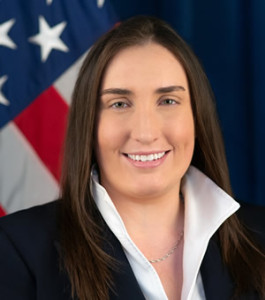
1) Who Is Madison Sheahan?
Sheahan’s rapid climb reflects a familiar political pattern in 2025–2026 Republican governance: young, media-ready officials elevated into high-impact roles because they are perceived as strong executors who can deliver “results,” especially on immigration enforcement.
According to multiple national outlets, Sheahan is a close Noem ally, and her departure prompted public praise from Homeland Security Secretary Kristi Noem, who framed Sheahan as a tough, mission-driven administrator aligned with President Trump’s enforcement agenda. See [CNN reporting as quoted in your excerpt] and corroborating coverage from Reuters.
What stands out immediately is not merely her ideology. It’s her trajectory:
- high-level political/administrative roles early
- rapid federal elevation
- high-visibility enforcement messaging
- then a pivot into electoral politics
That is a pipeline—by design, not accident.
2) Her Background Before ICE: Politics, Administration, and a Fast-Track Resume
Before ICE, Sheahan served as Secretary of the Louisiana Department of Wildlife and Fisheries, a senior state executive position. Multiple news accounts note this role as her most recent major public job before joining ICE. See LiveNOW from FOX and The Washington Post.
Sheahan also worked directly with Kristi Noem’s political operation during Noem’s tenure as governor, described in press accounts as being inside the political leadership circle. See The Washington Post and CBS News.
This matters because her critics are not primarily attacking her age. They are attacking the idea that her background was not formed by long-term law enforcement or immigration operations experience—but instead through political staffing and administrative appointments.
That criticism became louder once she began overseeing operational metrics inside ICE.

3) What She Did at ICE: Power, Visibility, and the Politics of “Results”
By design, the Deputy Director of ICE is not a symbolic role. It’s operational.
While the public often thinks of ICE in terms of raids or viral videos, the agency functions like a massive enforcement and logistics engine: personnel decisions, detention capacity, legal coordination, data systems, and field office performance targets all determine what happens on the ground.
Reporting indicates Sheahan quickly became one of the administration’s most visible faces of the deportation push—and that she oversaw major management initiatives including staffing and recruiting efforts. See The Washington Post.
This is important for understanding her candidacy: She is running not simply on values, but on an implicit argument that she delivered measurable outcomes.
In her campaign messaging, she portrays herself as someone who implemented enforcement priorities rather than debated them.
4) Controversy Inside the Enforcement Machine: “Aggressive Tactics” and Scrutiny
Sheahan’s tenure at ICE occurred during a period of intense national conflict over immigration enforcement tactics.
Across national media reporting, ICE has faced renewed scrutiny over operational aggressiveness, the optics of enforcement actions, and the human consequences of mistakes, escalation, or mission creep. That scrutiny has become central to the political environment in which she now runs.
This isn’t simply a “pro-ICE vs. anti-ICE” argument anymore.
It’s increasingly a dispute over whether ICE is being managed with:
- narrow public-safety focus
- constitutional constraints
- proportionality and accountability
- professional operational boundaries
Or whether it has become a tool for political theater, mission expansion, and public intimidation.
That debate is now embedded in Sheahan’s candidacy, whether she wants it to be or not.

5) Why Ohio’s 9th District Is the Perfect “Test Lab” for This Kind of Candidate
Marcy Kaptur’s district is no longer the “Snake on the Lake”
Ohio’s 9th used to be famous for its former shape along Lake Erie. Redistricting changed the district dramatically, and it is now viewed as more competitive than it once was. (District background and demographic snapshot can be found via Ballotpedia.)
In 2024, Kaptur won re-election by a slim margin, defeating Republican Derek Merrin. See Ballotpedia.
That’s exactly what makes Sheahan’s run so politically significant.
This is not “deep-red Ohio” where a MAGA candidate can coast.
This is a district where:
- national narratives collide with local economic realities
- labor and immigration politics often overlap
- voters split tickets more often than outsiders assume
In other words: it’s a proving ground.
6) Ohio Is MAGA’s Ground Zero — and Sheahan Is Running in the Center of It
If Florida is the branding headquarters of modern MAGA politics, Ohio is one of its operational command centers.
You cannot understand Sheahan’s candidacy without understanding Ohio’s role in post-2016 Republican politics:
JD Vance: MAGA’s Senate “intellectual fighter”
Sen. JD Vance became one of the most influential MAGA-aligned voices in national politics—bridging populist messaging, media warfare, and institutional ambition.
Even when voters disagree with him, Vance represents the newer MAGA model: less purely performative outrage, more strategic and policy-aware confrontation.
Sheahan’s ICE branding—discipline, order, enforcement, operational “wins”—fits that ecosystem.
Bernie Moreno: the MAGA business-nationalist style
Sen. Bernie Moreno embodies a second lane: the businessman-turned-politician who packages MAGA themes through the language of economics, national identity, crime, and “system failure.”
Sheahan’s pitch (“results,” “real leadership,” “ignored families paying more”) is essentially the same story arc—except her résumé is enforcement-centered rather than business-centered.
Ohio’s infrastructure advantage: primaries that reward combat candidates
Ohio’s modern GOP ecosystem rewards candidates who can:
- dominate local media cycles
- provoke national attention
- convert controversy into fundraising
- speak in simple moral binaries (“protect” vs. “invade,” “order” vs. “chaos”)
- frame enforcement outcomes as patriotism
That is exactly the environment where an ICE deputy director can credibly pitch herself as a member of Congress.
7) The Kristi Noem Factor: A Political Patron With National Reach
It’s impossible to separate Sheahan’s candidacy from her relationship with Kristi Noem.
Noem’s public praise of Sheahan is more than a farewell statement—it reads like a national endorsement and a signal to donors, consultants, and allied groups that Sheahan is part of the inner circle.
At the same time, Noem moved quickly to install a successor: Charles Wall, formerly ICE’s Principal Legal Advisor, as the new Deputy Director. This transition has been covered by Reuters and additional outlets including regional press.
That appointment is its own signal: ICE leadership is being reinforced with a strong legal command structure at a moment of intensified scrutiny, litigation risk, and operational controversy.
8) What Sheahan’s Campaign Is Really Selling (Beyond Immigration)
Sheahan describes herself as a “Trump conservative” and frames her candidacy around everyday affordability and feeling ignored by political leadership, according to national reporting. See The Washington Post.
But her real product is something deeper:
The promise of “enforcement competence”
In 2026 Republican politics, immigration is not just a policy issue.
It is used as proof of:
- seriousness
- strength
- executive control
- willingness to use state power
By running after serving as ICE’s #2 official, Sheahan is offering voters a message that she has already operated the machinery of federal authority.
That is attractive to some voters—and deeply alarming to others.
9) The Case For and Against Her: Why She’s Polarizing Even Before the First Debate
Supporters will say:
- she executed a mission voters demanded
- she’s young, energetic, and unafraid
- she understands federal enforcement realities
- she will “fight” in Washington rather than “manage decline”
Critics will argue:
- she is a political enforcer, not a community representative
- aggressive ICE tactics have harmed public trust
- she lacks deep local legislative experience
- her candidacy represents the militarization of politics
This isn’t a normal “R vs. D” contest.
It’s a referendum on whether immigration enforcement leadership is now a credential for mainstream congressional power.
10) What Happens Next: A Race That Could Go National Fast
If Sheahan survives a primary and pulls this race into national focus, expect:
- heavy outside spending
- immigration-focused attack ads
- viral moments over ICE tactics, warrants, raids, and protests
- national surrogates framing the race as “border security vs. chaos”
- counter-campaign framing the race as “constitutional rights vs. federal overreach”
This district could become one of the most high-profile congressional contests in the country, because it compresses so many issues into one narrative:
ICE enforcement → MAGA identity → Ohio political power → Congress control math.
What Ohio Voters Need to Know About ICE Power (Explained Simply)
Most voters know ICE as “the deportation agency.” But that shorthand hides something important—especially now that a former ICE Deputy Director is running for Congress in Ohio.
If you’re voting in northwest Ohio, here is the clean, nonpartisan way to understand what ICE actually does, what it can’t do, and why this matters in a congressional race.
ICE is not one thing — it’s multiple systems working together
ICE is not just “agents.” It’s an enforcement machine with several moving parts:
- Enforcement & Removal Operations (ERO): arrests, detention transfers, deportations
- Homeland Security Investigations (HSI): investigations (fraud, trafficking, cross-border networks, money laundering, cyber issues)
- Detention contracts + transportation logistics: private detention, county jail contracts, flights, buses, bed space
- Lawyers and legal screening: internal attorneys shape what cases move, how fast, and how aggressively
A top official at ICE does not “make laws.” But they can shape how the law is enforced in real life.
To understand what ICE’s mission includes (and how the agency describes itself), start with ICE’s official overview: ICE — About ICE.
What ICE can do (in plain English)
ICE can:
- arrest non-citizens who are suspected of being removable under federal immigration law
- detain people while removal proceedings move through the system (sometimes for long periods)
- transfer people across state lines (which can separate families from lawyers and support networks)
- conduct targeted operations at homes, workplaces, traffic stops, and public spaces
- work with local agencies, in ways that vary by jurisdiction and policy constraints
To understand the formal detention authority, detention standards, and legal structure, see:
What ICE cannot do (and what people confuse all the time)
ICE cannot legally do certain things the public often assumes are routine:
1) ICE generally cannot enter your home just because they “want to”
In many situations, an officer needs valid legal authority to enter a home without consent.
A major source of confusion is the difference between:
- Judicial warrants (signed by a judge)
vs. - Administrative immigration paperwork (ICE/DHS forms)
This difference is widely discussed by civil rights organizations because it directly affects what residents should do during a home encounter. For practical guidance, see:
2) ICE agents are not “above the Constitution”
Like all government officials, ICE is constrained by constitutional rules around:
- unlawful searches
- coercion
- excessive force
- due process
- unlawful detention practices
This is why immigration enforcement becomes politically explosive: even voters who support enforcement often object to tactics that look indiscriminate or abusive.
Why “ICE leadership experience” is a political credential now
When someone runs for Congress after running ICE operations, they’re not running on policy whitepapers.
They’re running on a promise of state power:
- “I can execute.”
- “I can remove threats.”
- “I can deliver results fast.”
- “I don’t apologize.”
For supporters, that’s competence.
For critics, that’s authoritarian drift.
In 2026 politics, ICE is no longer just an agency—it’s a symbol of what kind of country voters want.
The real Ohio question: enforcement goals vs. enforcement methods
Most Americans—including many Republicans, independents, and Democrats—support immigration enforcement in some form.
But elections are increasingly turning on a more precise question:
Do you support immigration enforcement that is narrow and constitutional—or broad and militarized?
That distinction matters because the difference isn’t philosophical. It affects families, workplaces, and entire communities—especially in large logistics and manufacturing regions like northern Ohio where immigrant labor intersects with local economies.
For context on your legal rights in encounters with immigration agents, see:
Quick FAQ: “Could a member of Congress control ICE?”
A member of Congress cannot “run ICE,” but they can materially influence it by:
- voting on DHS budgets and oversight
- conducting hearings and demanding records
- proposing laws that expand or limit enforcement authority
- pressuring agencies through public communications and investigations
In other words: Congress sets the guardrails. ICE drives inside them.
That is why an ICE official becoming a lawmaker is such a major governance story.
The part voters should watch closest: “criminal aliens” language
Nearly every administration says it is targeting “criminal illegal aliens.”
But the legal category “removable” is far broader than the public realizes, and operational incentives can expand the definition of “worst of the worst” into people who are not what most Americans picture.
This gap—between the slogan and the enforcement reality—is where controversy, lawsuits, and viral incidents are born.
Ohio Is MAGA’s Command Center — and Washington Runs Through Columbus Now
If Florida is where MAGA gets staged for national television, Ohio is where it gets operationalized into governing power.
Over the past decade, Ohio has shifted from a classic swing state into something more strategically valuable for the Republican Party: a national political factory that produces MAGA-aligned leaders, donors, message discipline, and campaign infrastructure.
That matters in a race like OH-09 because Madison Sheahan isn’t running in a vacuum. She’s running inside a political ecosystem that has already proven it can build candidates quickly, nationalize local races, and turn “law-and-order” messaging into durable electoral power.
Ohio MAGA politics is now defined by three reinforcing forces:
- Senate-level nationalization (exporting Ohio figures into national leadership)
- donor + super-PAC networks that treat Ohio as winnable and scalable
- message alignment around immigration, crime, culture, and “elite betrayal”
In practical terms: when a candidate like Sheahan runs as a “Trump conservative” in Ohio, she isn’t introducing something new. She’s plugging into an already-tested political machine.
The New MAGA Class in Ohio: Vance, Moreno, and the Pipeline Sheahan Represents
Ohio’s MAGA power structure isn’t dominated by one personality—it’s a portfolio. That portfolio includes distinct candidate “types,” each designed to activate a different part of the base while maintaining brand unity.
1) JD Vance: The National MAGA Intellectual + Institutional Fighter
Sen. JD Vance represents a modern MAGA archetype that didn’t exist in 2016:
A politician who can fight culture wars aggressively and translate them into governance, legislation, hearings, and national media strategy.
Vance’s influence isn’t just ideological—it’s operational:
- he helps define what MAGA policy looks like when it’s written down
- he shapes what the base sees as the “serious” agenda
- he normalizes the idea that hardline rhetoric can coexist with elite credentials
That’s relevant to Sheahan because she is effectively selling a similar promise—except her credential isn’t law school debate or venture capitalism.
It’s federal enforcement execution.
Her pitch is the administrative version of the Vance thesis:
“I’ve already been inside the machinery. I know how the state works. I can deliver outcomes.”
2) Bernie Moreno: The Business-Nationalist Candidate Model
Sen. Bernie Moreno represents the “economic resentment” lane of MAGA politics:
- inflation anger
- anti-establishment branding
- pro-business posture combined with populist cultural messaging
- politics as a referendum on competence and decline
Moreno’s power is not just the message—it’s the framing:
The argument that the country is failing because “professional politicians” are weak, corrupt, or captured.
Sheahan borrows that framing almost perfectly, but with a different résumé:
Moreno’s claim: I built things.
Sheahan’s claim: I enforced things.
Both are saying the same political sentence:
Washington doesn’t need another talker. It needs an executor.
3) The Next Pipeline: Enforcement Candidates as MAGA’s “Proof of Strength”
The most important trend isn’t Vance or Moreno alone.
It’s what comes next.
Sheahan represents a pipeline shift where MAGA candidates increasingly come from:
- federal or state enforcement systems
- operational agencies
- administrative command roles tied to “results” metrics
This is an evolution from earlier MAGA recruitment patterns, where the dominant profiles were:
- media figures
- business outsiders
- influencers
- ideological celebrities
In 2026 politics, MAGA is signaling that it wants candidates who can say:
“I didn’t just tweet. I ran the machine.”
That is why an ICE Deputy Director candidacy in Ohio makes strategic sense. It is the logical next step in how MAGA tries to prove “strength” and “control” to voters.
Why Ohio Keeps Producing MAGA Winners: The Structural Advantage Nobody Talks About
A lot of political analysis focuses on personalities.
But Ohio’s MAGA dominance isn’t only about individuals—it’s also structural.
Ohio has become a uniquely effective environment for MAGA candidates because it combines:
A) A statewide media ecosystem that amplifies conflict
Ohio has an aggressive, competitive political media environment where candidates are rewarded for:
- simple framing
- hard contrasts
- viral-friendly soundbites
- “enemy identification” politics
- clean moral binaries (order vs chaos, citizens vs outsiders, working families vs elites)
That environment pairs perfectly with immigration and enforcement messaging.
B) A donor class that understands national leverage
Ohio donors aren’t just funding Ohio.
They’re funding the ability to influence Washington.
When control of the U.S. House is tight, flipping a district like OH-09 becomes a national leverage event—meaning the race attracts money and attention far beyond the district’s borders.
C) The “blue-collar legitimacy” advantage
Ohio MAGA candidates benefit from a cultural narrative that plays extremely well on television and online:
- “real America”
- “work ethic”
- “industrial decline”
- “forgotten communities”
- “I’m not a DC insider”
It allows candidates to nationalize issues (like immigration) while making them feel local and personal:
“It’s not about politics. It’s about your family, your job, your neighborhood.”
This is why MAGA treats Ohio not as a battleground—but as a launchpad.
Why Immigration Is the Ohio MAGA Super-Issue (Even When the Border Is 1,200 Miles Away)
Ohio is not a border state. You can drive for days and never see the Rio Grande.
And yet immigration has become one of the most emotionally powerful issues in Ohio politics—arguably the single most reliable MAGA “activation lever” statewide.
That isn’t an accident. It’s a political strategy that works because immigration functions less like a geographic issue and more like a symbolic issue—a way to explain economic stress, cultural anxiety, distrust of institutions, and fear of disorder using one simple storyline.
In MAGA politics, immigration isn’t just about who enters the country. It’s about who is in control.
The Ohio reality: immigration becomes a proxy for “order vs. chaos”
For many Ohio voters, immigration debates are not primarily about visas, asylum law, or how removal proceedings work.
They are about the feeling that the system is no longer governed by rules.
That’s why MAGA messaging works so well here. It takes many complex problems and compresses them into a single emotional framework:
- “The government can’t control the border.”
- “The government can’t control crime.”
- “The government can’t control inflation.”
- “The government can’t protect ordinary people.”
Immigration becomes the clearest “proof exhibit” in the argument that the country has lost control—and that only hardline leadership can restore it.
Why immigration messaging hits Ohio harder than outsiders expect
Ohio is fertile ground for immigration politics because of how the issue overlaps with lived economic and cultural realities.
Even when immigration is not the direct cause of a community’s hardship, it becomes a persuasive story for explaining hardship.
Here are the main reasons.
1) The “working-family squeeze” gets mapped onto immigration
Ohio is filled with communities that have experienced long-term economic pressure:
- wage stagnation
- factory closures and reshoring anxiety
- rising housing costs
- opioid and public health fallout
- fragile small-town job markets
- frustration with corporate consolidation
When voters feel they are paying more and getting less, they become more receptive to arguments that resources are being diverted to “someone else.”
Immigration messaging is powerful because it offers a single villain:
outsiders + the elites who supposedly protect them.
This is why a candidate can campaign on immigration in Ohio even in areas with low immigrant visibility. The issue is doing the work of explaining economic stress.
2) Immigration is one of the easiest issues to “nationalize”
A governor or congressman can’t control global inflation.
A local sheriff can’t fix the price of insulin.
But immigration can be framed as something the federal government either “enforces” or “fails to enforce.”
That makes it an ideal campaign issue because it turns diffuse hardship into a clear blame target:
- “Biden did this” / “Trump fixed it”
- “Democrats opened the border” / “Republicans will close it”
- “Weakness invited chaos” / “strength restores order”
It simplifies politics into a clean morality play.
3) The border is far away — but the imagery is everywhere
Ohio voters may not see the border.
But they see border imagery constantly:
- viral videos
- cable news loops
- political ads
- social media clips
- sensational crime framing
- “invasion” language
That media environment creates a feeling of proximity: as if the border crisis is unfolding down the street.
This is one reason immigration has become such a dominant political issue in states like Ohio: it is experienced primarily through media intensity, not geography.
4) Immigration gets fused with crime messaging — even when the data is complex
One of the most consistent MAGA frames is:
“Immigration equals crime.”
This framing persists even though the real-world relationship between immigration and crime is debated, nuanced, and highly fact-dependent.
But politically, it doesn’t need to be precise to be effective.
Campaign messaging typically relies on a few highly emotional triggers:
- “dangerous criminals”
- “gangs”
- “fentanyl”
- “human trafficking”
- “rape and murder headlines”
- “unvetted people released into communities”
This is how immigration becomes an “everywhere issue” in Ohio: it gets connected to community safety.
5) Immigration is used to test party loyalty and cultural identity
In Ohio MAGA politics, immigration is no longer treated as a policy debate.
It’s treated as a loyalty signal:
- Do you support deportations or not?
- Do you support “sanctuary policies” or not?
- Do you support ICE or not?
- Do you support “warrants” and “due process,” or do you want speed and force?
That’s why immigration is so effective: it forces voters into identity-based alignment.
And identity politics always outperforms policy nuance.
6) It’s the perfect issue for the “executor candidate” brand
This is where Madison Sheahan’s profile matters.
Traditional candidates argue what they will do.
An enforcement candidate argues what they already did.
Immigration is the best issue for that strategy because it is the issue where “results” can be claimed in simple verbs:
- arrest
- detain
- remove
- deport
- expand capacity
- increase hiring
- “restore order”
That kind of messaging is designed to feel concrete and measurable, even when the underlying legal and humanitarian realities are deeply complex.
So in Ohio, immigration isn’t just an issue.
It becomes a resume.
7) Ohio’s political culture rewards binary narratives
Ohio is one of the best states in America for message discipline.
Not because voters are simplistic—but because campaigns know what themes consistently win attention:
- order vs chaos
- citizens vs outsiders
- workers vs elites
- law vs lawlessness
- strength vs weakness
- patriotism vs betrayal
Immigration fits perfectly into that binary structure.
That’s why it persists as a super-issue year after year—even when other issues might be more directly responsible for local hardship.
The real answer: immigration is a “systems trust” issue in Ohio
If you want the cleanest explanation for why immigration dominates Ohio MAGA politics, it’s this:
Immigration is where voters project their broader loss of trust in government.
Voters who feel the system is broken gravitate to issues that can be used as proof the system is broken.
And in modern American politics, nothing functions as a more powerful “broken system” symbol than immigration enforcement.
That’s why the border can be 1,200 miles away—and still shape Ohio elections.
Bottom line
Immigration is Ohio MAGA’s super-issue because it does three things at once:
- Explains hardship in a single story
- Creates a clear enemy (outsiders + elites)
- Rewards “executor” candidates who claim results, not nuance
In a state that now serves as MAGA’s operational headquarters—home to figures like JD Vance, Bernie Moreno, and Jim Jordan—immigration isn’t just an issue.
It’s the organizing principle of power.
Springfield, Ohio: How One City Became MAGA’s “Immigration Proof Point” Overnight
If you want the single clearest example of why immigration is a political super-issue in Ohio, it’s Springfield.
Springfield is not a border town. It is a mid-sized Midwest city. And yet it became one of the most nationally weaponized immigration narratives of the last election cycle—because it offered MAGA politics something unusually powerful:
A local place where immigration could be framed as a visible “system stress test,” then amplified into a national referendum on government control.
Why Springfield became a political flashpoint
Springfield has experienced a major influx of Haitian residents in recent years, with reporting and research groups noting estimates in the 12,000 to 20,000 range, many with lawful status such as temporary protections.
- American Immigration Council — Immigrants Are Making Ohio Great. Let’s Talk About That.
- PBS NewsHour — How Springfield and its Haitian immigrants are still dealing with the election’s spotlight
Local officials and business leaders have also pointed out a basic economic reality: Springfield, like many Ohio communities, has had more jobs than workers—making immigrant labor economically significant.
That economic story, however, was quickly overwhelmed by a political one.
The “pet-eating” hoax and why it mattered politically (even after it was debunked)
Springfield became internationally known after viral false claims spread online alleging Haitian immigrants were stealing and eating pets—claims that local authorities said were not supported by credible evidence.
Even after debunking, the controversy didn’t fade. It escalated—because the story wasn’t really about pets. It was about:
- fear of cultural change
- anger at federal policy
- a media-ready symbol of “loss of control”
- a campaign-ready narrative of “invasion vs. order”
Springfield’s experience illustrates how immigration messaging works in Ohio: distance from the border doesn’t reduce intensity—media amplification increases it.
For background on how the rumor spread and how local officials responded, see:
- Ohio Capital Journal — Trump’s words changed Springfield, Ohio. Its Haitian community is bracing for what’s next
- Al Jazeera / PolitiFact — Fact check: Are Haitian immigrants in Springfield in the US illegally?
Extremist spillover: intimidation, threats, and the city’s legal response
Springfield’s situation is also a case study in how immigration controversy can attract extremist attention—creating real-world safety risks for residents, officials, and institutions.
In 2025, the city of Springfield filed a lawsuit against a neo-Nazi group it said was involved in Haitian intimidation and harassment campaigns.
This is the hidden part of the Springfield story that national politics often ignores: when immigration becomes a political weapon, the fallout is not theoretical—it can become operational, local, and dangerous.
The economic whiplash effect: “needed workers” vs. “deportation politics”
One reason Springfield resonates so strongly in Ohio is that it exposes a contradiction MAGA politics often tries to keep separate:
Local economies may depend on immigrant labor, even while national politics campaigns against immigrants.
Multiple reports describe how Haitian residents contributed to Springfield’s recovery and workforce needs—and how fear and policy changes can trigger instability and out-migration.
Why Springfield connects directly to Madison Sheahan’s candidacy
Springfield explains the political environment Sheahan is stepping into.
Her campaign is built for voters who have absorbed this type of narrative for years:
- immigration as disorder
- enforcement as competence
- deportation as restoration of control
- federal power as the solution, not the danger
Springfield became a cautionary tale, a rallying cry, and a propaganda battlefield all at once.
And in 2026 Ohio politics, that is exactly why it matters.
Ohio’s Core MAGA Power Players (Federal)
Rep. Jim Jordan (OH-4)
Jordan is one of the most influential MAGA-aligned members of Congress nationally—an aggressive investigator, media fixture, and Trump defender who helps set the tone for House Republicans.
- Profile: Jim Jordan (Ballotpedia)
Rep. Warren Davidson (OH-8)
A reliable MAGA-aligned conservative with a strong anti-establishment streak, popular with hardline base voters in southwest Ohio.
- Background: Ohio’s 8th Congressional District (Ballotpedia)
Rep. Max Miller (OH-7)
A Trump-aligned congressman who has aligned strongly with the MAGA wing and fits the “young, combative” GOP style that thrives in Ohio.
- Delegation list: Current U.S. Representatives from Ohio (Wikipedia)
Rep. Mike Carey (OH-15)
A Trump-backed Republican who represents a district that anchors the statewide GOP coalition and often votes in lockstep with the MAGA agenda.
- Delegation list: Current U.S. Representatives from Ohio (Wikipedia)
Rep. Troy Balderson (OH-12)
A consistent GOP vote in Congress and part of the Ohio Republican federal infrastructure that supports Trump-aligned priorities.
- Delegation list: Current U.S. Representatives from Ohio (Wikipedia)
Rep. Bob Latta (OH-5)
A long-serving Republican whose district is deeply red and forms part of the MAGA-leaning congressional base in Ohio.
- Delegation list: Current U.S. Representatives from Ohio (Wikipedia)
Ohio MAGA Leadership (U.S. Senate)
Sen. JD Vance
Vance is arguably the most nationally important MAGA politician in Ohio: he blends culture-war positioning with institutional ambition and media dominance.
- Official Senate bio: Sen. JD Vance
Sen. Bernie Moreno
Moreno represents the “MAGA businessman-nationalist” lane—framing national politics around inflation, borders, crime, and elite failure.
- Official Senate bio: Sen. Bernie Moreno
Statewide Ohio MAGA Figureheads
Gov. Mike DeWine
DeWine is a traditional Republican with moments of MAGA alignment, but he’s still central to Ohio’s rightward shift as the statewide GOP leader.
- Profile: Mike DeWine (Ballotpedia)
Secretary of State Frank LaRose
A prominent statewide Republican who is closely tied to the modern Ohio GOP’s hardline election and governance posture.
- Profile: Frank LaRose (Ballotpedia)
Attorney General Dave Yost
Yost is a major legal/political power broker in Ohio Republican governance and frequently involved in high-profile legal fights tied to conservative priorities.
- Profile: Dave Yost (Ballotpedia)
Key Ohio MAGA-Adjacent Infrastructure (State Legislature / Power Centers)
Ohio House & Senate Republican leadership
Even when individual names rotate, Ohio’s legislative supermajority structure makes the General Assembly a “policy engine” for national conservative priorities (elections, education, policing, immigration cooperation posture, etc.).
- Overview: Ohio State Legislature (Ballotpedia)
Why This Matters for Madison Sheahan (OH-09)
Sheahan’s candidacy fits a recognizable Ohio MAGA recruitment pattern:
- young + media-ready
- aligned with Trump national identity
- framing immigration enforcement as competence
- running in a Trump-won district held by a Democrat
That’s the same political logic Ohio MAGA leaders have used to consolidate power statewide—and export influence nationally.
Bottom line for Ohio voters
If you live in OH-09, this race isn’t only about immigration.
It is about whether federal enforcement culture is becoming a mainstream pathway into congressional power—and what that means for:
- due process
- local community stability
- policing boundaries
- civil liberties
- how “safety” is defined in American politics
The OH-09 Playbook: Why Trump-Won Districts With Democratic Incumbents Are MAGA’s New Battlefield
Madison Sheahan’s campaign is unfolding in a district that perfectly fits the 2026 Republican strategy map:
districts Trump won, but Democrats still hold in Congress.
Those districts are rare—and therefore incredibly valuable.
They are the political equivalent of “swing assets” in a close House majority fight.
Ohio’s 9th is one of them.
A snapshot of the district’s recent election results and context is available via Ballotpedia — Ohio’s 9th Congressional District election.
Why MAGA targets these districts first
These districts are targeted because they offer a very specific advantage:
They already proved the “Trump message” can win there
If Trump carried the district but a Democrat still holds the House seat, strategists read that as:
- presidential-level MAGA messaging can work
- down-ballot results can be flipped with the right candidate
- turnout and persuasion are within reach
Why “enforcement candidates” are the new MAGA upgrade
In the old MAGA playbook, the political hero was:
- the TV fighter
- the businessman outsider
- the culture-war influencer
In the updated MAGA pipeline, the hero is increasingly:
the executor
the person who has:
- run agencies
- executed crackdowns
- managed personnel
- delivered “historic results”
- faced backlash and didn’t retreat
That’s why a former ICE Deputy Director fits the moment so well.
It’s a shift from “performative combat” to “power as proof.”
Why Ohio is the most important MAGA proving ground in the country
Florida gets the attention.
Texas gets the identity.
But Ohio has become one of the most influential production centers for MAGA-aligned governance and messaging.
Ohio produces national MAGA leadership styles
Ohio’s recent political rise includes:
- JD Vance, who blends populism with institutional ambition
- Bernie Moreno, who fuses business nationalism with election messaging
Sheahan’s candidacy fits that state-level pattern: Ohio isn’t merely electing Republicans. It’s exporting MAGA governing culture.
The real House math logic behind Sheahan’s race
A long-time incumbent like Marcy Kaptur is not attacked because she’s unknown.
She’s attacked because she’s symbolic:
- Democratic longevity
- institutional familiarity
- district-brand politics
- stability
In a close Congress, flipping a seat like OH-09 doesn’t just add “one vote.”
It adds a narrative win:
“We beat the Democratic machine.”
That headline spreads faster than policy details.
What makes OH-09 uniquely volatile: labor + borders + resentment politics
Northern Ohio includes communities where:
- wages have been pressured for decades
- manufacturing identity remains strong
- opioid and public health crises left scars
- voters feel “talked down to” by national elites
That environment is fertile ground for a campaign framed as:
- “they ignored you”
- “I fought for you”
- “I delivered results”
- “Washington is broken”
- “order must be restored”
Even if immigration is not the day-to-day lived issue for many voters, it can become the emotional trigger.
Why this race could go viral nationally
Expect a national media surge if any of these occur:
- protests around ICE activity in the district
- viral body-cam footage
- contentious debates about warrants or raids
- accusations of “politicized enforcement”
- endorsements from high-profile MAGA figures
- outside spending from immigration-aligned groups
Because the story writes itself:
ICE leader runs for Congress in a Trump-won district held by a Democrat.
That’s a national headline machine.
The takeaway: OH-09 is not just an Ohio race anymore
This is one of the clearest examples of the emerging 2026 political thesis:
immigration enforcement is becoming an identity pipeline into Congress, not just an issue people argue about.
Sheahan’s candidacy may succeed or fail.
But either way, it shows where MAGA politics is heading next:
- more enforcement
- more federal power rhetoric
- more “executor” candidates
- less emphasis on policy nuance
- more emphasis on “results” and loyalty
And Ohio—already a MAGA engine—may be the state where this transformation becomes the national blueprint.
Bottom Line
Madison Sheahan’s resignation from ICE to run for Congress in Ohio is not simply a personnel move.
It represents the next stage of Trump-era governance strategy:
turning federal enforcement officials into electoral candidates—then using their agency record as campaign proof of strength.
And Ohio—already home to defining MAGA figures like JD Vance and Bernie Moreno—is the most logical place for that strategy to expand.
Whether Sheahan wins or loses, her candidacy signals something bigger than one race:
Immigration enforcement is no longer just a policy. It is becoming a political identity—and a career launchpad.
Resource Directory: ICE Abuses, Accountability, and Verified Contractor/Supplier Tracking
1) Herman Legal Group (HLG)
- Shocking ICE Abuse Against U.S. Citizens (What’s Legal, What’s Not, and What to Do)
- 5 Shocking Cases of U.S. Citizens Wrongfully Detained by ICE
- Why Is ICE So Aggressive and Militaristic?
- How ICE Built a Surveillance Regime (ICE Surveillance State 2025)
Conservative / Cross-Ideological Opposition to ICE Overreach (HLG)
- The Conservative Case Against ICE Overreach (2025–2026)
- Celebrity Opposition to ICE Overreach (2025–2026)
Which Companies Supply ICE (HLG)
- Companies That Supply ICE: How to Identify Them, Contact Them, and Organize a Lawful Boycott
- Companies That Do Business With ICE
- Ohio Companies Serving ICE: A 2026 Overview
- Which Companies Are Facing Boycott for Role in Trump’s Immigration Enforcement?
- Directory of Companies That Distanced Themselves From ICE
- 10 Key Insights on Who Profits From ICE Detention
2) File a Complaint or Report ICE Misconduct (Official Government Channels)
- DHS Office for Civil Rights and Civil Liberties (CRCL) — File a Complaint
- ICE Office of Professional Responsibility (OPR) — Overview
- ICE OPR Contact Form — Submit a Misconduct Report
- DHS Office of Inspector General (OIG) — Immigration Oversight Reports
3) Know Your Rights (Home Encounters, Silence, Safety)
- ACLU — If Immigration Agents Come to Your Home (Know Your Rights)
- ACLU — Immigrants’ Rights (Main Hub)
- National Immigration Law Center (NILC) — Know Your Rights Resources
4) Detention Conditions, Medical Neglect, and Deaths in Custody (High-Citation Reports)
- ACLU — Deadly Failures: Preventable Deaths in U.S. Immigrant Detention
- American Immigration Council — Oversight of Immigration Detention (Fact Sheet)
- National Immigrant Justice Center (NIJC) — Snapshot of ICE Detention
5) Enforcement Violence, Use of Force, and Accountability Reporting (Deep Investigations)
- The Trace — Armed and Untouchable: ICE’s History of Deadly Force
- WIRED — Why ICE Can Kill With Impunity
6) Contractor / Vendor Verification (How to Prove “ICE Contractor” Claims)