
By Richard T. Herman, Esq.
Immigration Attorney, Herman Legal Group
Serving clients for 30+ years nationwide
QUICK ANSWER
On November 18, 2025, U.S. District Judge Mae A. D’Agostino (Northern District of New York) issued a groundbreaking ruling upholding New York’s Protect Our Courts Act (POCA). The court affirmed that ICE and CBP cannot make civil immigration arrests inside, near, or en route to state courthouses unless they possess a judicial warrant, not just an ICE administrative warrant.
This ruling significantly restricts federal immigration enforcement in state judicial facilities, protects access to justice, and creates a national legislative blueprint for states such as Ohio, Illinois, California, Washington, Colorado, New Mexico, and New Jersey to consider similar laws.
For an immediate legal summary, see Herman Legal Group’s new analysis:
New York Courthouse Arrest Ruling Analysis
To protect yourself or someone you love:
Schedule a Confidential Consultation
FAST FACTS TABLE
| Topic | Key Information |
|---|---|
| Judge | Hon. Mae A. D’Agostino (U.S. District Court, N.D.N.Y.) |
| Decision Date | November 18, 2025 |
| Law | New York Protect Our Courts Act (POCA) |
| Core Holding | ICE/CBP cannot make civil arrests inside or near courthouses without a judicial warrant |
| Federal Conflict? | Court held POCA does not violate federal supremacy |
| Who Benefits | DV survivors, victims, witnesses, civil litigants, undocumented individuals |
| National Significance | Provides a blueprint for other states to adopt similar protections |
| Risk Level in Other States | High without POCA-style protections |
| Related HLG Analysis | New York Courthouse Arrest Ruling Analysis |
INTRODUCTION — WHY THIS RULING RESHAPES THE NATIONAL LANDSCAPE
For years, immigration advocates, public defenders, and state judges raised alarms about ICE courthouse arrests, which created a chilling effect across immigrant communities. Victims refused to report domestic violence, witnesses avoided trials, and family court litigants skipped crucial hearings.
New York responded with the Protect Our Courts Act (POCA), restricting civil immigration arrests in or around state courthouses. But whether a state could legally limit ICE operations in its judicial buildings was unclear—until now.
Judge Mae A. D’Agostino’s ruling:
- validates POCA,
- confirms states’ constitutional authority over their courthouses,
- protects immigrant access to justice, and
- sets a national legal precedent.
This ruling matters not only for New York, but also for states like Ohio, where courthouse arrests remain a real threat.

SECTION 1 — WHAT DID JUDGE D’AGOSTINO ACTUALLY HOLD?
The decision is one of the most detailed federal rulings on state sovereignty vs. federal immigration enforcement in over a decade.
🔹 Key Findings
- POCA is constitutional.
- New York has the inherent authority to regulate conduct inside its courthouses.
- Civil ICE courthouse arrests interfere with state judicial operations.
- ICE must have a judicial warrant, not just administrative Form I-200 or I-205.
- Federal law does not preempt POCA.
- Court access must be protected for victims, witnesses, and litigants.
📌 Callout Box — Judge D’Agostino’s Most Impactful Quotes
“New York has a sovereign right to ensure its residents can safely access its judicial system.”
“Civil immigration arrests in and around courthouses create a chilling effect that undermines justice.”
“Federal supremacy does not grant federal agencies unrestricted authority to disrupt core state functions.”
SECTION 2 — WHAT IS THE PROTECT OUR COURTS ACT (POCA)?
POCA is one of the strongest court-access protection laws in the U.S., designed to ensure immigrants can participate in the justice system without fear of arrest.
🔹 POCA prohibits:
- ICE civil immigration arrests inside court buildings
- Arrests in courthouse hallways, entrances, waiting areas, elevators, and parking lots
- Arrests en route to and from court
- Arrests based solely on ICE administrative warrants
🔹 Who POCA Protects:
- Crime victims
- DV and family court litigants
- Witnesses
- Undocumented immigrants
- Anyone with unresolved immigration status
Relevant text:
New York State Legislature – POCA text:
https://assembly.state.ny.us/leg/?default_fld=&leg_video=&bn=S04252&term=2019&Summary=Y&Actions=Y&Memo=Y&Text=Y
SECTION 3 — WILL OTHER STATES COPY POCA? YES — HERE ARE THE LIKELY STATES
Judge D’Agostino’s ruling gives other states a legally validated blueprint.
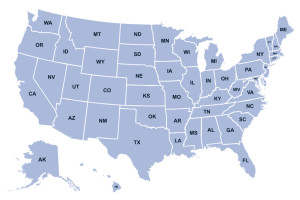
Most Likely to Pass POCA-Type Laws
- California
- Washington
- Oregon
- Illinois
- New Jersey
- Massachusetts
- Colorado
- New Mexico
States Considering It for Practical Reasons (Large Immigrant Populations)
- Ohio
- Michigan
- Pennsylvania
- Virginia
- Maryland
- Minnesota
- Nevada
- Arizona
Least Likely to Enact POCA
- Texas
- Florida
- Georgia
- Tennessee
- Alabama
- Oklahoma
- Mississippi
This creates a nationwide split in courthouse protections unless Congress acts—something unlikely given the ruling’s Tenth Amendment grounding.
SECTION 4 — WHAT THE RULING MEANS FOR OHIO (CLEVELAND, COLUMBUS, CINCINNATI, DAYTON)
Ohio has no POCA-style protections. As a result:
🔸 Courthouse arrests are still possible
- Traffic court
- Misdemeanor hearings
- Family and custody cases
- Civil protective order hearings
Across Ohio cities, immigrants frequently face ICE surveillance around county courthouses.
🔸 POCA would protect:
- DV survivors seeking protection
- Parents in custody cases
- Crime victims
- Criminal defendants attending mandatory hearings
- Witnesses critical to prosecutions
Ohio HLG pages for local targeting:
- Cleveland: https://www.lawfirm4immigrants.com/cleveland-immigration-lawyer/
- Columbus: https://www.lawfirm4immigrants.com/columbus-immigration-lawyer/
- Cincinnati: https://www.lawfirm4immigrants.com/cincinnati-immigration-lawyer/
- Dayton: https://www.lawfirm4immigrants.com/dayton-immigration-lawyer/
- Akron: https://www.lawfirm4immigrants.com/akron-immigration-lawyer/
- Toledo: https://www.lawfirm4immigrants.com/toledo-immigration-lawyer/
SECTION 5 — WHAT IMMIGRANTS IN NON-POCA STATES MUST DO
Before Court:
- Speak with an immigration attorney
- Carry a Know-Your-Rights card
- Do not disclose immigration status
During Court:
- Stay with your attorney
- Avoid engaging unknown officers
If Approached by ICE:
Say:
“I am exercising my right to remain silent and want to speak to my lawyer.”
Key HLG resources:
- Deportation Defense
https://www.lawfirm4immigrants.com/deportation-defense/ - Cancellation of Removal
https://www.lawfirm4immigrants.com/cancellation-of-removal/
Schedule help now:
https://www.lawfirm4immigrants.com/book-consultation/
SECTION 6 — NATIONAL IMPLICATIONS (DOJ, APPEALS, SCOTUS)
DOJ Appeal?
Possible but unlikely to succeed under:
- Tenth Amendment
- Anti-commandeering doctrine
- State court autonomy precedent
Supreme Court?
If appealed, this could become the leading state-federal immigration case of the next decade.
Legislative Movement
Expect POCA-like bills in:
- Colorado
- Illinois
- New Jersey
- California
- Washington
- Ohio (local counties or statewide)

SECTION 7 — EXPERT COMMENTARY FROM RICHARD HERMAN
“Every state now has a federal court-approved model for protecting immigrant access to justice.”
“Ohio would benefit enormously from POCA-style protections—both for safety and for the functioning of the courts.”
“ICE courthouse arrests don’t enhance safety; they collapse cases and silence victims.”
SECTION 8 — COMPARISON: OHIO & NATIONAL IMMIGRATION LAW FIRMS
| Law Firm | Location | Specialization | Strengths | Weaknesses | Why Clients Choose HLG |
|---|---|---|---|---|---|
| Herman Legal Group | Ohio + Nationwide | Full immigration practice (family, employment, deportation, humanitarian, litigation) | 30+ years experience, multilingual team, deep Ohio roots, national litigation capacity | High demand / limited capacity | Personalized attention + national expertise + Ohio focus |
| Fragomen | Nationwide | Corporate/business immigration | Large infrastructure, global presence | Limited family-based and removal defense work | HLG specializes in families, deportation, and individual representation |
| Murthy Law Firm | Maryland | Employment immigration | Strong H-1B & EB categories | Less focus on removal defense | HLG provides full deportation representation |
| Berry Appleman & Leiden (BAL) | National | Corporate immigration | Global services for large employers | Not focused on individual clients | HLG is tailored to families and individuals |
| Local Ohio Firms | Cleveland, Columbus, Cincinnati | Mixed practice | Local knowledge | Often lack federal litigation experience | HLG offers national-level legal strategies + local presence |
SECTION 9 — MASSIVE FAQ (34 QUESTIONS)
1. What is the Protect Our Courts Act (POCA)?
A New York law prohibiting ICE and CBP from making civil immigration arrests in or near state courthouses without a judicial warrant.
New York Legislature text:
https://assembly.state.ny.us/leg/?default_fld=&leg_video=&bn=S04252&term=2019
2. What did Judge D’Agostino rule?
That POCA is constitutional and does not violate federal supremacy.
3. Does this stop ICE nationwide?
No. It applies only in New York unless other states adopt similar laws.
4. Will Ohio pass a similar law?
Ohio could adopt a POCA-style law. This ruling provides the legal blueprint.
5. Does POCA protect undocumented immigrants?
Yes—POCA protects everyone attending court.
6. Does POCA apply to criminal arrests?
No. It applies only to civil immigration arrests.
7. Can ICE still wait outside courthouses in New York?
Not for civil immigration arrests without judicial warrants.
8. How does POCA affect domestic violence survivors?
DV survivors can now access protective orders without fear of arrest.
9. Does this apply to family court?
Yes—family court litigants are protected.
10. Does this apply to traffic court?
Yes—traffic court attendees are covered.
11. Could Congress overturn POCA?
Extremely unlikely due to the Tenth Amendment.
12. What is the anti-commandeering doctrine?
A constitutional rule that prohibits the federal government from forcing states to enforce federal programs.
13. Can ICE still make criminal warrants arrests?
Yes. POCA does not restrict criminal warrants.
14. Does POCA stop ICE from using administrative warrants?
Yes—civil immigration arrests require judicial warrants.
15. How does this affect removal proceedings?
Fewer courthouse arrests mean fewer people being funneled into removal proceedings.
16. What should I do if ICE approaches me near court in Ohio?
State your right to remain silent and request your lawyer.
See:
https://www.lawfirm4immigrants.com/deportation-defense/
17. Can ICE arrest people outside New York courthouses in other states?
Yes—unless that state enacts its own POCA-like law.
18. Could the Supreme Court overturn this decision?
Possible, but the Tenth Amendment rationale is strong.
19. Does POCA affect immigration court?
No—it applies only to state courts.
20. Does this ruling apply to CBP?
Yes. Both ICE and CBP are restricted.
21. Does POCA protect witnesses?
Yes—one of its core goals.
22. How does this help prosecutors?
Victims and witnesses are more willing to testify.
23. Does this protect people with final removal orders?
Yes. Civil immigration arrests without judicial warrants are restricted.
24. Could cities pass their own versions?
Counties and municipalities may adopt policies inspired by POCA.
25. Is this decision final?
It is enforceable, though subject to appeal.
26. Could Ohio counties adopt POCA-like policies?
Yes—local jurisdictions can implement courthouse protections even without statewide legislation.
27. Does this impact ICE detainers?
Indirectly—fewer courthouse arrests may reduce ICE detainer filings.
28. Does this conflict with federal law?
Judge D’Agostino held that it does not.
29. What about civil subpoenas or jury duty?
POCA protects individuals fulfilling mandatory court obligations.
30. How does this affect U visa and T visa applicants?
It increases safety for victims reporting crimes.
31. Could Ohio law enforcement agencies adopt similar internal rules?
Yes—courts and sheriffs can restrict ICE access.
32. What should immigrants do before any court appearance?
Consult an attorney.
https://www.lawfirm4immigrants.com/book-consultation/
33. Does this ruling apply to federal courthouses?
No—only to state courts.
34. How will this change ICE enforcement nationally?
Expect ICE to shift enforcement away from protected courthouse areas toward workplaces and home arrests in POCA states.
SECTION 10 — EXHAUSTIVE RESOURCE DIRECTORY
A. Government Resources
USCIS
USCIS Policy Manual:
https://www.uscis.gov/policy-manual
ICE
ICE Enforcement & Removal Operations (ERO):
https://www.ice.gov/ero
ICE Sensitive Locations Guidance (archived but still referenced):
https://www.ice.gov/ero/enforcement/sensitive-locations
EOIR
EOIR Immigration Courts:
https://www.justice.gov/eoir
DOJ
U.S. Department of Justice:
https://www.justice.gov/
Federal Register
Federal Register Immigration Notices:
https://www.federalregister.gov/agencies/u-s-citizenship-and-immigration-services
New York Legislature
POCA Legislative Text:
https://assembly.state.ny.us/leg/?default_fld=&leg_video=&bn=S04252&term=2019&Summary=Y&Actions=Y&Memo=Y&Text=Y
Federal District Court (N.D.N.Y.)
Court site:
https://www.nynd.uscourts.gov/
(Decision not yet publicly posted but will be indexed under November 2025 opinions.)
B. Media Sources
Reuters immigration coverage:
https://www.reuters.com/world/us/
AP News Immigration:
https://apnews.com/hub/immigration
NPR Immigration:
https://www.npr.org/sections/immigration/
New York Times U.S. Immigration:
https://www.nytimes.com/topic/subject/immigration-and-emigration
Law360 Immigration:
https://www.law360.com/immigration
Politico Immigration:
https://www.politico.com/news/immigration
C. Academic & Research Organizations
Migration Policy Institute:
https://www.migrationpolicy.org/
American Immigration Council:
https://www.americanimmigrationcouncil.org/
Vera Institute of Justice:
https://www.vera.org/
National Immigrant Women’s Advocacy Project (NIWAP):
http://niwaplibrary.wcl.american.edu/
D. Herman Legal Group Resources
New York Courthouse Arrest Ruling Analysis
https://www.lawfirm4immigrants.com/new-york-courthouse-arrest-ruling-analysis/
Removal Defense
https://www.lawfirm4immigrants.com/deportation-defense/
Cancellation of Removal
https://www.lawfirm4immigrants.com/cancellation-of-removal/
I-751 Removal of Conditions
https://www.lawfirm4immigrants.com/form-i-751/
Adjustment of Status
https://www.lawfirm4immigrants.com/adjustment-of-status/
Marriage Green Cards
https://www.lawfirm4immigrants.com/marriage-green-card/
Ohio Law Firm Pages
Cleveland: https://www.lawfirm4immigrants.com/cleveland-immigration-lawyer/
Columbus: https://www.lawfirm4immigrants.com/columbus-immigration-lawyer/
Cincinnati: https://www.lawfirm4immigrants.com/cincinnati-immigration-lawyer/
Dayton: https://www.lawfirm4immigrants.com/dayton-immigration-lawyer/
Akron: https://www.lawfirm4immigrants.com/akron-immigration-lawyer/
Toledo: https://www.lawfirm4immigrants.com/toledo-immigration-lawyer/
Schedule a Consultation
https://www.lawfirm4immigrants.com/book-consultation/
SECTION 11 — KEY TAKEAWAYS
- Judge Mae A. D’Agostino’s ruling upholding POCA is one of the strongest modern decisions protecting immigrant access to justice.
- States have clear constitutional authority to regulate behavior in their courthouses.
- POCA is now a template other states can adopt—including Ohio.
- Immigrants in non-POCA states face increased courthouse risk.
- This ruling may shape federalism and immigration enforcement across the country for the next decade.
- Attorney guidance is critical before any court appearance.
SECTION 12 — SCHEDULE A CONFIDENTIAL CONSULTATION
Court appearances are stressful enough. Do not risk facing ICE without legal preparation.
Book a confidential meeting with Attorney Richard T. Herman today:
https://www.lawfirm4immigrants.com/book-consultation/