USCIS Ends Most Telephonic Attorney Appearances: What the New Policy Means for Immigrants, Attorneys, and Access to Justice
Updated June 2026
Quick Answer
Beginning May 18, 2026, USCIS generally requires attorneys and accredited representatives to appear in person at adjustment of status interviews, naturalization interviews, affirmative asylum interviews, and certain NACARA interviews.
The new USCIS attorney interview policy is expected to impact many applicants.
Although immigrants continue to have the right to legal representation, the new policy significantly limits remote attorney participation and may increase costs for applicants who rely on counsel located outside their state. Understanding the USCIS attorney interview policy is crucial for navigating these changes.
The policy appears in USCIS guidance on Preparing for Your Affirmative Asylum Interview.
Key Takeaways
- USCIS generally no longer permits telephonic attorney participation in covered interviews.
- Attorneys must typically appear physically at the interview location.
- USCIS states that exceptions may exist in “limited circumstances,” but has not clearly defined those circumstances.
- The policy may increase legal fees and travel costs for immigrants.Overall, the USCIS attorney interview policy aims to streamline interview processes but raises concerns among immigrant communities.
- The change may reduce access to specialized immigration counsel.
- Federal regulations continue to recognize the right to representation before DHS.
- The policy appears difficult to justify from an efficiency and modernization perspective.
- Critics argue that the policy reflects a broader trend toward increasing procedural burdens in immigration adjudications.

What Exactly Changed?
USCIS now generally requires attorneys and accredited representatives to attend covered interviews in person.
The policy affects:
Adjustment of Status Interviews
Including:
- marriage-based green cards;
- family-sponsored green cards;
- employment-based green cards;
- diversity visa adjustment cases.
Naturalization Interviews
Including N-400 examinations involving:
- criminal history issues;
- selective service concerns;
- false claims to U.S. citizenship;
- unlawful voting allegations;
- lengthy absences from the United States.
Affirmative Asylum Interviews
The policy applies to interviews conducted by USCIS asylum offices.
NACARA Interviews
The policy also extends to certain NACARA proceedings.
USCIS announced the change without publishing a detailed explanation of what constitutes the “limited circumstances” under which remote participation may still be permitted.
What Has Not Changed?
Many reports incorrectly suggest that USCIS has prohibited attorneys from participating in interviews.
That is not accurate.
Applicants still have the right to legal representation.
Attorneys may still:
- file Form G-28;
- receive notices;
- prepare clients;
- submit evidence;
- attend interviews;
- raise legal concerns;
- advocate on behalf of clients.
The change concerns the method of participation.
In most cases, USCIS now requires physical attendance rather than telephonic participation.
What Are the “Limited Circumstances” Exceptions?
One of the most significant unanswered questions surrounding the new USCIS policy is the meaning of the phrase “limited circumstances.”
USCIS has announced that attorneys and accredited representatives generally may not participate remotely in covered interviews, but the agency has not publicly defined:
- what qualifies as a limited circumstance;
- how requests should be submitted;
- what evidence should accompany a request;
- who makes the decision;
- whether denials may be appealed;
- whether different field offices may apply different standards.
As of this writing, USCIS has provided little public guidance.
That uncertainty leaves applicants and attorneys attempting to predict what situations might justify an exception.
Circumstances That May Support a Remote Participation Request
Although USCIS has not established formal criteria, several situations appear likely to present stronger arguments.
Serious Medical Issues
An attorney suffering from a significant medical condition may have a compelling basis for requesting remote participation.
Examples may include:
- recent surgery;
- hospitalization;
- serious illness;
- physician-imposed travel restrictions;
- immunocompromised conditions.
Supporting documentation from a treating physician may strengthen the request.
Disability Accommodations
Attorneys with disabilities that substantially impair travel may have a strong argument for remote participation.
Potential examples include:
- mobility impairments;
- chronic medical conditions;
- disabilities requiring specialized accommodations.
Documentation supporting the accommodation request may be helpful.
Extraordinary Travel Burdens
The strongest practical arguments may arise where physical attendance would impose unusual burdens.
Examples might include:
- cross-country travel;
- international travel complications;
- severe weather disruptions;
- transportation emergencies;
- natural disasters.
While distance alone may not be sufficient, extraordinary travel obstacles could support an exception request.
Specialized Counsel in High-Stakes Cases
Another potential argument involves highly specialized representation.
Examples may include:
- EB-1A Extraordinary Ability cases;
- National Interest Waiver matters;
- denaturalization concerns;
- false claim to citizenship allegations;
- unlawful voting allegations;
- national security issues;
- complex asylum claims.
Applicants may argue that requiring physical attendance would effectively deprive them of meaningful access to the counsel they selected.
Whether USCIS will accept this argument remains unclear.
Asylum Cases Involving Vulnerable Applicants
Certain affirmative asylum cases may present compelling circumstances.
Examples could include:
- severe trauma;
- mental health conditions;
- interpreter complications;
- vulnerable populations;
- unusually complex evidentiary issues.
Attorneys may argue that remote participation would facilitate a fair and accurate interview without creating administrative burdens.
Emergencies Arising After Scheduling
Unexpected events occurring shortly before an interview may also justify a request.
Examples include:
- family emergencies;
- sudden illness;
- cancelled flights;
- natural disasters;
- transportation failures.
In these situations, remote participation may be preferable to cancelling and rescheduling the interview.

How Should Attorneys Request an Exception?
Because USCIS has not published a formal procedure, practitioners should consider creating a clear written record.
Submit the Request Early
Do not wait until the day of the interview.
Whenever possible, submit the request immediately after receiving the interview notice.
Early requests demonstrate good faith and provide USCIS time to evaluate the circumstances.
Make the Request in Writing
A written request creates documentation that may later become important.
The request should:
- identify the applicant;
- identify the attorney;
- provide the interview date and location;
- explain the specific circumstances;
- explain why remote participation is requested;
- attach supporting evidence where appropriate.
Emphasize Efficiency
This point may be particularly persuasive.
The request should explain that remote participation:
- avoids unnecessary delay;
- prevents rescheduling;
- conserves government resources;
- reduces costs;
- facilitates representation.
If remote participation would allow the interview to proceed as scheduled, that fact should be highlighted.
Cite Representation Rights
Although the new policy generally requires physical attendance, attorneys may wish to reference:
The purpose is not to challenge USCIS authority but to emphasize the longstanding importance of meaningful attorney participation.
Offer Alternative Formats
Do not limit the request to telephone participation.
Consider offering:
- telephone appearance;
- video appearance;
- Microsoft Teams;
- Webex;
- any platform acceptable to USCIS.
Flexibility may increase the likelihood of approval.
What If USCIS Denies the Request?
If USCIS denies remote participation, attorneys should consider preserving the issue.
Potential steps may include:
- retaining copies of all requests;
- documenting communications with USCIS;
- documenting costs associated with compliance;
- documenting any hardship imposed on the applicant.
This documentation may become important if future litigation challenges the policy or if USCIS later publishes additional guidance.
Richard Herman’s Analysis
The phrase “limited circumstances” may ultimately become the most important part of the entire policy.
A rigid interpretation could dramatically increase costs and reduce access to counsel.
A flexible interpretation could preserve many of the benefits of remote participation while still allowing USCIS discretion in individual cases.
Until USCIS publishes clear standards, applicants and attorneys should assume that remote participation will be the exception rather than the rule and should submit any exception requests as early and as thoroughly as possible.
The reality is that the strongest exception requests will likely be those that demonstrate both hardship and efficiency—showing not only why physical attendance is difficult, but also why remote participation would allow USCIS to conduct the interview fairly, accurately, and without unnecessary delay.

Immigration Law Has Long Recognized the Importance of Legal Representation
The significance of the policy becomes clearer when viewed against the legal framework governing representation before DHS.
Federal Regulations Protect Representation Rights
The foundational regulation is 8 CFR § 292.5(b).
The regulation provides:
Whenever an examination is provided for in this chapter, the person involved shall have the right to be represented by an attorney or representative.
Importantly, the regulation contemplates active participation by counsel.
Attorneys may:
- introduce evidence;
- make objections;
- examine witnesses;
- cross-examine witnesses;
- submit briefs.
This is not the language of a system that views attorneys as passive observers.
It is the language of a system that recognizes representation as an important procedural safeguard.
Another key regulation is 8 CFR § 292.1, which identifies the attorneys and accredited representatives authorized to appear before DHS.
USCIS Built an Entire System Around Attorney Representation
USCIS has long recognized the importance of legal representation through Form G-28, Notice of Entry of Appearance as Attorney or Accredited Representative.
The agency’s representation framework assumes that attorneys play a meaningful role in helping applicants navigate increasingly complex immigration laws.
Whether the case involves:
- adjustment of status;
- naturalization;
- asylum;
- waivers;
- humanitarian relief;
USCIS has historically facilitated attorney participation rather than discouraged it.
An Important Historical Fact Most Commentators Have Missed
One of the most overlooked aspects of this story is that USCIS previously moved in the opposite direction.
In 2022, USCIS implemented a pilot program allowing remote attorney participation in asylum interviews.
The agency’s pilot documentation remains publicly available through the USCIS Remote Attorney Participation Pilot Program.
The pilot explicitly recognized that asylum applicants have the right to have an attorney present at their interviews.
This creates an obvious question:
If remote participation was sufficiently beneficial to justify a USCIS pilot program in 2022, what evidence now justifies eliminating it in 2026?
To date, USCIS has not publicly provided a detailed explanation.
The Board of Immigration Appeals Has Long Recognized That Attorneys Matter
Immigration law contains an entire body of precedent recognizing the importance of competent legal representation.
The leading case is Matter of Lozada, 19 I&N Dec. 637 (BIA 1988).
Lozada established the framework for reopening immigration cases based on ineffective assistance of counsel.
The significance of Lozada extends far beyond motions to reopen.
The case reflects a broader principle:
Attorney performance affects immigration outcomes.
If legal representation did not matter, immigration courts would have little reason to reopen cases because of attorney misconduct or attorney error.
The existence of ineffective-assistance doctrines demonstrates that immigration law recognizes counsel as a meaningful safeguard against erroneous outcomes.
Federal Administrative Law Also Protects Representation
The principle extends beyond immigration law.
The Administrative Procedure Act recognizes representation rights before federal agencies.
See 5 U.S.C. § 555(b).
For decades, federal administrative law has recognized that legal representation helps promote:
- fairness;
- accuracy;
- procedural integrity;
- informed decision-making.
This broader administrative-law framework reinforces the importance of access to counsel in immigration adjudications.
The Real Issue Is Not Whether Representation Exists
Supporters of the policy may correctly note that immigrants still possess the right to counsel.
The more important question is different:
How meaningful is a right if exercising it becomes substantially more expensive?
The policy does not eliminate representation.
It increases the burden of obtaining representation.
That distinction matters.
The Financial Burden Falls on Immigrants
The most immediate effect of the policy is financial.
Before the policy:
- attorney preparation could occur remotely;
- attorney participation could occur telephonically;
- travel expenses were unnecessary.
After the policy:
Applicants may be responsible for:
- airfare;
- hotels;
- transportation;
- meals;
- attorney travel time;
- additional legal fees.
A single interview may now generate hundreds or even thousands of dollars in additional expenses.
Consider a client in Ohio represented by an attorney in California.
Previously, the attorney could prepare the client remotely and attend by telephone.
Now the client may be required to cover:
- round-trip airfare;
- overnight accommodations;
- local transportation;
- attorney travel time.
For many families, the additional cost may be significant.
For some, it may be prohibitive.
The Policy Reduces Access to Specialized Counsel
Modern immigration practice has become highly specialized.
Many attorneys focus almost exclusively on:
- EB-1A extraordinary ability petitions;
- National Interest Waivers;
- complex asylum cases;
- inadmissibility waivers;
- denaturalization defense;
- false claims to citizenship;
- unlawful voting allegations.
Remote participation allowed applicants to retain the attorney they believed was best qualified, regardless of location.
The new policy may force applicants to choose between:
- specialized counsel located elsewhere; or
- local counsel who can attend without substantial travel expenses.
For many immigrants, that is a significant change.
Lower-Income Immigrants May Be Affected Most
The burden is unlikely to fall equally.
Wealthier applicants may absorb the added costs.
Middle-income families may struggle but proceed.
Many lower-income immigrants may simply decide they cannot afford attorney attendance.
This creates an access-to-justice concern.
The right technically remains available.
The practical ability to exercise that right becomes more difficult.
Why Asylum Cases Raise Special Concerns
The impact may be particularly significant in affirmative asylum cases.
Asylum interviews frequently involve:
- trauma survivors;
- language barriers;
- credibility determinations;
- complex country-condition evidence;
- vulnerable applicants.
Attorneys often help:
- clarify misunderstandings;
- ensure accurate interpretation;
- organize evidence;
- protect procedural fairness.
Many asylum applicants rely on nonprofit organizations and pro bono counsel operating under limited budgets.
Requiring physical attendance may force some organizations to reduce participation because of travel costs and staffing limitations.
The Efficiency Problem
Perhaps the most surprising aspect of the policy is that it appears difficult to justify from an efficiency perspective.
For decades, government agencies have embraced technology to reduce costs and improve access.
Federal courts routinely conduct proceedings remotely.
Immigration courts increasingly utilize video technology.
USCIS encourages:
- online filing;
- electronic communication;
- digital case management.
Telephonic attorney appearances generally:
- reduce travel costs;
- improve scheduling flexibility;
- increase access to counsel;
- conserve resources;
- reduce barriers to representation.
The new policy eliminates many of those benefits.
A Policy That Increases Costs for Everyone
The policy shifts costs from the government to applicants.
Instead of a lawyer participating by telephone, clients may now pay for:
- airfare;
- hotel expenses;
- transportation costs;
- attorney travel time.
The policy also imposes costs on attorneys.
A lawyer who previously devoted one hour to a telephonic interview may now spend an entire day traveling.
Those hours cannot be spent:
- meeting clients;
- preparing cases;
- attending hearings;
- filing motions.
Those costs are often reflected in legal fees.
USCIS May Also Lose Efficiency
Experienced attorneys often make interviews more efficient.
Counsel frequently helps:
- organize evidence;
- narrow issues;
- explain legal questions;
- prevent misunderstandings;
- facilitate communication.
When counsel cannot attend because travel costs are prohibitive, officers may spend more time addressing confusion, requesting additional evidence, or conducting follow-up review.
The policy may therefore increase administrative burdens rather than reduce them.
What Problem Is USCIS Trying to Solve?
A fair question remains unanswered.
USCIS has not publicly identified evidence demonstrating that telephonic attorney participation was causing:
- fraud;
- attorney misconduct;
- operational failures;
- significant delays;
- reduced adjudicative quality.
Without a clearly articulated problem, critics may reasonably ask why the agency chose to impose additional costs and burdens on applicants.
Is This Part of a Larger Trend?
Viewed in isolation, the policy may appear minor.
Viewed alongside other recent developments—including expanded vetting, increased scrutiny of immigration benefits, heightened fraud investigations, and broader discretionary review frameworks—some observers see a larger pattern.
The telephonic-attendance policy does not eliminate any legal right.
But it arguably increases the burden of exercising one.
Critics contend that the cumulative effect of these policies is to make immigration benefits more expensive, more procedurally demanding, and more difficult to obtain.
Richard Herman’s Analysis
The most important question is not whether immigrants still have the right to legal representation.
They do.
The more important question is whether that right remains meaningfully accessible.
For decades, Congress, DHS regulations, USCIS procedures, federal administrative law, the Board of Immigration Appeals, and federal courts have all recognized that attorneys help protect against governmental error.
Technology made it possible for immigrants to access qualified counsel regardless of geography.
The new USCIS policy moves against that trend.
It increases costs.
It increases barriers.
It reduces flexibility.
And it may make specialized representation more difficult to obtain.
For some applicants, the change will be inconvenient.
For others, it may determine whether an attorney is physically present during one of the most important interactions they will ever have with the federal government.
Ultimately, the debate is not about whether the right to counsel still exists.
The debate is about whether meaningful access to that right should depend on an immigrant’s ability to pay for an attorney’s airplane ticket.
Frequently Asked Questions About USCIS’s New Attorney Attendance Policy
Does USCIS still allow attorneys at immigration interviews?
Yes. USCIS still allows attorneys and accredited representatives to attend immigration interviews. The policy change does not eliminate the right to legal representation. Instead, USCIS now generally requires attorneys to appear in person rather than participate remotely.
When did the new USCIS attorney attendance policy take effect?
The policy became effective on May 18, 2026. USCIS announced that attorneys and accredited representatives generally may no longer participate remotely in field office interviews, affirmative asylum interviews, and NACARA interviews except in limited circumstances.
What USCIS interviews are affected by the policy?
The policy generally applies to:
- Adjustment of Status (I-485) interviews;
- Marriage-based green card interviews;
- Employment-based green card interviews;
- Naturalization (N-400) interviews;
- Affirmative asylum interviews;
- Certain NACARA interviews.
Can my immigration attorney still participate by telephone?
Possibly, but only in limited circumstances.
USCIS has stated that exceptions may exist, but the agency has not clearly defined:
- what circumstances qualify;
- how requests should be made;
- what evidence may be required;
- who decides whether an exception is granted.
Can my attorney participate by video instead of appearing in person?
As a general rule, USCIS now requires in-person attendance. Applicants should not assume that video participation will be approved unless USCIS specifically authorizes an exception.
Why is this policy controversial?
Critics argue that the policy:
- increases legal costs;
- reduces access to specialized counsel;
- requires unnecessary travel;
- creates barriers to representation;
- undermines efficiency.
Supporters may argue that in-person participation improves consistency and accountability during interviews.
Does the policy eliminate my right to legal representation?
No.
Federal regulations continue to recognize the right to representation before DHS. Applicants may still hire attorneys and accredited representatives to advise them, prepare their cases, submit evidence, and attend interviews.
What regulation protects the right to legal representation before DHS?
The primary regulation is 8 CFR § 292.5(b), which provides that individuals appearing before DHS generally have the right to be represented by an attorney or accredited representative at no expense to the government.
Why is attorney representation important during USCIS interviews?
Attorneys may help:
- prepare applicants for questioning;
- organize evidence;
- clarify legal issues;
- address misunderstandings;
- protect against inaccurate statements;
- respond to officer concerns;
- identify potential inadmissibility issues.
In complex cases, attorney participation can significantly affect the outcome.
Will this policy increase immigration legal fees?
In many cases, yes.
Applicants may now be responsible for:
- attorney travel time;
- airfare;
- hotel expenses;
- transportation costs;
- additional preparation costs.
For some cases, these expenses may increase the overall cost of representation substantially.
Will the policy affect applicants who hire attorneys in other states?
Yes.
The policy may have the greatest impact on applicants represented by attorneys located outside the state where the interview is scheduled.
Previously, telephonic participation allowed applicants to retain specialized counsel regardless of geography.
Now, applicants may need to consider travel expenses when selecting counsel.
Why does this policy affect access to specialized immigration attorneys?
Many immigration attorneys focus on highly specialized areas such as:
- EB-1A Extraordinary Ability;
- National Interest Waivers;
- asylum law;
- inadmissibility waivers;
- denaturalization defense;
- false claims to citizenship;
- unlawful voting cases.
Because these attorneys often represent clients nationwide, requiring in-person attendance may make specialized representation more expensive or less accessible.
Did USCIS previously allow remote attorney participation?
Yes.
USCIS previously implemented a pilot program permitting remote attorney participation in certain asylum interviews. The existence of that program has led some observers to question why USCIS reversed course in 2026.
Does the policy affect asylum seekers?
Yes.
The policy applies to affirmative asylum interviews conducted by USCIS.
Many immigration advocates are particularly concerned because asylum interviews often involve:
- trauma survivors;
- language barriers;
- credibility determinations;
- vulnerable applicants.
Is the policy part of a broader trend in immigration enforcement?
Some observers believe so.
Critics point to recent developments involving:
- increased vetting;
- heightened fraud investigations;
- expanded discretionary review;
- additional interview scrutiny;
- more demanding adjudication procedures.
Others view the attorney-attendance policy as a routine procedural change.
Could the policy be challenged in court?
Potentially.
Future challenges could focus on:
- administrative law principles;
- agency decision-making;
- access-to-counsel concerns;
- procedural fairness issues.
Whether such challenges will be successful remains uncertain.
Should I hire an attorney for my USCIS interview?
Every case is different.
Attorney representation may be particularly valuable if your case involves:
- criminal history;
- prior immigration violations;
- prior visa denials;
- fraud allegations;
- false claims to citizenship;
- unlawful voting issues;
- inadmissibility concerns;
- asylum claims;
- complex family or employment-based immigration matters.
Applicants facing high-stakes interviews should consider consulting experienced immigration counsel before appearing before USCIS.
Need Help Preparing for a USCIS Interview?
USCIS interviews are becoming more consequential, more discretionary, and more procedurally demanding. If your case involves a green card interview, naturalization interview, asylum interview, prior immigration violations, criminal history, alleged fraud, false claims to citizenship, unlawful voting, or prior denials, experienced legal preparation may be critical.
Herman Legal Group helps immigrants, families, professionals, students, employers, and asylum seekers prepare for high-stakes USCIS interviews nationwide.
To discuss your case, schedule a consultation with Herman Legal Group or call 1-800-808-4013.
Resource Directory
Official Government and Legal Authority
HLG Resources
About Richard T. Herman, Esq.

Richard T. Herman is a nationally recognized immigration attorney, author, speaker, policy advocate, and founder of Herman Legal Group, the Law Firm for Immigrants. For more than 30 years, he has represented immigrants, families, entrepreneurs, investors, multinational employers, physicians, engineers, students, artists, athletes, and professionals navigating the complexities of U.S. immigration law.
Richard is widely recognized for his work in immigration law, immigrant entrepreneurship, economic development, federal court litigation, and immigration policy. He has built a national reputation for helping clients solve complex immigration challenges while serving as a leading voice on how immigration strengthens America’s economy, workforce, innovation ecosystem, and communities.
National Recognition & Professional Credentials
Richard has earned recognition from some of the legal profession’s most respected organizations, including:
- Super Lawyers
- Best Lawyers in America
- AV-Rated by Martindale-Hubbell
- Avvo 10.0 Superb Rating
- Lead Counsel Rated Attorney
Learn more:
Featured National Media
Richard’s immigration law analysis and economic development work have been featured by The New York Times, The Washington Post, NPR, WBUR, CBS News, Forbes, Business Insider, USA Today, and numerous other national and international media organizations.
Selected appearances include:
Author of Immigrant, Inc.
Richard is co-author of the acclaimed book:
Immigrant, Inc.: Why Immigrant Entrepreneurs Are Driving the New Economy (and How They Will Save the American Worker)

The book helped shape national discussions about immigrant entrepreneurship, innovation, workforce development, economic growth, and urban revitalization. Its themes have been cited in academic scholarship, economic development research, public policy discussions, and U.S. Supreme Court amicus briefs.
Learn more:
Academic, Policy & Legal Recognition
Richard’s work has been cited and discussed in academic journals, economic development research, public policy publications, and U.S. Supreme Court filings.
Selected references:
Civic Leadership, Nonprofit Service & Economic Development
Richard is widely regarded as a pioneer of immigration-based economic development in America’s Rust Belt. His work has focused on helping communities attract talent, support entrepreneurs, revitalize neighborhoods, strengthen local economies, and create American jobs.
Throughout his career, Richard has served in leadership, advisory, and board roles for organizations dedicated to immigrant integration, economic development, access to justice, entrepreneurship, international engagement, and civic advancement.
His leadership includes:
- Co-founder of Global Cleveland
- Founding advisor to Global Detroit
- Co-founder of TiE Ohio
- Former Civil Rights Director of LULAC Ohio
- Former Trustee of the Legal Aid Society of Cleveland
- Former Trustee of the Cuyahoga County Bar Association
- Board and advisory involvement with nonprofit, economic development, and international affairs organizations throughout Ohio and the Midwest
Learn more:
Speaker, Educator & Thought Leader
Richard has delivered keynote presentations, university lectures, economic development forums, chamber of commerce programs, and policy discussions throughout the United States.
Most notably, Richard was selected by former New York City Mayor Michael Bloomberg’s Partnership for a New American Economy (PNAE) to speak at chambers of commerce, economic development organizations, and business forums nationwide regarding the economic benefits of immigration. Through these engagements, he helped educate civic and business leaders on how welcoming immigrants can strengthen local economies, create American jobs, attract investment, address workforce shortages, and improve regional competitiveness.
Selected speaking resources:
Publications & Commentary
Richard has written extensively on immigration law, immigrant entrepreneurship, economic development, workforce strategy, public policy, and global competitiveness.
Selected publications:
Connect With Richard Herman
Need Immigration Help?
Schedule a consultation with Richard Herman or another Herman Legal Group attorney:
https://www.lawfirm4immigrants.com/book-consultation/
Or call:
1-800-808-4013
Herman Legal Group serves clients nationwide and around the world in family immigration, employment immigration, investor visas, citizenship and naturalization, removal defense, federal court litigation, waivers, asylum, humanitarian relief, and complex immigration matters.
Daily Immigration News Clips – June 11, 2026
Updated June 11, 2026 – Daily Immigration News June 11 2026
Welcome to the Herman Legal Group Immigration News Center.
This page highlights major immigration law developments, enforcement actions, detention issues, visa policy developments, court cases, and other immigration stories receiving national attention on June 11, 2026.
For the latest insights, refer to the Daily Immigration News June 11 2026.
Missed yesterday’s roundup?
Read: Daily Immigration News Clips – June 10, 2026
National Immigration News
Daily Immigration News June 11 2026: Important Updates
Report Raises Serious Questions About ICE’s Largest Detention Facility
Source: NPR: Report: ICE wasted millions, endangered detainees in largest immigration facility
NPR reported on findings from a federal investigation into the nation’s largest immigration detention facility. The report describes concerns involving detainee safety, medical care, contractor oversight, missing records, and millions of dollars in allegedly wasteful spending.
Why It Matters
Detention policy remains one of the most heavily scrutinized areas of immigration law in 2026. Questions involving medical care, bond hearings, access to counsel, prolonged detention, and federal contractor accountability continue to generate litigation and public debate.
These developments are covered extensively in the Daily Immigration News June 11 2026.
Iranian Women May Be Deported to Central African Republic
Source: New York Times: Women Who Fled Iran Are to Be Deported to Central African Republic, Lawyers Say
The New York Times reported that women who fled Iran may be deported to the Central African Republic under a third-country deportation arrangement, according to their lawyers.
The case raises serious questions about whether the United States may remove noncitizens to countries where they have no meaningful family ties, community connections, prior residence, or practical ability to seek protection.
Why It Matters
Third-country deportations have become one of the most controversial immigration enforcement tools of 2026. These cases are likely to generate significant litigation involving due process, humanitarian protection, the Convention Against Torture, and U.S. obligations under immigration law.
More on this issue can be found in the Daily Immigration News June 11 2026.
UN Human Rights Chief Calls for Rethink of U.S. Immigration Policy
Source: Associated Press: After troubled World Cup lead-in, UN human rights chief urges ‘rethink’ of US immigration policy
The Associated Press reported that the United Nations High Commissioner for Human Rights urged a “massive rethink” of immigration policies, especially in the United States, ahead of the World Cup.
This context is crucial for understanding the Daily Immigration News June 11 2026.
The report discussed concerns involving racial profiling, immigration enforcement, visa issues, and travel restrictions as the United States prepares to host major international events.
Why It Matters
The 2026 World Cup places U.S. immigration policy under global scrutiny. Visa processing, border screening, travel restrictions, and immigration enforcement can affect athletes, officials, fans, workers, students, professionals, and families traveling to or within the United States.
White House Wants More Doctors, But Immigration Barriers Remain
Source: Forbes: White House Wants More Doctors But Its Immigration Policies Block Them
Forbes examined the tension between calls for more physicians and immigration policies that may restrict the ability of foreign-trained doctors to enter, work, or remain in the United States.
As discussed in the Daily Immigration News June 11 2026, healthcare policies are also impacted.
Hospitals, rural communities, healthcare systems, and underserved regions continue to rely heavily on international medical graduates.
Why It Matters
Healthcare workforce shortages remain a major national issue. Immigration policies affecting physicians can directly affect patient access to care, hospital staffing, rural healthcare systems, and medically underserved communities.
Debate Intensifies Over Denaturalization Efforts
Source: The Guardian: Trump is stripping Americans of their citizenship at a shocking rate
The Guardian published an opinion piece arguing that denaturalization efforts are expanding and may increasingly affect naturalized U.S. citizens whose old immigration histories are subjected to renewed government review.
The article focuses on concerns involving fraud allegations, prior applications, criminal history, national security claims, and the possible use of denaturalization as a broader enforcement tool.
Why It Matters
Citizenship remains the most secure immigration status available. But denaturalization carries severe consequences and continues to raise major questions about due process, fairness, government power, and the permanence of naturalized citizenship.
These implications reflect broader trends noted in the Daily Immigration News June 11 2026.
Local Immigration News
Cameroonian Woman Continues Seeking Release From Detention
Source: St. Louis Public Radio: One Cameroonian remains hopeful as she petitions immigration courts to be released
St. Louis Public Radio reported on Armande Namegni, a Cameroonian asylum seeker who has been fighting to be released from immigration detention.
Such cases are highlighted in the Daily Immigration News June 11 2026.
Her case reflects the broader challenges faced by immigrants who remain detained while pursuing asylum, withholding of removal, bond, or other forms of protection.
Why It Matters
Immigration detention can separate families, limit access to counsel, and make it harder for immigrants to gather evidence needed to fight removal. Detained asylum seekers often face especially difficult legal and humanitarian challenges.
Florida Approves $90 Million Expansion of Immigration Enforcement
Source: News Radio FLA: Florida Approves $90 Million Expansion of Immigration Enforcement
News Radio FLA reported that Florida officials approved a major immigration enforcement funding package intended to expand state and local cooperation with federal immigration authorities.
For further details, refer to the Daily Immigration News June 11 2026.
The funding is expected to support enforcement operations, training, equipment, transportation, detention-related expenses, and local agency participation in immigration enforcement efforts.
Why It Matters
States are playing an increasingly aggressive role in immigration enforcement. Expanded state funding may lead to more arrests, more detention, more transfers to ICE custody, and more cooperation between local law enforcement and federal immigration agencies.
Tennessee Health Department Warning Raises Immigration Concerns
Source: Tennessee Lookout: Tennessee health department warns parents their children will be reported to immigration officials
Tennessee Lookout reported that the Tennessee Department of Health warned parents of critically ill immigrant children that their children’s information may be reported to immigration officials if they continue receiving care through a public health program after June 30.
The ramifications on families are discussed in the Daily Immigration News June 11 2026.
The story has generated concern among pediatricians, public health providers, immigrant families, and advocates for children with disabilities and serious medical conditions.
Why It Matters
When immigrant families fear that seeking medical care could trigger immigration consequences, children may lose access to essential treatment. Public health, child welfare, disability services, and immigration enforcement are increasingly colliding in state policy debates.
Richard Herman’s Analysis: What June 11 Tells Us About Immigration in 2026
Today’s headlines reveal several powerful themes shaping immigration policy.
First, immigration detention remains under intense scrutiny. Questions involving detainee safety, medical care, contractor accountability, and prolonged detention are increasingly finding their way into federal court.
These themes are explored in detail in the Daily Immigration News June 11 2026.
Second, third-country deportations are rapidly becoming a defining legal battle of 2026. Courts will likely continue examining whether these removals comply with due process requirements, statutory protections, and humanitarian obligations.
Third, immigration policy now touches nearly every major public policy area, including healthcare, public health, workforce development, international relations, civil liberties, and national security.
Fourth, states are becoming increasingly active immigration actors, creating a patchwork of enforcement policies that vary dramatically from one jurisdiction to another.
Taken together, these developments demonstrate that immigration law is no longer merely about visas, green cards, and citizenship. It increasingly shapes how America addresses labor shortages, healthcare access, detention policy, constitutional rights, and its relationship with the rest of the world.
For insights on these issues, see the Daily Immigration News June 11 2026.
Key Takeaways
- Immigration detention remains a major area of controversy.
- Third-country deportation litigation is expanding rapidly.
- Physician immigration issues continue to affect healthcare systems.
- State-level immigration enforcement is growing.
- Public health and immigration policy are becoming increasingly intertwined.
- Denaturalization remains a significant topic of national debate.These trends are critical for understanding the Daily Immigration News June 11 2026.
- Federal courts continue to play a central role in shaping immigration policy.
Need Help With an Immigration Matter?
Whether you are facing removal proceedings, detention, visa delays, citizenship concerns, family immigration challenges, employment-based immigration issues, or humanitarian relief questions, experienced legal guidance has never been more important.
Stay informed with the Daily Immigration News June 11 2026.
For more than 30 years, Richard Herman and the attorneys at Herman Legal Group have helped immigrants, families, professionals, students, employers, and lawful permanent residents navigate the complexities of U.S. immigration law.
Schedule a consultation with Herman Legal Group or call 1-800-808-4013.
Contact us for more information as we navigate the Daily Immigration News June 11 2026.
About Richard T. Herman, Esq.
Richard T. Herman is a nationally recognized immigration attorney, author, speaker, policy advocate, and founder of Herman Legal Group, the Law Firm for Immigrants. For more than 30 years, he has represented immigrants, families, entrepreneurs, investors, multinational employers, physicians, engineers, students, artists, athletes, and professionals navigating the complexities of U.S. immigration law.
Richard is widely recognized for his work in immigration law, immigrant entrepreneurship, economic development, federal court litigation, and immigration policy. He has built a national reputation for helping clients solve complex immigration challenges while serving as a leading voice on how immigration strengthens America’s economy, workforce, innovation ecosystem, and communities.
National Recognition & Professional Credentials
Richard has earned recognition from some of the legal profession’s most respected organizations, including:
- Super Lawyers
- Best Lawyers in America
- AV-Rated by Martindale-Hubbell
- Avvo 10.0 Superb Rating
- Lead Counsel Rated Attorney
Learn more:
Featured National Media
Richard’s immigration law analysis and economic development work have been featured by The New York Times, The Washington Post, NPR, WBUR, CBS News, Forbes, Business Insider, USA Today, and numerous other national and international media organizations.
Selected appearances include:
Author of Immigrant, Inc.
Richard is co-author of the acclaimed book:
Immigrant, Inc.: Why Immigrant Entrepreneurs Are Driving the New Economy (and How They Will Save the American Worker)
The book helped shape national discussions about immigrant entrepreneurship, innovation, workforce development, economic growth, and urban revitalization. Its themes have been cited in academic scholarship, economic development research, public policy discussions, and U.S. Supreme Court amicus briefs.
Learn more:
Academic, Policy & Legal Recognition
Richard’s work has been cited and discussed in academic journals, economic development research, public policy publications, and U.S. Supreme Court filings.
Selected references:
Civic Leadership, Nonprofit Service & Economic Development
Richard is widely regarded as a pioneer of immigration-based economic development in America’s Rust Belt. His work has focused on helping communities attract talent, support entrepreneurs, revitalize neighborhoods, strengthen local economies, and create American jobs.
Throughout his career, Richard has served in leadership, advisory, and board roles for organizations dedicated to immigrant integration, economic development, access to justice, entrepreneurship, international engagement, and civic advancement.
His leadership includes:
- Co-founder of Global Cleveland
- Founding advisor to Global Detroit
- Co-founder of TiE Ohio
- Former Civil Rights Director of LULAC Ohio
- Former Trustee of the Legal Aid Society of Cleveland
- Former Trustee of the Cuyahoga County Bar Association
- Board and advisory involvement with nonprofit, economic development, and international affairs organizations throughout Ohio and the Midwest
Learn more:
Speaker, Educator & Thought Leader
Richard has delivered keynote presentations, university lectures, economic development forums, chamber of commerce programs, and policy discussions throughout the United States.
Most notably, Richard was selected by former New York City Mayor Michael Bloomberg’s Partnership for a New American Economy (PNAE) to speak at chambers of commerce, economic development organizations, and business forums nationwide regarding the economic benefits of immigration. Through these engagements, he helped educate civic and business leaders on how welcoming immigrants can strengthen local economies, create American jobs, attract investment, address workforce shortages, and improve regional competitiveness.
Selected speaking resources:
Publications & Commentary
Richard has written extensively on immigration law, immigrant entrepreneurship, economic development, workforce strategy, public policy, and global competitiveness.
Selected publications:
Connect With Richard Herman
Need Immigration Help?
Schedule a consultation with Richard Herman or another Herman Legal Group attorney:
https://www.lawfirm4immigrants.com/book-consultation/
Or call:
1-800-808-4013
Herman Legal Group serves clients nationwide and around the world in family immigration, employment immigration, investor visas, citizenship and naturalization, removal defense, federal court litigation, waivers, asylum, humanitarian relief, and complex immigration matters.
$70 Billion Immigration Enforcement Package: Why This May Be the Most Important Immigration Story of 2026
By Richard T. Herman, Esq.
Quick Answer
Congress is moving toward final approval of a nearly $70 billion immigration enforcement package that would provide approximately $38 billion for Immigration and Customs Enforcement (ICE) and $26 billion for Customs and Border Protection (CBP), along with billions more for detention operations and immigration enforcement infrastructure. Funding extends through fiscal year 2029.
The Senate has already approved the package, and House approval appears likely. If enacted, it would provide immigration enforcement agencies with unprecedented resources through the remainder of President Trump’s term.
For immigrants, employers, universities, and families, this may prove more consequential than many executive orders, travel bans, court decisions, or USCIS policy memoranda because enforcement priorities only matter if the government has the personnel, detention capacity, transportation systems, attorneys, and technology necessary to implement them.
In short, this bill is not primarily about changing immigration law.
It is about dramatically expanding the government’s ability to enforce existing immigration laws.
Why This May Be Bigger Than Any White House Immigration Executive Order
Over the past year, immigration headlines have focused on:
- travel restrictions;
- enhanced vetting programs;
- asylum policies;
- social media screening;
- detention litigation;
- the new USCIS adjustment-of-status discretion policy.
Many of those developments generated enormous controversy.
But enforcement ultimately comes down to resources.
An immigration agency cannot significantly increase arrests without officers.
It cannot expand detention without beds.
It cannot conduct more workplace investigations without investigators.
It cannot increase removals without transportation and logistical support.
According to reporting from Reuters, Associated Press, and The Guardian, Congress in Washington is now attempting to provide those resources through an immigration enforcement bill on a scale not seen in modern immigration enforcement history.
Critics argue the measure delivers a large infusion of money with limited oversight, and some critics described a related provision as a slush fund.
That is why many immigration lawyers believe this legislation may ultimately have a greater practical impact than many of the immigration policies that have dominated headlines during the past year, because it is designed to facilitate a broader enforcement crackdown.

What Is Actually in the Immigration Enforcement Bill Package?
Current reporting indicates that the legislation includes approximately, as part of a broader homeland security funding structure aimed at strengthening border security:
$38 Billion for ICE
Funding would support:
- additional enforcement personnel;
- expanded detention operations;
- transportation and removal logistics;
- investigative activities;
- fugitive operations;
- enforcement infrastructure.
$26 Billion for Border Patrol (CBP)
Funding would support:
- Border Patrol operations within U.S. Customs and Border Protection, which operates under the Department of Homeland Security;
- staffing increases;
- technology;
- surveillance systems;
- border infrastructure.
Funding for new family detention faciilities allows parents and children to be held together during prosecution.
Additional DHS Enforcement Funding
The package also contains billions of dollars for immigration enforcement initiatives, detention operations, and operational support.
While specific implementation details will evolve, the overall objective is clear: increase enforcement capacity.
What Happens Next?
The biggest Senate battle has already occurred.
The Senate passed the legislation by a 52-47 vote after more than 18 hours of proceedings on the senate floor during a vote-a-rama.
Senate Republicans advanced it without support from Democrats, underscoring how partisan the Senate passage was as lawmakers considered amendments during the process. The bill moved through Congress using budget reconciliation, which allows passage by a simple majority.
The focus now shifts to the House of Representatives, where the bill now heads and could be considered as soon as this week.
As of June 2026, House Republican leadership appears to have a viable path to passage.
If the House approves the measure, President Trump is expected to sign it quickly given the administration’s emphasis on immigration enforcement.
Barring an unexpected political development, the legislation appears likely to become law.

Will ICE Increase Arrests?
Probably.
That is the practical purpose of the legislation.
Additional funding does not automatically guarantee a specific number of arrests or deportations.
However, increased resources generally result in:
- more law enforcement officers;
- more detention capacity;
- more investigations;
- more transportation resources;
- greater ability to execute final orders of removal.
Immigrants with unresolved immigration issues, prior removal orders, pending enforcement matters, or significant status violations should pay close attention to these developments.
Will Immigration Detention Expand?
Almost certainly.
One of the greatest operational constraints facing immigration enforcement agencies has been detention capacity.
More funding means more contracts, more beds, more transportation resources, and more operational flexibility.
For immigration lawyers, that likely means:
- more detained clients;
- more bond hearings;
- more custody reviews;
- more federal habeas corpus litigation;
- increased demand for emergency legal representation.
This issue is particularly important because detention often shapes the outcome of removal proceedings.
Individuals who are detained frequently face greater challenges obtaining evidence, securing counsel, and preparing their cases.
Will This Affect Green Card Applicants?
Many immigrants assume that enforcement legislation only affects undocumented immigrants.
That assumption may be incorrect.
While this package is not a USCIS funding bill, enforcement initiatives often coincide with:
- increased fraud investigations;
- enhanced vetting;
- greater information sharing between agencies;
- more Requests for Evidence (RFEs);
- more Notices of Intent to Deny (NOIDs);
- heightened scrutiny of discretionary benefits.
These concerns are especially relevant following USCIS’s May 2026 adjustment-of-status memorandum.
As discussed in HLG’s analysis of “Will USCIS Deny My I-485 Under the New 2026 Memo?”, many applicants are already concerned about expanded discretionary review in adjustment-of-status adjudications.
Likewise, applicants should understand the risks explored in HLG’s article “What Happens If Your Adjustment of Status Is Denied?“, particularly if increased enforcement resources result in broader government scrutiny of immigration benefits.
The legal standards governing green card eligibility may not change.
The intensity of review could.
What Does This Mean for International Students?
International students should not assume they are insulated from these developments.
As discussed in HLG’s article “F-1 to Marriage Green Card“, many students are already navigating increased uncertainty regarding future immigration benefits.
Increased enforcement funding may result in:
- more compliance reviews;
- increased scrutiny of status violations;
- greater information sharing among agencies;
- more aggressive enforcement of existing immigration laws.
Students should ensure that their immigration records remain accurate and that they promptly address any status concerns.
What Does This Mean for H-1B Workers and Employment-Based Immigrants?
Employment-based immigrants should also pay attention.
Although the legislation primarily targets enforcement operations, increased government resources often lead to:
- expanded investigations;
- more site visits;
- additional compliance reviews;
- greater scrutiny of employment-based filings.
As discussed in HLG’s article “Should H-1B Holders Avoid Filing I-485 Right Now?“, employment-based immigrants are already confronting uncertainty created by recent USCIS policy developments.
This legislation could add another layer of scrutiny to an already evolving landscape.
Will Employers Face More I-9 Audits and Workplace Enforcement?
Many employers may experience the effects of this legislation before individual immigrants do.
Historically, increased enforcement funding has often been accompanied by:
- more I-9 audits;
- workplace investigations;
- compliance reviews;
- employer sanctions actions.
Industries that have historically experienced heightened scrutiny include:
- construction;
- hospitality;
- manufacturing;
- food processing;
- transportation;
- agriculture.
Businesses that employ foreign nationals should review their compliance programs now rather than waiting for an audit notice.
The Immigration Court Bottleneck
One of the most important unanswered questions is whether Congress will significantly expand immigration court funding.
Enforcement agencies can scale rapidly when resources increase.
Immigration courts generally cannot.
If arrests, detention, and enforcement activity increase faster than adjudicative capacity, the result may be:
- larger backlogs;
- more detained dockets;
- increased pressure on immigration judges;
- additional due process litigation.
This imbalance could become one of the defining immigration challenges of the next several years.

Richard Herman’s Analysis: What Immigration Lawyers Should Expect
Based on current legislative debate, immigration lawyers should prepare for six major trends, especially since senators spent the debate focused on passage rather than broader court-capacity concerns.
1. Increased Enforcement Activity
Additional resources typically translate into increased operational activity.
2. Expanded Detention
Detention growth appears to be a central objective of the legislation.
3. More Workplace Audits
Employer compliance enforcement is likely to increase.
4. More USCIS Scrutiny
Applicants should expect more RFEs, NOIDs, fraud investigations, and discretionary review.
5. More Federal Litigation
Expanded enforcement almost always produces constitutional and procedural challenges in federal court.
6. Greater Pressure on Immigration Courts
Court resources may not keep pace with enforcement resources.
Frequently Asked Questions
Is this the largest immigration enforcement funding package in U.S. history?
It is widely being described as one of the largest immigration enforcement appropriations measures ever considered by Congress.
Has Congress already passed the bill?
The Senate has approved the package by a 52-47 vote, and it cleared the Capitol after a party-line Senate vote. House approval remains the next major step. Sen. Lisa Murkowski was the only Republican to oppose the bill.
Will deportations increase?
Most observers expect enforcement activity to increase if the legislation becomes law because the funding is specifically designed to expand operational capacity.
Will this affect legal immigrants?
Potentially yes. Increased enforcement resources often lead to greater scrutiny of immigration benefits, compliance issues, and fraud investigations.
Will this affect pending green card cases?
Indirectly, it could. Expanded enforcement resources frequently coincide with enhanced vetting and greater scrutiny of immigration applications.
Will immigration detention increase?
Most analysts expect significant detention expansion if the legislation becomes law.
Will employers face more audits?
Many immigration lawyers anticipate increased I-9 audits and workplace enforcement activity.
Related Resources
Herman Legal Group Analysis
Government Resources
Major Media Coverage
.
Final Thoughts
The biggest immigration story of 2026 may not be a travel ban.
It may not be a USCIS memo.
It may not be a Supreme Court case.
Instead, it may be Congress providing immigration enforcement agencies with the resources necessary to implement enforcement priorities at a scale not previously possible.
For immigrants, employers, and families, the most important question is no longer simply what immigration policies exist.
The question is whether the government now has the capacity to enforce them.
If Congress completes passage of this legislation, the answer may soon be yes.
Need Help Understanding How These Changes Could Affect You?
Whether you are:
- applying for a green card;
- responding to an RFE or NOID;
- facing removal proceedings;
- seeking naturalization;
- sponsoring a family member;
- concerned about a prior immigration violation;
- managing immigration compliance for your business;
strategic planning has never been more important.
The immigration attorneys at Herman Legal Group closely monitor Congressional developments, USCIS policy changes, federal litigation, detention practices, immigration court developments, and enforcement trends nationwide.
Schedule a consultation with Richard Herman or an experienced Herman Legal Group attorney to discuss your options and develop a strategy tailored to your circumstances.
Call 1-800-808-4013 or schedule your consultation through the Herman Legal Group website.
About Richard T. Herman, Esq.
Richard T. Herman is a nationally recognized immigration attorney, author, speaker, policy advocate, and founder of Herman Legal Group, the Law Firm for Immigrants. For more than 30 years, he has represented immigrants, families, entrepreneurs, investors, multinational employers, physicians, engineers, students, artists, athletes, and professionals navigating the complexities of U.S. immigration law.
Richard is widely recognized for his work in immigration law, immigrant entrepreneurship, economic development, federal court litigation, and immigration policy. He has built a national reputation for helping clients solve complex immigration challenges while serving as a leading voice on how immigration strengthens America’s economy, workforce, innovation ecosystem, and communities.
National Recognition & Professional Credentials
Richard has earned recognition from some of the legal profession’s most respected organizations, including:
- Super Lawyers
- Best Lawyers in America
- AV-Rated by Martindale-Hubbell
- Avvo 10.0 Superb Rating
- Lead Counsel Rated Attorney
Learn more:
Featured National Media
Richard’s immigration law analysis and economic development work have been featured by The New York Times, The Washington Post, NPR, WBUR, CBS News, Forbes, Business Insider, USA Today, and numerous other national and international media organizations.
Selected appearances include:
Author of Immigrant, Inc.
Richard is co-author of the acclaimed book:
Immigrant, Inc.: Why Immigrant Entrepreneurs Are Driving the New Economy (and How They Will Save the American Worker)
The book helped shape national discussions about immigrant entrepreneurship, innovation, workforce development, economic growth, and urban revitalization. Its themes have been cited in academic scholarship, economic development research, public policy discussions, and U.S. Supreme Court amicus briefs.
Learn more:
Academic, Policy & Legal Recognition
Richard’s work has been cited and discussed in academic journals, economic development research, public policy publications, and U.S. Supreme Court filings.
Selected references:
Civic Leadership, Nonprofit Service & Economic Development
Richard is widely regarded as a pioneer of immigration-based economic development in America’s Rust Belt. His work has focused on helping communities attract talent, support entrepreneurs, revitalize neighborhoods, strengthen local economies, and create American jobs.
Throughout his career, Richard has served in leadership, advisory, and board roles for organizations dedicated to immigrant integration, economic development, access to justice, entrepreneurship, international engagement, and civic advancement.
His leadership includes:
- Co-founder of Global Cleveland
- Founding advisor to Global Detroit
- Co-founder of TiE Ohio
- Former Civil Rights Director of LULAC Ohio
- Former Trustee of the Legal Aid Society of Cleveland
- Former Trustee of the Cuyahoga County Bar Association
- Board and advisory involvement with nonprofit, economic development, and international affairs organizations throughout Ohio and the Midwest
Learn more:
Speaker, Educator & Thought Leader
Richard has delivered keynote presentations, university lectures, economic development forums, chamber of commerce programs, and policy discussions throughout the United States.
Most notably, Richard was selected by former New York City Mayor Michael Bloomberg’s Partnership for a New American Economy (PNAE) to speak at chambers of commerce, economic development organizations, and business forums nationwide regarding the economic benefits of immigration. Through these engagements, he helped educate civic and business leaders on how welcoming immigrants can strengthen local economies, create American jobs, attract investment, address workforce shortages, and improve regional competitiveness.
Selected speaking resources:
Publications & Commentary
Richard has written extensively on immigration law, immigrant entrepreneurship, economic development, workforce strategy, public policy, and global competitiveness.
Selected publications:
Connect With Richard Herman
Need Immigration Help?
Schedule a consultation with Richard Herman or another Herman Legal Group attorney:
Book Consultation
Or call:
1-800-808-4013
Herman Legal Group serves clients nationwide and around the world in family immigration, employment immigration, investor visas, citizenship and naturalization, removal defense, federal court litigation, waivers, asylum, humanitarian relief, and complex immigration matters.
Did USCIS Walk Back I 485 Memo? What PM-602-0199 Really Means for Green Card Applicants in 2026
By Richard T. Herman, Esq.
Founder, Herman Legal Group
Quick Answer
Many applicants are asking, Did USCIS walk back the I-485 memo? This question is crucial for understanding the current immigration landscape.
No, USCIS has not withdrawn PM-602-0199.
However, there is growing evidence that DHS and USCIS have softened the most aggressive public interpretation of the memorandum following intense criticism from immigration lawyers, employers, universities, advocacy organizations, and the media.
For those wondering, Did USCIS walk back the I-485 memo? The answers lie in the details of the policy changes and their interpretations.
The result is a confusing but critically important reality:
The memo remains in force. The law has not changed. But the government’s explanation of the memo appears to have evolved.
As we explore the implications, many will ask: Did USCIS walk back the I-485 memo? Understanding this is essential for applicants.
That distinction may determine the future of hundreds of thousands of pending and future adjustment-of-status applications.
Key Takeaways
Did USCIS walk back the I-485 memo? If you only read one section of this article, read this:
Curious minds want to know—Did USCIS walk back the I-485 memo? It’s a pivotal question in immigration circles today.
USCIS Has Not Eliminated Adjustment of Status
Marriage-based adjustment remains available.
Employment-based adjustment remains available.
Adjustment for parents of U.S. citizens remains available.
Adjustment for many F-1 students, H-1B workers, L-1 executives, and other eligible applicants remains available.
USCIS Has Not Changed the Statute
Congress has not amended INA §245.
USCIS cannot rewrite the Immigration and Nationality Act through a memorandum.
USCIS May Be Applying Greater Discretionary Scrutiny
The biggest practical effect of PM-602-0199 may be increased emphasis on:
- positive equities;
- credibility;
- immigration compliance;
- criminal history;
- family ties;
- hardship;
- overall deservingness.
Attorneys Are Not Reporting Mass Denials
Interviews continue.
Approvals continue.
Cases continue moving forward.
The recent developments surrounding the Did USCIS walk back the I-485 memo? have raised questions among many applicants regarding their adjustment of status applications. Understanding the implications of the Did USCIS walk back the I-485 memo? is crucial for applicants navigating this process.
For clarity, let’s discuss—Did USCIS walk back the I-485 memo? This question has been on the minds of many immigration applicants.
Strong Cases Need Stronger Presentation
The future may belong to applicants who not only prove eligibility but also demonstrate why they deserve a favorable exercise of discretion.

What Is PM-602-0199?
On May 21, 2026, USCIS issued the USCIS policy memorandum, Policy Memorandum PM-602-0199:
Policy Memorandum PM-602-0199
“Adjustment of Status Is a Matter of Discretion and Administrative Grace, and an Extraordinary Relief that Permits Applicants to Dispense with the Ordinary Consular Visa Process.”
This USCIS policy memorandum guides adjudication practice but does not itself change statutes or regulations.
Official USCIS Memorandum:
https://www.uscis.gov/sites/default/files/document/memos/PM-602-0199-AdjustmentOfStatusAndDiscretion-20260521.pdf
USCIS simultaneously issued a press release stating:
“US Citizenship and Immigration Services will grant adjustment of status only in extraordinary circumstances.”
The policy memo and the press release together triggered immediate concern.
USCIS Press Release:
https://www.uscis.gov/newsroom/news-releases/us-citizenship-and-immigration-services-will-grant-adjustment-of-status-only-in-extraordinary
The immigration bar immediately reacted.
Many lawyers interpreted the announcement as an attempt to dramatically curtail adjustment of status and force applicants into consular processing abroad.
Why This Memo Created Panic
In the current debate, the question remains—Did USCIS walk back the I-485 memo? Understanding this will guide applicants in their journey.
For decades, adjustment of status has been one of the most important pathways to permanent residence.
It allows eligible individuals already inside the United States to obtain green cards without departing and risking:
- family separation;
- visa delays;
- administrative processing;
- unlawful presence bars;
- travel complications;
- consular denials.
The original USCIS announcement created the impression that adjustment had become a rare exception rather than a routine statutory pathway.
Many attorneys worried that:
- marriage cases would be denied;
- employment-based adjustment would become much harder;
- family-based applicants would be forced abroad;
- officers would be encouraged to deny cases.
Those concerns were amplified by media reports from Reuters, AP, the Washington Post, and others.
Reuters:
https://www.reuters.com/legal/government/uscis-tells-foreigners-seeking-green-cards-return-your-countries-apply-2026-05-22/
Associated Press:
https://apnews.com/article/8f64f9ada5c3f04e511a7b3cf43eaa13
The New York Times Interview Changed the Story
Reflecting on recent events, we must consider—Did USCIS walk back the I-485 memo? An important discussion for future applicants.
The most important development may not have been the memo itself.
It may have been what happened afterward.
In reporting published by the New York Times on May 29, 2026, DHS officials reportedly clarified that the policy should not be interpreted as requiring every applicant to leave the United States and pursue consular processing.
Instead, officials emphasized that USCIS evaluates adjustment applications on a case by case basis, with individualized determinations and officer discretion.
The practical effect was significant.
The original public message sounded categorical.
The later explanation sounded discretionary.
Those are very different things.
If the policy is categorical:
- many applicants have little realistic chance to adjust.
If the policy is discretionary:
- adjustment remains available;
- facts matter;
- equities matter;
- credibility matters;
- preparation matters.
That distinction lies at the heart of the current controversy.
The Three Stages of PM-602-0199
Stage One: Shock
May 21–22, 2026.
USCIS issues PM-602-0199.
The agency announces adjustment will be granted only in extraordinary circumstances.
The immigration community reacts with alarm.
Stage Two: Backlash
The days that follow.
AILA objects.
Employers object.
Universities object.
Immigration lawyers object.
Major media outlets report widespread concern.
Questions emerge about legality, implementation, and congressional intent.
AILA Resource Center:
https://www.aila.org/library/featured-issue-new-policy-on-adjustment-of-status-as-act-of-extraordinary-discretion
Stage Three: Clarification
By May 29, DHS appears to be signaling a more nuanced approach.
Media reporting suggests:
-
- not everyone must leave;
- individualized review remains important;
- economic contributions matter;
- national-interest considerations matter;
As we analyze these circumstances, one question persists: Did USCIS walk back the I-485 memo? It’s crucial for prospective applicants.
- officer discretion remains central.
The practical implementation increasingly appears narrower than many initially feared.

What Richard Herman Is Seeing in Actual USCIS Interviews
This may be the most important section of this article.
Shortly after PM-602-0199 was issued, Richard Herman attended an adjustment interview.
During that interview, a USCIS officer acknowledged concerns generated by the memorandum.
The officer indicated that applicants should not automatically assume the most aggressive interpretation would govern every case.
One officer does not create agency policy.
But the comment is significant because it mirrors what attorneys around the country are reporting:
- interviews continue;
- approvals continue;
- adjudications continue;
- adjustment remains alive.
What lawyers are generally not seeing:
- blanket denials;
- cancellation of adjustment;
- forced consular processing in every case.
Instead, attorneys are seeing greater emphasis on discretionary review, with uscis officers appearing to weigh cases more individually during interviews and adjudications.
What Attorneys Are Actually Seeing
Based on practitioner discussions, webinars, attorney reports, and client experiences:
We Are Not Seeing
- mass denials;
- collapse of adjustment processing;
- suspension of marriage-based adjustment;
- automatic referral to consular processing.
We Are Seeing
- greater scrutiny;
- more questions regarding positive equities;
- increased attention to credibility;
- heightened focus on criminal history;
- concern regarding immigration violations;
- increased preparation before interviews.
This is a very different reality from what many feared during the first days following the memo.
Why Did USCIS Issue This Memo?
This remains one of the most fascinating questions.
After all:
Adjustment was already a discretionary benefit under immigration law, not an automatic entitlement.
The statute did not change.
Federal court precedent did not change.
So why issue PM-602-0199?
Possible Explanation #1
USCIS wanted to encourage more consular processing.
Possible Explanation #2
USCIS wanted officers to exercise discretion more aggressively.
Possible Explanation #3
The memo was intended as a deterrence signal.
Critics argue the practical effect was to create uncertainty and fear among immigrants, employers, students, and families across the immigration system, especially when deterrence messaging can influence whether applicants pursue adjustment or consular processing.
Whether that was the intended goal is ultimately a matter of interpretation.
What is not debatable is that the memo immediately changed behavior and generated widespread anxiety.
What Are Positive Equities?
If discretion matters more, positive equities matter more.
Examples include:
- U.S. citizen spouse;
- U.S. citizen children;
- long-term residence;
- tax compliance;
- employment history;
- entrepreneurship;
- job creation;
- military family ties;
- community service;
- volunteer work;
- educational achievements;
- caregiving responsibilities;
- rehabilitation.
Applicants should not assume USCIS will infer these positive factors supporting favorable discretion.
They should document them.
Well-documented positive discretionary factors can affect the discretionary balance.
What Are Negative Factors?
Potential negative factors include:
- criminal history;
- immigration violations;
- prior fraud;
- misrepresentation;
- inconsistent statements;
- tax issues;
- public safety concerns;
- credibility problems.
A negative factor does not automatically result in denial.
But it should be addressed directly and strategically, because uscis officers apply discretion by weighing positive and negative factors when making the decision.
What Does This Mean for Marriage Green Card Cases?
Marriage cases remain viable.
But documentation, consistency, and credibility are becoming increasingly important.
Relevant HLG Resources:
Marriage Green Card Guide:
https://www.lawfirm4immigrants.com/marriage-green-card-2026-ohio-complete-guide/
Who Can File for a Marriage-Based Green Card?
https://www.lawfirm4immigrants.com/who-can-file-for-a-marriage-based-green-card/
I-485 Marriage Adjustment Guide:
https://www.lawfirm4immigrants.com/i-485-marriage-adjustment-steps-2026-guide/
What Does This Mean for Employment-Based Cases?
Employment-based applicants often possess strong positive equities, including education, professional achievements, employer sponsorship, and economic benefit to the United States:
- education;
- professional achievements;
- tax compliance;
- employer sponsorship;
- economic contributions.
Maintaining lawful status or another valid nonimmigrant status can also strengthen the discretionary presentation in employment-based cases.
With all these developments, the query arises—Did USCIS walk back the I-485 memo? This remains a key concern for many.
But employment-based applicants should also be prepared to address:
- status violations;
- unauthorized employment;
- criminal concerns;
- prior immigration issues.
What Does This Mean for Students?
International students remain anxious.
Many F-1 students are asking:
- Is adjustment still safe?
- Should I pursue employment sponsorship?
- Should I marry and adjust?
- Should I leave?
The answer depends on the facts, because a student’s underlying status and underlying nonimmigrant status can affect risk, travel strategy, and how a future adjustment case is viewed.
But there is currently no evidence that USCIS intends to categorically deny adjustment applications filed by students who are otherwise eligible.
Students in different status categories may need further guidance as USCIS clarifies how the memo applies in practice.
Richard Herman’s Predictions
1. USCIS Will Not Withdraw PM-602-0199
The memo is likely here to stay.
2. USCIS Will Continue Softening Implementation
Practical application may become more moderate than the original announcement suggested. That softening may continue through public explanations, a policy memo reiterating existing law, or later updates rather than a formal withdrawal.
3. RFEs Will Increase
Expect more requests for evidence.
4. Positive Equities Will Become Increasingly Important
Applicants will need to prove more than eligibility by documenting positive discretionary factors such as immigration history, community involvement, and other favorable evidence.
5. Litigation Will Increase
Federal courts will likely become increasingly involved, alongside immigration court decisions and long standing immigration law that will shape the future debate over the memo.
6. Immigration Equities Packages Will Become Standard
The strongest cases will proactively demonstrate why discretion should be exercised favorably.
FAQ: New I-485 Memo
Did USCIS withdraw PM-602-0199?
In conclusion, the central issue is: Did USCIS walk back the I-485 memo? This remains a pertinent topic for ongoing discussions.
No—USCIS has not retracted the policy memo.
Did USCIS walk back the memo?
Not formally, but many attorneys believe implementation is becoming more moderate than the initial announcement suggested. Questions like—Did USCIS walk back the I-485 memo?—are still common.
Is adjustment of status still available?
Yes—eligible applicants can still adjust status or file new cases, even though scrutiny is higher.
Are marriage green cards still being approved?
Yes.
Can USCIS deny my I-485 even if I qualify?
Yes. Adjustment remains discretionary.
Should I withdraw my pending I-485?
Generally no, but the question of whether Did USCIS walk back the I-485 memo? looms large amidst the changes.
Is USCIS forcing everyone into consular processing?
No.
What are positive equities?
Family ties, employment, tax compliance, community contributions, education, rehabilitation, and hardship factors.
What are negative discretionary factors?
Criminal history, immigration violations, fraud, misrepresentation, credibility concerns, and public safety issues.
Continued interviews and approvals are happening; however, heightened scrutiny leaves many wondering, Did USCIS walk back the I-485 memo?
Continued interviews and approvals, but increased discretionary scrutiny.
HLG Resource Center: PM-602-0199 and Adjustment of Status
HLG Articles
Will USCIS Deny My I-485 Under the New Memo?
https://www.lawfirm4immigrants.com/will-uscis-deny-my-i-485-under-the-new-2026-memo-what-green-card-applicants-need-to-know-about-the-new-uscis-discretion-policy/
What Happens If Your Adjustment Is Denied?
https://www.lawfirm4immigrants.com/what-happens-if-your-adjustment-of-status-is-denied-the-real-risks-facing-green-card-applicants-under-the-new-uscis-i-485-memo/
Marriage Green Card 2026 Guide
https://www.lawfirm4immigrants.com/marriage-green-card-2026-ohio-complete-guide/
I-485 Marriage Adjustment Guide
https://www.lawfirm4immigrants.com/i-485-marriage-adjustment-steps-2026-guide/
USCIS Vetting and AI Hub
https://www.lawfirm4immigrants.com/exploring-uscis-vetting-center-atlanta-ai-hub-2026/
Government Sources
USCIS PM-602-0199
https://www.uscis.gov/sites/default/files/document/memos/PM-602-0199-AdjustmentOfStatusAndDiscretion-20260521.pdf
USCIS Press Release
https://www.uscis.gov/newsroom/news-releases/us-citizenship-and-immigration-services-will-grant-adjustment-of-status-only-in-extraordinary
USCIS Policy Manual
https://www.uscis.gov/policy-manual/volume-1-part-e-chapter-8
Media Coverage
Reuters
https://www.reuters.com/legal/government/uscis-tells-foreigners-seeking-green-cards-return-your-countries-apply-2026-05-22/
Associated Press
https://apnews.com/article/8f64f9ada5c3f04e511a7b3cf43eaa13
WBUR / Here & Now
https://www.wbur.org/hereandnow/2026/05/26/trump-green-card-rules
Practitioner Analysis
AILA Resource Center
https://www.aila.org/library/featured-issue-new-policy-on-adjustment-of-status-as-act-of-extraordinary-discretion
Morgan Lewis Analysis
https://www.morganlewis.com/pubs/2026/05/uscis-issues-new-policy-memorandum-on-adjustment-of-status
The Bottom Line
The memo has not been withdrawn.
The law has not changed.
But the government’s explanation of the memo appears to have changed.
The story today is not whether PM-602-0199 exists.
The story is whether USCIS is quietly implementing it far more narrowly than the original announcement suggested.
For many applicants, adjustment of status remains available as a path to becoming lawful permanent residents.
The question is no longer simply whether you qualify.
Increasingly, the question may be whether your case is prepared, documented, and presented in a way that shows humanitarian considerations, addresses parole status issues where relevant, and supports why USCIS should exercise favorable discretion.
Worried About PM-602-0199?
In light of recent developments, many are asking: Did USCIS walk back the I-485 memo? This question is becoming increasingly relevant.
If you are asking:
- Will USCIS deny my I-485?
- Should I continue to pursue adjustment if I am in H-1B and L-1 or another dual intent status?
- Is consular processing safer?
- What positive equities matter?
- What evidence should I submit?
- What happens if I receive an RFE or NOID?
You should seek individualized legal advice before making strategic decisions. If you are in H-1B and L-1 or another dual intent situation, evaluate your underlying status before travel or strategy changes.
Herman Legal Group has been analyzing PM-602-0199 since the day it was issued, commenting on the policy in national media, representing clients at adjustment interviews, responding to RFEs and NOIDs, litigating immigration cases in federal court, and helping immigrants navigate rapidly changing USCIS policies.
If you are concerned about how PM-602-0199 may affect your green card case, schedule a consultation with Richard Herman or an experienced HLG immigration attorney.
People are increasingly concerned: Did USCIS walk back the I-485 memo? Consulting experts is vital for navigating these changes.
Call 1-800-808-4013 or schedule a consultation online today.
Make sure to address the question: Did USCIS walk back the I-485 memo? This could impact your immigration process significantly.
The strongest cases are usually built before USCIS raises concerns—not after.
Ultimately, stay informed about the question: Did USCIS walk back the I-485 memo? Knowledge is power when navigating immigration issues.
About Richard T. Herman, Esq.
Richard T. Herman is a nationally recognized immigration attorney, author, speaker, policy advocate, and founder of Herman Legal Group, the Law Firm for Immigrants. For more than 30 years, he has represented immigrants, families, entrepreneurs, investors, multinational employers, physicians, engineers, students, artists, athletes, and professionals navigating the complexities of U.S. immigration law.
Richard is widely recognized for his work in immigration law, immigrant entrepreneurship, economic development, federal court litigation, and immigration policy. He has built a national reputation for helping clients solve complex immigration challenges while serving as a leading voice on how immigration strengthens America’s economy, workforce, innovation ecosystem, and communities.
National Recognition & Professional Credentials
Richard has earned recognition from some of the legal profession’s most respected organizations, including:
- Super Lawyers
- Best Lawyers in America
- AV-Rated by Martindale-Hubbell
- Avvo 10.0 Superb Rating
- Lead Counsel Rated Attorney
Learn more:
Featured National Media
Richard’s immigration law analysis and economic development work have been featured by The New York Times, The Washington Post, NPR, WBUR, CBS News, Forbes, Business Insider, USA Today, and numerous other national and international media organizations.
Selected appearances include:
Author of Immigrant, Inc.
Richard is co-author of the acclaimed book:
Immigrant, Inc.: Why Immigrant Entrepreneurs Are Driving the New Economy (and How They Will Save the American Worker)
The book helped shape national discussions about immigrant entrepreneurship, innovation, workforce development, economic growth, and urban revitalization. Its themes have been cited in academic scholarship, economic development research, public policy discussions, and U.S. Supreme Court amicus briefs.
Learn more:
Academic, Policy & Legal Recognition
Richard’s work has been cited and discussed in academic journals, economic development research, public policy publications, and U.S. Supreme Court filings.
Selected references:
Civic Leadership, Nonprofit Service & Economic Development
Richard is widely regarded as a pioneer of immigration-based economic development in America’s Rust Belt. His work has focused on helping communities attract talent, support entrepreneurs, revitalize neighborhoods, strengthen local economies, and create American jobs.
Throughout his career, Richard has served in leadership, advisory, and board roles for organizations dedicated to immigrant integration, economic development, access to justice, entrepreneurship, international engagement, and civic advancement.
His leadership includes:
- Co-founder of Global Cleveland
- Founding advisor to Global Detroit
- Co-founder of TiE Ohio
- Former Civil Rights Director of LULAC Ohio
- Former Trustee of the Legal Aid Society of Cleveland
- Former Trustee of the Cuyahoga County Bar Association
- Board and advisory involvement with nonprofit, economic development, and international affairs organizations throughout Ohio and the Midwest
Learn more:
Speaker, Educator & Thought Leader
Richard has delivered keynote presentations, university lectures, economic development forums, chamber of commerce programs, and policy discussions throughout the United States.
Most notably, Richard was selected by former New York City Mayor Michael Bloomberg’s Partnership for a New American Economy (PNAE) to speak at chambers of commerce, economic development organizations, and business forums nationwide regarding the economic benefits of immigration. Through these engagements, he helped educate civic and business leaders on how welcoming immigrants can strengthen local economies, create American jobs, attract investment, address workforce shortages, and improve regional competitiveness.
Selected speaking resources:
Publications & Commentary
Richard has written extensively on immigration law, immigrant entrepreneurship, economic development, workforce strategy, public policy, and global competitiveness.
Selected publications:
Connect With Richard Herman
Need Immigration Help?
Schedule a consultation with Richard Herman or another Herman Legal Group attorney:
https://www.lawfirm4immigrants.com/book-consultation/
Or call:
1-800-808-4013
Herman Legal Group serves clients nationwide and around the world in family immigration, employment immigration, investor visas, citizenship and naturalization, removal defense, federal court litigation, waivers, asylum, humanitarian relief, and complex immigration matters.
USCIS’s New I-485 Memo Changes Everything: Why Adjustment of Status Is Now Under Heavy Discretionary Scrutiny
By Richard Herman, Immigration Attorney (30+ Years Experience)

Overview: What the New USCIS I-485 Memo Means
The new USCIS adjustment of status memo issued on May 21, 2026 dramatically expands discretionary review in green card cases. USCIS officers may now deny Form I-485 adjustment of status applications even when applicants technically qualify under immigration law. The policy places greater emphasis on:
The recent changes surrounding the USCIS I-485 memo are crucial for applicants to understand as they navigate the adjustment of status process.
The memo could lead to:
These changes may also lead to increased inquiries regarding the USCIS I-485 memo, affecting how cases are prepared.
Immigration attorneys nationwide expect significant legal challenges to the policy.
The New I-485 Memo
The USCIS I-485 memo signifies a critical evolution in immigration policy that applicants must heed.
On May 21, 2026, U.S. Citizenship and Immigration Services (USCIS) issued one of the most consequential immigration policy memoranda in decades.
The memorandum — officially titled:
“Adjustment of Status is a Matter of Discretion and Administrative Grace, and an Extraordinary Relief that Permits Applicants to Dispense with the Ordinary Consular Visa Process”
signals a dramatic shift in how USCIS intends to adjudicate green card applications filed inside the United States (Form I-485 adjustment of status applications).
Official USCIS Memorandum:
https://www.uscis.gov/sites/default/files/document/memos/PM-602-0199-AdjustmentOfStatusAndDiscretion-20260521.pdf
Official USCIS News Release:
https://www.uscis.gov/newsroom/news-releases/us-citizenship-and-immigration-services-will-grant-adjustment-of-status-only-in-extraordinary
The implications of the USCIS I-485 memo are far-reaching and require strategic adaptation by applicants.
The practical message from USCIS is unmistakable:
Merely qualifying for adjustment of status may no longer be enough.
Applicants may now need to affirmatively prove they deserve favorable discretion.
This represents a major philosophical and operational change in green card adjudications.
Key Takeaways About the New USCIS I-485 Memo
Understanding the nuances of the USCIS I-485 memo can greatly influence an application’s success.
-
- USCIS now treats adjustment of status as “extraordinary relief,” not a routine immigration benefit
- Immigration officers may deny green card applications even where applicants technically qualify under the law
- USCIS is expected to issue substantially more RFEs (Requests for Evidence) and NOIDs (Notices of Intent to Deny)
- Marriage-based and employment-based green card cases may face significantly greater scrutiny
- Applicants with overstays, unauthorized employment, or prior immigration violations could face increased risk
- USCIS may now weigh hardship, tax compliance, moral character, and community involvement more heavily
- Strong discretionary evidence is becoming increasingly important in I-485 cases
The USCIS I-485 memo highlights the shift towards a more subjective evaluation process.
- Many immigration lawyers expect federal lawsuits challenging the new policy memo
- The Supreme Court’s Patel v. Garland decision may influence how courts review adjustment denials
- Applicants should prepare adjustment cases more like waiver cases, with extensive supporting evidence
- Early legal strategy and careful documentation are now more important than ever
Official USCIS Memo:
https://www.uscis.gov/sites/default/files/document/memos/PM-602-0199-AdjustmentOfStatusAndDiscretion-20260521.pdf
WBUR/NPR Interview Featuring Richard Herman:
https://www.wbur.org/hereandnow/2026/05/26/trump-green-card-rules
What Green Card Applicants Should Do Immediately
✅ Save IRS tax transcripts and recent tax returns
✅ Gather strong character and support letters
✅ Preserve proof of lawful employment and income
✅ Document family ties and caregiving responsibilities
✅ Obtain certified court records for any arrests or charges
✅ Prepare explanations for overstays or immigration violations
✅ Collect hardship evidence (medical, financial, psychological)
✅ Save proof of community involvement and volunteer work
✅ Review prior immigration filings for inconsistencies
✅ Consult experienced immigration counsel before filing
The new USCIS I-485 memo means adjustment of status cases may now face significantly greater discretionary scrutiny. Strong documentation and proactive preparation are more important than ever.
In light of the USCIS I-485 memo, having robust documentation is essential for applicants.
Schedule a consultation:
https://www.lawfirm4immigrants.com/book-consultation/
Call:
1-800-808-4013
What Is Adjustment of Status?
Adjustment of status allows certain immigrants already inside the United States to apply for lawful permanent residence (“green card”) without leaving the country for consular processing abroad.
The governing statute is:
INA § 245
8 U.S.C. § 1255
Cornell Legal Information Institute:
https://www.law.cornell.edu/uscode/text/8/1255
As highlighted by the USCIS I-485 memo, the importance of positive discretionary factors cannot be overstated.
Critically, the statute states:
“The status of an alien … may be adjusted by the Attorney General, in his discretion…”
USCIS is now relying heavily on the phrase:
“in his discretion”
to justify broader officer authority to deny cases even where statutory eligibility exists.
With the USCIS I-485 memo in effect, applicants may face fresh challenges in their petitions.
Why This Memo Matters So Much
For decades, many adjustment cases functioned largely as technical adjudications.
If applicants:
-
- qualified under the statute,
- passed background checks,
- established admissibility,
- and submitted proper documentation,
The changing landscape due to the USCIS I-485 memo necessitates strategic foresight.
approval often followed.
Discretion technically existed, but in practice it was often secondary.
This memo changes that.
USCIS officers are now instructed to place far greater emphasis on discretionary balancing.
The agency repeatedly characterizes adjustment as:
- “administrative grace,”
- “extraordinary relief,”
- and an exception to the “ordinary” process of consular processing abroad.
This means:
Applicants should examine how the USCIS I-485 memo affects their specific circumstances.
- subjective officer judgment may matter more,
- “positive equities” may matter more,
- and adverse discretionary factors may become far more important.
USCIS Appears to Be Encouraging More Discretionary Denials
The memo strongly suggests that USCIS officers should:
- weigh positive and negative factors more aggressively,
- deny cases lacking strong favorable equities,
- and treat adjustment as exceptional rather than routine.
One particularly concerning statement in the memo says:
The USCIS I-485 memo sets a new tone for immigration adjudications moving forward.
the absence of adverse factors alone may not justify favorable discretion.
In practical terms:
having a clean record may no longer be enough.
Applicants may now need to demonstrate affirmative reasons why they deserve permanent residence.
Who Could Be Most Affected?
The memo potentially affects:
The ramifications of the USCIS I-485 memo are particularly significant for family-based applicants.
-
- H-1B professionals,
- L-1 multinational executives,
- F-1 students,
- physicians,
- startup founders,
- EB-2 and EB-1 applicants,
- undocumented spouses of U.S. citizens,
- parole recipients,
Those engaged in employment-based petitions must closely follow the USCIS I-485 memo developments.
- and long-term visa overstays.
Particular scrutiny may focus on:
- unlawful presence,
- unauthorized employment,
- prior immigration violations,
- prior removal proceedings,
- criminal history,
- tax issues,
- prior fraud allegations,
- public benefits concerns,
- and applicants who entered temporarily but later sought permanent residence.
Understanding the USCIS I-485 memo is critical for those navigating this complex landscape.
Employment-Based Applicants Should Not Assume They Are Safe
Many H-1B and L-1 professionals historically assumed that maintaining lawful status and obtaining employer sponsorship would generally lead to green card approval.
The memo suggests USCIS may now conduct broader discretionary reviews even for highly skilled workers.
At the same time, the memo expressly acknowledges that dual-intent visa categories remain legally valid.
That is important.
USCIS specifically states that adjustment is not inherently inconsistent with H-1B or L-1 status.
However, the agency also suggests that lawful dual-intent status alone may not guarantee favorable discretion.
That creates uncertainty for:
Moreover, applicants must acknowledge the influence of the USCIS I-485 memo on their applications.
Family-Based Applicants Could Also Face Increased Scrutiny
Marriage-based green card applicants should not assume the memo only targets employment-based immigration.
USCIS may now examine:
-
- prior unlawful presence,
- unauthorized employment,
- prior immigration filings,
As pointed out in discussions about the USCIS I-485 memo, proactive approaches are now essential.
- financial stability,
- tax compliance,
- prior marriages,
- relationship history,
- and broader discretionary factors.
Even immediate relatives of U.S. citizens may face expanded scrutiny.
USCIS May Begin Issuing More RFEs Seeking “Positive Equities”
One likely result of this policy is a sharp increase in Requests for Evidence (RFEs).
USCIS officers may now request evidence demonstrating:
Given the USCIS I-485 memo, applicants are encouraged to gather comprehensive evidence.
- hardship,
- tax compliance,
- financial stability,
- community involvement,
- caregiving responsibilities,
- education,
- employment history,
- and good moral character.
Our office is already advising clients to proactively prepare evidence previously considered optional in many adjustment filings.
The USCIS I-485 memo emphasizes the need for thorough documentation and representation.
What Types of Evidence Could Become Critical?
Examples include:
-
- tax returns and IRS transcripts,
- proof of lawful employment,
- property ownership,
- business ownership,
- evidence of volunteer work,
- church or religious involvement,
- letters from employers,
- school records for children,
Regardless of the pathway, the USCIS I-485 memo will impact how applications are processed.
- psychological evaluations,
- medical documentation,
- evidence of rehabilitation,
- military service,
- and proof of long residence in the United States.
Our office recently prepared client guidance summarizing many of these likely evidentiary categories.
The Supreme Court’s Patel Decision May Play a Major Role
USCIS appears poised to rely heavily on the Supreme Court’s decision in:
Patel v. Garland
Supreme Court opinion:
https://www.supremecourt.gov/opinions/21pdf/20-979_h3ci.pdf
The implications of the USCIS I-485 memo extend to various immigrant categories.
In Patel, the Court broadly interpreted limits on judicial review involving discretionary immigration decisions.
USCIS may argue that:
- adjustment is discretionary,
- courts cannot easily review discretionary denials,
- and officers therefore possess broad authority.
However, many immigration lawyers believe Patel does not give USCIS unlimited power.
Federal litigation challenging this memo is widely expected.
Important BIA Cases May Become Central to Litigation
Several historic Board of Immigration Appeals (BIA) decisions may become important in future legal challenges.
Matter of Arai
As noted in many analyses, understanding the USCIS I-485 memo is essential for all applicants.
Historically held that once eligibility is established, adjustment ordinarily should be granted absent adverse factors.
https://www.justice.gov/sites/
Matter of Marin
Foundational balancing test case involving positive and negative equities in discretionary immigration adjudications.
https://www.justice.gov/
Many practitioners believe the new USCIS memo departs significantly from how adjustment discretion has historically operated in practice.
Could This Memo Be Challenged in Federal Court?
Almost certainly.
The legal landscape surrounding the USCIS I-485 memo is evolving, requiring constant vigilance.
Potential legal arguments include:
- violation of the Administrative Procedure Act (APA),
- improper rulemaking without notice-and-comment procedures,
- arbitrary and capricious agency action,
- inconsistency with congressional intent,
- and unconstitutional vagueness or due process concerns.
Critics argue USCIS is effectively attempting to narrow adjustment eligibility without Congress changing the law.
Litigation may ultimately limit how aggressively USCIS can implement this policy.
But for now, applicants should assume the memo will be enforced.
Mainstream Media Coverage Has Been Extensive
Media reports on the USCIS I-485 memo highlight the widespread implications for applicants.
The memo has triggered nationwide concern among immigrants, universities, employers, and immigration lawyers.
Reuters reported that the policy could push more applicants toward consular processing abroad and potentially separate families.
WBUR/NPR interviewed immigration attorney Richard Herman regarding the memo and its practical consequences for green card applicants.
WBUR/NPR interview:
https://www.wbur.org/hereandnow/2026/05/26/trump-green-card-rules
During the interview, Richard Herman explained that:
- the memo injects enormous uncertainty into adjustment adjudications,
- expands officer discretion,
- and may fundamentally alter how immigrants prepare green card applications.
Additional national coverage has emphasized widespread fear and confusion among green card applicants following release of the memo.
Practical Strategies for I-485 Applicants Right Now
Importantly, the USCIS I-485 memo influences how cases are strategized and presented.
-
Treat Your I-485 Like a Waiver Case
Do not assume technical eligibility alone is sufficient.
Build a strong discretionary record.
-
Resolve Tax Problems Immediately
Tax compliance may become increasingly important.
Address:
-
- missing returns,
- payment plans,
- contractor reporting issues,
- and inconsistencies.
The shift introduced by the USCIS I-485 memo cannot be overstated.
-
Gather Strong Character Evidence
Letters from:
- employers,
- clergy,
- professors,
- community leaders,
- neighbors,
- and coaches
may become increasingly valuable.
-
Prepare Thorough Explanations for Immigration Violations
Understanding the USCIS I-485 memo will allow applicants to better navigate their cases.
If there were:
- overstays,
- unauthorized employment,
- status violations,
- prior visa denials,
- or removal proceedings,
prepare detailed legal explanations and mitigating evidence.
-
Anticipate More RFEs and Possible NOIDs
USCIS may issue:
-
- Requests for Evidence (RFEs),
The USCIS I-485 memo has significant implications for future cases.
- Notices of Intent to Deny (NOIDs),
- and broader discretionary inquiries.
Respond aggressively and comprehensively.
Richard Herman’s Predictions About the New USCIS I-485 Policy Memo
After more than 30 years practicing immigration law, I believe the new USCIS adjustment of status memo may fundamentally reshape how green card cases are prepared, adjudicated, and litigated in the United States.
While the full impact remains uncertain, several trends already appear likely.
-
Increased Green Card Denial Rates
I expect denial rates for adjustment of status applications to increase, particularly in cases involving:
-
- unlawful presence,
- unauthorized employment,
The evolving interpretation of the USCIS I-485 memo continues to impact applicants nationwide.
- prior immigration violations,
- criminal history,
- inconsistent filings,
- or discretionary concerns.
Even applicants who technically qualify under immigration law may face greater difficulty obtaining approval.
-
Significant Increase in RFEs and NOIDs
USCIS officers will likely issue substantially more:
-
- Requests for Evidence (RFEs),
- Notices of Intent to Deny (NOIDs),
- and discretionary inquiry notices.
As such, the USCIS I-485 memo remains a focal point in adjustment discussions.
Applicants should expect USCIS to request evidence involving:
- hardship,
- tax compliance,
- moral character,
- family ties,
- rehabilitation,
- and community involvement.
Adjustment of status cases may increasingly resemble waiver cases.
-
More Pressure Toward Consular Processing
The memo repeatedly describes consular processing abroad as the “ordinary” immigration process while characterizing adjustment of status as “extraordinary relief.”
The USCIS I-485 memo challenges the assumptions previously held by many applicants.
I believe USCIS may increasingly:
- discourage adjustment filings,
- narrow discretionary approvals,
- and pressure more applicants toward consular processing abroad.
This could create major risks for families involving:
- unlawful presence bars,
- visa backlogs,
- administrative processing delays,
- and overseas interview uncertainty.
-
Surge in Federal Litigation
As we move forward, the USCIS I-485 memo will undoubtedly shape immigration policy.
I expect substantial federal court litigation challenging the memo.
Potential legal claims may include:
- Administrative Procedure Act (APA) violations,
- arbitrary and capricious agency action,
- improper rulemaking,
- due process violations,
- and conflicts with congressional intent.
Multiple lawsuits nationwide are highly likely.
-
Increase in Mandamus and Delay Litigation
If USCIS officers apply broader discretionary review procedures, adjustment adjudications may slow dramatically.
Anticipating changes brought about by the USCIS I-485 memo is essential for applicants.
This could produce:
- longer processing times,
- more stalled cases,
- more security review delays,
- and increased mandamus litigation in federal court seeking adjudication of delayed I-485 applications.
-
Greater Importance of “Human Storytelling” in Immigration Cases
Historically, many green card cases were prepared primarily as technical legal filings.
That approach may no longer be enough.
I believe successful adjustment applications increasingly will require applicants to demonstrate:
The USCIS I-485 memo highlights the importance of proactive legal strategies.
- family contributions,
- community involvement,
- rehabilitation,
- hardship,
- and compelling humanitarian circumstances.
The strongest cases will tell a persuasive human story supported by substantial documentary evidence.
-
Expanded Discretion Creates Risk of Inconsistent or Selective Enforcement
One major concern is that broad discretionary standards may produce inconsistent adjudications between officers, field offices, or regions.
Applicants with similar facts may receive very different outcomes depending on:
Overall, the USCIS I-485 memo represents a significant shift in immigration procedures.
- local adjudication culture,
- or shifting political priorities.
This type of expanded subjectivity often creates unpredictability within the immigration system.
-
Employment-Based Applicants Will No Longer Assume Approval Is Routine
Many H-1B, L-1, and employment-based applicants historically viewed adjustment of status as relatively straightforward once sponsorship and eligibility requirements were met.
I believe that assumption is now dangerous.
Employment-based applicants should expect USCIS to examine:
-
- maintenance of status,
- payroll history,
- tax records,
In summary, the USCIS I-485 memo will change the landscape of how these cases are reviewed.
- immigration history,
- and discretionary factors far more aggressively than before.
-
USCIS May Attempt to Expand Use of Patel v. Garland
I expect the government to rely heavily on the Supreme Court’s decision in Patel v. Garland to argue that courts cannot meaningfully review discretionary adjustment denials.
At the same time, immigration advocates likely will argue:
- Patel has limits,
- adjustment discretion is not unlimited,
- and USCIS cannot create entirely new substantive standards through policy memoranda alone.
This issue may become one of the next major immigration battles in federal courts.
Supreme Court decision:
https://www.supremecourt.gov/opinions/21pdf/20-979_h3ci.pdf
As the USCIS I-485 memo continues to unfold, applicants must remain informed.
-
Early Legal Strategy Will Become More Important Than Ever
Under this new policy framework, I believe proactive case preparation is critical.
Applicants should no longer assume:
- their case is “routine,”
- USCIS will issue an RFE before denial,
- or statutory eligibility alone guarantees approval.
Careful legal analysis, strong documentation, and early discretionary strategy may now determine whether many green card applications succeed or fail.
Final Thought from Richard Herman
This memorandum may become one of the most important immigration policy developments of the decade.
Whether portions of the policy ultimately survive federal court review remains uncertain.
Ultimately, the USCIS I-485 memo requires careful consideration in all adjustment strategies.
But right now, adjustment of status cases are entering a new era — one where discretion, documentation, and strategic preparation matter more than ever before.
After more than 30 years practicing immigration law, I view this memorandum as one of the most significant shifts in adjustment adjudication policy in recent history.
Adjustment of status is no longer simply about proving eligibility.
USCIS officers may now evaluate:
- your life history,
- your equities,
- your family ties,
- your tax compliance,
- your employment history,
- your moral character,
- and whether they believe you deserve favorable discretion.
The strongest cases going forward will not merely establish eligibility.
They will tell a compelling human story.
Frequently Asked Questions About the New USCIS I-485 Adjustment of Status Memo
What is the new USCIS I-485 memo?
On May 21, 2026, USCIS issued Policy Memorandum PM-602-0199, dramatically expanding discretionary review in adjustment of status (Form I-485) cases. The memo states that adjustment of status is an “extraordinary” discretionary benefit and not merely a routine administrative process.
Official USCIS Memo:
https://www.uscis.gov/sites/default/files/document/memos/PM-602-0199-AdjustmentOfStatusAndDiscretion-20260521.pdf
Can USCIS deny my green card even if I legally qualify?
Potentially yes.
Under the new memo, USCIS officers may deny adjustment of status applications even where applicants technically satisfy the statutory eligibility requirements.
USCIS now appears to place greater emphasis on:
- discretionary factors,
- positive equities,
- hardship,
- moral character,
- tax compliance,
- and overall applicant history.
What does “discretionary denial” mean?
A discretionary denial means USCIS denies the case based on officer judgment rather than solely because the applicant failed to meet statutory requirements.
Adjustment of status under INA § 245 has always technically involved discretion, but historically many approvable cases were routinely granted once eligibility was established.
The new memo appears to significantly expand how USCIS applies that discretion.
Does the new USCIS memo affect marriage-based green cards?
Yes.
Marriage-based green card applicants may face increased scrutiny regarding:
- prior immigration violations,
- unauthorized employment,
- unlawful presence,
- financial stability,
- tax history,
- prior marriages,
- and overall discretionary factors.
Even immediate relatives of U.S. citizens may now receive broader discretionary review.
Does the memo affect H-1B visa holders and employment-based immigrants?
Yes.
Employment-based immigrants may now face broader review of:
- maintenance of status,
- employment history,
- payroll compliance,
- tax records,
- prior status violations,
- unauthorized employment,
- and other discretionary factors.
This could affect:
- H-1B workers,
- L-1 executives,
- physicians,
- researchers,
- startup founders,
- and EB-1/EB-2 applicants.
Does this mean adjustment of status is ending?
No.
Adjustment of status remains authorized by federal law under INA § 245.
USCIS must still process eligible applications.
However, the memo suggests USCIS may apply far stricter discretionary scrutiny when deciding whether to approve cases.
Can USCIS issue RFEs asking for proof of “positive equities”?
Yes.
Many immigration lawyers expect a significant increase in Requests for Evidence (RFEs) seeking evidence of:
- family ties,
- hardship,
- community involvement,
- tax compliance,
- rehabilitation,
- employment history,
- and moral character.
Applicants should prepare more comprehensive documentation than in prior years.
What are “positive equities” in immigration cases?
Positive equities are favorable discretionary factors USCIS may weigh when deciding whether to approve an immigration benefit.
Examples include:
- long residence in the United States,
- U.S. citizen children,
- marriage to a U.S. citizen,
- military service,
- community involvement,
- volunteer work,
- stable employment,
- business ownership,
- tax compliance,
- and rehabilitation.
What negative factors could USCIS consider?
Potential adverse discretionary factors may include:
- unlawful presence,
- unauthorized employment,
- prior immigration violations,
- criminal history,
- fraud allegations,
- removal proceedings,
- tax problems,
- inconsistent applications,
- and public safety concerns.
The memo suggests USCIS officers may weigh these factors more aggressively than before.
Can USCIS deny my I-485 without issuing an RFE?
Potentially yes.
Although USCIS often issues RFEs or Notices of Intent to Deny (NOIDs), the agency may deny cases without first requesting additional evidence in some situations.
This is one reason why submitting a strong initial filing package is now more important than ever.
What evidence should I include with my I-485 now?
Depending on the case, applicants may wish to include:
- IRS tax transcripts,
- employment verification letters,
- proof of lawful employment,
- mortgage or lease documents,
- bank records,
- community support letters,
- medical evidence,
- hardship evidence,
- rehabilitation records,
- and proof of long-term residence in the United States.
Every case is different and should be evaluated individually.
Does this memo affect undocumented spouses of U.S. citizens?
Potentially yes.
Undocumented spouses applying for adjustment may face heightened discretionary scrutiny, particularly involving:
- unlawful presence,
- unauthorized employment,
- prior entries,
- prior removal proceedings,
- and other immigration history issues.
However, adjustment of status may still remain available in many cases.
Does the memo affect people with prior immigration violations?
Yes.
Applicants with:
- visa overstays,
- unauthorized employment,
- prior removal orders,
- prior immigration fraud allegations,
- or status violations
may face greater scrutiny under the new policy framework.
Strong legal preparation and discretionary evidence may become increasingly important.
Does this policy affect consular processing cases too?
Indirectly, yes.
The memo repeatedly emphasizes that consular processing abroad is the “ordinary” immigration process, while adjustment of status inside the United States is considered exceptional.
Some critics believe USCIS may increasingly pressure applicants toward consular processing.
Is the new USCIS memo being challenged in court?
Federal litigation is widely expected.
Potential legal arguments may include:
- Administrative Procedure Act (APA) violations,
- improper rulemaking,
- arbitrary and capricious agency action,
- and due process concerns.
At this time, however, the memo remains in effect.
What is Patel v. Garland and why does it matter?
Patel v. Garland is a 2022 Supreme Court case involving judicial review of discretionary immigration decisions.
USCIS may rely on Patel to argue that courts cannot easily review discretionary adjustment denials.
Supreme Court decision:
https://www.supremecourt.gov/opinions/21pdf/20-979_h3ci.pdf
Many immigration lawyers believe the government may attempt to use Patel aggressively in future litigation involving adjustment denials.
What is Matter of Arai?
Matter of Arai is an important Board of Immigration Appeals (BIA) decision discussing discretionary balancing in adjustment cases.
Historically, Matter of Arai suggested that once applicants established eligibility, adjustment ordinarily should be granted absent significant adverse factors.
Many immigration attorneys believe the new USCIS memo departs substantially from that historical approach.
Matter of Arai:
https://www.justice.gov/sites/default/files/eoir/legacy/2014/07/25/1806.pdf
Could green card denial rates increase because of this memo?
Potentially yes.
Many immigration attorneys expect:
- more RFEs,
- more NOIDs,
- longer processing times,
- greater discretionary scrutiny,
- and potentially higher denial rates.
The full impact of the memo remains uncertain because implementation is still evolving.
Should I still file adjustment of status now?
In many situations, yes.
For eligible applicants, adjustment of status may still provide major advantages compared to consular processing abroad.
However, cases should now be prepared much more carefully and strategically than before.
Applicants should consult experienced immigration counsel regarding risks and documentation strategies.
How can I strengthen my adjustment of status case now?
Strong cases increasingly may require:
- comprehensive documentation,
- evidence of positive equities,
- tax compliance,
- strong hardship evidence,
- detailed legal analysis,
- and proactive responses to possible discretionary concerns.
Applicants should treat many I-485 cases more like waiver cases than simple administrative filings.
Where can I learn more about the new USCIS policy?
Official USCIS memo:
https://www.uscis.gov/sites/default/files/document/memos/PM-602-0199-AdjustmentOfStatusAndDiscretion-20260521.pdf
Official USCIS announcement:
https://www.uscis.gov/newsroom/news-releases/us-citizenship-and-immigration-services-will-grant-adjustment-of-status-only-in-extraordinary
WBUR/NPR interview featuring Richard Herman:
https://www.wbur.org/hereandnow/2026/05/26/trump-green-card-rules
Need Help With Your Adjustment of Status Case?
If you are filing Form I-485 or responding to an RFE or NOID, experienced legal representation is more important than ever.
Richard Herman and the Herman Legal Group have over 30 years of experience helping immigrants nationwide navigate complex green card and immigration cases.
Schedule a consultation:
https://www.lawfirm4immigrants.com/book-consultation/
Call:
1-800-808-4013
About Richard T. Herman, Esq.
Richard T. Herman is a nationally recognized immigration attorney, author, speaker, policy advocate, and founder of Herman Legal Group, the Law Firm for Immigrants. For more than 30 years, he has represented immigrants, families, entrepreneurs, investors, multinational employers, physicians, engineers, students, artists, athletes, and professionals navigating the complexities of U.S. immigration law.
Richard is widely recognized for his work in immigration law, immigrant entrepreneurship, economic development, federal court litigation, and immigration policy. He has built a national reputation for helping clients solve complex immigration challenges while serving as a leading voice on how immigration strengthens America’s economy, workforce, innovation ecosystem, and communities.
National Recognition & Professional Credentials
Richard has earned recognition from some of the legal profession’s most respected organizations, including:
- Super Lawyers
- Best Lawyers in America
- AV-Rated by Martindale-Hubbell
- Avvo 10.0 Superb Rating
- Lead Counsel Rated Attorney
Learn more:
Featured National Media
Richard’s immigration law analysis and economic development work have been featured by The New York Times, The Washington Post, NPR, WBUR, CBS News, Forbes, Business Insider, USA Today, and numerous other national and international media organizations.
Selected appearances include:
Author of Immigrant, Inc.
Richard is co-author of the acclaimed book:
Immigrant, Inc.: Why Immigrant Entrepreneurs Are Driving the New Economy (and How They Will Save the American Worker)
The book helped shape national discussions about immigrant entrepreneurship, innovation, workforce development, economic growth, and urban revitalization. Its themes have been cited in academic scholarship, economic development research, public policy discussions, and U.S. Supreme Court amicus briefs.
Learn more:
Academic, Policy & Legal Recognition
Richard’s work has been cited and discussed in academic journals, economic development research, public policy publications, and U.S. Supreme Court filings.
Selected references:
Civic Leadership, Nonprofit Service & Economic Development
Richard is widely regarded as a pioneer of immigration-based economic development in America’s Rust Belt. His work has focused on helping communities attract talent, support entrepreneurs, revitalize neighborhoods, strengthen local economies, and create American jobs.
Throughout his career, Richard has served in leadership, advisory, and board roles for organizations dedicated to immigrant integration, economic development, access to justice, entrepreneurship, international engagement, and civic advancement.
His leadership includes:
- Co-founder of Global Cleveland
- Founding advisor to Global Detroit
- Co-founder of TiE Ohio
- Former Civil Rights Director of LULAC Ohio
- Former Trustee of the Legal Aid Society of Cleveland
- Former Trustee of the Cuyahoga County Bar Association
- Board and advisory involvement with nonprofit, economic development, and international affairs organizations throughout Ohio and the Midwest
Learn more:
Speaker, Educator & Thought Leader
Richard has delivered keynote presentations, university lectures, economic development forums, chamber of commerce programs, and policy discussions throughout the United States.
Most notably, Richard was selected by former New York City Mayor Michael Bloomberg’s Partnership for a New American Economy (PNAE) to speak at chambers of commerce, economic development organizations, and business forums nationwide regarding the economic benefits of immigration. Through these engagements, he helped educate civic and business leaders on how welcoming immigrants can strengthen local economies, create American jobs, attract investment, address workforce shortages, and improve regional competitiveness.
Selected speaking resources:
Publications & Commentary
Richard has written extensively on immigration law, immigrant entrepreneurship, economic development, workforce strategy, public policy, and global competitiveness.
Selected publications:
Connect With Richard Herman
Need Immigration Help?
Schedule a consultation with Richard Herman or another Herman Legal Group attorney:
https://www.lawfirm4immigrants.com/book-consultation/
Or call:
1-800-808-4013
Herman Legal Group serves clients nationwide and around the world in family immigration, employment immigration, investor visas, citizenship and naturalization, removal defense, federal court litigation, waivers, asylum, humanitarian relief, and complex immigration matters.
Immigration Law Expert Available to Journalists: Richard T. Herman
Richard T. Herman is a U.S. immigration attorney and founder of Herman Legal Group, available to journalists for on-the-record quotes, expert interviews, and deadline-driven legal analysis. As an Immigration law expert for journalists, he explains immigration enforcement, detention, visas, green cards, asylum, and immigration court procedures in clear, public-facing language grounded in federal law and official agency guidance. Reporters can contact him directly by email or phone for rapid, accurate commentary on breaking immigration developments.
Media Contact (Direct):
Email: richardtmherman@gmail.com
Call: 1-800-808-4013

Richard T. Herman (Short Bio)
Richard T. Herman has practiced U.S. immigration law for more than 30 years and leads Herman Legal Group. He is known for translating complex, fast-moving immigration developments into clear legal explanations that journalists can use on deadline.
For verified background and professional profile details:
Richard Herman is also a co-author of a widely cited book on immigrant entrepreneurship:
Quick Answer: What Richard T. Herman can provide to journalists
Richard T. Herman helps reporters explain what U.S. immigration law actually says, what federal agencies are doing, and what happens next procedurally. He can provide clear commentary on the difference between statutes, agency policy, discretionary enforcement, and real-world outcomes in immigration cases.
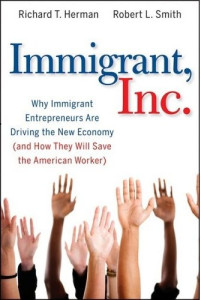
Fast Facts (Key Takeaways for Reporters)
-
Richard T. Herman is a U.S. immigration attorney available for media interviews and commentary.
-
He explains ICE enforcement, detention, visas, green cards, and immigration court procedure clearly.
-
He provides deadline-friendly analysis grounded in federal law and primary government sources.
-
He distinguishes between immigration law, agency policy guidance, and real-world practice.
-
He helps journalists verify claims using official USCIS, EOIR, DHS, and Federal Register materials.
-
Immigration outcomes often depend on posture, timing, and documentary record.
-
Accurate reporting requires separating rumors from enforceable legal authority.
Selected Press Topics
Journalists can contact Richard T. Herman to cover these high-urgency, high-confusion immigration topics with accurate legal framing:
-
ICE enforcement actions and real-world consequences
Explain what happens after detention events, including procedural next steps and legal posture.
-
Immigration detention and bond hearings
Clarify bond standards, custody review, and court procedure in practical terms.
-
Removal defense and immigration court timelines
Explain hearings, relief eligibility, continuances, motions, and realistic outcomes.
-
Visa cancellations, denials, and inadmissibility issues
Translate technical grounds of inadmissibility into understandable reporting.
-
Travel risk for visa holders and green card applicants
Explain what increases risk at airports or borders and what documents matter.
-
USCIS processing delays and case “stall points”
Clarify what delays mean, what notices mean, and what happens next.
-
RFEs, NOIDs, denials, and re-filing risks
Explain why the government requests evidence and what the stakes are.
-
Asylum procedure and humanitarian protection basics
Explain the process without oversimplifying legal requirements and posture.
-
Expedite requests (what USCIS actually allows)
Clarify legal criteria and what evidence is needed to support urgency.
-
Federal Register changes and immigration rulemaking
Explain the difference between proposed rules, final rules, and guidance.
Primary sources reporters can cite for verification:

What makes an immigration source credible
A credible immigration source does three things consistently:
1) Identifies the legal authority
Immigration outcomes are governed by federal statutes, regulations, and binding precedent.
2) Separates law from policy
Agency policy guidance may change faster than statutes and does not always equal enforceable law.
3) Explains real-world procedure
What happens next depends on posture, timeline, and which agency is involved.
Reliable references include:
What Richard T. Herman can clarify fast (on deadline)
Why Journalists Should Consult an Immigration Law Expert for Journalists
Richard Herman can quickly answer questions like:
-
What is the legal authority behind this action?
-
Who has jurisdiction—USCIS, ICE, CBP, or EOIR?
-
What is the next procedural step after this event?
-
Who is affected, and who is not?
-
What facts change risk from low to high?
-
What primary sources should a reporter cite?
For bond and custody standards, a citable EOIR precedent includes:
Contact Richard T. Herman (Direct)
Media Contact (Direct):
Email: richardtmherman@gmail.com
Call: 1-800-808-4013
When you reach out, include:
FAQ
Who is Richard T. Herman?
Richard T. Herman is a U.S. immigration attorney and founder of Herman Legal Group. He is available to journalists for interviews and legal commentary on immigration enforcement, visas, asylum, and immigration court procedure.
What kinds of immigration stories can he comment on?
He can comment on ICE enforcement, detention and bond, immigration court procedure, USCIS case processing, visa denials, travel risks, asylum issues, and federal policy changes affecting immigrant families and employers.
How can journalists contact Richard Herman directly?
Email richardtmherman@gmail.com or call 1-800-808-4013 for media requests, interviews, or deadline quotes.
Can he explain what a new USCIS change means?
Yes. He can explain what is binding law, what is policy guidance, and how the change typically affects real cases, using primary sources such as the USCIS Policy Manual and official agency notices.
Can he explain immigration detention and bond?
Yes. He can explain detention posture, bond hearings, and key legal standards. He can also point reporters to official resources and precedent decisions such as Matter of Guerra.
Can he help reporters verify immigration claims?
Yes. He helps journalists confirm details using official sources such as USCIS, EOIR, DHS, and the Federal Register rather than rumors or secondary summaries.
What This Means Going Forward
Immigration law stories require careful attention to procedure, jurisdiction, and primary-source verification. When enforcement actions, policy changes, or agency notices move quickly, journalists benefit from expert analysis that separates enforceable authority from speculation. Richard T. Herman is available to provide clear, reliable legal explanations that improve accuracy and public understanding.
Media Contact (Direct):
Email: richardtmherman@gmail.com
Call: 1-800-808-4013
Gold Card I-140G Million-Dollar Green Card Program: What Changed, Who Qualifies, and What Immigrants Must Know in 2025–26
By Richard T. Herman, Immigration Lawyer, Herman Legal Group
QUICK ANSWER
The Gold Card is a proposed immigration pathway allowing wealthy foreign nationals to obtain a green card through a $1 million donation (individual) or $2 million donation (corporate) to a qualifying U.S. nonprofit, university, or hospital.
The breakthrough occurred when USCIS formally transmitted draft Form I-140G to the Office of Management and Budget (OMB) for review — a mandatory step before launching a new immigration form.
Referenced sources:
If you want to evaluate eligibility or filing strategy, schedule a review with the Herman Legal Group:

FAST FACTS
- Draft Form I-140G is under OMB review
- Donation amounts:
- $1M for individual petitioner
- $2M for corporate petitioners
- Expected filing fee: ~$15,000
- Affects wealthy immigrants, EB-5 candidates, universities, hospitals, and nonprofits
- Could become the fastest path to a green card
- Faces high litigation risk
- Not yet active — cannot file yet
- Verified updates:

INTRODUCTION
The Trump administration’s 2025–26 immigration strategy combines aggressive enforcement with newly expanded “elite” immigration channels. The Gold Card I-140G green card program has drawn extraordinary attention because it allows qualifying donors to secure permanent residency by contributing large sums to U.S. nonprofits, universities, hospitals, and other public-benefit organizations.
The key development:
USCIS has officially transmitted draft Form I-140G to OMB for approval, which means this program is not hypothetical — it is moving toward implementation.
Government sources:
Major professional analysis confirming the OMB submission:
If rolled out, the Gold Card would compete directly with pathways like EB-5, EB-1, NIW, and occasionally even O-1.
For personal evaluation:
1. WHAT CHANGED: USCIS SENDS DRAFT FORM I-140G TO OMB
The biggest confirmation that the Gold Card is real is the posting of draft Form I-140G to OMB’s review queue.
Why OMB review matters
Before a new immigration form can be used, the Office of Management and Budget must approve it under the Paperwork Reduction Act.
Verified source:
Once OMB gives the green light:
- USCIS adds the form to its Forms page
- USCIS updates the Policy Manual
- Field officers receive training
- Applications can be submitted
If published, all updates will appear at:

2. HOW THE GOLD CARD PROGRAM WOULD WORK
A. Donation Requirements
- $1 million donation (individual petitioner)
- $2 million donation (corporate petitioner)
Donations must be made to U.S.-based public-benefit institutions, typically 501(c)(3) nonprofits.
B. Filing Fee (~$15,000)
This would place it among the most expensive USCIS forms — justified by USCIS as necessary for “integrity reviews.”
C. Program Differences From EB-5
- No job creation
- No investment risk
- No regional center involvement
- Donation may be irrevocable
- Stricter AML and source-of-funds scrutiny expected
- Faster adjudication likely
To compare existing investor pathways:
D. Fraud, AML, and Source-of-Funds Standards
Modeled on EB-5 documentation, USCIS will likely require:
- tax records
- international bank statements
- donor contracts
- nonprofit verification
- AML certification

3. WHO’S MOST AFFECTED
A. High-Net-Worth Immigrants
Includes:
- global investors
- EB-5 participants
- entrepreneurs
- H-1B, O-1, and L-1 executives seeking faster residency
- dependents
B. Universities and Hospitals
Potential beneficiaries:
- Cleveland Clinic
- University Hospitals
- The Ohio State University
- Case Western Reserve University
- Cincinnati Children’s Hospital
- Cleveland Museum of Art
- State universities
C. Corporate Petitioners
The $2M corporate-donation track may be used by:
- biotech companies
- research consortiums
- hospitals
- private universities
Employment-based green card overview:
4. GOLD CARD VS. EB-5 VS. EB-1/NIW COMPARISON
| Category |
Gold Card (I-140G) |
EB-5 Investor Visa |
EB-1 / NIW |
| Donation / Investment |
$1M–$2M donation |
$800K–$1.05M investment |
No major cost |
| Risk |
Political volatility |
Investment risk |
RFE-heavy |
| Job Requirement |
None |
10+ jobs |
None |
| Timeline |
Expected fast |
3–5 yrs |
Medium |
| Dependents |
Yes |
Yes |
Yes |
| Filing Fee |
~$15k |
~$11k |
~$700 |
| Legal Stability |
Low |
Medium |
High |
EB-1/NIW information:
5. LEGAL UNKNOWNS
Major unresolved issues include:
- Definition of “qualifying nonprofit”
- Refundability of donations
- Fraud-prevention mechanisms
- Whether court challenges will block implementation
- Whether I-140G petitions will be grandfathered if reversed
- Extent of AML vetting
- Whether consular officers will follow USCIS approval
Expect ongoing updates at:
6. POLITICAL BACKLASH & EXPECTED LITIGATION
The U.S. is following in the footsteps of other countries that implemented or abandoned “golden visa” programs (Malta, UK, Portugal, Canada).
Media coverage likely to intensify:
Litigation is expected on grounds that DHS is “monetizing immigration benefits.”
7. COMPLIANCE REQUIREMENTS (EXPECTED)
Applicants will likely need:
- full source-of-funds documentation
- foreign tax records
- donation contract
- nonprofit IRS documentation
- lawful immigration status (if filing I-485)
For adjustment of status guidance:
8. STEP-BY-STEP PROCESS (EXPECTED)
- Strategic consultation → Book a Consultation
- Identify qualifying institution
- Negotiate donation
- Prepare evidence packet
- File Form I-140G once published
- File I-485 or consular processing
- Attend interview (if scheduled)
- Receive permanent residency
9. RISKS FOR IMMIGRANTS (CRITICAL)
- No guarantee of approval
- Donation may be nonrefundable
- Program could be frozen by court order
- Increased AML scrutiny
- Reversal by a future administration
- Delays or RFEs could stall cases
10. OHIO ANALYSIS
Ohio could become a top Gold Card beneficiary due to:
- world-class hospitals
- major research universities
- philanthropic growth sectors
- large nonprofit institutions eligible to receive donations
This is especially relevant for:
- Cleveland
- Columbus
- Cincinnati
- Dayton
- Toledo
- Akron
- Youngstown
11. QUOTES FROM RICHARD HERMAN
“The Gold Card program could reshape high-net-worth immigration — but with extraordinary legal risk.”
“Immigrants must be cautious: a philanthropic donation could be lost if the program stalls or is overturned.”
“The financial documentation burden for Gold Card applicants will likely mirror, or exceed, EB-5 standards.”
12. FAQ — GOLD CARD I-140G PROGRAM
1. Is the Gold Card program active right now?
No. USCIS has only submitted draft Form I-140G to OMB. Updates will appear in the USCIS Newsroom → USCIS Newsroom .
2. What exactly is the Gold Card I-140G program?
A proposed immigration pathway allowing green cards through large donations to U.S. institutions.
3. Where can I confirm the status of Form I-140G?
Through the OMB Review Dashboard → OMB Review Dashboard .
4. How much is the required donation?
$1 million for individual petitioners; $2 million for corporate petitioners.
5. Is the donation refundable if my case is denied?
There is no evidence refunds will be allowed; most donations will likely be nonrefundable.
6. Does a $1 million donation guarantee a green card?
No. USCIS may deny the case for many reasons.
7. Is this the same as the EB-5 program?
No. EB-5 requires investment + job creation; Gold Card is donation-based.
8. How is the Gold Card different from EB-1 or NIW?
EB-1/NIW are merit-based; no donations required.
9. Who can file a Gold Card petition?
Individuals or U.S. institutions (universities, hospitals, nonprofits).
10. Who benefits most from the Gold Card program?
High-net-worth immigrants, universities, hospitals, and nonprofits.
11. Will dependents (spouse + children) be included?
Yes. As with EB categories, spouses and unmarried children under 21 qualify.
12. Does USCIS have legal authority to create this category?
USCIS claims authority under employment-based immigrant visa broad definitions.
13. Will Congress need to approve the Gold Card?
No. This is a regulatory (agency-level) program.
14. Could the program be blocked by lawsuits?
Yes. High likelihood.
15. What happens if the program is frozen after I donate?
Your money may already be gone; USCIS may hold or cancel your case.
16. Is it safer than EB-5?
No. EB-5 is more stable; Gold Card is politically volatile.
17. Will USCIS require source-of-funds documentation?
Yes. Likely similar to EB-5 scrutiny.
18. What kind of documents prove source of funds?
Tax returns, bank records, business records, inheritance documents, sale agreements.
19. Can the donation be made in cryptocurrency?
Likely no or extremely restricted due to AML concerns.
20. Will USCIS interview Gold Card applicants?
Probably yes.
21. Can an H-1B worker qualify?
Yes, if they can meet the donation requirement.
22. Can O-1 or L-1 holders qualify?
Yes.
23. Can someone without status in the U.S. apply?
They may apply abroad through consular processing.
24. Can undocumented immigrants apply?
Unlikely — unlawful presence triggers multiple bars.
25. Will Gold Card donors need biometrics?
Yes.
26. Will I need a medical exam?
Yes — required for adjustment of status.
27. Can nonprofits solicit donations for this program?
Likely yes, but with strict compliance requirements.
28. What institutions qualify to receive donations?
Likely 501(c)(3) public-benefit organizations such as universities and hospitals.
29. Can I donate to a private foundation?
Unclear; depends on final rules.
30. Will churches qualify?
Uncertain; IRS and DHS criteria must be met.
31. Can foreign organizations receive the donation?
No — donations must go to U.S. institutions.
32. Will the donation be tax-deductible?
Possibly, if made to a qualifying charity and documented properly.
33. Will USCIS verify the nonprofit?
Yes — likely strict vetting.
34. How long will adjudication take?
Unknown; may be expedited.
35. Will premium processing be available?
Undetermined.
36. Will USCIS publish guidance for officers?
Yes — through the USCIS Policy Manual → USCIS Policy Manual .
37. Will consular officers approve Gold Card cases?
They must follow USCIS approval but may raise security issues.
38. Could a change in administration cancel the program?
Yes — extremely likely.
39. Would pending cases be grandfathered in?
No guarantee.
40. Could USCIS deny a case even if the donation is made?
Yes, for eligibility, admissibility, or security concerns.
41. What if the nonprofit mishandles paperwork?
The petition may be denied.
42. Will this increase fundraising competition among universities?
Yes — major institutions may race to attract donors.
43. Can corporate employers sponsor executives via the Gold Card?
Yes — through the $2 million donation track.
44. Will Gold Card holders get work authorization?
Yes — green card includes full employment authorization.
45. Will Gold Card lead to citizenship?
Yes, after holding permanent residency for the required number of years.
46. Can I apply for adjustment of status in the U.S.?
Yes — if lawfully present and eligible.
See:
Adjustment of Status (I-485)
47. Can I apply from overseas?
Yes — through consular processing.
48. Can I hire a lawyer for this?
Yes. For strategy advice, use:
Book a Consultation
49. How do Gold Card approvals differ from EB-5 approvals?
They rely on donation compliance vs. job creation compliance.
50. What is the safest time to donate?
Only after USCIS finalizes the rule AND all litigation risks are evaluated with an attorney.
KEY TAKEAWAYS
- Draft Form I-140G is under OMB review
- Gold Card green cards would require $1M–$2M donations
- Political, legal, and refundability risks are significant
- Ohio institutions may become major beneficiaries
- Immigrants should conduct legal strategy reviews before donating
- To explore eligibility:
Book a Consultation
RESOURCE DIRECTORY
A. Government
B. Media
C. Economic & Policy
D. Herman Legal Group
2023 H-1B Cap Updates
The H-1B visa is the visa category assigned to highly skilled workers. These are professionals with a college degree.
The visas issued to them, also known as work permits, allow recipients to come to the U.S. to work for three years, with the option to renew for another three years. Obtaining this type of visa requires prior digital registration.
Typically, H-1B visa applicants will have at least 4 years of college or equivalent work experience and work in their previous field of study or experience.
As of Tuesday, March 29, 2022, U.S. Citizenship and Immigration Services (USCIS) has announced that the annual H-1B employment cap limit for FY 2023 has been reached and the random selection process has ended.
By reading this article, you will not only understand the status that governs you as an applicant, but you will also be educated on the other paperwork that must be completed if you are selected.
How do I view the Random Selection Results Online?
To view the results of the random selection, your immigration attorney and corporate signatory will need to access their my.USCIS.gov account and check the status of each beneficiary.
In addition, for each cap record, USCIS must send an email to the employer’s authorized signer and immigration attorney to inform them of the change in status record.
For each registered beneficiary, the USCIS online system displays one of four statuses:
1.) Submitted: this application has been submitted and is eligible for selection. If the initial selection process is complete, the application remains eligible for selection in subsequent selections for the fiscal year in which it was submitted, unless it is subsequently invalidated.
2.) Selected: indicates that the employer may file an H-1B cap application for FY 2023 for the recipient within the designated 90-day filing period.
3.) Denied: duplicate records submitted by the same filer for the same recipient; all FY 2023 entries submitted for that recipient are invalid. There have been reports that USCIS has incorrectly rejected some records as duplicate submissions. If you receive such a rejection, please recheck your submission records to ensure that there are indeed no duplicate submissions.
4.) Invalidated-Failed Payment: An entry was submitted, but the payment method was rejected, disputed or cancelled after submission.
H-1B Cap Petitions for FY 2023
H-1B cap filings on behalf of selected individuals for FY 2023 began on April 1, 2022 and will continue through June 30, 2022. The petition is submitted to the United States Citizenship and Immigration Services (USCIS). Applicants have 90 days to complete this process.
For admissions selected between March 19 and March 29, all FY 2023 H-1B capstone petitions must be submitted during this period. Selection notifications received to date reflect the application period of April 1 through June 30, 2022.
While in most cases a cap request can be made at any time during the application period, some circumstances may require a specific time frame. For example these cases:
If the beneficiary is an F-1 student and needs cap-gap protection, this request must be submitted before the expiration of their OPT employment authorization.
If the beneficiary is awaiting completion or graduation of the required degree, the petition, in this case, should not be submitted until the degree has been awarded or the beneficiary has obtained documentation from the appropriate school principal that the degree requirements have been met.
In all cases, the H-1B petition cannot be submitted online, so applicants filing an H-1B petition must do so on paper. The petitioner must attach a printed copy of the applicable admission selection notice to the FY 2023 H-1B capstone subject petition.
Only elective applicants may file FY 2023 H-1B cap-subject petitions, and only for those recipients named in the applicable elective enrollment notice.
Selection during the enrollment process does not exempt applicants from submitting evidence or otherwise determining their eligibility, as enrollment is tied only to eligibility to file an H-1B capstone subject petition.
Frequently Asked Questions
What is the annual cap on H-1B visas?
The number of H-1B visas available each fiscal year is capped at 65,000 individuals with a bachelor’s degree and an additional 20,000 for individuals with an advanced degree from a U.S. university.
Do I need to find an employer?
The H1B visa is tied to the employer. This means that you absolutely must be sponsored by your employer to apply.
Employers must demonstrate that you will be hired for a professional position. Employers will also need to show that they will pay you the “prevailing wage” for the position. Current salaries must be determined based on an objective survey of the salaries of similarly employed professionals in the same geographic area in which you will be employed.
The employer must also file a statement of working conditions with the Regional Labor Office (DOL). The application assures the DOL that the company will provide you with fair pay and benefits equal to those of a U.S. citizen.
How long is the H1-B visa valid?
The visa is valid for 6 years and can be extended if the applicant submits a current green card application before the 5th year expires.
Depending on your situation, if you need help with the process, please contact the Herman Legal Group who can provide you with information on which visa category may be right for you.