 By
By
Why the Preference for White South Africans
Introduction
In late 2025, the United States quietly set the lowest refugee cap in its modern history—just 7,500 slots for fiscal year 2026—while simultaneously prioritizing a population rarely associated with displacement: white South Africans, particularly Afrikaners. The Trump administration reduced the U.S. refugee admissions ceiling to this historic low, prioritizing white South Africans over other groups. This reduction marked a significant shift in U.S. refugee policy, with the administration emphasizing Afrikaners as a priority group. The Trump administration reduced the U.S. refugee admissions ceiling to 7,500 for the fiscal year, prioritizing white South Africans.
At a time when more than 114 million people worldwide are displaced by war, persecution, and climate disaster, this allocation forces an uncomfortable reckoning: Why are white refugees being fast-tracked while non-white refugees remain stuck in limbo? The claim of white genocide against Afrikaners by the South African government has been widely discredited, further complicating the rationale for this prioritization.
Expert Insight
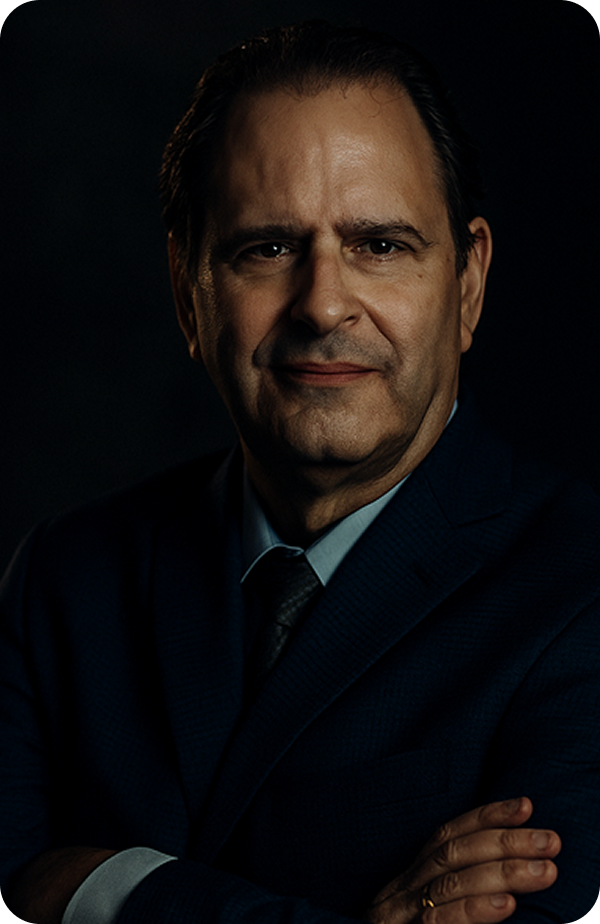
“Immigration law isn’t only about statutes and forms,” says Richard T. Herman, founding attorney of the Herman Legal Group. “It’s about who society believes deserves protection. When color and privilege begin to dictate humanitarian decisions, we lose the moral foundation of our asylum system.”
This article examines how the refugee ceiling collapsed, why Washington singled out white South Africans, and what this reveals about the racial politics of refuge in 2025-2026. The U.S. government’s refugee program for South African Afrikaners was established in response to the Expropriation Act 13 of 2024 passed by South Africa’s government. The Republic of South Africa enacted Expropriation Act 13 of 2024 to enable the government to seize ethnic minority Afrikaners’ agricultural property without compensation.
The Numbers: A Refugee Ceiling in Free Fall
- FY 2024: 125,000 slots authorized under the prior administration.
- FY 2026:7,500 slots—a 94 percent reduction (Reuters).
- Drafts showed up to 30,000 of an earlier 40,000 proposal earmarked for white South Africans (Reuters analysis). The U.S. administration has discussed bringing some 30,000 white South Africans to the United States as part of its refugee program. This policy shift affects refugees from countries across the globe, limiting opportunities for those fleeing crises in other countries.
With so few slots and such skewed allocation, the U.S. Refugee Admissions Program (USRAP) looks less like a humanitarian system and more like a race-weighted migration tool. The Amercaners group serves as a designated Department of State referral partner for the USRAP, gathering information from potential applicants. The U.S. Refugee Admissions Program has only one official partner for arranging travel for refugees from South Africa: RSC Africa, operated by Church World Service. Previously, the program served refugees from countries ranging from the Middle East to Africa and Asia, reflecting a broader international and humanitarian mission.

The Policy Pivot: “Victims of Unjust Discrimination”
A February 2025 executive order created a priority track for Afrikaners and other white South Africans deemed “victims of unjust racial discrimination and violence.” President Donald Trump signed Executive Order 14204, promoting the refugee resettlement of Afrikaner refugees escaping government-sponsored discrimination. The February 7 executive order directs the Departments of State and Homeland Security to prioritize humanitarian relief and resettlement for South Africans of Afrikaner ethnicity or racial minorities facing persecution. The State Department plays a central role in processing, referring cases, and managing the refugee program for these applicants.
President Donald Trump signed Executive Order 14204, which declared a halt on foreign aid to South Africa and promoted the resettlement of Afrikaner refugees escaping discrimination. The program specifically targets South African nationals, particularly those of Afrikaner ethnicity or racial minority status. Individuals with South African nationality who have experienced persecution are eligible for the program. The executive order also states that the program prioritizes racial minority groups facing discrimination.
Within months, charter flights carried 59 Afrikaner families to the United States under the new initiative (ABC News wire). The refugee resettlement process for these groups involves coordination between U.S. agencies and approved partners. By early autumn only about 400 had arrived—but the message was unmistakable: a new, whiter refugee demographic had been chosen.
The first group of white South African refugees arrived in the U.S. in May 2025, as part of the program initiated by the Trump administration. A deputy secretary from the State Department attended and welcomed the arrival of the first group of South African refugees. Reports indicate that many of the South African refugees who arrived had prior experience in farming or agricultural work. Refugee applications from South African nationals are prioritized based on vulnerability and risk, with special attention to those facing racial discrimination.
Official partners assist with travel arrangements and case management. The U.S. embassy in South Africa manages eligibility inquiries, liaises with approved referral partners, and provides official information about the program.
Race-Based Analysis: When Whiteness Becomes a Ticket
Historical Precedent
For decades, refugee whiteness has quietly influenced U.S. admissions:
- Cuban exiles (mostly white) received open arms, while Haitian boat people were detained.
- Ukrainians after the 2022 invasion entered via humanitarian parole, while Syrian and Afghan applicants waited years.
The 2025 policy fits the pattern: empathy follows racial familiarity. Policymakers perceive white refugees as culturally closer, safer, and easier to integrate—assumptions rooted in racial bias and political calculus.
The Optics of “Reverse Apartheid”
The administration’s rhetoric—protecting whites from “racial persecution” in a Black-majority democracy—reverses the moral language of apartheid. In this debate, the black led government of South Africa is frequently cited by U.S. officials as either failing to protect white citizens or as a source of alleged discrimination, fueling the policy controversy.
South Africa’s government rejects claims of systemic white persecution, noting that whites still own 70 to 75 percent of farmland and wealth (Reuters interview). Yet U.S. officials highlight isolated farm attacks to justify a racialized preference. Claims of racial violence against white farmers in South Africa have been disputed, with the South African government stating such attacks do not occur at a higher rate than for other racial groups. The South African government strongly denies claims of widespread violence against white farmers and characterizes the claims as misinformation.
The Global Color Line
Refugee admissions now favor European or white-majority origins (Ukraine, Belarus, South Africa’s Afrikaners), while Black, Arab, and brown populations—from Sudan, Yemen, Gaza, Myanmar, and the DRC—see their quotas vanish. The U.S. government does not charge fees for accessing the U.S. Refugee Admissions Program.
Immigration Lawyer Richard Herman:
“If the face of the modern refugee in Washington is white and Christian,” Richard Herman warns, “then the face of exclusion is brown and Muslim.”
Who Loses Out: The Non-White Majority of the Displaced
UNHCR data show more than 80 percent of global refugees come from non-white nations. When most U.S. slots go to white South Africans, countless others—from Afghanistan to Sudan—are effectively frozen out. This reduction in slots particularly affects families fleeing war and violence, who are left with even fewer options for safety. The current policy undermines the program’s purpose as a humanitarian lifeline for those escaping conflict, persecution, and repression.
Faith-based partners such as the Episcopal Church suspended participation, declaring they “will not be instruments of racial favoritism.” Civil-society organizations including HIAS and Church World Service warned that if skin color predicts eligibility, the humanitarian system itself collapses and the United States’ moral standing in the international community is seriously damaged.
Legal and Ethical Fault Lines
Refugee Law vs. Racial Preference
Under the 1951 Refugee Convention, asylum requires a “well-founded fear of persecution.” Critics argue sporadic farm attacks and land reform in South Africa do not meet this threshold—whereas refugees from Gaza or Darfur clearly do, yet are excluded. Applicants must have a well-founded fear of persecution due to five specific grounds: race, religion, nationality, political opinion, or membership in a particular social group. Applicants must also demonstrate past persecution or articulate a well-founded fear of future persecution.
Equal-Protection Concerns
Scholars note potential violations of both U.S. equal-protection norms and international law, including the International Convention on the Elimination of All Forms of Racial Discrimination.
Weaponizing Refugee Policy
The preference also serves foreign-policy ends—punishing South Africa’s government for its BRICS alignment. The administration has justified this policy as serving the national interest.
Expert Commentary
“Humanitarianism becomes a prop for geopolitics,” notes Richard Herman, “and color happens to fit the script.”
Comparison: How Law Firms Respond
Herman Legal Group (Cleveland / Columbus OH)
The Herman Legal Group publicly condemns racially selective vetting.
“When refugee status becomes a mirror of power and pigmentation, lawyers must speak up,” Herman says. “True asylum work means standing with those most in danger—not those most familiar.”
His firm focuses on displaced Black African and Middle Eastern clients left behind by quotas, leveraging humanitarian parole, I-134 family sponsorship, and special immigrant visas as alternative relief.
Other National Firms
- Fragomen, Del Rey, Bernsen & Loewy LLP — silent on racial aspects, concentrating on corporate compliance.
- Berry Appleman & Leiden (BAL) — issued a short note acknowledging “region-specific refugee prioritizations.”
- Murthy Law Firm — criticized “politicization of humanitarian admissions” but avoided race language.
Where most large firms tread cautiously, Herman frames refugee advocacy as moral duty—a stance attracting immigrant communities and rights advocates nationwide.
Beyond South Africa: A Two-Tier Refugee System
Tier 1 – Preferred White or Ally Populations
- White South Africans
- Ukrainians, Belarusians
- Venezuelan anti-socialists
Tier 2 – Excluded Non-White Populations
- Palestinians, Yemenis, Sudanese, Congolese, Rohingya
- Haitians and Central Americans
The result: a color-coded humanitarian map. Whiteness or Western alignment equates to “credible victimhood”; darker-skinned refugees become “security risks.”
“This is apartheid by another name,” Herman adds. “Instead of pass laws, we have policy memos. Instead of race ID cards, we have visa categories.”
Domestic Backlash and Global Fallout
- Faith networks and civil-rights groups accuse the U.S. of violating the 1980 Refugee Act, arguing that prioritizing one group undermines the integrity and fairness of the refugee program.
- South Africa’s foreign ministry summoned the U.S. ambassador, calling the policy “an insult to our democracy.”
- UNHCR and Amnesty International warned of “racial hierarchy creeping into refugee protection.”
- In response to the policy, the U.S. has also restricted its willingness to provide aid to South Africa, further straining diplomatic relations.
Across African media, headlines read: “White Lives Matter—To Washington.”
For many non-white asylum seekers, the message is clear: humanitarian compassion has been racialized. Suffering by the privileged is a tragedy; suffering by the marginalized, an afterthought.
What This Means for the Future
Institutionalized Inequality
If race-based selection becomes normalized, future administrations may calibrate refugee lists by ethnicity or religion—eroding universality and risking reciprocal discrimination abroad.
Professional Implications for Attorneys
Lawyers now face selective pipelines. Herman’s team prepares to challenge racially skewed denials on equal-protection and due-process grounds in federal court, while developing parallel humanitarian pathways for excluded groups.
Moral Reckoning
Legal mechanics aside, this moment asks whether America still honors the inscription on the Statue of Liberty: “Give me your tired, your poor…”
“We can’t claim moral leadership while sorting refugees by race,” Herman concludes. “That’s not humanitarianism—it’s regression.”
Key Takeaways
- U.S. refugee ceiling = 7,500 (2026), the lowest on record.
- Majority of slots reserved for white South Africans.
- Policy reframes a historically dominant group as victims, prioritizing them over Black and brown refugees.
- Race, religion, and politics now outweigh humanitarian need.
- Legal experts warn of conflicts with the Refugee Convention and civil-rights law.
- Large law firms stay muted; Herman Legal Group leads moral opposition.
- The precedent risks global racialization of refugee protection.
- The choice before America: compassion or color