
Overview Box
Headline: ICE in Minneapolis: “Show Me Your Papers” Citizenship Checks Raise Alarm
One-sentence takeaway: Reports of ICE agents approaching people in public and demanding proof of citizenship in Minneapolis are intensifying fear and raising serious civil-rights concerns. This alarming trend reflects the reality of ICE Minneapolis citizenship checks.
What to do now: Stay calm, ask if you’re free to leave, do not consent to searches, do not sign anything, and contact an immigration lawyer immediately.
Official rights resource: ACLU — Immigrants’ Rights
Printable quick tool: ILRC Red Cards
Talk to a lawyer: Herman Legal Group Consultation
Quick Answer
Yes—multiple reports indicate that ICE officers have been approaching people in Minneapolis-area public places and demanding proof of citizenship or lawful status. This has alarmed residents and civil-rights advocates because these encounters can feel like “papers, please” street checks that create fear for immigrants, mixed-status families, and even U.S. citizens who may be questioned or profiled. People should know that ICE can ask questions, but individuals often still have rights—including the right to remain silent, to refuse consent to searches, and to ask whether they are free to leave. If you or a loved one is stopped or detained, it is critical to stay calm, avoid signing documents without legal advice, and contact a qualified immigration attorney as quickly as possible.
Key resources: NBC News coverage, ACLU “Know Your Rights”, ILRC Red Cards, and Book a consultation with Herman Legal Group.

Show Me Your Papers
I use to live in Russia. What is is happening in Minneapolis sure feels like a Soviet-style policing to me.
Minneapolis residents are describing a disturbing new reality: immigration officers approaching people in public, demanding identification, and pressing them to prove they are U.S. citizens.
These ICE Minneapolis citizenship checks have created a palpable tension in the community.
Not in a courthouse.
Not after a conviction.
Not with advance notice.
But in everyday life—on regular streets, during ordinary commutes—where the wrong encounter at the wrong moment can spiral into detention, fear, and humiliation.
That is the core alarm raised in this recent NBC News report: ICE is approaching people in Minneapolis, demanding proof of citizenship.
And for many people watching this unfold—especially immigrant communities, communities of color, and mixed-status families—the message feels unmistakable:
This isn’t “enforcement.” This is intimidation.
This is “show me your papers.”
Minneapolis Is Becoming the Testing Ground for a New Kind of Street-Level Enforcement
In theory, ICE claims to target specific people.
In practice, residents say these encounters feel like a roving system of checks—where suspicion becomes enough to initiate questioning, and where “prove who you are” becomes the starting point rather than the conclusion.
This is not a theoretical concern. In the Twin Cities, videos and first-person accounts have circulated showing people stopped and pressured to produce proof of citizenship.
Local reporting documented one such encounter in which ICE agents demanded a person “prove” citizenship during a stop, even as the individual questioned why he had been targeted: KSTP: ICE agents stop U.S. citizen, demand proof of citizenship.
The larger issue isn’t only that a stop happened.
It’s the chilling implication behind it:
If you can be stopped without warning, your rights become theoretical
And when rights become theoretical, fear becomes policy.
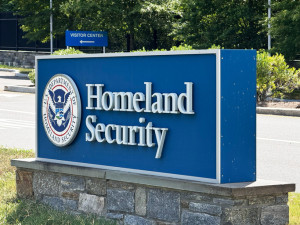
Kristi Noem’s “Be Ready to Prove It” Message Normalizes a Dangerous Standard
What has inflamed public alarm even further is that high-level officials have suggested Americans should be prepared to prove citizenship during these encounters.
As widely reported, Homeland Security Secretary Kristi Noem defended the idea that people near enforcement activity may be asked to identify themselves—fueling concern that “papers, please” logic is being normalized as an acceptable feature of public life.
For example: People.com: Noem says Americans should be prepared to prove their citizenship.
This framing is deeply corrosive in a constitutional democracy.
Because the point of citizenship is not that it must be repeatedly proven on demand—but that it comes with presumptive rights that the government must respect.

The “Show Me Your Papers” Dynamic Hits Citizens Too
The harsh truth: these tactics do not stop at undocumented immigrants.
When enforcement teams operate with broad discretion in public spaces, the net widens. U.S. citizens—especially those who are Black, Latino, Asian, Middle Eastern, African, or visibly “foreign” to someone else’s bias—are more likely to experience these encounters as coercive, threatening, and degrading.
This is exactly how civil liberties collapse in real time:
-
The government expands “suspicion” beyond clear facts
-
The public is told this is “normal” and “necessary”
-
Entire communities begin living like daily movement is risky
-
The line between immigration enforcement and street policing disappears
In effect, citizenship becomes something you carry like a permission slip.

The Legal Reality: ICE Can Ask Questions — But You Still Have Rights
One of the most dangerous features of these incidents is that people often don’t know what they’re allowed to do in the moment.
Here is the most important framework to understand:
1) You can be questioned, but you don’t have to surrender your dignity
Immigration agents can ask questions. That doesn’t mean you have to answer everything.
2) You may have the right to remain silent
Civil rights organizations emphasize that people generally have the right to decline questions and ask if they are free to leave.
Start here: ACLU: Know Your Rights — Immigration Enforcement
3) You do not have to consent to a search
If agents ask to search your car, your pockets, or your home, consent changes the legal posture dramatically.
More guidance: NILC: Know Your Rights
4) “Reasonable suspicion” isn’t supposed to mean “your face looks foreign”
That’s why allegations of racial profiling matter so much in this context.
For reference on profiling concerns: Department of Justice — Guidance on Profiling
What This Does to a City: Fear as a Daily Operating System
The psychological toll of aggressive immigration enforcement is not abstract.
When enforcement becomes unpredictable and public-facing, the entire community adapts around it:
-
Parents rethink school drop-offs
-
Workers skip shifts (or take longer, indirect routes)
-
People avoid hospitals and clinics
-
Victims and witnesses avoid calling police
-
Families stop attending religious services
-
Small businesses lose customers overnight
This is how a city becomes governed by fear—without any formal change in law.
And the damage spreads beyond immigration policy. It becomes a public health issue. A workforce issue. A community safety issue.
Why This Feels “Soviet” to People Who Know History
The phrase “show me your papers” is not just rhetorical.
It invokes a specific kind of society: one where the government treats everyday movement as suspicious, and where legitimacy must be proven on demand.
That dynamic destroys public trust because it flips the default relationship between people and the state:
-
In a free society, the government must justify its intrusion
-
In an authoritarian system, the people must justify their existence
Minneapolis residents are reacting not only to what happened in one interaction—but to what it suggests is becoming routine.
The Bigger Risk: Minneapolis Tactics Don’t Stay in Minneapolis
The greatest danger is normalization.
Once tactics like this become tolerated in one metro area, they become the pilot program for the next. The same playbook—“brief stops,” “routine questioning,” “identity verification,” “collateral encounters”—can migrate quickly.
And if the public is told to accept it as a new normal, the country drifts into a two-tier system:
-
People who move freely
-
People who must constantly prove they deserve to exist here
That is not how citizenship is supposed to work.
What To Do If ICE Approaches You (Practical, Real-World Guidance)
If ICE approaches you in public, the goal is simple:
Stay calm. Stay safe. Don’t escalate. Don’t volunteer unnecessary information.
Here are practical steps:
-
Ask: “Am I free to leave?”
-
If yes: leave calmly
-
If no: ask, “Am I being detained?”
-
Say clearly: “I choose to remain silent.”
-
Do not sign anything without legal advice
-
Do not lie (but you do not have to answer)
-
Document what you can (time, location, badge info, witnesses)
If you need printable rapid guidance:
ILRC Red Cards (“Know Your Rights” wallet cards)
Where to Get Help and Report an Incident
If someone is detained, or if enforcement activity is affecting your family, get legal guidance fast.
Helpful resources include:
If you want to speak to an immigration lawyer about enforcement risk, travel exposure, or family protection planning, Herman Legal Group’s consultation page is here:
Book a consultation with Herman Legal Group
The Core Question Minneapolis Is Forcing America to Answer
A government that demands proof of citizenship on the street, without clear cause, trains the public to accept a premise that should never be normal:
You are not presumed free. You are presumed suspect.
Minneapolis residents are not “overreacting.” They are recognizing a pattern early—before it becomes permanent.
And they are sounding an alarm that applies far beyond Minnesota:
If “show me your papers” becomes the new American routine, the damage won’t be limited to immigrants.
It will redefine citizenship itself.
50-Question FAQ
The Most Asked Questions
1) Can ICE stop me in public in Minneapolis?
ICE can approach and question people in public, but the legality of detaining someone depends on the facts and location. Learn general rights here: ACLU Know Your Rights
2) Do I have to answer ICE’s questions?
Often, you may choose to remain silent. You can say: “I choose to remain silent.” NILC Know Your Rights
3) Can ICE demand proof of citizenship?
ICE may ask for identification or status information, but “demanding proof” in a coercive way raises serious concerns—especially if it resembles profiling.
4) What should I say if ICE approaches me?
Ask: “Am I free to leave?” If yes, leave calmly. If no, say: “I choose to remain silent.”
5) Should I show my ID to ICE?
It depends on your status, location, and risk profile. Do not guess—speak with counsel. Book a consultation with Herman Legal Group
6) Can ICE stop U.S. citizens?
Yes. That’s part of why these reports are alarming—citizens can be questioned, delayed, or mistreated.
7) What if ICE stops me and I’m a U.S. citizen?
Ask if you are free to leave. You can refuse to answer questions beyond identifying yourself in some contexts.
8) Can ICE arrest me without a warrant?
They can arrest in certain circumstances. Home entry typically requires consent or a proper warrant. ACLU guidance
9) Can ICE enter my home in Minneapolis?
Not legally without consent or a valid warrant. Do not open the door—ask them to slide paperwork under the door.
10) Is this happening near courthouses or in neighborhoods?
Reports describe public encounters; details vary by incident. Stay alert and document safely.
Stops, Searches, and Detentions
11) Can ICE search my car?
Not without consent or legal authority. You can say: “I do not consent to a search.”
12) Can ICE take my phone?
Seizing a phone raises serious constitutional issues; consult counsel immediately.
13) Can ICE read my texts or social media?
In some enforcement contexts, the government may review digital information; do not consent to unlocking your device.
14) What if ICE says I “match a description”?
Ask if you’re being detained and request legal counsel.
15) What if ICE is wearing plain clothes?
Ask for identification and agency affiliation. Do not escalate.
16) What if ICE blocks my path?
That can become a detention issue. Stay calm and ask if you can leave.
17) What is a “Terry stop” and does it apply to ICE?
“Terry stops” involve brief detentions based on reasonable suspicion. Immigration enforcement has overlapping but distinct authority.
18) Can ICE detain me just for not carrying documents?
Document rules vary by status. Speak with a lawyer before assuming.
19) Can ICE arrest me if I refuse to talk?
Refusing to talk alone should not be grounds for arrest, but interactions can escalate—be careful and get counsel.
20) What if ICE threatens me with jail?
Do not argue. Ask for a lawyer. Say you will not answer questions.
Immigration Status and Risk Levels
21) Who is at highest risk during street enforcement?
Undocumented individuals, people with old removal orders, and people with unresolved court matters face higher risk.
22) Are green card holders at risk?
Sometimes. Past arrests, alleged fraud, or certain offenses can trigger enforcement attention.
23) Are visa holders at risk (F-1, H-1B, B-1/B-2)?
Yes—status issues can escalate quickly, especially after violations or overstays.
24) Can asylum seekers be detained?
Yes. Detention risk depends on posture, history, and current policy trends.
25) Are DACA recipients at risk?
DACA may reduce risk but does not eliminate it—individual circumstances matter.
26) Are TPS holders at risk?
TPS provides protection while valid, but enforcement risks can arise if there are arrests, allegations, or paperwork issues.
27) Does having a U.S. citizen child protect me?
No. It can help in some legal defenses, but it does not prevent arrest.
28) Does marriage to a U.S. citizen protect me?
Not automatically. Many spouses are still vulnerable depending on entry history and prior orders.
29) Are “mixed-status families” specifically impacted?
Yes—these tactics cause severe fear and instability even when some family members are citizens.
30) Can ICE detain someone while an immigration case is pending?
Yes, sometimes—even with pending petitions or court hearings.
Practical Safety Planning
31) What is a family preparedness plan?
A plan that includes emergency contacts, childcare instructions, and legal documents if someone is detained.
32) Should I carry my passport?
Usually not. Speak to counsel before carrying anything that raises risk.
33) Should I carry proof of lawful status?
Sometimes yes, depending on your status. Ask your lawyer.
34) Should I film ICE encounters?
If safe, filming can help. Keep distance. Do not interfere.
35) What details should I write down after an incident?
Time, location, agent descriptions, vehicle plates, badge names (if visible), and witness names.
36) What if ICE approaches me at work?
Stay calm. Ask if you can leave. Contact counsel.
37) What if ICE approaches me near school or daycare?
Do not escalate. Leave if free to leave. Notify trusted contacts.
38) What if ICE approaches my child?
Children should be instructed to seek a trusted adult and not answer questions alone.
39) Can I refuse to show documents?
Sometimes. But consequences vary—get individualized legal advice.
40) Should I sign anything ICE gives me?
No—never sign documents without a lawyer.
Legal Help and Process Questions
41) What happens after ICE detains someone in Minnesota?
They may be transferred, processed, and placed into removal proceedings or held for bond eligibility review.
42) How do I find out where someone is detained?
Start here: ICE Detainee Locator
43) Can someone get bond after detention?
Sometimes. Bond eligibility depends on history and custody determination.
44) What is an immigration hold (“detainer”)?
A request to local law enforcement to hold someone for ICE pickup (legality and compliance vary).
45) Can Minneapolis police help ICE?
Local policies vary; immigrants should assume information-sharing risk exists.
46) If I have a prior deportation order, what do I do?
Get legal counsel immediately—this is high-risk. Book a consultation with Herman Legal Group
47) What if ICE claims I have “no status,” but I do?
Do not argue. Ask for a lawyer and present evidence through counsel.
48) Can I sue ICE for wrongful stop or profiling?
In some cases, lawsuits are possible, but the process is complex.
49) What if ICE threatens to take my kids?
Contact legal counsel and community support immediately. Prepare a family plan in advance.
50) What if I’m afraid to leave my house?
You are not alone—seek legal advice and community support. Document incidents and get a safety plan.
Minneapolis-Specific Resource Directory (Legal + Rapid Response + Community)
Trusted “Know Your Rights” Tools (Printable + Immediate)
Minnesota / Minneapolis Legal Services & Advocacy Groups
Immigrant legal advocacy (Minnesota)
Civil rights support
Community-based immigrant support (Twin Cities)
Detention & Locator Tools (Critical in the First 24 Hours)
Minneapolis Immigration Emergency Planning for Families
If your household includes immigrants (documented or undocumented), consider creating a basic preparedness file:
-
copies of IDs and immigration paperwork
-
attorney contact information
-
childcare authorization plan
-
emergency money and medications
-
instructions for school pickup
You can start with guidance from:
For Media, Reporting, and Accountability
When incidents are happening across a city, documentation matters.
You can reference coverage here:
Local incident documentation has also been publicly discussed in Minnesota media:
Talk to an Immigration Lawyer
If you or your family is worried about ICE contact, risk exposure, travel, past immigration history, old removal orders, or what to do in an emergency:
Book a consultation with Herman Legal Group