

Several public universities in Florida have entered into formal partnerships with U.S. Immigration and Customs Enforcement (ICE), signaling a dramatic shift in how campus law enforcement interacts with immigration policy. These agreements, known as Florida university ICE partnerships, fall under the controversial 287(g) program, allowing state and local officers to act as federal immigration agents — a policy strongly backed by Governor Ron DeSantis.
These Florida universities would be among the first in the nation to have campus police departments participate in the 287(g) program, as reported by the Associated Press, highlighting the involvement of institutions like the University of Florida and Florida Atlantic University.
This development has raised concerns among students and advocacy groups about the potential impact on campus safety and inclusivity. Critics argue that involving campus police in immigration enforcement could deter students from accessing campus resources and participating in campus life due to fear of immigration-related consequences.
“College campuses should be safe spaces for academic growth, not checkpoints,” said Miriam Feldblum, CEO of the Presidents’ Alliance on Higher Education and Immigration.
The 287(g) program, part of the Immigration and Nationality Act, allows ICE to delegate certain immigration enforcement powers to local and state law enforcement officers — including those on college campuses.
These partnerships allow designated officers to:
There are two main models under 287(g):
Florida’s implementation is under the task force model, which allows police officers to detain and question individuals anywhere, including university campuses.
As of mid-April 2025, at least five major public universities in Florida have confirmed partnerships with ICE:
| University | 287(g) Status | Visa Revocations Reported |
|---|---|---|
| University of Florida (UF) | Signed | 8 students |
| University of South Florida (USF) | Signed | Unknown |
| University of Central Florida (UCF) | Signed | Unknown |
| Florida Atlantic University (FAU) in Boca Raton | Signed | Unknown |
| Florida International University (FIU) | Signed | 18 students |
FIU’s participation in the 287(g) program has raised concerns among students and faculty, particularly given the university’s diverse student body. Approximately 68% of FIU’s students are Hispanic, and nearly 600 are beneficiaries of the Deferred Action for Childhood Arrivals (DACA) program.
The decision to involve campus police in immigration enforcement has led to fears of increased scrutiny and potential targeting of international and undocumented students.
According to the Department of Homeland Security (DHS), a total of 200 law enforcement agencies in Florida currently have active 287(g) agreements, and over 40 more agreements are pending.
Joshua Glanzer, FAU spokesperson, stated:
“All state schools are expected to comply with the governor’s directive.”
For data on visa/Sevis revocations see this.
On February 19, 2025, Gov. Ron DeSantis issued the Governor’s Feb directive, an executive order instructing all state law enforcement agencies — including university police — to enforce federal immigration law under 287(g). The order emphasized:
The consequences for international students and immigrants on campus are significant:
The ICE-campus partnership comes amid a significant rise in student visa revocations across the U.S. According to CNN data:
Data from Insider Higher indicates that 18 international students at Florida International University had their visas or SEVIS revoked this semester; 18 international students at University of Florida suffered similar events. Students and faculty say the enforcement effort is having a chilling effect on campus life and academic freedom.
SEVIS (Student and Exchange Visitor Information System) is the database used by U.S. Immigration and Customs Enforcement (ICE) and the Department of Homeland Security (DHS) to track and manage international students (F, M visas) and exchange visitors (J visas) in the U.S. A SEVIS termination typically results in the student becoming “out of status,” which can lead to visa revocation, loss of legal presence, and potential removal proceedings.
The Florida developments are part of a wider pattern under the Trump administration targeting foreign nationals involved in political activism.
Similar incidents are raising alarms about political surveillance and suppression of speech under immigration pretexts. This case is being seen by many as a political crackdown on student dissent.
The decision has sparked reactions from students and community members. For instance, Jennica Charles, a political science student at FAU and daughter of Haitian immigrants, expressed concern about the potential for racial profiling and the erosion of trust between students and campus police.
Similarly, student protests have emerged in response to recent deportations of international students following minor infractions, highlighting the heightened anxiety within immigrant communities on campus.
At the University of Florida, backlash has been swift. On Wednesday, students rallied in Gainesville to protest the deportation of a Colombian international student.
According to WCJB News, students say the partnership with ICE is creating a climate of fear and uncertainty:
“Our classmates are afraid to speak, afraid to show up to class. Immigration enforcement should not be part of student life.”
Concerns raised by students and staff include:
Campus leaders have largely framed the ICE partnerships as a matter of compliance with state law and campus safety, emphasizing the involvement of the federal government in these agreements:
Cassandra Edwards, speaking for the Board, stated:
“University police departments are encouraged to work with law enforcement entities to enforce both state and federal laws.”
As international students across the U.S. face a wave of visa revocations and SEVIS terminations, Universities are facing a crossroads: how to care for the well-being of foreign students who are in an emotional and sometimes legal crisis.
Rather than partnering with a lawless federal administration that is violating the civil rights of immigrants, and becoming complicit with those civil and human rights violations, U.S. universities should be standing strong to protect their foreign students. If approved, these universities would be among the first to be granted such authority under a federal program, indicating a significant policy change and the implications for campus safety and student welfare.
Designated School Officials (DSOs) and International Student Officers (ISOs) are the individuals who head the International Student Offices on Campus. They are more critical than ever. These professionals serve as the bridge between students and federal immigration authorities—and in today’s climate, that bridge must be built on compassion, trust, and proactive advocacy.
Here’s what a truly supportive and professional DSO or ISO should be doing to help students who are afraid that their F-1 visa has been revoked, or that their SEVIS record has been or may be terminated.
Students facing immigration uncertainty are often paralyzed by fear. Some are afraid to even walk into the international student office. A professional DSO should:
It is not enough to react. A good DSO should:
DSOs are not immigration attorneys, but they can—and should—be knowledgeable, accurate, and transparent. They should:
If a SEVIS termination has occurred or is imminent, a DSO must be ready to:
For reference, DSOs should review and share the DHS SEVIS reinstatement overview:
tudy in the States – Reinstatement
When a student’s status is in jeopardy, it often affects their housing, financial aid, academic enrollment, and mental health. A DSO should:
A proactive DSO equips students, not just manages crises. This includes:
In a time when immigration policies are shifting rapidly and unpredictably, Colleges and Universities must serve not just as bureaucratic gatekeepers, but as compassionate allies and professional guides. A student’s visa status can determine their education, their future, and even their safety. The best colleges will meet that responsibility with urgency, care, and unwavering commitment to the students they serve.
History will not judge Florida state universities well.
If you are an international student, particularly on an F-1, J-1, or OPT visa, here are steps you should take immediately:
Download a Free “Know Your Rights” Guide (PDF) (link simulated)
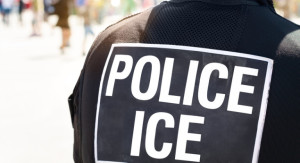
What Is the 287(g) Program?
The 287(g) program stems from Section 287(g) of the Immigration and Nationality Act (INA), passed as part of the Illegal Immigration Reform and Immigrant Responsibility Act (IIRAIRA) of 1996. It allows state and local law enforcement officers to work with federal immigration authorities (ICE) to identify, detain, and begin removal proceedings against noncitizens.
How Does the Program Operate?
Through formal Memoranda of Agreement (MOAs) with the Department of Homeland Security (DHS), participating local law enforcement officers are “deputized” to carry out federal immigration duties. As of December 2024, ICE maintained active 287(g) agreements with 135 agencies across 21 states.
Powers Given to Deputized Officers Include:
· Checking individuals’ immigration status
· Accessing DHS databases
· Issuing detainers
· Creating and managing removal case files
· Issuing Notices to Appear (NTAs)
· Recommending detention or voluntary departure
· Transferring detainees to ICE custody
Under the 287(g) program, these deputized officers, now acting as immigration officers, have the authority to perform immigration enforcement activities on campus. These participating officers can question individuals suspected of being in the country illegally and execute warrants for immigration violations, significantly shifting the role of campus police towards immigration enforcement.
MOAs can be terminated by either party and may or may not include expiration dates.
1. Jail Enforcement Model (JEM):
o Officers question arrestees in jail about immigration status
o Issue immigration detainers
o 60 JEM agreements exist as of Dec. 2024
2. Warrant Service Officer Model (WSO):
o Officers execute ICE warrants in jails
o No authority to conduct interviews
o 75 WSO agreements are active as of Dec. 2024
Discontinued Models:
· Task Force Model
· Hybrid Model These were discontinued in 2012 due to efficiency and resource concerns.
Evolution of the Program
· 2009: ICE standardized all MOAs
· 2013: MOAs updated after DHS OIG recommendations
· 2020: Revised MOAs removed expiration dates and loosened training requirements
· Budget peaked at $68 million (FY2010-2013), but declined to $24 million by FY2022
Training Requirements
· Deputized officers must be U.S. citizens and pass ICE background checks
· Complete 4-week course at FLETC ICE Academy in Charleston, SC
· Topics include immigration law, ICE systems, cultural sensitivity, and profiling prevention
· Must score at least 70% to qualify
· Refresher training is optional, max once every 2 years
· WSO training: 8 hours only, conducted by ICE field offices
Financial Burdens on Localities ICE covers:
· Training travel and materials
· IT infrastructure at local agencies
Local governments must cover:
· Officer salaries and benefits
· Administrative costs
· Detention costs (partially reimbursed by SCAAP, which remains underfunded)
Jurisdiction Selection
Agencies interested in joining submit requests to ICE. While ICE claims to evaluate capacity and benefit, a 2021 GAO report criticized ICE for prioritizing quantity over strategic benefit.
o DOJ found systemic Latino targeting in Maricopa County, AZ and Alamance County, NC, where officers could interrogate any person believed to be undocumented
o Texas A&M research shows profiling even in neighboring areas
o Florida SB1808 now mandates 287(g) participation for all jail-operating law enforcement
o Half of detainers were for misdemeanors or traffic offenses (MPI)
o North Carolina: 33-57% of those detained had traffic violations
o Mecklenburg County: $5.3M in first year
o Alamance County: $4.8M in first year
o Prince William County, VA: $6.4M first year, $26M over five
o Maricopa County: $1.3M deficit in three months due to overtime
o Resulted in property tax hikes and public service cuts
o IACP and MCCA report immigrants fear contact with police, undermining public safety
o Law enforcement officials say it deters crime reporting and cooperation
o 2021 GAO report: No performance metrics, weak monitoring
o 2010 OIG report: ICE failed to ensure MOA compliance or supervise properly
o Poor planning and staff shortages hindered ICE’s ability to manage partnerships
· Secure Communities: Fingerprints sent to ICE databases after arrests
· Criminal Apprehension Program (CAP): ICE agents screen inmates directly
· 287(g) overlaps with these programs, complicating enforcement transparency
The 287(g) program has reshaped how local police interact with immigrant communities, but at significant social, financial, and civil rights costs. While it continues to be expanded in states like Florida, oversight and community resistance persist.
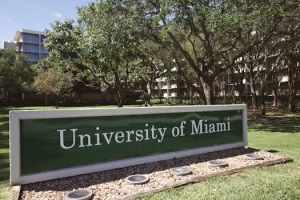
What is a 287(g) agreement?A 287(g) agreement is a partnership authorized under Section 287(g) of the Immigration and Nationality Act. It allows DHS/ICE to delegate limited immigration enforcement authority to state and local law enforcement agencies—including, in this case, campus police at Florida public universities.
Which Florida universities have entered into 287(g) agreements?As of April 2025, the University of Florida (UF), University of South Florida (USF), University of Central Florida (UCF), and Florida Atlantic University (FAU) have confirmed or are reported to have entered into 287(g) agreements. Florida International University (FIU) is also reported to be participating. These schools confirmed their participation and have signed similar agreements to enhance collaboration on immigration enforcement efforts.
What powers do university police receive under a 287(g) agreement?Trained officers may be authorized to:
Does the agreement mean ICE will have an active presence on campus?Not necessarily. Under 287(g), ICE trains campus police officers, who then act under ICE supervision. ICE agents themselves may not be physically stationed on campus, but they will coordinate with campus police.
Can university police detain students solely based on suspected immigration status?If authorized under 287(g), officers may question and detain individuals suspected of being in the U.S. unlawfully. However, they must still adhere to constitutional protections, including probable cause and due process.
Do these agreements apply to undocumented students, DACA recipients, or international students on visas?Yes. Anyone who falls under immigration scrutiny—undocumented immigrants, Deferred Action for Childhood Arrivals (DACA) recipients, or F-1/J-1 visa holders—could be affected by immigration enforcement if a violation or suspicion arises.
Are university campuses still considered “sensitive locations” where immigration enforcement is discouraged?No. The Biden administration had previously considered schools “sensitive locations,” but under renewed Trump-era policies, that protection has been rolled back. 287(g) agreements further erode the notion that campuses are exempt from enforcement.
Can a university refuse to enter into a 287(g) agreement?In theory, yes. Florida law mandates certain types of cooperation, especially for sheriff and detention offices, but does not explicitly require university police to join 287(g). However, Governor DeSantis has issued directives strongly pressuring all state law enforcement entities—including university police—to participate.
Are students being notified when their campus police enter into 287(g) agreements?There is no federal or state requirement to inform students, and many universities have not proactively notified students or held public forums. News has often emerged through media investigations or public records.
Can faculty or administrators intervene or advocate against these agreements?Yes. Faculty senates, student governments, and academic leadership can issue public statements, organize advocacy campaigns, and request transparency from university administration.
How might this affect international student enrollment and recruitment?Foreign students may avoid applying to or enrolling at schools with immigration enforcement agreements. It may also affect a school’s international reputation and partnerships with foreign institutions.
Will this affect students’ access to campus services or make them more reluctant to seek help?Yes. Experts warn that students may avoid academic support, counseling, or reporting crimes due to fear of exposure to immigration enforcement. This undermines campus safety and student well-being.
What happens if someone is mistakenly targeted by campus police under 287(g)?Individuals wrongfully detained or questioned may pursue legal remedies, but it can be difficult to reverse enforcement actions quickly. Legal counsel should be contacted immediately, especially immigration attorneys experienced in 287(g) and removal defense.
Can student protests or political speech lead to immigration scrutiny under 287(g)?Potentially. Under enhanced vetting policies, political activism or online posts are sometimes used to justify visa denials or revocations. 287(g) does not specifically target protestors, but increased surveillance and enforcement increase risks for politically active students, especially noncitizens.
Does this mean students can be arrested for simply being out of status?Yes. Being unlawfully present in the U.S. is a civil violation but can lead to arrest under immigration law. 287(g)-trained officers may arrest noncitizens even without criminal charges if there is an immigration violation.
How can students find out if their SEVIS or visa status has been flagged?Students should monitor their SEVIS records, communicate regularly with their Designated School Official (DSO), and check with U.S. embassies or consulates if abroad. Sudden issues at ports of entry or visa appointments may indicate problems.
What should international or undocumented students do if they feel unsafe?They should:
Where can students and faculty learn more or get help?
Can these agreements be reversed or challenged legally?Yes, though it’s difficult. Legal challenges can be brought under state or federal law, particularly if civil rights violations occur. Political pressure from students, alumni, donors, and faculty may also influence universities’ participation in 287(g).
Florida’s integration of university police into federal immigration enforcement through 287(g) signals a sharp turn toward criminalizing immigrant presence on campuses. As these agreements unfold, students—particularly international and undocumented ones—face heightened vulnerability to deportation, racial profiling, and suppression of political expression.
This policy also raises constitutional concerns around due process, discrimination, and freedom of speech — especially in the context of academic institutions.
The stakes for immigrant students and scholars have never been higher. If you’ve been targeted for immigration enforcement — or fear you might be — speak with a trusted immigration lawyer immediately.
For students, scholars, and campus employees affected by these new policies — particularly if you’re on an F-1, J-1, OPT, or dependent visa — it is essential to:
Richard Herman is one of the nation’s leading immigration attorneys and founder of the Herman Legal Group. He regularly defends students in SEVIS termination, ICE detention, and visa revocation cases.
Book a confidential consultation by arranging it online now:
Call: (800) 808-4013
· American Immigration Council: The 287(g) Program Overview
· ICE: Delegation of Immigration Authority Section 287(g) Immigration and Nationality Act
· Presidents’ Alliance on Higher Education and Immigration