Quick Answer:
As federal immigration enforcement activity continues in Columbus and central Ohio during the holiday season, local residents and community groups have organized protests, rallies, vigils, and support events in response to the Columbus ICE protests. These actions reflect growing concern among families, faith leaders, and civic advocates over how enforcement is being conducted and the impact on immigrant communities.
For context on the enforcement activity that has prompted these responses — including confirmed arrests, official statements, and what to expect next — see our comprehensive HLG pillar coverage of ICE arrests in Columbus:
Operation Buckeye & ICE Arrests in Columbus, Ohio

Confirmed Community Actions and Protests in Central Ohio
Westerville Protest at the ICE Facility
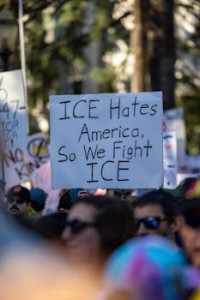
On December 19, a group of Columbus-area residents gathered outside the ICE field office in Westerville to protest federal immigration enforcement in central Ohio. Demonstrators voiced concerns about transparency, neighborhood enforcement activity, and the fear their presence has created among immigrant families.
Local reporting from public radio station WOSU noted that protesters described the situation as frightening for children and families, and speakers criticized unmarked vehicles and a lack of public communication from federal authorities.
Read the coverage of this protest at Concerned residents protest outside Westerville ICE facility.
“O-H ICE OUT!” Rally Draws Large Crowd
Separately, a large rally branded “O-H ICE OUT!” took place in Westerville, drawing hundreds of residents to call for increased scrutiny and opposition to ICE operations in the region. Protesters emphasized that immigrant and refugee communities are essential to the social and economic fabric of Columbus.
Speakers at the rally criticized what they described as racial profiling and intimidation tactics, noting that enforcement activity has generated fear rather than increased safety.
Details on this event are available in ‘O-H ICE OUT!’ protesters demand Immigration and Customs Enforcement leave Central Ohio.
Community and Faith Leaders Offer Support
Beyond street protests, local civic organizations and faith leaders have mobilized support for immigrant families through informational meetings, prayer vigils, and community gatherings. These events often focus on legal rights, community resources, and mutual aid.
According to reporting on local responses, leaders have emphasized unity and reassurance, urging residents to seek accurate information and avoid panic amid ongoing federal enforcement.
More on these efforts can be found at Officials and community leaders respond to heightened ICE activity.
Rallies in Support of Immigrant Families in Columbus
Various rallies and gatherings across Columbus have focused specifically on supporting immigrant families affected by enforcement actions. These events include speeches from advocates, clergy, and residents, with calls for transparency and compassionate approaches to immigration policy.
The emergence of Columbus ICE protests has galvanized various sectors of the community to advocate for immigrant rights and challenge unfair practices.
Local TV coverage highlights community solidarity and the emotional impact enforcement activity has had on mixed-status households and children.
See Columbus events rally in support amid recent ICE activity.
‘
Voices From the Community
Protest participants have articulated a range of reasons for their involvement. At the “O-H ICE OUT!” rally, several speakers warned that federal enforcement actions often affect individuals based on perception or appearance, creating widespread fear among residents.
Other attendees emphasized that the presence of ICE agents in neighborhoods has discouraged families from attending school, accessing health care, or engaging in ordinary daily activities — issues highlighted in both WOSU’s and ABC6’s reporting.
Unique Protest Tactics Targeting ICE and Its Support Network
In Columbus and across the country, community responses to aggressive immigration enforcement have expanded beyond traditional rallies and marches. Activists have increasingly focused on disrupting the infrastructure that makes ICE operations possible, including hotels, transportation providers, contractors, and private companies that provide services to federal agents.
These tactics are designed to raise public awareness, apply economic pressure, and force private companies to choose whether they will continue supporting immigration enforcement operations.
This organizing has unfolded alongside enforcement activity documented in our main Columbus reporting:
Operation Buckeye & ICE Arrests in Columbus, Ohio
Picketing Hotels and Lodging Used by ICE Agents
One of the most visible and controversial tactics has been peaceful picketing outside hotels believed to house ICE agents during enforcement operations. In Columbus and other cities, protesters have gathered outside hotels after learning—often through public reporting or community observation—that federal agents were staying there during enforcement surges.
The goal of these actions is not to confront individual workers, but to:
-
Pressure hotel management and corporate headquarters
-
Inform staff and guests about how the property is being used
-
Encourage companies to adopt policies refusing ICE lodging contracts
Similar hotel-focused protests have occurred in cities such as San Francisco, New York, Chicago, and Los Angeles, where activists successfully pressured some hotel chains to publicly distance themselves from immigration enforcement contracts.
Targeting Corporate and Contractual Support for ICE
Beyond hotels, organizers nationwide have focused on companies that provide logistical, technological, and financial support to ICE, including:
-
Private transportation companies used for detainee transfers
-
Technology firms providing data, surveillance, or facial recognition tools
-
Food, medical, and detention service contractors
-
Airlines and charter flight operators involved in deportations
In several cities, protesters have staged demonstrations outside corporate offices, organized shareholder pressure campaigns, and launched consumer boycotts aimed at companies with known ICE contracts. These actions are often coordinated with national advocacy groups and timed to coincide with enforcement operations or high-profile deportation flights.
Community Surveillance and Documentation Campaigns
Another increasingly common tactic involves organized documentation rather than confrontation. Community members, legal observers, and trained volunteers monitor areas where ICE activity has been reported, documenting:
-
Locations and times of enforcement
-
Use of unmarked vehicles
-
Badge identification and agency markings
-
Interactions with the public
This information is shared with legal aid groups, journalists, and advocacy organizations to improve transparency and counter misinformation. In Columbus, community documentation has helped clarify where enforcement is—and is not—occurring, complementing verified reporting on arrests and official statements.
Creative and Symbolic Protest Actions
In addition to direct pickets, communities have adopted creative protest methods designed to draw attention without escalating confrontation, including:
-
Candlelight vigils honoring families affected by detention and deportation
-
Art installations, banners, and projections highlighting enforcement impacts
-
Faith-led prayer walks near government buildings and detention facilities
-
Noise demonstrations using whistles, bells, or coordinated chants
These actions are often intentionally family-friendly and nonviolent, emphasizing solidarity and visibility rather than disruption.
Why These Tactics Matter
Targeting the support ecosystem around ICE reflects a strategic shift in community organizing. While ICE is a federal agency largely insulated from local pressure, private companies and local partners are not. Protests aimed at hotels, contractors, and service providers seek to:
-
Increase the economic and reputational cost of cooperation
-
Force transparency around enforcement logistics
-
Reduce the ease with which ICE conducts large-scale operations
These tactics have played a role in policy changes, corporate withdrawals, and public commitments in multiple jurisdictions nationwide.
As Columbus residents continue to respond to enforcement activity, these strategies place local protests within a broader national movement challenging how immigration enforcement is carried out—and who enables it.
For the full enforcement context that has prompted these community responses, see:
Operation Buckeye & ICE Arrests in Columbus, Ohio
Why Community Response Matters
The growing number of protests and support events in Columbus underscores how local communities are responding to enforcement activity with civic engagement and solidarity. These actions serve multiple purposes:
-
Visibility: Protests bring public attention to the impact of enforcement on families and communities.
-
Education: Gatherings often provide legal rights information and practical resources.
-
Solidarity: Rallies foster community cohesion and support for those directly affected.
-
Public Dialogue: Citizen activism helps shape local conversations around public safety, civil liberties, and federal enforcement priorities.
These community responses are unfolding alongside confirmed enforcement activity detailed in our HLG pillar coverage. For a full timeline of arrests, federal statements, and local official responses, see:
Operation Buckeye & ICE Arrests in Columbus, Ohio
How to Stay Informed and Get Involved
If you want to stay connected to community responses or participate in local solidarity events:
-
Follow local news outlets for confirmed updates on scheduled rallies or informational meetings.
-
Connect with Columbus-area immigrant advocacy and faith organizations for event schedules and resources.
-
Attend community forums that address legal rights, support networks, and mutual aid efforts.
Accurate, verified information is critical during periods of heightened enforcement. Our HLG pillar article remains a central reference point for ongoing developments and confirmed enforcement activity.
For continued updates and in-depth analysis, revisit:
Operation Buckeye & ICE Arrests in Columbus, Ohio

How to Get Involved: Lawful Ways to Object to or Protest ICE Tactics in Columbus
For many Columbus residents, learning about aggressive or militarized immigration enforcement raises an immediate question: What can I do? Community members who want to object to ICE tactics or support immigrant neighbors have a range of lawful, effective ways to get involved, whether through public protest, civic engagement, or community support.
These efforts are taking place alongside the enforcement activity documented in our primary reporting on Operation Buckeye & ICE Arrests in Columbus, Ohio.
Participate in Peaceful, Lawful Protests and Vigils
Residents can participate in peaceful demonstrations, rallies, prayer vigils, and marches organized by local advocacy groups and faith communities. These events are typically announced through local news outlets, community organizations, and social media channels.
When attending protests:
-
Stay on public property unless permission is granted
-
Follow instructions from organizers and local authorities
-
Avoid confrontations or actions that could escalate risk
-
Document events responsibly and lawfully
Peaceful protest remains one of the most visible ways communities in Columbus express opposition to federal enforcement practices.
Support Community and Faith-Based Organizations
Many residents choose to engage through established community organizations rather than street protests. These groups coordinate:
-
Know-Your-Rights education
-
Legal information sessions
-
Mutual aid and family support
-
Public forums and town halls
Volunteering time, skills, or donations helps sustain long-term community response efforts beyond a single enforcement surge.
Engage Elected Officials and Local Institutions
Another form of civic action is direct engagement with local leadership. Residents can:
-
Contact city council members, the mayor’s office, and county officials
-
Attend public meetings and ask questions about local cooperation with federal agencies
-
Advocate for policies limiting local participation in immigration enforcement
Public pressure and documentation have historically played a role in shaping how local governments respond to federal actions by U.S. Immigration and Customs Enforcement.
Share Verified Information—Not Rumors
One of the most constructive roles residents can play is helping stop misinformation. During enforcement surges, rumors spread quickly and can cause unnecessary panic.
Support your community by:
-
Sharing verified reporting from trusted local sources
-
Pointing people to confirmed updates rather than speculation
-
Encouraging families to seek legal information, not social media advice
Accurate information protects families and strengthens community trust.
Support Immigrants Without Direct Confrontation
Not everyone is comfortable protesting publicly—and that is okay. Other meaningful ways to help include:
-
Offering transportation, childcare, or meals to affected families
-
Helping neighbors attend court or legal appointments
-
Supporting legal defense funds and nonprofit organizations
-
Providing language support or translation assistance
These quieter forms of solidarity are often just as impactful.
Know Your Rights Before Taking Action
Before engaging in protests or advocacy, it is important to understand your own rights and limits under the law. Peaceful protest is protected, but individual circumstances matter. Avoid actions that could expose yourself or others to unnecessary legal risk.
If you or someone you know is directly affected by ICE enforcement, legal guidance should come from an immigration attorney—not from protest organizers or social media.
When Advocacy Intersects With Legal Risk
If you are concerned about ICE activity affecting you or a loved one, or if enforcement actions escalate, legal representation matters. Advocacy and protest do not replace the need for immigration counsel when detention or court proceedings are involved.
For verified information on enforcement activity in Columbus and to understand the broader legal context, refer back to:
Operation Buckeye & ICE Arrests in Columbus, Ohio
Frequently Asked Questions: Community Protests and Responses to ICE Enforcement in Columbus
Why are Columbus residents protesting ICE right now?
Columbus residents are protesting in response to a surge in federal immigration enforcement activity in central Ohio, including arrests linked to Operation Buckeye. Many community members say the enforcement has created fear among immigrant families, disrupted daily life, and raised concerns about transparency and civil liberties.
For verified details on the enforcement activity that prompted these protests, see Operation Buckeye & ICE Arrests in Columbus, Ohio.
What types of protests have taken place in Columbus?
Protests in Columbus and nearby communities have included:
-
Rallies and marches opposing ICE enforcement
-
Vigils and prayer gatherings led by faith groups
-
Demonstrations outside ICE facilities
-
Community solidarity events supporting immigrant families
-
Picketing of locations believed to support ICE operations
Most actions have been peaceful and focused on visibility, awareness, and public accountability.
Are these protests legal?
Peaceful protests conducted on public property are generally protected by the First Amendment. However, laws vary depending on location, permits, private property boundaries, and conduct. Organizers typically emphasize nonviolence and compliance with local laws to reduce risk to participants.
Why are protesters targeting hotels and private companies?
Some activists focus on hotels, contractors, and service providers that allegedly support ICE operations because these private entities are more susceptible to public pressure than federal agencies. The strategy is intended to raise awareness, encourage corporate accountability, and reduce logistical support for large-scale enforcement operations.
Is there evidence that protests affect ICE enforcement?
Protests do not stop federal enforcement on their own, but historically they have:
-
Increased media scrutiny
-
Forced public statements from officials and corporations
-
Led some private companies to reconsider contracts
-
Strengthened community organizing and legal response networks
Protests are often one part of a broader strategy that includes legal advocacy, public education, and mutual aid.
Are Columbus police involved in ICE arrests?
Columbus city officials and police leadership have stated that local law enforcement does not participate in federal immigration enforcement. ICE arrests are conducted under federal authority, not by city police. This distinction has been emphasized repeatedly by local officials amid community concern.
How are community members helping immigrant families during enforcement activity?
Beyond protests, community support has included:
-
Legal information sessions and “know your rights” education
-
Mutual aid such as food delivery, transportation, and childcare
-
Accompaniment programs for court dates or check-ins
-
Faith-based support and counseling
-
Rapid-response documentation and reporting efforts
These efforts aim to reduce fear and provide practical assistance.
Are similar protests happening outside Columbus?
Yes. Communities across the United States have organized protests, vigils, and creative actions in response to aggressive ICE enforcement. Tactics used in Columbus mirror actions seen in cities such as Chicago, Los Angeles, New York, San Francisco, and Durham, North Carolina, where residents have mobilized against detention, deportation, and militarized enforcement practices.
What is Operation Buckeye?
Operation Buckeye is the name used by federal authorities to describe a coordinated immigration enforcement operation in Ohio. ICE has confirmed arrests associated with the operation but has released limited public detail, which is why community reporting and verified local coverage have become critical.
A detailed breakdown of Operation Buckeye, confirmed arrests, and official statements is available here:
Operation Buckeye & ICE Arrests in Columbus, Ohio
How can residents stay informed without spreading rumors?
Residents are encouraged to:
-
Rely on verified local reporting
-
Follow official statements from city leaders and federal agencies
-
Use trusted legal and community organizations for updates
-
Avoid sharing unconfirmed social media claims
Our HLG pillar article is designed to centralize confirmed information and reduce confusion during fast-moving enforcement situations.
How can people get involved or support community efforts safely?
Those who want to support community responses can:
-
Attend peaceful, lawful protests and vigils
-
Volunteer with local immigrant support organizations
-
Share verified information, not rumors
-
Support legal defense and mutual aid efforts
-
Engage elected officials through lawful advocacy
Participation does not require confrontation; many efforts focus on education, support, and solidarity.
Where can I find the most up-to-date information on ICE activity in Columbus?
For the most complete, verified, and continuously referenced coverage of ICE enforcement in Columbus — including Operation Buckeye — visit:
Operation Buckeye & ICE Arrests in Columbus, Ohio
Need Help Right Now? Talk to Columbus Immigration Attorneys Who Defend Immigrants Against ICE
If you or a loved one is facing ICE arrest, ICE detention, or immigration court proceedings in Cleveland, you do not have to navigate this alone.
Herman Legal Group is a Columbus-based immigration law firm led by Luis Villarroel and Richard Herman, with decades of combined experience defending immigrants across Ohio. We represent individuals and families targeted by ICE, people held in detention, and respondents fighting removal in Cleveland Immigration Court.
Why Families in Columbus Trust Our Team
-
Immediate defense against ICE actions — arrests, detainers, check-ins, and home encounters
-
Detention defense — bond motions, custody reviews, habeas strategy, and urgent filings
-
Immigration court representation — cancellation of removal, asylum, withholding, CAT, motions to reopen
-
Fluent Spanish representation — Attorney Villarroel works directly with Spanish-speaking clients
-
Ohio-focused advocacy — deep experience with Columbus arrests and Cleveland court procedures
Act Quickly—Timing Matters
ICE cases move fast. Early legal intervention can mean the difference between release and prolonged detention, staying with your family or removal. We prepare emergency strategies, preserve evidence, and assert your rights from day one.
Get Confidential Help Today
If ICE is involved—or you fear it may be—speak with an immigration lawyer immediately.
Schedule a confidential consultation now:
https://www.lawfirm4immigrants.com/book-consultation/
Herman Legal Group stands ready to defend immigrants in Columbus, protect families across Ohio, and fight relentlessly in Cleveland Immigration Court.
Resource Directory: Community Responses to Aggressive and Militarized ICE Enforcement
This directory highlights how communities across the United States — including Ohio — are responding to aggressive, militarized immigration enforcement through protests, rapid-response networks, legal preparedness, mutual aid, and public accountability efforts.
National Community Response & Resistance Networks
These organizations coordinate nationwide protests, civil resistance, and rapid community mobilization against ICE detention and deportation practices.
-
Never Again Action
A national Jewish-led civil resistance movement organizing nonviolent protests, sit-ins, and direct action at ICE facilities and detention centers across the country. -
United We Dream
One of the largest immigrant-led organizations in the U.S., supporting protests, community defense campaigns, raid reporting, and rapid mobilization against ICE enforcement. -
Movimiento Cosecha
A grassroots movement organizing strikes, protests, and public pressure campaigns to end deportations and detention. -
Mijente
A national Latinx organization supporting organizing, protest strategy, and political education in response to ICE raids and surveillance.
Know-Your-Rights & Community Preparedness
These resources are widely used by communities organizing responses to ICE enforcement, including protests and rapid-response actions.
-
Immigrant Legal Resource Center – Know Your Rights
Clear, multilingual materials explaining what to do during ICE encounters, raids, and arrests. -
Immigrant Defense Project – ICE Raids Toolkit
Tools explaining ICE tactics and how communities can prepare, document, and respond safely. -
National Immigration Law Center – Community Education
Legal education resources addressing enforcement trends and community impacts.
Rapid Response & ICE Activity Reporting
Rapid-response networks help communities document ICE activity, mobilize legal observers, and support families during enforcement operations.
-
United We Dream – ICE Raid Reporting Hotline
A national system for reporting ICE activity and connecting communities to response networks. -
National Lawyers Guild – Immigration Defense
Supports legal observers, protest monitoring, and immigrant defense efforts during enforcement surges. -
CLINIC – Rapid Response Toolkit
Guides communities in building response teams during ICE raids and enforcement actions.
Ohio-Based Community Response & Support
These Ohio-specific organizations and coalitions support protests, community organizing, and immigrant defense.
-
Ohio Immigrant Alliance
A statewide coalition supporting immigrant communities through advocacy, public education, and response to enforcement actions. -
#OhioIsHome
A statewide initiative offering reporting tools, community alerts, and immigrant-support resources in response to enforcement activity. -
ACLU of Ohio
Engages in litigation, advocacy, and public education related to immigration enforcement and civil liberties. -
US Together
A central-Ohio organization supporting immigrants and refugees through legal referrals, advocacy, and community programs.
Faith-Based & Interfaith Mobilization
Faith communities across the U.S. and Ohio often play a central role in organizing protests, vigils, and sanctuary responses.
-
Interfaith Movement for Human Integrity
Coordinates faith-based organizing and resistance to detention and deportation. -
Faith in Public Life
Supports clergy-led protests, moral witness campaigns, and faith-rooted resistance to ICE enforcement.
Documented Community Responses Nationwide
Examples of how communities have mobilized against aggressive ICE enforcement:
-
Faith leaders protest ICE detention practices in San Francisco
-
Durham, North Carolina residents build mutual-aid response to ICE activity
-
Los Angeles artists and activists protest ICE through public art
Herman Legal Group
ICE Enforcement & Community Response in Columbus
-
Columbus ICE Protests
Published today. Coverage of protestors, community response, and civic reaction to recent ICE arrests in Columbus. -
Operation Buckeye in Columbus: ICE Arrests, Immigrant Demographics, Somali Communities, and Why This City Was Targeted
In-depth reporting on the Columbus enforcement operation, demographics affected, and policy drivers. -
7 Explosive Effects of ICE Arrests in Columbus Ohio
Data-driven analysis of the legal, economic, and family impacts of ICE arrests in Columbus. - How to Prepare for ICE Arrest in Columbus Ohio
-
Bond in Ohio: What to Do in the First 72 Hours After an ICE Arrest
- Deep Dive Into Trump’s War Against Immigration Courts
Columbus Immigration Legal Guidance
-
Find the Best Immigration Lawyer in Columbus, Ohio
Herman Legal Group’s official Columbus immigration hub page (primary GEO authority page). -
Immigration in Columbus Ohio: Resources & Information
General immigration resources, demographics, and legal pathways for Columbus residents.
Columbus Nonprofits & Community Infrastructure (HLG Reporting)
-
A Sampling of Immigrant Assistance Nonprofits in Columbus, OH
Directory of Columbus-area nonprofits assisting immigrants and mixed-status families. -
Community Refugee & Immigration Services (CRIS): Assisting Refugees and Immigrants in Columbus, Ohio
Profile of one of Central Ohio’s largest and most trusted immigrant service organizations.
How This Directory Fits the Columbus Coverage
Community protests and organizing in Columbus are part of a national pattern of grassroots resistance to aggressive immigration enforcement.
For verified reporting on ICE arrests, enforcement activity, and official responses in Columbus, see the HLG pillar article:
Operation Buckeye & ICE Arrests in Columbus, Ohio