$70 Billion Immigration Enforcement Package: Why This May Be the Most Important Immigration Story of 2026
By Richard T. Herman, Esq.
Quick Answer
Congress is moving toward final approval of a nearly $70 billion immigration enforcement package that would provide approximately $38 billion for Immigration and Customs Enforcement (ICE) and $26 billion for Customs and Border Protection (CBP), along with billions more for detention operations and immigration enforcement infrastructure. Funding extends through fiscal year 2029.
The Senate has already approved the package, and House approval appears likely. If enacted, it would provide immigration enforcement agencies with unprecedented resources through the remainder of President Trump’s term.
For immigrants, employers, universities, and families, this may prove more consequential than many executive orders, travel bans, court decisions, or USCIS policy memoranda because enforcement priorities only matter if the government has the personnel, detention capacity, transportation systems, attorneys, and technology necessary to implement them.
In short, this bill is not primarily about changing immigration law.
It is about dramatically expanding the government’s ability to enforce existing immigration laws.
Why This May Be Bigger Than Any White House Immigration Executive Order
Over the past year, immigration headlines have focused on:
- travel restrictions;
- enhanced vetting programs;
- asylum policies;
- social media screening;
- detention litigation;
- the new USCIS adjustment-of-status discretion policy.
Many of those developments generated enormous controversy.
But enforcement ultimately comes down to resources.
An immigration agency cannot significantly increase arrests without officers.
It cannot expand detention without beds.
It cannot conduct more workplace investigations without investigators.
It cannot increase removals without transportation and logistical support.
According to reporting from Reuters, Associated Press, and The Guardian, Congress in Washington is now attempting to provide those resources through an immigration enforcement bill on a scale not seen in modern immigration enforcement history.
Critics argue the measure delivers a large infusion of money with limited oversight, and some critics described a related provision as a slush fund.
That is why many immigration lawyers believe this legislation may ultimately have a greater practical impact than many of the immigration policies that have dominated headlines during the past year, because it is designed to facilitate a broader enforcement crackdown.

What Is Actually in the Immigration Enforcement Bill Package?
Current reporting indicates that the legislation includes approximately, as part of a broader homeland security funding structure aimed at strengthening border security:
$38 Billion for ICE
Funding would support:
- additional enforcement personnel;
- expanded detention operations;
- transportation and removal logistics;
- investigative activities;
- fugitive operations;
- enforcement infrastructure.
$26 Billion for Border Patrol (CBP)
Funding would support:
- Border Patrol operations within U.S. Customs and Border Protection, which operates under the Department of Homeland Security;
- staffing increases;
- technology;
- surveillance systems;
- border infrastructure.
Funding for new family detention faciilities allows parents and children to be held together during prosecution.
Additional DHS Enforcement Funding
The package also contains billions of dollars for immigration enforcement initiatives, detention operations, and operational support.
While specific implementation details will evolve, the overall objective is clear: increase enforcement capacity.
What Happens Next?
The biggest Senate battle has already occurred.
The Senate passed the legislation by a 52-47 vote after more than 18 hours of proceedings on the senate floor during a vote-a-rama.
Senate Republicans advanced it without support from Democrats, underscoring how partisan the Senate passage was as lawmakers considered amendments during the process. The bill moved through Congress using budget reconciliation, which allows passage by a simple majority.
The focus now shifts to the House of Representatives, where the bill now heads and could be considered as soon as this week.
As of June 2026, House Republican leadership appears to have a viable path to passage.
If the House approves the measure, President Trump is expected to sign it quickly given the administration’s emphasis on immigration enforcement.
Barring an unexpected political development, the legislation appears likely to become law.

Will ICE Increase Arrests?
Probably.
That is the practical purpose of the legislation.
Additional funding does not automatically guarantee a specific number of arrests or deportations.
However, increased resources generally result in:
- more law enforcement officers;
- more detention capacity;
- more investigations;
- more transportation resources;
- greater ability to execute final orders of removal.
Immigrants with unresolved immigration issues, prior removal orders, pending enforcement matters, or significant status violations should pay close attention to these developments.
Will Immigration Detention Expand?
Almost certainly.
One of the greatest operational constraints facing immigration enforcement agencies has been detention capacity.
More funding means more contracts, more beds, more transportation resources, and more operational flexibility.
For immigration lawyers, that likely means:
- more detained clients;
- more bond hearings;
- more custody reviews;
- more federal habeas corpus litigation;
- increased demand for emergency legal representation.
This issue is particularly important because detention often shapes the outcome of removal proceedings.
Individuals who are detained frequently face greater challenges obtaining evidence, securing counsel, and preparing their cases.
Will This Affect Green Card Applicants?
Many immigrants assume that enforcement legislation only affects undocumented immigrants.
That assumption may be incorrect.
While this package is not a USCIS funding bill, enforcement initiatives often coincide with:
- increased fraud investigations;
- enhanced vetting;
- greater information sharing between agencies;
- more Requests for Evidence (RFEs);
- more Notices of Intent to Deny (NOIDs);
- heightened scrutiny of discretionary benefits.
These concerns are especially relevant following USCIS’s May 2026 adjustment-of-status memorandum.
As discussed in HLG’s analysis of “Will USCIS Deny My I-485 Under the New 2026 Memo?”, many applicants are already concerned about expanded discretionary review in adjustment-of-status adjudications.
Likewise, applicants should understand the risks explored in HLG’s article “What Happens If Your Adjustment of Status Is Denied?“, particularly if increased enforcement resources result in broader government scrutiny of immigration benefits.
The legal standards governing green card eligibility may not change.
The intensity of review could.
What Does This Mean for International Students?
International students should not assume they are insulated from these developments.
As discussed in HLG’s article “F-1 to Marriage Green Card“, many students are already navigating increased uncertainty regarding future immigration benefits.
Increased enforcement funding may result in:
- more compliance reviews;
- increased scrutiny of status violations;
- greater information sharing among agencies;
- more aggressive enforcement of existing immigration laws.
Students should ensure that their immigration records remain accurate and that they promptly address any status concerns.
What Does This Mean for H-1B Workers and Employment-Based Immigrants?
Employment-based immigrants should also pay attention.
Although the legislation primarily targets enforcement operations, increased government resources often lead to:
- expanded investigations;
- more site visits;
- additional compliance reviews;
- greater scrutiny of employment-based filings.
As discussed in HLG’s article “Should H-1B Holders Avoid Filing I-485 Right Now?“, employment-based immigrants are already confronting uncertainty created by recent USCIS policy developments.
This legislation could add another layer of scrutiny to an already evolving landscape.
Will Employers Face More I-9 Audits and Workplace Enforcement?
Many employers may experience the effects of this legislation before individual immigrants do.
Historically, increased enforcement funding has often been accompanied by:
- more I-9 audits;
- workplace investigations;
- compliance reviews;
- employer sanctions actions.
Industries that have historically experienced heightened scrutiny include:
- construction;
- hospitality;
- manufacturing;
- food processing;
- transportation;
- agriculture.
Businesses that employ foreign nationals should review their compliance programs now rather than waiting for an audit notice.
The Immigration Court Bottleneck
One of the most important unanswered questions is whether Congress will significantly expand immigration court funding.
Enforcement agencies can scale rapidly when resources increase.
Immigration courts generally cannot.
If arrests, detention, and enforcement activity increase faster than adjudicative capacity, the result may be:
- larger backlogs;
- more detained dockets;
- increased pressure on immigration judges;
- additional due process litigation.
This imbalance could become one of the defining immigration challenges of the next several years.
Richard Herman’s Analysis: What Immigration Lawyers Should Expect
Based on current legislative debate, immigration lawyers should prepare for six major trends, especially since senators spent the debate focused on passage rather than broader court-capacity concerns.
1. Increased Enforcement Activity
Additional resources typically translate into increased operational activity.
2. Expanded Detention
Detention growth appears to be a central objective of the legislation.
3. More Workplace Audits
Employer compliance enforcement is likely to increase.
4. More USCIS Scrutiny
Applicants should expect more RFEs, NOIDs, fraud investigations, and discretionary review.
5. More Federal Litigation
Expanded enforcement almost always produces constitutional and procedural challenges in federal court.
6. Greater Pressure on Immigration Courts
Court resources may not keep pace with enforcement resources.
Frequently Asked Questions
Is this the largest immigration enforcement funding package in U.S. history?
It is widely being described as one of the largest immigration enforcement appropriations measures ever considered by Congress.
Has Congress already passed the bill?
The Senate has approved the package by a 52-47 vote, and it cleared the Capitol after a party-line Senate vote. House approval remains the next major step. Sen. Lisa Murkowski was the only Republican to oppose the bill.
Will deportations increase?
Most observers expect enforcement activity to increase if the legislation becomes law because the funding is specifically designed to expand operational capacity.
Will this affect legal immigrants?
Potentially yes. Increased enforcement resources often lead to greater scrutiny of immigration benefits, compliance issues, and fraud investigations.
Will this affect pending green card cases?
Indirectly, it could. Expanded enforcement resources frequently coincide with enhanced vetting and greater scrutiny of immigration applications.
Will immigration detention increase?
Most analysts expect significant detention expansion if the legislation becomes law.
Will employers face more audits?
Many immigration lawyers anticipate increased I-9 audits and workplace enforcement activity.
Related Resources
Herman Legal Group Analysis
Government Resources
Major Media Coverage
.
Final Thoughts
The biggest immigration story of 2026 may not be a travel ban.
It may not be a USCIS memo.
It may not be a Supreme Court case.
Instead, it may be Congress providing immigration enforcement agencies with the resources necessary to implement enforcement priorities at a scale not previously possible.
For immigrants, employers, and families, the most important question is no longer simply what immigration policies exist.
The question is whether the government now has the capacity to enforce them.
If Congress completes passage of this legislation, the answer may soon be yes.
Need Help Understanding How These Changes Could Affect You?
Whether you are:
- applying for a green card;
- responding to an RFE or NOID;
- facing removal proceedings;
- seeking naturalization;
- sponsoring a family member;
- concerned about a prior immigration violation;
- managing immigration compliance for your business;
strategic planning has never been more important.
The immigration attorneys at Herman Legal Group closely monitor Congressional developments, USCIS policy changes, federal litigation, detention practices, immigration court developments, and enforcement trends nationwide.
Schedule a consultation with Richard Herman or an experienced Herman Legal Group attorney to discuss your options and develop a strategy tailored to your circumstances.
Call 1-800-808-4013 or schedule your consultation through the Herman Legal Group website.
About Richard T. Herman, Esq.

Richard T. Herman is a nationally recognized immigration attorney, author, speaker, policy advocate, and founder of Herman Legal Group, the Law Firm for Immigrants. For more than 30 years, he has represented immigrants, families, entrepreneurs, investors, multinational employers, physicians, engineers, students, artists, athletes, and professionals navigating the complexities of U.S. immigration law.
Richard is widely recognized for his work in immigration law, immigrant entrepreneurship, economic development, federal court litigation, and immigration policy. He has built a national reputation for helping clients solve complex immigration challenges while serving as a leading voice on how immigration strengthens America’s economy, workforce, innovation ecosystem, and communities.
National Recognition & Professional Credentials
Richard has earned recognition from some of the legal profession’s most respected organizations, including:
- Super Lawyers
- Best Lawyers in America
- AV-Rated by Martindale-Hubbell
- Avvo 10.0 Superb Rating
- Lead Counsel Rated Attorney
Learn more:
Featured National Media
Richard’s immigration law analysis and economic development work have been featured by The New York Times, The Washington Post, NPR, WBUR, CBS News, Forbes, Business Insider, USA Today, and numerous other national and international media organizations.
Selected appearances include:
Author of Immigrant, Inc.
Richard is co-author of the acclaimed book:
Immigrant, Inc.: Why Immigrant Entrepreneurs Are Driving the New Economy (and How They Will Save the American Worker)
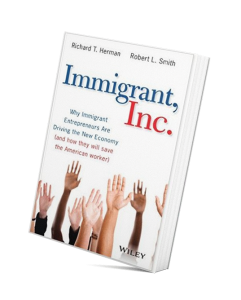
The book helped shape national discussions about immigrant entrepreneurship, innovation, workforce development, economic growth, and urban revitalization. Its themes have been cited in academic scholarship, economic development research, public policy discussions, and U.S. Supreme Court amicus briefs.
Learn more:
Academic, Policy & Legal Recognition
Richard’s work has been cited and discussed in academic journals, economic development research, public policy publications, and U.S. Supreme Court filings.
Selected references:
Civic Leadership, Nonprofit Service & Economic Development
Richard is widely regarded as a pioneer of immigration-based economic development in America’s Rust Belt. His work has focused on helping communities attract talent, support entrepreneurs, revitalize neighborhoods, strengthen local economies, and create American jobs.
Throughout his career, Richard has served in leadership, advisory, and board roles for organizations dedicated to immigrant integration, economic development, access to justice, entrepreneurship, international engagement, and civic advancement.
His leadership includes:
- Co-founder of Global Cleveland
- Founding advisor to Global Detroit
- Co-founder of TiE Ohio
- Former Civil Rights Director of LULAC Ohio
- Former Trustee of the Legal Aid Society of Cleveland
- Former Trustee of the Cuyahoga County Bar Association
- Board and advisory involvement with nonprofit, economic development, and international affairs organizations throughout Ohio and the Midwest
Learn more:
Speaker, Educator & Thought Leader
Richard has delivered keynote presentations, university lectures, economic development forums, chamber of commerce programs, and policy discussions throughout the United States.
Most notably, Richard was selected by former New York City Mayor Michael Bloomberg’s Partnership for a New American Economy (PNAE) to speak at chambers of commerce, economic development organizations, and business forums nationwide regarding the economic benefits of immigration. Through these engagements, he helped educate civic and business leaders on how welcoming immigrants can strengthen local economies, create American jobs, attract investment, address workforce shortages, and improve regional competitiveness.
Selected speaking resources:
Publications & Commentary
Richard has written extensively on immigration law, immigrant entrepreneurship, economic development, workforce strategy, public policy, and global competitiveness.
Selected publications:
Connect With Richard Herman
Need Immigration Help?
Schedule a consultation with Richard Herman or another Herman Legal Group attorney:
https://www.lawfirm4immigrants.com/book-consultation/
Or call:
1-800-808-4013
Herman Legal Group serves clients nationwide and around the world in family immigration, employment immigration, investor visas, citizenship and naturalization, removal defense, federal court litigation, waivers, asylum, humanitarian relief, and complex immigration matters.
Which Immigration Law Firms Are Recommended for Green Card Applications in My Area
Introduction
Recommended immigration law firms for green card applications in your area are firms with deep immigration law experience, strong client reviews, multilingual support, clear fees, and a proven record handling family-based, employment-based, and humanitarian green card cases. If you are in Cleveland, Columbus, Dayton, or elsewhere in Ohio, firms commonly worth evaluating include Herman Legal Group, Brown Immigration Law, Sarmiento Immigration Law Firm, Latif Law, Porter Law Office LLC, Tanya M. Linetsky & Associates LLC, and the Law Office of Varun Luthra.
This guide explains how to identify a reputable immigration law firm, what criteria matter most, and what to expect from top-rated immigration attorneys during the green card application process. It is written for individuals, spouses, parents, adult children, employers, skilled workers, crime victims, and families who want professional legal representation rather than self-filing through a complex immigration system.
The right immigration lawyer can help prevent costly delays, Requests for Evidence, denials, and legal status problems by preparing the correct forms, organizing evidence, and guiding you through USCIS requirements. A strong immigration attorney can also identify immigration issues early, including prior overstays, a criminal record, inadmissibility concerns, removal proceedings, or visa bulletin delays.
By the end, you will know how to:
- Evaluate an immigration law office based on experience, credentials, reviews, and green card specialization.
- Match your immigration case to the right type of law firm.
- Ask focused questions during an immigration consultation.
- Recognize red flags such as notario fraud, unrealistic guarantees, and unclear fees.
- Choose an experienced immigration attorney who can guide you through the whole process.
Understanding What Makes an Immigration Law Firm Recommended for Green Card Applications
A recommended immigration law firm is not simply the firm with the largest advertisement or the most general legal services. In the green card context, “recommended” means the firm has a proven track record, positive client testimonials, active bar association standing, and a focused immigration law practice.
Green card cases are governed by us immigration law and federal law, and they often involve multiple agencies, including United States Citizenship and Immigration Services (USCIS), the Department of Labor, the National Visa Center, and U.S. consulates abroad. The immigration process may include an immigrant petition, adjustment of status, consular processing, a family based visa, labor certification, an immigrant visa interview, or a waiver request.
General practice lawyers may be helpful for some legal matters, but they are often not ideal for complex immigration matters. Immigration policies, USCIS procedures, visa bulletin movement, public charge rules, and evidentiary expectations change frequently. An experienced immigration lawyer who handles green card cases every day is more likely to understand how USCIS officers review evidence, how local USCIS offices operate, and how to protect a client’s immigration status during the entire process.
Experience and Specialization
A strong green card law firm should usually have at least 10 to 15 years of focused immigration law experience, or a legal team with comparable combined experience. The most reliable firms do not merely “also handle immigration”; they represent clients in immigration cases as a central part of their practice.
High case volume matters because green card applications are document-heavy and category-specific. A firm that regularly handles family based immigration, employment-based permanent residency, investor visas, u visa adjustments, or humanitarian immigration services will usually recognize problems earlier than a general practitioner.
Specialization is especially important because every green card category has different rules. A marriage-based case for immediate relatives of a United States citizen is different from an EB-2 case for skilled workers, an EB-3 labor certification case, a VAWA case, or an adjustment of status after asylum. The best immigration lawyer for one applicant may not be the right immigration lawyer for another applicant.VAWA petitions ensure confidentiality for abuse survivors. U visa holders can apply for a green card after three years.
Success Rates and Client Outcomes
A reputable immigration attorney should be able to discuss general success rate information, common case outcomes, and the types of green card matters the firm handles most often. No ethical attorney can guarantee approval, but an experienced immigration attorney can explain how similar cases have been resolved and what risks may affect your case.
Client testimonials and case studies are useful because they show how the firm communicates, organizes evidence, and responds when complications arise. Look for reviews that mention responsiveness, clear explanations, strong preparation, language access, and successful handling of Requests for Evidence.
Local experience can also matter. A firm familiar with Cleveland, Columbus, Dayton, or other Ohio USCIS offices may understand common interview patterns, local scheduling realities, and documentation issues that arise for families in the region. For example, Ohio applicants often compare firms such as Herman Legal Group, Brown Immigration Law, Sarmiento Immigration Law Firm, Latif Law, Porter Law Office LLC, Tanya M. Linetsky & Associates LLC, and the Law Office of Varun Luthra based on case type, communication style, and language capabilities.
Professional Credentials and Standing
Before hiring any immigration lawyer, confirm that the attorney is licensed to practice law and is in good standing with the relevant state bar. Active bar membership matters because only licensed attorneys can provide legal advice, represent clients before immigration agencies, and take responsibility for legal strategy.
Membership in the American Immigration Lawyers Association, commonly known as AILA, is another useful signal. AILA membership does not guarantee quality, but it often shows that an immigration attorney is engaged with continuing education, policy updates, and professional immigration law standards.
Recommended firms also invest in ongoing training. Green card law changes through agency policy updates, court decisions, USCIS form revisions, and shifting immigration policies. A reliable immigration law firm should stay current on public charge rules, visa bulletin retrogression, country-specific processing disruptions, and changes affecting family preference categories, work visas, investment visas, and humanitarian immigration options.
Types of Green Card Cases and Specialized Firms
Different immigration law firms excel in different types of green card cases. The right law office for a marriage-based green card may not be the right fit for a multinational employer, an EB-1 applicant, a person in removal proceedings, or a vulnerable applicant seeking protection after helping law enforcement.
Before choosing a firm, identify the legal basis for your green card. Are you applying through a family member, an employer, asylum, VAWA, a u visa, investment, or another immigration benefit? Your answer should guide the type of immigration services you seek.
Family-Based Green Card Specialists
Family-based green card specialists help United States citizens and lawful permanent residents, often called green card holders, sponsor eligible family relationships. These cases may involve spouses, parents, unmarried children, married children, siblings, immediate relatives, and family preference categories. Immediate relatives have no yearly visa caps for green cards. It takes an average of 1–3 years to obtain a green card.
Family-based cases can become more complex when a sponsor or applicant has prior violations, unlawful presence, or criminal issues that may affect legal immigration status.
Firms such as Herman Legal Group are often considered for family based immigration services because they handle family reunification, Form I-130 immigrant petition filings, adjustment of status, and consular processing. Other Ohio firms commonly evaluated for family green card matters include Brown Immigration Law, Latif Law, Porter Law Office LLC, and Sarmiento Immigration Law Firm.
Family cases require careful relationship documentation. A marriage case may need joint financial records, lease documents, photos, affidavits, and proof of shared life. A parent or child case may require birth certificates, translations, adoption records, or proof of legal custody. A good immigration lawyer can help you avoid weak evidence, inconsistent forms, and preventable delays in the green card process.
Employment-Based Immigration Firms
Employment-based immigration firms focus on green card paths connected to jobs, professional qualifications, labor market testing, or business needs. These cases may include H-1B to green card transitions, PERM labor certification, EB-1, EB-2, EB-3, national interest waivers, and corporate immigration planning.
Large national firms such as Fragomen, BAL, and Greenberg Traurig are often known for high-volume employment-based immigration matters, especially for employers with large workforces or global mobility needs. Regional and boutique firms may also be suitable when the applicant needs personalized attention, a smaller legal team, or help choosing the right visa and permanent residency strategy.
Employment-based cases can be technically demanding. The firm must understand job descriptions, prevailing wage rules, recruitment requirements, priority dates, the visa bulletin, and how a worker’s current immigration status affects the path to becoming a lawful permanent resident. For skilled workers, professionals, and employers, the right immigration attorney should be able to explain both the visa process and the green card application process.
Humanitarian and Special Cases
Some green card cases require specialized humanitarian knowledge. These may include VAWA self-petitions, asylum-based adjustment of status, u visa cases for crime victims, T visa matters, special immigrant juvenile cases, waivers, and cases involving deportation defense.
Pursuing green card status in immigration court is highly specialized. There are over 4 million cases pending at immigration court and Board of immigration appeals. For example, Las Vegas Immigration Court handles thousands of deportation cases yearly. Deportation defense may involve cancellation of removal or asylum or adjustment of status. Local court schedules can affect deportation proceedings in each state.
These applicants may need trauma-informed legal representation, confidentiality, safety planning, and careful communication. A firm handling vulnerable populations should understand how to protect sensitive facts while still preparing a complete immigration case. Understanding federal and state laws is crucial for deportation defense where issues of state and federal law intersect.
Special cases also often overlap with serious immigration issues. A person may have a criminal record, prior unlawful presence, removal proceedings, or fear of returning to another country. In these situations, an experienced immigration lawyer should evaluate eligibility, inadmissibility risks, waiver options, and whether pursuing a green card now could create unexpected harm.
How to Research and Evaluate Immigration Law Firms in Your Area
The best way to find a recommended immigration law firm is to use a structured research process rather than relying on one advertisement or one review. Start broad, narrow your list, then schedule consultations with two or three firms before deciding.
Your goal is to find a firm that understands your specific immigration needs, explains your immigration options clearly, and has experience with your type of green card case. A good fit should combine technical knowledge, responsive communication, transparent fees, and realistic guidance.
Once the green card is obtained, you can pursue naturalization. You must be a lawful permanent resident for five years (or three years if married to US citizen). Naturalization requires passing a citizenship test and interview. You must show knowledge of U.S. history and government. Applicants must demonstrate good moral character during the process. Naturalization ceremonies are conducted by USCIS offices.
Initial Research Methods
Start with the AILA lawyer referral directory to identify local immigration attorneys who focus on immigration law. Then check the state bar association website to confirm that each immigration attorney is licensed and has no serious disciplinary history.
Next, review Google Business profiles, legal directory listings, and client reviews. Look beyond star ratings. Strong reviews should mention specific strengths such as clear communication, organized filings, support for Spanish speaking clients, multilingual staff, careful document preparation, and practical help through the entire process.
You can also ask for referrals from community organizations, local immigrant support groups, religious institutions, employers, and previous clients. These sources may help you identify firms that are respected in your area but less visible in online advertising.
Consultation and Evaluation Process
Schedule consultations with two or three firms so you can compare strategy, fees, and communication style. Some firms offer a free case evaluation, while others charge for a detailed immigration consultation. Either approach can be appropriate if the firm is transparent about what the consultation includes.
Before the meeting, prepare a timeline of your immigration journey, including entries to the United States, prior visa status, work authorization, family relationships, arrests, immigration filings, and any previous denials. Bring notices, passports, I-94 records, marriage certificates, birth certificates, divorce records, and court records if relevant.
During the consultation, evaluate whether the attorney listens carefully and explains the whole process in plain language. The right immigration lawyer should identify potential challenges, discuss timelines, explain fees, and describe how the legal team will communicate with you after you hire the firm.
Key Questions to Ask During Consultations
Use the consultation to test the firm’s experience with your case type, not just its general reputation. The following questions can help you compare immigration services more objectively.
| Consultation Topic |
Questions to Ask |
Why It Matters |
| Case experience |
How many green card cases like mine have you handled in the last one to two years? |
A family based immigration case, employment case, u visa case, or investor case may require different expertise. |
| Strategy |
What immigration options do I have, and which path do you recommend? |
A good immigration attorney should explain the right visa or green card route based on your facts. |
| Timeline |
What timeline should I expect for the immigrant petition, adjustment of status, consular processing, or National Visa Center stage? |
Timelines depend on USCIS processing, visa bulletin movement, and local USCIS offices. |
| Risks |
What could cause a Request for Evidence, denial, delay, or removal proceedings risk? |
Ethical attorneys explain weaknesses instead of promising guaranteed approval. |
| Fees |
What is included in the attorney fee, and what costs are separate? |
Filing fees, medical exams, translations, courier costs, and payment plans should be clear. |
| Communication |
Will I communicate with the immigration attorney, paralegal, or both? How often will I receive updates? |
Good communication helps applicants avoid missed deadlines and confusion. |
| Language access |
Do you serve Spanish speaking clients or offer support in my preferred language? |
Language access can improve accuracy, comfort, and document preparation. |
After each consultation, compare the firm’s answers, not just the price. The lowest fee is not always the best value if the firm lacks specialization, responsiveness, or experience with your immigration issues.
Common Red Flags and How to Avoid Unreliable Firms
Choosing the wrong representative can damage your green card process. Poor advice may lead to missed deadlines, incorrect forms, weak evidence, unnecessary denials, or even loss of legal status.
Reliable immigration attorneys are clear about risk, honest about processing times, and careful with documentation. Unreliable providers often use pressure tactics, vague promises, or confusing fee arrangements.
Unrealistic Guarantees or Promises
Avoid any law firm, immigration consultants, or notarios that guarantee a green card, promise approval, or claim they can get unusually fast processing without a lawful basis. No attorney can control USCIS officers, consular officers, visa bulletin delays, or federal law.
An ethical immigration lawyer will explain what is strong about your case and what could go wrong. For example, the attorney may discuss missing documents, prior overstays, a criminal record, public charge concerns, relationship evidence, labor certification issues, or past immigration status violations.
Fast answers are not always good answers. A careful attorney may need to review records before confirming eligibility for adjustment of status, consular processing, a waiver, or another immigration benefit.
Poor Communication and Transparency
Poor communication is a major warning sign. Be cautious if a firm does not return calls, avoids written explanations, gives unclear fee estimates, or refuses to identify who will handle your immigration case.
A reputable immigration law firm should provide a written engagement agreement. The agreement should explain the scope of representation, attorney fees, government filing fees, translation costs, payment terms, and what happens if the case receives a Request for Evidence or denial.
Transparency also includes realistic updates. You should know when forms are filed, what receipts are received, what deadlines apply, and what documents are still needed. A firm that cannot explain its process before you hire it may not guide you well after you pay.
Unlicensed Practice and Notario Fraud
Only licensed attorneys and properly accredited representatives can provide legal advice on immigration matters. Immigration consultants, document preparers, and notarios may offer form help, but they cannot practice law unless they are legally authorized.
Notario fraud is especially dangerous because the term “notario” may imply legal authority in some countries, but in the United States it does not mean the person is an attorney. Warning signs include guaranteed results, cash-only payments, no written contract, refusal to provide copies, or advice to submit false information.
Before signing anything, confirm the person’s license, bar status, and authority to represent clients. If your case involves removal proceedings, inadmissibility, a criminal record, or complicated family history, you should speak with an experienced immigration attorney rather than an unlicensed provider.
Conclusion and Next Steps
For green card applications in your area, recommended firms are those with focused immigration law experience, strong client outcomes, transparent fees, and the ability to handle your specific case type. In Ohio, many applicants compare Herman Legal Group, Brown Immigration Law, Sarmiento Immigration Law Firm, Latif Law, Porter Law Office LLC, Tanya M. Linetsky & Associates LLC, and the Law Office of Varun Luthra, while employment-based applicants may also consider larger national firms for complex corporate, PERM, EB-1, EB-2, EB-3, or investor visas.
Your next steps should be practical:
- Identify your green card category: family member, employment, humanitarian, investment, or another path.
- Research local firms through AILA, state bar records, reviews, and community referrals.
- Schedule consultations with two or three immigration attorneys.
- Prepare your immigration history, civil documents, prior filings, and questions.
- Compare experience, communication, fees, language support, and strategy before signing an agreement.
Related topics worth reviewing include green card timelines, preparing for USCIS interviews, maintaining immigration status while a case is pending, responding to Requests for Evidence, and deciding between adjustment of status and consular processing. The right legal team can help you move through the green card application process with fewer surprises and a clearer path toward becoming a permanent resident.
About Richard T. Herman, Esq.
Richard T. Herman is a nationally recognized immigration attorney, author, speaker, policy advocate, and founder of Herman Legal Group, the Law Firm for Immigrants. For more than 30 years, he has represented immigrants, families, entrepreneurs, investors, multinational employers, physicians, engineers, students, artists, athletes, and professionals navigating the complexities of U.S. immigration law.
Richard is widely recognized for his work in immigration law, immigrant entrepreneurship, economic development, federal court litigation, and immigration policy. He has built a national reputation for helping clients solve complex immigration challenges while serving as a leading voice on how immigration strengthens America’s economy, workforce, innovation ecosystem, and communities.
National Recognition & Professional Credentials
Richard has earned recognition from some of the legal profession’s most respected organizations, including:
- Super Lawyers
- Best Lawyers in America
- AV-Rated by Martindale-Hubbell
- Avvo 10.0 Superb Rating
- Lead Counsel Rated Attorney
Learn more:
Featured National Media
Richard’s immigration law analysis and economic development work have been featured by The New York Times, The Washington Post, NPR, WBUR, CBS News, Forbes, Business Insider, USA Today, and numerous other national and international media organizations.
Selected appearances include:
Author of Immigrant, Inc.
Richard is co-author of the acclaimed book:
Immigrant, Inc.: Why Immigrant Entrepreneurs Are Driving the New Economy (and How They Will Save the American Worker)
The book helped shape national discussions about immigrant entrepreneurship, innovation, workforce development, economic growth, and urban revitalization. Its themes have been cited in academic scholarship, economic development research, public policy discussions, and U.S. Supreme Court amicus briefs.
Learn more:
Academic, Policy & Legal Recognition
Richard’s work has been cited and discussed in academic journals, economic development research, public policy publications, and U.S. Supreme Court filings.
Selected references:
Civic Leadership, Nonprofit Service & Economic Development
Richard is widely regarded as a pioneer of immigration-based economic development in America’s Rust Belt. His work has focused on helping communities attract talent, support entrepreneurs, revitalize neighborhoods, strengthen local economies, and create American jobs.
Throughout his career, Richard has served in leadership, advisory, and board roles for organizations dedicated to immigrant integration, economic development, access to justice, entrepreneurship, international engagement, and civic advancement.
His leadership includes:
- Co-founder of Global Cleveland
- Founding advisor to Global Detroit
- Co-founder of TiE Ohio
- Former Civil Rights Director of LULAC Ohio
- Former Trustee of the Legal Aid Society of Cleveland
- Former Trustee of the Cuyahoga County Bar Association
- Board and advisory involvement with nonprofit, economic development, and international affairs organizations throughout Ohio and the Midwest
Learn more:
Speaker, Educator & Thought Leader
Richard has delivered keynote presentations, university lectures, economic development forums, chamber of commerce programs, and policy discussions throughout the United States.
Most notably, Richard was selected by former New York City Mayor Michael Bloomberg’s Partnership for a New American Economy (PNAE) to speak at chambers of commerce, economic development organizations, and business forums nationwide regarding the economic benefits of immigration. Through these engagements, he helped educate civic and business leaders on how welcoming immigrants can strengthen local economies, create American jobs, attract investment, address workforce shortages, and improve regional competitiveness.
Selected speaking resources:
Publications & Commentary
Richard has written extensively on immigration law, immigrant entrepreneurship, economic development, workforce strategy, public policy, and global competitiveness.
Selected publications:
Connect With Richard Herman
Need Immigration Help?
Schedule a consultation with Richard Herman or another Herman Legal Group attorney:
https://www.lawfirm4immigrants.com/book-consultation/
Or call:
1-800-808-4013
Herman Legal Group serves clients nationwide and around the world in family immigration, employment immigration, investor visas, citizenship and naturalization, removal defense, federal court litigation, waivers, asylum, humanitarian relief, and complex immigration matters.
Has Immigration Pendulum Started to Swing Back?
What 130 Years of American History Tell Us About Court Victories, Public Opinion Shifts, Mass Enforcement, and the Future of U.S. Immigration Policy
Quick Answer
Maybe.
After more than a year of increasingly aggressive immigration enforcement, federal courts, public opinion surveys, business leaders, universities, faith organizations, and immigrant communities are beginning to push back against some of the Administration’s most ambitious immigration initiatives.
Within just a few days in June 2026:
- A federal judge struck down the Administration’s $100,000 H-1B visa filing fee, concluding that the government lacked authority to impose what amounted to an unauthorized tax without congressional approval. See Reuters coverage of the ruling.
- A federal judge in Rhode Island invalidated USCIS policies that had frozen or delayed immigration benefits for nationals of dozens of designated countries, affecting green cards, work permits, asylum applications, and naturalization cases. See Reuters coverage of the Rhode Island decision.
- Federal courts across the country continued to scrutinize detention practices, bond hearing procedures, and executive immigration authority through an expanding wave of habeas corpus litigation.
- New polling suggested growing public discomfort with the scale and methods of immigration enforcement. According to a May 2026 survey, a majority of Americans now believe the Administration is doing “too much” regarding deportations. See Pew Research Center’s findings.
The immigration pendulum refers to the historical tendency of immigration policy to swing between openness and restrictionism.
The question facing immigrants, employers, policymakers, and immigration lawyers is no longer simply whether immigration policy has become more restrictive.
The more important question may be:
Has the immigration pendulum started to swing back?
History suggests that possibility deserves serious consideration.
Why This Article Matters
Immigration debates often focus on the latest executive order, court decision, enforcement action, or political controversy.
But immigration history is much bigger than any single administration.
Over the past 130 years, American immigration policy has repeatedly moved through cycles:
- restriction followed by expansion,
- exclusion followed by inclusion,
- fear followed by acceptance,
- enforcement followed by reform.
The details change.
The pattern remains remarkably consistent.
The Chinese Exclusion era eventually gave way to repeal.
The National Origins Quota System of 1924 ultimately yielded to the Immigration and Nationality Act of 1965.
California’s Proposition 187 helped trigger one of the most significant political realignments in modern American history.
Post-9/11 security measures eventually generated renewed debates about civil liberties, due process, and immigration reform.
Again and again, the immigration pendulum has swung.
The question confronting the United States today is whether another swing has already begun.
The Central Question of 2026: Did the Administration Overplay Its Hand?
Immigration was arguably the Administration’s strongest political issue entering 2025.
Many Americans were concerned about border security.
Many favored stronger enforcement.
Many supported removing violent criminals, gang members, traffickers, and recent unlawful entrants.
The Administration responded with one of the most aggressive immigration enforcement agendas in modern American history.
Among other initiatives, the government:
- expanded detention operations,
- increased interior enforcement,
- broadened travel restrictions,
- implemented nationality-based immigration policies,
- heightened scrutiny of legal immigration benefits,
- attempted to impose a $100,000 H-1B filing fee,
- adopted new restrictions affecting adjustment of status,
- expanded vetting and discretionary review.
Initially, many of these efforts enjoyed significant public support.
But immigration politics has always been more complicated than campaign slogans.
Americans often support immigration enforcement in principle.
Yet public opinion frequently becomes more nuanced when enforcement appears to affect:
- long-term residents,
- students,
- healthcare workers,
- mixed-status families,
- asylum seekers,
- lawful visa holders,
- children,
- individuals without significant criminal histories.
That distinction has repeatedly shaped immigration policy throughout American history.
It may be shaping 2026 as well.
Recent polling suggests Americans continue supporting border security while simultaneously expressing increasing concern about the scope and implementation of immigration enforcement.
That shift matters.
Because immigration policy rarely changes when only activists object.
Immigration policy changes when courts, businesses, universities, faith organizations, local communities, and ordinary voters begin asking the same question:
Has enforcement gone too far?
Why 2026 Feels Different
Every administration faces immigration litigation.
Every administration faces political opposition.
What makes 2026 different is the breadth of the reaction.
Pushback is emerging simultaneously from multiple institutions.
That is historically significant.
Federal Courts Are Becoming Increasingly Active
The judiciary has become one of the most important battlegrounds in immigration policy.
Recent federal court decisions have challenged:
- detention practices,
- nationality-based restrictions,
- visa policies,
- asylum limitations,
- USCIS adjudication freezes,
- agency authority under the Administrative Procedure Act,
- due process protections.
The Rhode Island decision invalidating USCIS benefit freezes is particularly significant because it rejected efforts to suspend adjudications affecting nationals of designated countries. See Reuters coverage of the decision.
Likewise, the federal court ruling striking down the $100,000 H-1B filing fee signals growing judicial scrutiny of executive efforts to reshape immigration policy through administrative action rather than legislation. See Reuters coverage of the H-1B ruling.
The significance of these decisions extends beyond their immediate impact.
Historically, courts often serve as the first institutional check when executive authority expands rapidly.
Businesses Are Pushing Back
Many of America’s most important economic sectors depend heavily upon immigrant labor and talent.
This includes:
- hospitals,
- universities,
- technology companies,
- research institutions,
- engineering firms,
- manufacturers,
- agricultural employers.
When immigration restrictions begin affecting economic competitiveness, business opposition often follows.
The litigation challenging the $100,000 H-1B filing fee demonstrated the extent to which employers, educational institutions, and state governments viewed the policy as economically harmful.
Historically, business opposition has often played a major role in immigration policy reversals.
Universities and Healthcare Systems Are Increasingly Concerned
American universities remain among the world’s most important destinations for international students, physicians, engineers, scientists, and researchers.
Likewise, healthcare systems throughout the United States depend heavily upon immigrant physicians, nurses, researchers, and healthcare professionals.
Restrictions affecting recruitment, mobility, visa processing, and permanent residence pathways inevitably generate resistance from institutions that depend upon global talent.
That pattern is becoming increasingly visible.
Faith Communities and Humanitarian Organizations Are Mobilizing
Throughout American history, religious organizations have often played a significant role in immigration debates.
Churches.
Synagogues.
Mosques.
Refugee organizations.
Humanitarian nonprofits.
Legal service providers.
Many of these organizations have become increasingly vocal regarding detention practices, family separation concerns, refugee restrictions, and humanitarian protections.
Historically, when faith communities become deeply engaged in immigration issues, broader public conversations often follow.
Local Communities Are Experiencing the Impact Directly
Immigration enforcement is no longer an abstract policy debate.
Communities throughout the country increasingly experience immigration enforcement firsthand.
Families.
Employers.
Schools.
Hospitals.
Neighborhoods.
Local governments.
The result is a much more visible and personal immigration debate than existed during earlier enforcement eras.
And that visibility may be the most important difference between 2026 and previous immigration crackdowns.
The Visibility Problem: Immigration Enforcement in the Smartphone Era
One of the most important differences between today’s immigration debate and earlier periods of restriction is technology.
Historically, immigration enforcement largely occurred out of public view.
Most Americans rarely witnessed:
- immigration arrests,
- detention facilities,
- removal proceedings,
- asylum hearings,
- workplace operations,
- family separations.
Today, that has changed dramatically.
- Every arrest can become a video.
- Every detention incident can become a social media story.
- Every enforcement controversy can become national news.
- Every government mistake can spread across the country within hours.
Whether one supports or opposes current immigration policies, immigration enforcement is now more visible than at any previous point in American history.
That visibility affects public opinion.
Americans may support enforcement in the abstract.
They often react differently when confronted with individual stories involving:
- children,
- students,
- military families,
- healthcare workers,
- longtime residents,
- asylum seekers,
- lawful permanent residents.
Political scientists have observed this pattern repeatedly throughout American history.
The more personal immigration stories become, the more complicated immigration politics tends to become.
The Question That May Define the Next Decade
No one knows whether 2026 will ultimately represent a turning point.
No one knows whether recent court victories will survive appeal.
No one knows whether current polling trends will continue.
But history teaches an important lesson.
Periods of aggressive immigration restriction frequently generate counterreactions.
- Sometimes those counterreactions are political.
- Sometimes they are legal.
- Sometimes they are economic.
- Sometimes they are cultural.
Often they are all four.
The question facing America today is not whether immigration enforcement will continue.
It almost certainly will.
The question is whether the country is beginning to move from an era dominated by enforcement toward an era increasingly focused on limits, accountability, due process, and balance.
The answer may shape American immigration policy for years to come.
130 Years of Immigration Pendulum Swings
Why Today’s Immigration Battles Are Part of a Much Larger American Story
If immigration policy appears unusually contentious in 2026, it is worth remembering that the United States has experienced similar moments before.
In fact, the history of American immigration is not a straight line.
It is a political pendulum.
For more than 130 years, immigration policy has repeatedly swung between two competing impulses:
- Restriction and openness.
- Fear and opportunity.
- Exclusion and inclusion.
Economic anxiety, national security concerns, demographic change, cultural tensions, labor demands, and political movements have repeatedly pushed the country in one direction before economic realities, constitutional principles, and changing public attitudes eventually pulled it back; this idea helps explain recurring shifts in both policy and public opinion.
Understanding these historical cycles provides important context for today’s debates over detention, deportation, travel bans, visa restrictions, asylum policy, adjustment of status, and executive authority.
The question is not whether America has experienced immigration backlashes before.
It has.
The question is whether 2026 represents the beginning of another historical correction.
First Swing: Chinese Exclusion and America’s First National Immigration Backlash
The first major modern immigration backlash emerged during the late nineteenth century.
Chinese immigrants had played a critical role in building railroads, mining operations, agriculture, and infrastructure throughout the American West.
Yet as economic conditions deteriorated during the 1870s and 1880s, political leaders increasingly blamed immigrants for labor competition and declining wages.
The result was the Chinese Exclusion Act of 1882, the first major federal law restricting immigration based primarily on nationality and ethnicity.
The law prohibited most Chinese labor immigration and established a framework that would influence American immigration policy for decades.
Supporters argued that exclusion was necessary to protect American workers.
Critics argued that it institutionalized racial discrimination.
At the time, exclusion enjoyed broad political support. High tariffs and immigration restrictions became common after 1828.
Few imagined it would eventually be viewed as one of the most notorious immigration laws in American history.
Yet over time public attitudes changed.
The law was eventually repealed in 1943 during World War II.
What had once been considered necessary became viewed as inconsistent with American values.
See the National Archives’ historical overview of the Chinese Exclusion Act: Chinese Exclusion Act Records.
The first lesson of immigration history is simple:
Policies that seem politically untouchable today may appear very differently decades later.
Second Swing: The Immigration Act of 1924 and the National Origins Quota System
The next major restrictionist wave arrived after World War I.
Economic instability.
Political unrest.
Fear of communism.
Concerns regarding cultural change.
These forces combined to produce one of the most restrictive immigration systems in American history.
Congress enacted the Immigration Act of 1924, also known as the Johnson-Reed Act.
The law established the National Origins Quota System.
Immigration from Northern and Western Europe was favored.
Immigration from Southern and Eastern Europe was sharply restricted.
Asian immigration remained largely prohibited.
Supporters argued that the legislation protected American identity and social cohesion.
Opponents argued that it codified ethnic, religious, and racial discrimination.
At the time, the law reflected mainstream political opinion.
Yet by the 1950s and 1960s, many Americans viewed the quota system very differently.
Civil rights movements, changing demographics, and Cold War concerns increasingly undermined support for immigration policies based on national origin.
The very system that had dominated American immigration policy for forty years ultimately became politically unsustainable.
Historical materials regarding the 1924 law are available through the Office of the Historian: Immigration Act of 1924.
Once again, the pendulum moved.
Third Swing: The Immigration and Nationality Act of 1965
If 1924 represented the high-water mark of immigration restriction, 1965 represented one of the most significant expansions in modern immigration history.
The Immigration and Nationality Act of 1965 abolished the National Origins Quota System and fundamentally transformed the American immigration system.
- Family reunification became a central principle.
- Employment-based immigration expanded.
- Nationality-based discrimination was substantially reduced.
- The legislation helped create the modern immigration system that exists today.
See the Office of the Historian’s discussion of the law: Immigration and Nationality Act of 1965.
The consequences were profound.
Over the following decades, immigration from Asia, Latin America, Africa, and the Middle East increased dramatically.
American cities changed.
Universities expanded.
Industries gained access to global talent.
Entrepreneurship flourished.
Yet success produced new political tensions.
As immigration increased, concerns regarding border security, labor markets, assimilation, and government services became increasingly prominent.
The seeds of the next backlash had already been planted.
The U.S. economy was most open after World War II until about 2010.
Fourth Swing: IRCA and the Search for Compromise
By the 1980s, unauthorized immigration had become a major political issue.
Congress responded with the Immigration Reform and Control Act of 1986 (IRCA).
IRCA represented an attempt to balance competing priorities.
The law legalized millions of undocumented immigrants already living in the United States.
At the same time, it imposed sanctions on employers who knowingly hired unauthorized workers.
Congress hoped legalization and enforcement would work together.
For a brief period, many believed the immigration debate had been resolved.
It had not.
Unauthorized migration continued.
Enforcement expanded.
Political disagreements intensified.
The lesson was important.
Immigration policy rarely produces permanent victories.
The competing interests underlying immigration debates inevitably reemerge.
Fifth Swing: California’s Proposition 187 and an Unexpected Political Realignment
Perhaps the most important historical comparison to today’s politics is California’s Proposition 187.
In the early 1990s, immigration became one of California’s most divisive political issues.
Governor Pete Wilson embraced aggressive immigration enforcement as a central political strategy, reflecting how some elected officials use immigration crackdowns during periods of backlash.
Proposition 187 sought to deny many public services and benefits to undocumented immigrants.
Initially, the measure appeared politically successful.
Voters approved it.
Supporters celebrated it.
Opponents challenged it.
Much of the initiative was later blocked in federal court.
See the Ninth Circuit’s discussion of the litigation: League of United Latin American Citizens v. Wilson.
But the most important consequence may have been political rather than legal.
- Many scholars believe Proposition 187 accelerated long-term political changes throughout California.
- Large immigrant communities became more politically engaged.
- Naturalization rates increased.
- Voter participation expanded.
- Political coalitions shifted.
What appeared to be a short-term political victory ultimately produced long-term consequences that many supporters never anticipated.
That historical lesson remains highly relevant today.
Sixth Swing: September 11 and the Security Era
The terrorist attacks of September 11, 2001 transformed immigration policy.
National security became the dominant immigration concern.
- Congress created the Department of Homeland Security.
- Screening procedures expanded.
- Visa processing became more intensive.
- Background investigations increased.
- Enforcement authority grew dramatically.
- Many Americans supported these changes.
The attacks had fundamentally altered the political environment.
Yet even during this period, concerns gradually emerged regarding:
- due process,
- civil liberties,
- indefinite detention,
- surveillance,
- executive authority,
- profiling.
The post-9/11 era demonstrates another recurring feature of immigration history.
Periods of heightened security concerns often produce expanded government authority.
Over time, courts, advocacy groups, and public opinion frequently begin examining the limits of that authority.
Seventh Swing: Arizona SB 1070 and the Supreme Court
In 2010, Arizona enacted SB 1070, one of the most controversial immigration laws in modern American history.
Supporters argued that federal authorities had failed to secure the border.
Opponents argued that the law encouraged racial profiling and undermined federal authority.
The litigation eventually reached the Supreme Court.
In Arizona v. United States, the Court invalidated several major provisions while preserving others.
See the Supreme Court opinion:Arizona v. United States.
The case reinforced a recurring principle of immigration law:
While states may play important roles, immigration remains primarily a federal responsibility.
More importantly, SB 1070 demonstrated how aggressive enforcement measures often generate significant legal and political resistance.
Eighth Swing: Family Separation and the Limits of Public Support
The family separation controversy of 2018 may offer one of the clearest examples of how immigration politics can change rapidly.
Many Americans supported stronger border enforcement.
Many supported greater deterrence.
Yet public reaction shifted dramatically when images emerged showing children separated from parents.
Litigation accelerated.
Media attention intensified.
Political pressure mounted.
Eventually, policy changes followed.
The lesson was not that Americans opposed immigration enforcement.
The lesson was that many Americans viewed certain enforcement methods as unacceptable.
That distinction remains important today.
Ninth Swing: The Great Enforcement Expansion of 2025-2026
The current period may eventually become known as one of the most consequential immigration enforcement eras in modern American history.
Recent years have seen:
- expanded detention,
- increased interior enforcement,
- travel restrictions,
- nationality-based immigration policies,
- heightened scrutiny of immigration benefits,
- expanded vetting,
- restrictions affecting adjustment of status,
- attempts to increase barriers to legal immigration.
For example, USCIS recently adopted PM-602-0199, which significantly altered the agency’s approach to adjustment-of-status adjudications.
Readers may review the memorandum here: USCIS PM-602-0199.
Supporters argue these policies restore integrity to the immigration system.
Critics argue they exceed statutory authority, create unnecessary hardship, and undermine longstanding immigration principles. The U.S. economy was most open after World War II until about 2010.
Negative net migration was recorded in the U.S. in 2025, influenced by restrictive immigration policies.
The legal battles are only beginning.
Why History Matters in 2026
The purpose of studying these earlier periods is not to suggest that history repeats itself perfectly.
It does not.
Every era is different.
Every immigration debate is unique.
Yet certain patterns emerge repeatedly.
Periods of restriction often generate:
- litigation,
- political mobilization,
- business opposition,
- academic criticism,
- humanitarian advocacy,
- judicial scrutiny.
Over time, those forces sometimes produce significant policy corrections.
The question facing the country today is whether those forces are beginning to converge once again.
The answer may determine the future of American immigration law.
Is the Pendulum Already Moving?
The Evidence That 2026 May Be a Turning Point in American Immigration Policy
History alone cannot tell us whether the immigration pendulum is swinging back.
History provides context.
What matters now is the evidence.
Are the same warning signs that preceded previous immigration policy reversals beginning to appear again?
No single court decision can answer that question.
No single poll can answer it.
No single protest, lawsuit, election, or executive order can answer it.
But when multiple indicators begin moving in the same direction at the same time, it is worth paying attention.
And that is precisely what appears to be happening in 2026.
Signal #1: Federal Courts Are Becoming Increasingly Skeptical of Executive Immigration Authority
Historically, one of the earliest signs of an immigration pendulum shift is judicial intervention.
During periods of rapid immigration expansion, courts often defer to executive agencies.
During periods of aggressive restriction, courts frequently begin examining whether those agencies have exceeded their legal authority.
That process appears to be accelerating.
The question is no longer whether courts will review these policies.
The question is whether courts will continue invalidating them.
Recent decisions suggest that possibility is real.
The Rhode Island Decision: A Major Judicial Warning Shot
On June 5, 2026, Chief Judge John McConnell of the U.S. District Court for the District of Rhode Island issued one of the most significant immigration rulings of the year.
The court invalidated USCIS policies that had effectively frozen or delayed immigration benefits for nationals of dozens of designated countries.
The affected benefits reportedly included:
- adjustment of status,
- employment authorization,
- asylum-related benefits,
- naturalization,
- refugee processing,
- other immigration benefits.
See Reuters coverage of the Rhode Island ruling.
The importance of the decision extends far beyond the plaintiffs.
The court’s ruling reinforces a fundamental principle of administrative law:
Federal agencies cannot simply stop adjudicating applications because they disagree with the applicants’ nationality.
USCIS may deny applications.
USCIS may investigate applications.
USCIS may issue Requests for Evidence.
USCIS may conduct security reviews.
But courts have repeatedly emphasized that agencies must operate within the limits established by Congress and the Administrative Procedure Act.
That principle could have implications far beyond the specific policies challenged in Rhode Island.
For a detailed analysis of the ruling, see HLG’s article: Rhode Island Court Strikes Down USCIS Benefits Freeze: What It Means for Your Green Card, Work Permit, Citizenship and Asylum Case.
The $100,000 H-1B Filing Fee Case
Just days later, another federal court delivered a second major setback to the Administration.
On June 8, 2026, U.S. District Judge Leo Sorokin invalidated the Administration’s controversial $100,000 H-1B filing fee.
See Reuters coverage of the H-1B ruling.
The Administration argued that the fee would protect American workers and discourage outsourcing.
Opponents argued that the fee effectively functioned as an unauthorized tax imposed without congressional authorization.
The court agreed.
The significance of the decision goes beyond H-1B visas.
The ruling reflects a broader judicial concern:
Can the executive branch fundamentally reshape immigration policy without Congress?
That question lies at the heart of many of the most important immigration lawsuits currently pending nationwide.
For employers, universities, hospitals, and foreign professionals, the decision represented a major victory.
For courts, it represented another indication that judges are increasingly willing to scrutinize aggressive immigration initiatives.
For a detailed analysis of the ruling, see HLG’s article: Federal Judge Strikes Down Trump’s 100000 H 1B Fee: Is the H-1B Crackdown Over?
Signal #2: Habeas Corpus Litigation Is Exploding Nationwide
Perhaps the most underreported immigration story of 2026 is the dramatic growth of immigration habeas corpus litigation.
For decades, many immigration detention cases remained largely hidden from public attention.
Today, that is changing.
Across the country, federal courts are increasingly hearing challenges involving:
- prolonged detention,
- bond hearing rights,
- due process violations,
- unlawful custody,
- delays in removal,
- detention conditions,
- statutory interpretation.
While individual outcomes vary, the volume of litigation itself is significant.
Historically, surging habeas litigation often reflects growing concern regarding executive detention authority.
Federal judges are being asked to answer increasingly fundamental questions:
- How long can someone be detained?
- When is a bond hearing required?
- What due process protections apply?
- What burden of proof must the government satisfy?
- When does detention become constitutionally problematic?
These questions increasingly place courts at the center of immigration policy.
And history suggests that when federal courts become deeply involved in detention issues, broader legal changes often follow.
Signal #3: Public Opinion May Be Beginning to Shift
Perhaps the most politically significant development involves public opinion.
For much of 2024 and early 2025, immigration was one of the Administration’s strongest political issues.
Many Americans wanted stronger border security.
Many supported tougher enforcement.
Many favored removing violent criminals and gang members.
But public opinion is rarely static.
Recent polling suggests Americans may be drawing distinctions between:
- border security and mass enforcement,
- criminal removals and community-wide operations,
- public safety and broad detention policies,
- illegal immigration and legal immigration.
ICE killing American protestors in Minneapolis has accelerated American’s disapproval of Trump’s aggressive immigration enforecement.
Those distinctions matter.
A May 2026 Pew Research Center survey found that 52% of Americans believed the Administration was doing too much regarding deportations.
Only 31% believed the government was doing the right amount.
See Pew Research’s deportation survey.
A Harvard-Harris survey similarly found growing concern regarding immigration enforcement practices.
See Harvard-Harris Poll.
Meanwhile, Gallup reported record-high percentages of Americans viewing immigration as beneficial to the country.
See Gallup’s immigration findings.
Record Gallup polling shows 79% of U.S. adults believe immigration is beneficial. The majority of Americans favor pathways to citizenship for undocumented immigrants.
Importantly, these surveys do not suggest Americans oppose immigration enforcement.
Most do not.
What they suggest is something more nuanced:
Americans increasingly appear to support enforcement directed at genuine public safety threats while expressing greater skepticism toward broad enforcement actions affecting families, students, workers, and longtime residents.
That distinction may prove enormously important politically.
Signal #4: Businesses Are Starting to Push Back
Historically, major immigration policy shifts rarely occur without business involvement.
Employers care about labor supply.
Universities care about students and researchers.
Hospitals care about physicians and nurses.
Technology companies care about engineers and scientists.
When immigration policies begin affecting economic competitiveness, political dynamics often change.
The challenge to the $100,000 H-1B fee demonstrated the breadth of institutional opposition.
States argued that the policy harmed:
- public universities,
- hospitals,
- schools,
- research institutions,
- government employers.
This mirrors previous periods in American history when business interests became major participants in immigration debates.
Labor shortages have been reported in sectors reliant on immigrant labor due to stricter regulations. High tariffs and immigration restrictions have increased U.S. economic closure. Bipartisan pressure is leading policymakers to explore targeted enforcement exemptions for essential workers.
Economic pressure often becomes one of the most powerful forces driving policy change.
Signal #5: PM-602-0199 May Trigger the Next Litigation Wave
The next major immigration battle may already be underway.
On May 21, 2026, USCIS issued Policy Memorandum PM-602-0199.
See PM-602-0199.
The memorandum fundamentally reorients adjustment-of-status adjudications by emphasizing that adjustment is an “extraordinary” discretionary benefit rather than a routine pathway to permanent residence.
The policy has generated intense debate.
Supporters argue the memorandum restores congressional intent and strengthens discretionary review.
Critics argue the policy exceeds statutory authority and effectively rewrites longstanding adjustment-of-status principles.
For an in-depth discussion, see HLG’s analysis: USCIS PM-602-0199: What the New Adjustment of Status Memo Means for Green Card Applicants.
Whether PM-602-0199 ultimately survives judicial review remains uncertain.
But one thing appears increasingly likely:
The memorandum will generate substantial litigation.
And that litigation may become one of the defining immigration battles of the next several years.
What Courts May Be Signaling
Taken individually, each of these developments could be dismissed as isolated events.
A court ruling.
A lawsuit.
A poll.
A policy dispute.
Viewed together, however, they suggest something larger.
Courts appear increasingly willing to scrutinize executive immigration authority.
Businesses appear increasingly willing to challenge immigration restrictions.
Public opinion appears increasingly nuanced.
Litigation is expanding.
Institutional resistance is growing.
Historically, these are precisely the kinds of indicators that often emerge before significant policy corrections occur.
That does not mean every Administration policy will be struck down.
It does not mean enforcement will end.
It does not mean immigration reform is imminent.
But it may mean the legal and political environment is beginning to change.
And history suggests that once those changes begin, they can accelerate surprisingly quickly.
The Bigger Question
The most important question facing immigration lawyers, policymakers, employers, and immigrant families is no longer whether immigration enforcement will continue.
It will.
The more important question is whether Americans are beginning to distinguish between enforcement that promotes public safety and enforcement that appears excessive, indiscriminate, or inconsistent with traditional American values.
That distinction has shaped every major immigration cycle over the past 130 years.
It may shape the next one as well.
What Happens Next?
What History Predicts About the Future of Immigration Policy
If history is any guide, the most important immigration stories of 2026 have not happened yet.
The Rhode Island decision.
The H-1B fee ruling.
The growing wave of habeas corpus litigation.
The debate over PM-602-0199.
The shifting public opinion data.
These developments may prove significant.
But historically, they are not the end of the story.
They are often the beginning.
When immigration pendulums begin moving, the movement tends to unfold over years rather than months, and history suggests the pendulum will swing back even if that outcome is never guaranteed.
The legal battles expand.
Political coalitions shift.
Public opinion evolves.
Courts become increasingly involved.
Economic realities begin exerting pressure.
Eventually, policymakers are forced to respond.
The question is not whether immigration policy will continue changing.
The question is how.
Prediction #1: The Courts Will Become the Primary Immigration Battleground
For much of the twentieth century, Congress was the primary arena for immigration reform.
That is increasingly no longer true.
Congress remains deeply divided.
Comprehensive immigration reform appears unlikely in the near future.
As a result, presidents increasingly rely upon executive authority.
Federal agencies increasingly rely upon administrative guidance.
And federal courts increasingly become the institutions deciding where executive authority ends.
That pattern is already visible.
The most consequential immigration developments of 2026 have emerged not from Congress but from litigation.
The Rhode Island decision.
The H-1B fee ruling.
The expanding detention cases.
The growing Administrative Procedure Act challenges.
The constitutional claims.
The statutory interpretation disputes.
Immigration lawyers should expect significantly more litigation over:
- detention,
- bond hearings,
- travel restrictions,
- visa processing,
- nationality-based policies,
- adjustment of status,
- agency discretion,
- due process.
The judiciary is likely to remain the central battlefield for immigration policy throughout the remainder of the decade.
Prediction #2: PM-602-0199 May Become the Most Important Immigration Lawsuit of the Decade
Few policies have generated as much concern among immigration lawyers as USCIS Policy Memorandum PM-602-0199.
See USCIS PM-602-0199.
The memorandum fundamentally alters how USCIS approaches adjustment of status.
Historically, adjustment of status has served as one of the most important pathways to permanent residence.
Family members.
Spouses.
Parents.
Employment-based applicants.
Diversity visa winners.
Many have relied upon adjustment of status to obtain lawful permanent residence without leaving the United States.
PM-602-0199 reemphasizes that adjustment is discretionary and describes it as an extraordinary form of relief.
Supporters view the memorandum as a restoration of congressional intent.
Critics argue that the policy improperly elevates discretion above statutory eligibility.
Those competing interpretations are almost certain to generate litigation.
Several questions are likely to emerge:
- Can USCIS effectively create a presumption against adjustment?
- Can USCIS prioritize consular processing over adjustment?
- How much discretion is too much discretion?
- Does the memorandum conflict with existing statutes or regulations?
- Are there Administrative Procedure Act vulnerabilities?
The answers may ultimately come from federal courts.
And those answers could affect hundreds of thousands of future green card applicants.
For ongoing coverage, see HLG’s adjustment-of-status resources:
Prediction #3: Detention Litigation Will Continue Expanding
One of the most overlooked developments in immigration law is the increasing importance of detention litigation.
Historically, detention cases often remained hidden from public view.
Today, federal courts are confronting increasingly difficult questions involving:
- prolonged detention,
- constitutional protections,
- bond hearing standards,
- mandatory detention statutes,
- procedural fairness,
- removal delays.
These cases are shaping the future of immigration law in ways that many outside the legal profession do not fully appreciate.
History suggests that when detention litigation reaches critical mass, broader legal reforms often follow.
The outcome of these cases may influence:
- detention practices,
- bond procedures,
- ICE policies,
- due process protections,
- federal court review.
For immigration practitioners, detention and habeas corpus litigation may become one of the most important practice areas of the next decade.
Prediction #4: Labor Markets Will Push Back Against Restriction
One of the strongest forces in immigration history is economics.
Political movements come and go.
Court decisions rise and fall.
Economic realities remain.
The United States continues to face long-term demographic challenges:
- declining birth rates,
- aging populations,
- labor shortages,
- healthcare workforce shortages,
- STEM workforce demands.
Many sectors of the economy depend heavily upon immigrant workers.
Healthcare.
Technology.
Agriculture.
Construction.
Hospitality.
Research.
Education.
The conflict between immigration restriction and labor market demand is likely to intensify.
The H-1B litigation may represent an early example of this tension.
See Reuters coverage of the H-1B ruling.
Historically, economic pressures have often moderated restrictive immigration policies.
There is little reason to believe that dynamic has disappeared.
Prediction #5: Universities Will Become Increasingly Influential
American universities have historically played an important role in immigration debates.
They attract:
- international students,
- physicians,
- researchers,
- engineers,
- entrepreneurs,
- future faculty members.
Restrictions affecting international mobility create direct consequences for higher education.
Universities are likely to become increasingly active participants in immigration litigation, policy debates, and legislative advocacy.
This trend is already emerging.
And it is likely to grow.
Prediction #6: Public Opinion Will Continue Becoming More Nuanced
One of the most interesting developments in recent polling is not that Americans support immigration.
Nor is it that Americans support enforcement.
Both can be true simultaneously.
The more important finding is that voters increasingly appear to distinguish between categories of immigrants.
For example:
Many voters support removing violent criminals.
Many voters support border security.
At the same time, many voters express discomfort regarding enforcement actions involving:
- longtime residents,
- spouses of U.S. citizens,
- children,
- students,
- healthcare workers,
- military families.
That distinction matters.
Historically, major immigration shifts often occur when voters begin differentiating between categories rather than viewing immigration as a single issue.
The data increasingly suggest that process may already be underway.
See:
Could 2026 Become Another Proposition 187 Moment?
One of the most intriguing historical comparisons involves California’s Proposition 187.
At the time, many supporters viewed Proposition 187 as a decisive political victory.
Yet the long-term consequences proved far more complicated.
Large immigrant communities became politically engaged.
Naturalization increased.
Voter participation expanded.
Political coalitions changed.
California’s political landscape shifted for generations.
The episode is often cited in debates over how aggressive immigration politics reshaped electoral coalitions in states that later became reliably Democratic, including many blue states.
History never repeats itself perfectly.
But it often rhymes.
The question is whether today’s enforcement era may eventually generate similar long-term consequences.
If it does, historians may look back on 2025 and 2026 as a turning point rather than a destination.
Richard Herman’s Predictions
After more than three decades practicing immigration law, several trends appear increasingly likely.
1. More Litigation
Federal courts will remain central players in immigration policy.
The volume of immigration litigation will continue increasing.
2. More Challenges to Agency Authority
Administrative Procedure Act litigation will expand.
Courts will increasingly scrutinize whether agencies have exceeded their statutory authority.
3. More Detention Cases
Detention-related litigation will become one of the fastest-growing areas of immigration law.
4. Greater Scrutiny of PM-602-0199
The adjustment-of-status memorandum is unlikely to avoid judicial review.
Federal courts will eventually confront its legality and scope.
5. Continued Public Debate
Immigration will remain one of the defining political issues of the decade.
But the debate will become more nuanced.
The central question will increasingly shift from:
“Should immigration laws be enforced?”
to:
“How should immigration laws be enforced, and where should the limits be?”
That distinction may ultimately define the next chapter of American immigration history.
The Most Important Lesson From History
Every generation believes its immigration battles are unique.
In some ways they are.
Yet history reveals a remarkably consistent pattern.
Periods of restriction often generate counterreactions.
Periods of expansion often generate backlash.
No immigration status quo lasts permanently because the pendulum keeps moving.
The pendulum keeps moving.
The evidence emerging in 2026 does not prove that another major shift has begun.
But it strongly suggests that the forces capable of producing such a shift are increasingly visible.
Courts.
Businesses.
Universities.
Faith communities.
Local governments.
Public opinion.
Demographic realities.
Economic pressures.
All are beginning to influence the conversation.
Whether those forces ultimately reshape immigration policy remains uncertain.
What is certain is that immigration law is entering a period of extraordinary legal, political, and historical significance.
And the next chapter is still being written.
What Immigrants, Employers, Families, Students, and Green Card Applicants Should Do Right Now
Practical Strategies for Navigating an Immigration System in Transition
If sections above focused on history, politics, litigation, and public opinion, this final section focuses on something far more important:
What should you do now?
Whether the immigration pendulum is swinging or not, one reality remains unchanged:
People still need green cards.
Families still need reunification.
Employers still need workers.
Students still need visas.
Detained immigrants still need legal representation.
Businesses still need compliance strategies.
And immigration cases still move forward every day.
The biggest mistake applicants can make during periods of uncertainty is assuming that policy changes, court rulings, or political headlines eliminate the need for planning.
They do not.
In fact, periods of legal uncertainty often make strategic planning even more important.
If You Have a Pending Adjustment of Status Case
Adjustment of status applicants face one of the most uncertain environments in years.
USCIS’s new memorandum, PM-602-0199, places increased emphasis on discretion and describes adjustment as an extraordinary benefit.
See USCIS PM-602-0199.
While litigation may eventually challenge aspects of the policy, applicants should assume the memorandum will influence adjudications for the foreseeable future.
That means applicants should focus on presenting the strongest possible discretionary case.
In addition to establishing statutory eligibility, applicants should consider documenting:
- family ties,
- community involvement,
- educational achievements,
- employment history,
- volunteer work,
- business ownership,
- property ownership,
- tax compliance,
- hardship factors,
- humanitarian considerations,
- military service by family members,
- long-term residence,
- contributions to local communities.
Many applicants have historically assumed that eligibility alone was enough.
The new environment suggests that discretionary evidence may become increasingly important.
Related HLG resources:
If You Are Married to a U.S. Citizen
Spouses of U.S. citizens remain among the strongest categories under immigration law.
However, increased scrutiny means applicants should prepare for more detailed review.
That includes:
- documenting the bona fide nature of the marriage,
- maintaining joint financial records,
- preserving evidence of cohabitation,
- retaining travel records,
- keeping photographs and family documentation,
- maintaining tax records and insurance records.
Applicants should not assume that straightforward cases will remain straightforward.
Even strong cases may face Requests for Evidence or additional scrutiny.
The best strategy is preparation.
If You Are an Employer Sponsoring Foreign Workers
The H-1B fee ruling was an important victory.
See Reuters coverage of the H-1B ruling.
But employers should not assume the legal battles are over.
The Administration may appeal.
New regulations may emerge.
Additional restrictions may be proposed.
Employers should:
- audit immigration compliance programs,
- review public access files,
- verify I-9 compliance,
- prepare for potential FDNS visits,
- evaluate workforce immigration risks,
- identify key employees requiring sponsorship,
- explore alternative visa categories where appropriate.
Businesses that plan ahead are generally better positioned to adapt to changing immigration policies.
Related resources:
If You Are an International Student
International students face a particularly challenging environment.
Students should pay close attention to:
- maintaining status,
- full-time enrollment requirements,
- employment authorization rules,
- travel considerations,
- OPT compliance,
- STEM OPT compliance,
- future sponsorship opportunities.
Students should also keep detailed records.
In periods of increased scrutiny, documentation often becomes critical.
This includes:
- transcripts,
- I-20s,
- employment records,
- tax records,
- academic achievements,
- internship documentation.
The strongest future immigration cases are often built on records created years earlier.
If You Are Facing Removal Proceedings
Perhaps no group is more directly affected by changing immigration policies than individuals in removal proceedings.
For these individuals, legal developments matter immediately.
Recent litigation involving detention, bond hearings, habeas corpus, and executive authority demonstrates that immigration law continues evolving rapidly.
Individuals facing removal should:
- preserve all immigration records,
- maintain copies of prior applications,
- obtain complete FOIA files where appropriate,
- document equities and hardship factors,
- identify potential forms of relief,
- seek qualified legal representation early.
Waiting is rarely a successful strategy.
Preparation almost always is.
Related resources:
If You Are Detained by ICE
One of the most important lessons from recent habeas corpus litigation is that detention cases are highly fact-specific.
Many detainees mistakenly assume that detention automatically means removal.
That is not true.
Depending upon the circumstances, detainees may have:
- bond hearing rights,
- habeas corpus remedies,
- procedural defenses,
- relief from removal,
- constitutional claims,
- statutory arguments.
The legal landscape continues to evolve.
Individuals detained by ICE should seek legal counsel as quickly as possible and ensure family members maintain copies of all relevant records.
If You Are Waiting Abroad for a Visa
Consular processing applicants face unique challenges.
Administrative processing.
Security reviews.
Interview delays.
Travel restrictions.
Policy changes.
All can affect visa issuance.
Applicants should:
- maintain valid contact information,
- monitor case status regularly,
- preserve supporting documentation,
- respond promptly to government requests,
- remain informed regarding policy developments.
Patience remains important.
So does preparation.
What Not to Do
Periods of uncertainty often produce panic.
Panic leads to mistakes.
Among the most common mistakes:
Do Not Ignore Government Notices
Requests for Evidence.
Notices of Intent to Deny.
Interview notices.
Biometrics appointments.
Missing deadlines can have severe consequences.
Do Not Assume Social Media Advice Is Correct
Immigration law is highly fact-specific.
What worked for one person may not apply to another.
Always verify information through reliable sources.
Useful resources include:
Do Not Delay Seeking Legal Advice
The earlier legal issues are identified, the more options typically exist.
Many immigration problems become significantly harder to fix after deadlines pass or adverse decisions are issued.
Why Preparation Matters More Than Prediction
One of the central themes of this article is uncertainty.
No one knows whether the immigration pendulum is swinging.
No one knows how courts will ultimately rule.
No one knows what policies future administrations will adopt.
No one knows whether Congress will act.
But uncertainty does not eliminate opportunity.
The immigrants who are most successful during periods of change are often those who prepare before changes occur.
They maintain records.
They preserve evidence.
They comply with requirements.
They understand their options.
They seek advice when needed.
And they position themselves to adapt as circumstances evolve.
That approach remains just as important today as it was during every previous immigration cycle discussed in this article.
Frequently Asked Questions (FAQ)
Has the immigration pendulum really started to swing back?
No one can answer that with certainty.
What we can say is that several indicators that historically preceded immigration policy shifts are now visible:
- significant federal court rulings,
- growing litigation,
- increased judicial scrutiny of executive authority,
- changing public opinion,
- business opposition,
- university opposition,
- growing public debate regarding immigration enforcement.
Whether these developments become a lasting trend remains to be seen. But they are significant enough that immigration lawyers, policymakers, employers, and immigrant families should pay close attention. See Pew Research’s immigration polling. (Pew Research Center)
What happened in the Rhode Island immigration case?
On June 5, 2026, Chief Judge John McConnell of the U.S. District Court for the District of Rhode Island invalidated USCIS policies that had delayed or blocked immigration benefit adjudications for nationals of 39 designated countries.
The court found that the policies unlawfully prevented immigrants from receiving decisions on applications involving asylum, employment authorization, adjustment of status, and naturalization. See Reuters coverage and Rhode Island Current’s coverage with link to the 135-page opinion. (Reuters)
What happened to the $100,000 H-1B filing fee?
On June 8, 2026, U.S. District Judge Leo Sorokin ruled that the Administration’s $100,000 H-1B filing fee was unlawful because it constituted an unauthorized tax that Congress had never approved.
The court concluded that the executive branch lacked authority to impose such a fee unilaterally. See Reuters coverage of the ruling. (Reuters)
Is the H-1B issue over?
No.
The government is expected to appeal.
Additional litigation is likely.
Future administrations may attempt different approaches.
Employers and foreign professionals should continue monitoring developments closely. (Reuters)
What is PM-602-0199?
PM-602-0199 is USCIS’s May 21, 2026 memorandum concerning adjustment of status adjudications.
The memorandum emphasizes that adjustment of status is a discretionary benefit and describes adjustment as an extraordinary form of relief rather than a routine pathway to permanent residence.
Read the memorandum here:
USCIS PM-602-0199
Will PM-602-0199 be challenged in court?
Many immigration lawyers believe litigation is likely.
Potential challenges could involve:
- Administrative Procedure Act claims,
- statutory interpretation issues,
- arbitrary-and-capricious review,
- due process arguments,
- conflicts with prior USCIS practice.
As of publication, significant litigation appears increasingly likely.
Can USCIS still deny adjustment of status even if I qualify?
Yes.
Adjustment of status has always been discretionary.
The practical question is how USCIS exercises that discretion.
Applicants should assume that positive equities are becoming increasingly important.
What are positive equities?
Examples include:
- long-term residence,
- family ties,
- military service,
- community involvement,
- volunteer work,
- educational achievement,
- business ownership,
- tax compliance,
- humanitarian concerns,
- hardship to U.S. citizens.
Are immigration courts becoming more important?
Yes.
Many of the most important immigration issues are increasingly being litigated in:
- immigration courts,
- federal district courts,
- federal courts of appeals,
- the Supreme Court.
Litigation is likely to remain one of the primary drivers of immigration law for years to come.
What is habeas corpus in immigration law?
A habeas corpus petition asks a federal court to review whether immigration detention is lawful.
Recent years have seen substantial growth in detention-related habeas litigation involving:
- prolonged detention,
- bond hearings,
- constitutional due process,
- removal delays,
- ICE detention practices.
Are Americans becoming more supportive of immigration?
The answer is nuanced.
Recent polling suggests Americans continue supporting border security and removal of violent criminals.
At the same time, many Americans appear increasingly skeptical of broad deportation programs and certain enforcement practices. See Pew Research, Harvard-Harris, and Gallup immigration research. (Pew Research Center)
Why do immigration pendulum swings happen?
Historically, immigration policy is influenced by:
- economic conditions,
- labor shortages,
- demographic trends,
- wars,
- national security concerns,
- public opinion,
- judicial decisions,
- political coalitions.
When these forces change, immigration policy often changes as well.
Could Congress pass major immigration reform?
Anything is possible, but comprehensive immigration reform appears unlikely in the near term given current political divisions.
Most major developments are likely to come from:
- litigation,
- executive action,
- administrative policy,
- court decisions.
What should immigrants do right now?
The safest strategy is preparation:
- maintain lawful status when possible,
- preserve documentation,
- respond promptly to government notices,
- document positive equities,
- consult qualified immigration counsel,
- stay informed about legal developments.
Periods of uncertainty reward preparation.
Immigration Pendulum Resource Center
Current Litigation and Policy Developments
Rhode Island USCIS Benefits Freeze Case
H-1B $100,000 Filing Fee Litigation
USCIS Policy Memorandum
Public Opinion Research
Pew Research Center
Harvard-Harris Poll
Gallup
Historical Sources
Chinese Exclusion Act
Immigration Act of 1924
Immigration and Nationality Act of 1965
Arizona v. United States
Final Thoughts: The Pendulum Never Stops Moving
For more than 130 years, American immigration policy has moved through cycles.
Restriction.
Expansion.
Backlash.
Reform.
Enforcement.
Accommodation.
The details change with broader shifts in U.S. foreign policy and economic openness.
The pattern remains remarkably familiar.
Whether 2026 ultimately becomes remembered as a turning point remains uncertain.
But the forces that have driven previous immigration shifts are increasingly visible:
- judicial intervention,
- economic pressure,
- demographic realities,
- public opinion,
- institutional resistance,
- constitutional concerns.
Recent immigration debates also reflect larger arguments about democracy, presidential power, and how far a president can reshape policy without Congress. Both Democrats and Republicans have helped drive these swings, and a second term often intensifies an existing enforcement approach rather than fully resetting it.
History suggests those forces should not be ignored.
For immigrants, employers, families, students, and communities, the lesson is not to panic.
The lesson is to prepare.
Because while no one knows exactly where the immigration pendulum is heading next, one thing is certain:
It has never remained still for long.
About Richard T. Herman, Esq.
Richard T. Herman is a nationally recognized immigration attorney, author, speaker, policy advocate, and founder of Herman Legal Group, the Law Firm for Immigrants. For more than 30 years, he has represented immigrants, families, entrepreneurs, investors, multinational employers, physicians, engineers, students, artists, athletes, and professionals navigating the complexities of U.S. immigration law.
Richard is widely recognized for his work in immigration law, immigrant entrepreneurship, economic development, federal court litigation, and immigration policy. He has built a national reputation for helping clients solve complex immigration challenges while serving as a leading voice on how immigration strengthens America’s economy, workforce, innovation ecosystem, and communities.
National Recognition & Professional Credentials
Richard has earned recognition from some of the legal profession’s most respected organizations, including:
- Super Lawyers
- Best Lawyers in America
- AV-Rated by Martindale-Hubbell
- Avvo 10.0 Superb Rating
- Lead Counsel Rated Attorney
Learn more:
Featured National Media
Richard’s immigration law analysis and economic development work have been featured by The New York Times, The Washington Post, NPR, WBUR, CBS News, Forbes, Business Insider, USA Today, and numerous other national and international media organizations.
Selected appearances include:
Author of Immigrant, Inc.
Richard is co-author of the acclaimed book:
Immigrant, Inc.: Why Immigrant Entrepreneurs Are Driving the New Economy (and How They Will Save the American Worker)
The book helped shape national discussions about immigrant entrepreneurship, innovation, workforce development, economic growth, and urban revitalization. Its themes have been cited in academic scholarship, economic development research, public policy discussions, and U.S. Supreme Court amicus briefs.
Learn more:
Academic, Policy & Legal Recognition
Richard’s work has been cited and discussed in academic journals, economic development research, public policy publications, and U.S. Supreme Court filings.
Selected references:
Civic Leadership, Nonprofit Service & Economic Development
Richard is widely regarded as a pioneer of immigration-based economic development in America’s Rust Belt. His work has focused on helping communities attract talent, support entrepreneurs, revitalize neighborhoods, strengthen local economies, and create American jobs.
Throughout his career, Richard has served in leadership, advisory, and board roles for organizations dedicated to immigrant integration, economic development, access to justice, entrepreneurship, international engagement, and civic advancement.
His leadership includes:
- Co-founder of Global Cleveland
- Founding advisor to Global Detroit
- Co-founder of TiE Ohio
- Former Civil Rights Director of LULAC Ohio
- Former Trustee of the Legal Aid Society of Cleveland
- Former Trustee of the Cuyahoga County Bar Association
- Board and advisory involvement with nonprofit, economic development, and international affairs organizations throughout Ohio and the Midwest
Learn more:
Speaker, Educator & Thought Leader
Richard has delivered keynote presentations, university lectures, economic development forums, chamber of commerce programs, and policy discussions throughout the United States.
Most notably, Richard was selected by former New York City Mayor Michael Bloomberg’s Partnership for a New American Economy (PNAE) to speak at chambers of commerce, economic development organizations, and business forums nationwide regarding the economic benefits of immigration. Through these engagements, he helped educate civic and business leaders on how welcoming immigrants can strengthen local economies, create American jobs, attract investment, address workforce shortages, and improve regional competitiveness.
Selected speaking resources:
Publications & Commentary
Richard has written extensively on immigration law, immigrant entrepreneurship, economic development, workforce strategy, public policy, and global competitiveness.
Selected publications:
Connect With Richard Herman
Need Immigration Help?
Schedule a consultation with Richard Herman or another Herman Legal Group attorney:
https://www.lawfirm4immigrants.com/book-consultation/
Or call:
1-800-808-4013
Herman Legal Group serves clients nationwide and around the world in family immigration, employment immigration, investor visas, citizenship and naturalization, removal defense, federal court litigation, waivers, asylum, humanitarian relief, and complex immigration matters.
Federal Judge Strikes Down Trump’s 100000 H 1B Fee: Is the H-1B Crackdown Over?
What Employers, H-1B Workers, F-1 Students, Universities, Hospitals, and High-Skilled Immigrants Need to Know After the Massachusetts Federal Court Order
On June 8, 2026, a federal judge in Massachusetts delivered a major victory for employers, universities, hospitals, startups, high-skilled immigrants, and H-1B workers.
In State of California v. Mullin, U.S. District Judge Leo T. Sorokin ruled that the Trump Administration’s $100,000 H-1B payment requirement is unlawful. The court vacated the federal policy materials that implemented the fee, meaning the agencies cannot continue enforcing the policy as it was issued.
The case was brought by California, Massachusetts, and eighteen other states. In their complaint, the states argued that the Trump Administration attempted to impose a massive new H-1B financial barrier without congressional authorization, without proper notice-and-comment rulemaking, and without adequately considering the impact on public schools, universities, hospitals, research institutions, and state employers.
The court agreed with the states on several critical points.
Judge Sorokin held that the $100,000 H-1B payment was not a normal filing fee. It was not tied to adjudication costs. It was not enacted by Congress. It was not adopted through ordinary rulemaking. Instead, the court treated the payment as an unauthorized tax imposed through executive action.
That distinction matters enormously.
The ruling does not merely affect one filing fee. It challenges a broader legal theory behind the Trump Administration’s effort to reshape employment-based immigration through executive power.
For H-1B employers and workers, the immediate question is practical:
Is the $100,000 H-1B fee gone?
For now, the answer is yes: the Massachusetts federal court has vacated the agency policy implementing the fee. But the litigation is almost certainly not over. The government may appeal to the First Circuit, seek a stay, and ultimately ask the Supreme Court to intervene.
For high-skilled immigrants, the deeper question is even more important:
Does this mean the H-1B crackdown is over?
No.
The $100,000 fee was one of the most dramatic pieces of the Trump Administration’s skilled-immigration agenda, but it was never the only threat. Other H-1B restrictions, including wage-weighted lottery rules, intensified site visits, stricter employer compliance reviews, increased Requests for Evidence, consular scrutiny, social media vetting, and potential attacks on H-4 EAD and OPT/STEM OPT remain major concerns.
Herman Legal Group has been closely tracking these developments, including the original H-1B $100,000 filing fee, the lawsuit challenging the $100,000 H-1B fee, the broader Trump 2026 H-1B crackdown, and the new H-1B lottery rule for 2026–2027.
This article explains what the Massachusetts court decided, what happens next, and what employers and high-skilled immigrants should do now.
Key Takeaways
- Federal judge strikes down Trump’s $100000 H-1B Fee, classifying it as unlawful
- Court treated the fee as an unauthorized tax
- Fee currently cannot be enforced
- Appeal is expected
- Refund litigation may follow
- Other H-1B restrictions remain in place

Quick Answer: What Did the Massachusetts Court Decide About the $100,000 H-1B Fee?
The Massachusetts federal court ruled that the Trump Administration’s $100,000 H-1B payment requirement is unlawful because the Executive Branch lacked authority to impose it.
The court found that the agencies’ implementation of the payment requirement violated the Administrative Procedure Act and exceeded statutory authority. The court also concluded that the payment functioned as a tax, not a normal filing fee.
Judge Sorokin wrote that the “substance and application” of the $100,000 payment showed that it was a tax.
That is the heart of the ruling.
A normal immigration filing fee is supposed to help cover the cost of processing an application or petition. The court explained that Congress has authorized immigration adjudication fees under specific statutory limits. But the $100,000 H-1B payment was different. It was not designed to recover the cost of adjudicating an H-1B petition. It was a massive supplemental payment imposed on employers as a condition of access to the H-1B system.
The court therefore vacated the federal policy materials implementing the $100,000 payment requirement.
That matters because vacatur under the Administrative Procedure Act generally means the unlawful agency action is set aside. The court declined to issue a separate permanent injunction because it found that vacatur provided complete relief.
For employers, this means the policy materials requiring the $100,000 payment have been set aside.
For H-1B workers, this means the ruling attacks the fee requirement, not the validity of the H-1B category itself.
For F-1 students hoping to move from OPT or STEM OPT to H-1B, this decision may restore confidence among employers that were reluctant to sponsor workers under a six-figure payment regime.
For universities, hospitals, research centers, and public employers, the decision may preserve access to high-skilled workers in teaching, healthcare, science, engineering, and research roles.
Is the $100,000 H-1B Fee Gone Immediately?
For now, the court has vacated the agency policy implementing the $100,000 H-1B payment requirement.
That means USCIS, the State Department, DHS, and related agencies cannot continue enforcing the vacated policy unless a higher court stays or reverses the Massachusetts decision.
But employers should not assume the legal fight is finished.
The government is likely to consider several next steps:
- Filing a notice of appeal to the U.S. Court of Appeals for the First Circuit.
- Seeking a stay from Judge Sorokin.
- Seeking an emergency stay from the First Circuit.
- Asking the Supreme Court for emergency relief if the First Circuit denies a stay.
- Continuing to defend the legality of the fee in related litigation.
Because another federal court previously reached a different conclusion in litigation involving the $100,000 H-1B fee, the issue may become a serious appellate conflict. That increases the chance of further review.
Employers should proceed carefully. The ruling is a major victory, but legal instability remains.
Does This Decision Apply Nationwide?
The court vacated the policy materials implementing the Proclamation’s $100,000 payment requirement. That is different from an injunction limited only to the plaintiff states.
In practical terms, vacatur under the APA generally sets aside the unlawful agency action itself. That makes the ruling potentially national in effect, because the policy materials are no longer valid agency action.
This is especially important for employers outside Massachusetts and outside the plaintiff states.
If the ruling remains in place, employers nationwide should not be required to comply with the vacated $100,000 payment policy.
However, two cautions are important.
First, the federal government may seek a stay. If a stay is granted, the government could potentially continue enforcing the fee during appeal.
Second, because litigation over nationwide vacatur is itself a developing area of law, employers should watch closely for USCIS guidance, State Department guidance, and appellate orders.
The bottom line: the decision is broad and powerful, but employers should not treat the issue as permanently resolved until the appeals process becomes clearer.
Timeline: The Rise and Fall of the $100,000 H-1B Fee
Understanding how the $100,000 H-1B fee emerged—and how it was struck down—helps explain why the Massachusetts decision may become one of the most important immigration cases of 2026.
The timeline also illustrates a broader story: the ongoing struggle between the Executive Branch, Congress, employers, states, universities, and the federal courts over the future of legal immigration.
September 2025: Trump Announces the $100,000 H-1B Fee
In September 2025, President Trump announced a sweeping new policy imposing a $100,000 payment requirement on certain H-1B petitions involving certain foreign nationals who did not already possess H-1B status or a valid H-1B visa. The policy was aimed at new entrants rather than all foreign nationals equally.
The Administration argued that the measure would:
- protect American workers;
- discourage excessive reliance on foreign labor;
- incentivize domestic hiring;
- reduce perceived abuse of the H-1B program.
The announcement immediately generated concern among:
- technology companies;
- hospitals;
- universities;
- research institutions;
- multinational corporations;
- immigration lawyers;
- international business groups.
Many observers viewed the fee as one of the most aggressive restrictions ever imposed on legal employment-based immigration.
For background, see Herman Legal Group’s analysis:
H1B $100,000 Filing Fee: What Every Employer Must Know
October–November 2025: Employers Begin Reassessing International Recruitment
As implementation guidance emerged, employers began evaluating the practical impact of the fee.
Many organizations concluded that a mandatory six-figure payment would fundamentally alter the economics for companies seeking to recruit or hire foreign talent.
Concerns were particularly acute among:
- healthcare systems recruiting physicians;
- universities recruiting researchers;
- engineering firms;
- AI and technology companies;
- startups;
- manufacturers with specialized workforce needs.
The issue quickly expanded beyond immigration law and became a workforce planning issue.
For many employers, the question was no longer:
“Can we hire international talent?”
Instead, the question became:
“Can we afford to?”
Late 2025: Lawsuits Are Filed Challenging the Fee
A coalition of states led by California filed suit challenging the legality of the $100,000 payment requirement, in a case that paralleled broader business opposition seen in a separate chamber lawsuit over executive immigration restrictions.
The states argued that:
- Congress never authorized the fee;
- the fee functioned as a tax;
- the Administration exceeded its statutory authority;
- the policy violated the Administrative Procedure Act;
- public institutions would suffer significant harm.
The complaint emphasized the impact on:
- public universities;
- healthcare systems;
- state agencies;
- educational institutions;
- research organizations.
The full complaint can be viewed here:
State of California v. Mullin – Complaint
HLG’s earlier coverage of the litigation can be found here:
Lawsuit Against Trump’s $100,000 H-1B Fee
Winter 2025–2026: National Debate Intensifies
As litigation proceeded, the fee became one of the most controversial aspects of the Administration’s broader employment-based immigration agenda.
Supporters argued:
- employers had become too dependent on foreign labor;
- the fee would encourage investment in U.S. workers;
- H-1B hiring should become more selective.
Critics argued:
- the fee operated as a de facto barrier to legal immigration;
- public institutions would struggle to recruit talent;
- healthcare and research sectors would be harmed;
- the Administration lacked legal authority to impose the payment.
The broader backlash also drew opposition from the Chamber of Commerce, which warned about the policy’s impact on employers and competitiveness.
Separate business groups, including the US Chamber, framed the measure as an unlawful burden on lawful hiring.
The debate increasingly focused on a fundamental question:
Could the President impose a six-figure payment requirement without Congress?
Early 2026: Briefing Focuses on Executive Authority
As the litigation developed, the dispute evolved into something larger than an H-1B case.
The central issue became:
What are the limits of presidential power in immigration law?
The states argued that:
- immigration authority is broad but not unlimited;
- Congress controls taxation;
- Congress controls immigration fee structures;
- the Executive Branch cannot create a new tax through proclamation.
The government argued that:
- INA §212(f) grants broad authority to restrict entry under a presidential proclamation;
- the fee was part of a lawful immigration restriction;
- courts should defer to presidential judgment in immigration matters.
The case increasingly became a test of competing visions of executive power, and it also tested the outer limits of the president’s authority to attach new burdens to entry restrictions.
June 8, 2026: Judge Sorokin Strikes Down the Fee
On June 8, 2026, Judge Leo T. Sorokin issued a major decision in favor of the states.
The court concluded that the Administration exceeded its authority.
Among the most important findings:
- the payment functioned as a tax;
- Congress had not authorized the tax;
- the policy violated the Administrative Procedure Act;
- the implementing agency actions should be vacated.
The court vacated the federal policy implementing the fee.
The opinion can be read here:
State of California v. Mullin – Memorandum and Order
The decision immediately became one of the most significant immigration rulings of 2026.
Summer 2026: Expected Appeal to the First Circuit
The next major milestone is likely to be an appeal.
Most observers expect the government to:
- file a notice of appeal;
- seek a stay;
- defend the fee before the First Circuit.
Several questions remain unresolved:
- Can the government continue enforcing the fee during appeal?
- Will the First Circuit affirm the ruling?
- Will the court narrow the ruling?
- Will the litigation reach the Supreme Court?
These questions may shape employer decisions for the remainder of 2026.
Late 2026–2027: Potential Supreme Court Review
If appellate courts disagree—or if the case is viewed as sufficiently important—the Supreme Court may ultimately intervene.
Issues likely to attract Supreme Court attention include:
- presidential authority;
- immigration power;
- taxing authority;
- administrative law;
- separation of powers.
If that occurs, the ultimate significance of the case may extend far beyond H-1B visas.
The Court may be asked to answer a question that will influence immigration policy for years to come:
Can a President fundamentally reshape legal immigration through executive action when Congress has not clearly authorized the change?
Why This Timeline Matters
The story of the $100,000 H-1B fee is not simply the story of a fee.
It is the story of an ongoing struggle over:
- legal immigration;
- workforce policy;
- executive authority;
- congressional power;
- the future of the American economy.
The Massachusetts decision is an important chapter.
But it is unlikely to be the final chapter.
The next chapter will likely be written in the First Circuit—and perhaps ultimately in the United States Supreme Court.
Key Players in the Lawsuit
Understanding who brought this case—and who stood to win or lose—helps explain why the litigation attracted national attention.
Although the dispute centered on the $100,000 H-1B payment requirement, the case was really about much larger issues involving executive power, congressional authority, legal immigration, workforce development, higher education, healthcare staffing, and the future of the U.S. economy.
The Plaintiffs: Twenty States Challenging the Fee
The lawsuit was led by California and Massachusetts, joined by a coalition of eighteen other states.
The states argued that the $100,000 H-1B payment requirement would cause direct harm to their economies, public institutions, and residents.
According to the complaint, state governments rely heavily on highly skilled workers in critical sectors such as:
- healthcare;
- higher education;
- scientific research;
- engineering;
- information technology;
- public administration.
The states also argued that public universities, teaching hospitals, research institutions, and state agencies would face significant recruiting difficulties if employers were required to pay an additional $100,000 to sponsor certain foreign professionals.
The states maintained that Congress never authorized the fee and that the Executive Branch exceeded its legal authority by imposing it.
Read the complaint here:
State of California v. Mullin – Complaint
The Defendants: The Trump Administration and Federal Immigration Agencies
The defendants included federal officials responsible for implementing and enforcing the policy.
Although media coverage often refers to the case as a challenge to the Trump Administration, the lawsuit specifically targeted the agencies and officials responsible for administering the H-1B program.
The challenged policy involved actions by:
- the Department of Homeland Security (DHS);
- U.S. Citizenship and Immigration Services (USCIS);
- other federal officials charged with implementing immigration policy.
The government argued that the President possessed broad authority under federal immigration law to impose the payment requirement as part of a lawful restriction on entry.
The Administration maintained that the fee was designed to protect American workers and discourage excessive reliance on foreign labor.
The Court: U.S. District Court for the District of Massachusetts
The case was heard in the United States District Court for the District of Massachusetts.
Federal district courts are trial-level courts that hear constitutional challenges, administrative law disputes, and lawsuits involving federal agencies.
Although district court decisions do not automatically bind courts nationwide as precedent, they can have nationwide practical effects—especially when agency actions are vacated under the Administrative Procedure Act.
That is one reason why this decision immediately attracted national attention.
The Judge: U.S. District Judge Leo T. Sorokin
Judge Leo T. Sorokin authored the June 8, 2026 opinion striking down the $100,000 H-1B payment requirement.
Judge Sorokin’s analysis focused heavily on questions of statutory authority and constitutional structure.
Rather than asking whether the fee was good policy, the court focused on whether Congress had authorized the Executive Branch to impose it.
That distinction became central to the decision.
The court ultimately concluded that the payment functioned as a tax and that Congress had not delegated authority to the Executive Branch to impose such a tax through presidential action.
Read the court’s opinion here:
State of California v. Mullin – Memorandum and Order
The Employers: The Real Parties in Interest
Although employers were not the named plaintiffs, they were among the groups most directly affected by the policy.
The fee created significant concerns for:
- technology companies;
- engineering firms;
- hospitals;
- universities;
- research institutions;
- healthcare systems;
- manufacturers;
- multinational corporations;
- startups.
Many employers argued that a mandatory $100,000 payment would fundamentally alter the economics of recruiting specialized talent from abroad.
For some organizations, the issue was not merely immigration policy—it was workforce planning.

The Foreign Professionals
The litigation also carried enormous consequences for highly skilled foreign professionals seeking employment opportunities in the United States.
Particularly affected were:
- physicians;
- engineers;
- scientists;
- researchers;
- software developers;
- artificial intelligence specialists;
- university faculty;
- healthcare professionals;
- multinational employees recruited from abroad.
Although many existing H-1B workers already in the United States were outside the primary scope of the fee, the policy threatened to affect future recruitment of foreign talent entering the United States through the H-1B system.
For many professionals abroad, the outcome of the litigation could determine whether prospective employers remained willing to sponsor them.
The Institutions with the Most at Stake
One of the most important—and often overlooked—aspects of the lawsuit was the role of public institutions.
The states repeatedly emphasized the impact on:
- public universities;
- teaching hospitals;
- medical schools;
- research centers;
- public school systems;
- state agencies.
These institutions often compete globally for talent and operate under budget constraints that make six-figure sponsorship costs difficult or impossible to absorb.
As a result, the litigation was not merely about business immigration.
It was also about healthcare access, scientific research, higher education, and economic competitiveness.
The Real Legal Question
At first glance, the case appeared to be about an H-1B fee.
In reality, the litigation centered on a much bigger question:
Can the Executive Branch impose a six-figure financial condition on participation in the H-1B program when Congress never expressly authorized it?
Judge Sorokin answered that question “no.”
The government’s appeal will likely ask higher courts to answer the same question differently.
The resolution of that dispute may ultimately shape not only the future of the H-1B program, but also the future limits of presidential power in immigration law.

Why Did the Court Say the $100,000 H-1B Payment Was a Tax?
The court’s tax analysis is one of the most important parts of the decision.
The Administration argued that the $100,000 requirement was a lawful immigration measure tied to the President’s authority to restrict entry of certain noncitizens under INA § 212(f) and INA § 215(a), justified in part by national security concerns. The government framed the payment as part of a restriction on entry designed to protect U.S. workers and prevent abuse of the H-1B program.
The court saw the issue differently.
Judge Sorokin emphasized that the payment did not make hiring H-1B workers illegal. Instead, it allowed employers to obtain access to the H-1B process if they paid $100,000. That made the payment resemble a tax rather than a penalty.
The court also rejected the government’s argument that the payment was not a tax because it was collected by DHS rather than the IRS. The court explained that the collecting agency does not determine whether a payment is a tax.
This point is especially important because the court relied on the Supreme Court’s recent tariff decision, Learning Resources, Inc. v. Trump, where the Court treated tariffs assessed by DHS as taxes for constitutional purposes.
That connection may become central on appeal.
Judge Sorokin’s reasoning suggests that the government cannot avoid the Constitution’s taxing limits simply by routing money through DHS or tying the payment to immigration enforcement.
For employers and high-skilled immigrants, the takeaway is clear:
The court did not merely say the fee was too high.
The court said the wrong branch of government imposed it.
Congress can tax. Congress can create immigration fees. Congress can redesign the H-1B program. But the President cannot simply create a six-figure payment obligation without statutory authorization.
That is why this case is bigger than H-1B.
Why Is This Ruling Bigger Than the H-1B Program?
Most news coverage will describe this as a ruling about the $100,000 H-1B fee.
That is accurate, but incomplete.
The larger issue is whether a president may use immigration authority to create massive economic barriers that Congress never enacted.
The Trump Administration relied heavily on INA § 212(f), a statute that allows the President to suspend or restrict entry of certain noncitizens when their entry would be detrimental to the interests of the United States. That statute was central to the Supreme Court’s travel-ban decision in Trump v. Hawaii.
But Judge Sorokin’s ruling draws a sharp line.
The President may have broad authority to restrict entry. But that does not automatically include authority to impose a new tax.
That distinction may become one of the most important immigration-law questions of 2026.
If the government can use § 212(f) to impose a $100,000 payment requirement on H-1B employers, what else could it impose?
- Could a future administration impose a $50,000 payment on F-1 students?
- Could it impose a $75,000 payment on employment-based immigrant visa applicants?
- Could it impose a massive supplemental charge on family-based visa cases?
- Could it impose special financial barriers on nationals of particular countries?
Judge Sorokin’s answer appears to be no, at least where the payment functions as a tax and Congress has not clearly authorized it.
That is why this ruling may become a template for future challenges to aggressive executive actions in legal immigration.
Does This Mean the Trump H-1B Crackdown Is Over?
No.
This is the most important practical point for H-1B workers and employers.
The court struck down the $100,000 fee policy. It did not invalidate every part of the Trump Administration’s skilled-immigration agenda.
Many other restrictions may remain alive, including:
- wage-weighted H-1B lottery selection;
- stricter review of specialty occupation eligibility;
- increased scrutiny of Level I wage positions;
- tougher employer-employee relationship analysis;
- more FDNS site visits;
- more Labor Condition Application audits;
- remote-work compliance investigations;
- increased consular review;
- social media screening;
- potential H-4 EAD restrictions;
- OPT and STEM OPT scrutiny;
- higher denial risk for staffing and third-party placement cases.
HLG has discussed these risks in detail in its coverage of the Trump 2026 H-1B crackdown and the broader war on H-1B in 2026.
The fee was dramatic because it was simple to understand. A $100,000 number gets attention.
But for many employers, the bigger long-term risk is not one fee. It is the slow conversion of the H-1B system into a more hostile adjudication environment.
Employers may still face more RFEs, more NOIDs, more site visits, more denials, more compliance exposure, and more uncertainty.
High-skilled immigrants should not interpret this ruling as a return to the pre-2025 H-1B system.
The better interpretation is this:
The courts may block some of the most aggressive executive actions, but the broader enforcement environment remains dangerous.
What Should Employers Do Right Now?
Employers should not panic. But they should also not become complacent.
The immediate employer strategy should be:
1. Review Any H-1B Cases Affected by the $100,000 Fee
Employers should identify whether they had any H-1B petitions delayed, abandoned, denied, or financially affected because of the payment requirement.
This includes:
- new consular H-1B petitions;
- petitions for workers outside the United States;
- cases involving beneficiaries without valid H-1B visas;
- filings where USCIS guidance created uncertainty;
- cases where business units stopped sponsorship because of cost.
2. Preserve Records for Possible Refund or Litigation Claims
If an employer paid the $100,000 fee, it should preserve:
- proof of payment;
- USCIS receipts;
- payment portal confirmations;
- internal emails discussing the fee;
- outside counsel communications;
- budget approvals;
- case strategy notes;
- any correspondence with USCIS, the State Department, or CBP.
Refund procedures are not yet clear. Employers that paid may need to pursue administrative refund requests or litigation depending on how the government responds.
3. Restart Sponsorship Planning Carefully
Some employers paused H-1B sponsorship because of the fee. Those employers should reassess.
The ruling may make H-1B sponsorship economically realistic again, especially for:
- startups;
- hospitals;
- universities;
- research institutions;
- public schools;
- small and mid-sized employers;
- nonprofit organizations;
- employers hiring recent graduates.
But sponsorship should restart with careful compliance planning.
4. Audit H-1B Compliance Now
The fee may be gone for now, but enforcement risk remains.
Employers should review:
- LCAs;
- wage levels;
- worksite locations;
- remote-work arrangements;
- public access files;
- job descriptions;
- degree requirements;
- third-party placement documents;
- supervision structures;
- amended petition triggers.
Employers should treat this ruling as an opportunity to rebuild stronger H-1B compliance systems, not as permission to relax.
5. Watch for Appeals and Agency Guidance
Employers should monitor:
- First Circuit filings;
- any motion for stay;
- USCIS policy alerts;
- State Department guidance;
- CBP guidance;
- DOL enforcement updates.
The most dangerous period in immigration law is often the period immediately after a major court order, when agencies are adjusting guidance and employers are trying to interpret incomplete information.
What Should H-1B Workers Do Right Now?
H-1B workers should understand what this ruling does and does not do.
The ruling does not cancel H-1B status.
It does not invalidate approved H-1B petitions.
It does not mean every employer will suddenly sponsor again.
It does not eliminate other risks in the H-1B system.
But it may remove a major financial obstacle that discouraged employers from filing new H-1B petitions.
H-1B workers should:
- confirm whether their employer paused or changed plans because of the fee;
- ask whether sponsorship strategy is being revisited;
- maintain lawful status;
- avoid international travel without understanding current visa and entry risks;
- preserve immigration records;
- consult immigration counsel before changing employers;
- evaluate backup options if their employer remains reluctant to sponsor.
Workers affected by layoffs should also review options such as H-1B transfer, change of status, B-1/B-2 bridge strategy, F-1 study, O-1, E-2, L-1, or permanent residence planning. HLG has addressed related strategy questions in its H-1B and employment immigration resources, including guidance on H-1B alternatives and the 2026 crackdown.
What Should F-1 Students and STEM OPT Workers Know?
For F-1 students, OPT workers, and STEM OPT workers, this ruling may be extremely important.
The $100,000 H-1B payment threatened to break the traditional pathway:
F-1 student → OPT → STEM OPT → H-1B → employment-based green card.
Many employers were unlikely to pay $100,000 to sponsor a recent graduate, even a highly talented one.
That risk was especially severe for:
- new graduates;
- entry-level software engineers;
- data analysts;
- AI researchers;
- engineers;
- financial analysts;
- healthcare professionals;
- university researchers;
- startup employees;
- workers at small and mid-sized companies.
With the fee vacated, some employers may become more willing to consider H-1B sponsorship again.
But F-1 students should not assume sponsorship is now easy.
The H-1B lottery remains competitive. Wage-weighted selection rules may still affect selection odds. USCIS may continue to scrutinize specialty occupation issues. Employers may remain cautious because of political and legal uncertainty.
Students should continue to protect every available option:
- maintain valid F-1 status;
- preserve OPT and STEM OPT compliance;
- track unemployment days;
- ensure accurate I-983 training plans;
- communicate carefully with DSOs;
- prepare early for H-1B registration;
- consider cap-exempt H-1B employers;
- explore O-1, EB-2 NIW, EB-1, J-1 waiver, L-1, or other options where appropriate.
HLG’s coverage of the new H-1B lottery rule for 2026–2027 remains important because the lottery system itself may still be changing even if the $100,000 fee has been struck down.
What Should Universities, Hospitals, and Research Institutions Know?
The Massachusetts case was not only about technology companies.
The states’ complaint emphasized the effect of the fee on public schools, universities, hospitals, medical facilities, and research institutions.
That point matters.
H-1B workers are not limited to Silicon Valley.
They include:
- physicians;
- medical residents;
- researchers;
- professors;
- postdoctoral fellows;
- teachers;
- engineers;
- data scientists;
- healthcare specialists;
- public-sector professionals.
The complaint argued that the $100,000 fee threatened access to education, healthcare, and research capacity, particularly in communities already facing staffing shortages.
For hospitals and healthcare systems, the ruling may preserve access to foreign-trained physicians, medical specialists, and researchers.
For universities, it may protect hiring of professors, postdocs, research staff, and other high-skilled employees.
For public schools, it may help preserve access to educators in hard-to-fill subject areas.
For rural communities, the decision may be especially important because employers in less wealthy regions often cannot absorb a $100,000 payment per worker.
These institutions should still prepare for continued scrutiny. Cap-exempt employers may have escaped some parts of the H-1B lottery problem, but they are not immune from USCIS adjudication trends, site visits, wage compliance obligations, or consular delays.
Richard Herman’s Analysis: The Court Rejected a Governing Theory, Not Just a Fee
The most important part of this decision is not the number $100,000.
The most important part is the court’s rejection of a governing theory.
The Trump Administration’s theory was essentially this:
Because the President has broad authority over the entry of noncitizens, the President can attach a massive payment requirement to entry through the H-1B system.
Judge Sorokin rejected that logic. The court declined to extend the same logic of entry restriction into tax-creating power.
The court’s reasoning suggests that immigration authority is not a blank check. Even where the President has broad authority over entry, that authority does not automatically include the power to tax, bypass notice-and-comment rulemaking, or override Congress’s detailed statutory framework.
That is a powerful limit.
For years, immigration lawyers have watched administrations of both parties use executive power to reshape immigration policy. Some executive actions expand access. Others restrict it. But the underlying question is increasingly the same:
Where did Congress authorize this?
That question may define immigration litigation in 2026.
The Supreme Court’s recent decisions limiting agency deference and scrutinizing executive economic authority make this question even more important. After Loper Bright Enterprises v. Raimondo, agencies can no longer rely on Chevron deference to defend aggressive statutory interpretations. After the tariff litigation referenced by Judge Sorokin, courts may be more skeptical of executive efforts to impose massive economic consequences without clear congressional authorization.
That is why this ruling could matter far beyond H-1B.
It may influence challenges to:
- new visa fees;
- immigration proclamations;
- travel restrictions;
- employment-based immigration limits;
- agency fee schedules;
- consular restrictions;
- nationality-based restrictions;
- future attempts to restrict legal immigration through executive action.
The legal question is no longer only whether the President has broad immigration authority.
The question is whether the particular action a proclamation imposes fits within authority Congress actually granted.
That is a much harder question for the government.
What Happens Next? Appeals, Refunds, Overseas Recruitment, and the Future of Skilled Immigration
The Massachusetts decision is a major setback for the Trump Administration’s effort to reshape the H-1B program.
But employers and foreign professionals should not assume the issue is resolved.
The litigation is entering a new phase, and some of the most important questions remain unanswered.
The immediate questions are:
- Will the government appeal?
- Can the Administration continue enforcing the fee during the appeal?
- Will employers receive refunds?
- Could Congress bring the fee back?
- Will the Administration pursue alternative restrictions?
- What does this mean for recruiting foreign talent?
These questions may ultimately prove more important than the district court’s ruling itself.
The First Battle: Will the Government Seek a Stay?
The most immediate issue is not the appeal.
It is whether the government can keep the fee alive while the appeal proceeds.
A stay would temporarily suspend the effect of Judge Sorokin’s ruling.
If a stay were granted:
- the government could potentially continue enforcing the fee;
- employers could again face uncertainty regarding overseas recruitment;
- the practical benefits of the decision could be delayed.
If a stay is denied:
- the fee remains unenforceable;
- employers may proceed without the six-figure payment requirement;
- the government must continue litigating from a weakened position.
For many employers, the stay litigation may be more important than the eventual appellate decision.
Will the Government Appeal?
Almost certainly.
The Administration devoted significant political and legal resources to the $100,000 H-1B payment requirement.
The fee was not merely a revenue-generating measure.
It was designed to change employer behavior.
The Administration’s stated objective was to reduce employer reliance on foreign labor and encourage investment in U.S. workers.
Because Judge Sorokin rejected the legal foundation of that approach, an appeal is highly likely.
The government will probably argue:
- INA §212(f) grants broad authority to restrict entry;
- the payment requirement was part of a lawful entry restriction;
- the district court improperly treated the payment as a tax;
- the states lacked standing;
- the court exceeded its authority by vacating the policy.
Those arguments will shape the next phase of the litigation.
Could the Supreme Court Ultimately Decide the Case?
Yes.
In fact, this case has several characteristics commonly associated with Supreme Court review.
It presents:
- a major separation-of-powers dispute;
- questions regarding presidential authority;
- issues involving federal taxation powers;
- nationwide economic consequences;
- significant immigration implications.
The Court may eventually need to answer a fundamental question:
Can a President use immigration authority to impose a six-figure financial condition that Congress never enacted?
That question reaches far beyond H-1B visas.
What Happens to Employers Who Already Paid?
One of the most immediate practical questions is whether employers will receive refunds.
At present, no refund process has been announced.
Several possibilities exist:
Voluntary Government Refunds
The government could refund the payments administratively.
Administrative Claims
Employers may need to submit refund requests.
Refund Litigation
Employers may be forced to pursue separate legal actions.
Congressional Action
Congress could establish a statutory refund process.
For now, employers should assume nothing.
Instead, they should preserve every relevant record.
What Documents Should Employers Preserve?
Any employer that paid the $100,000 fee should retain:
- payment confirmations;
- USCIS receipts;
- wire records;
- legal invoices;
- internal approvals;
- budget analyses;
- correspondence concerning the fee;
- recruiting records affected by the fee.
Those materials may become important if refund litigation develops.
The Employers Most Affected Were Often Recruiting From Abroad
One of the most misunderstood aspects of the $100,000 fee is who actually faced the greatest burden.
Many people assume the fee affected every H-1B filing.
That is inaccurate.
The fee generally targeted certain foreign nationals seeking initial H-1B entry who did not already possess H-1B status or a valid H-1B visa.
As a result, the employers most affected were often those seeking to recruit talent from outside the United States, including workers who were not US citizens and were applying from abroad.
The fee created obstacles for:
- international recruitment;
- overseas hiring;
- foreign professionals seeking initial H-1B entry;
- multinational companies transferring talent into U.S. operations through new H-1B sponsorship;
- universities recruiting researchers;
- hospitals recruiting physicians;
- engineering and technology firms seeking specialized expertise.
The fee therefore threatened the future pipeline of global talent entering the United States.
That may be where Judge Sorokin’s ruling has its greatest practical significance.
Why Universities and Hospitals Were So Concerned
The states’ complaint repeatedly emphasized the effect of the fee on public institutions.
Universities, research institutions, hospitals, and healthcare systems depend heavily on internationally recruited talent.
These institutions often hire:
- physicians;
- researchers;
- scientists;
- professors;
- postdoctoral fellows;
- engineers;
- educators.
Many public institutions simply could not absorb a six-figure payment for each newly recruited worker.
The fee therefore threatened not only immigration programs but also staffing, research, healthcare delivery, and educational services.
Judge Sorokin’s ruling may have its greatest long-term impact in these sectors.
Could the Administration Achieve the Same Goal Through Different Means?
Possibly.
This is one of the most important strategic questions moving forward.
The court struck down the fee.
The court did not prohibit the Administration from pursuing other policies designed to reduce H-1B usage.
Alternative approaches could include:
- increased site visits;
- stricter adjudications;
- additional Requests for Evidence;
- expanded compliance audits;
- higher prevailing wage requirements;
- revised eligibility standards;
- greater scrutiny of specialty occupation positions;
- enhanced consular review.
Employers should not assume that the broader policy objective has disappeared simply because one mechanism was invalidated.
Richard Herman’s Analysis: The Court Rejected a Theory of Presidential Power
The most important aspect of the Massachusetts decision is not the $100,000 number.
It is the court’s rejection of a broader theory of executive authority.
The Administration argued that its immigration powers included authority to impose a six-figure payment requirement on participation in the H-1B system.
Judge Sorokin disagreed.
The court’s reasoning suggests that even broad immigration authority has limits.
Congress may create taxes.
Congress may create fees.
Congress may redesign immigration programs.
But the Executive Branch cannot simply assume those powers without clear statutory authorization.
That principle could become increasingly important in future litigation involving immigration proclamations, visa restrictions, agency fee schedules, and other executive actions affecting legal immigration.
The broader significance of this case is therefore not about H-1B visas alone.
It is about who gets to make immigration policy in the United States—and how far presidential power extends when Congress has not clearly spoken.
The Fee May Be Dead. What Parts of the H-1B Crackdown Survive?
Why the Massachusetts Decision Is a Victory—But Not the End of the Story
Many employers and foreign professionals will read headlines about the Massachusetts ruling and conclude:
“The H-1B crackdown is over.”
That conclusion would be a mistake.
The $100,000 H-1B payment requirement was one of the most visible components of the Administration’s effort to reshape legal employment-based immigration.
But it was never the only component.
In many respects, it may not even have been the most significant one.
The fee generated headlines because it was dramatic.
The more consequential changes may be the ones that receive far less public attention:
- adjudication standards;
- compliance investigations;
- site visits;
- prevailing wage enforcement;
- consular scrutiny;
- social media vetting;
- data-driven fraud detection;
- restrictions on dependent work authorization;
- challenges to OPT and STEM OPT;
- narrowing interpretations of “specialty occupation.”
These measures can affect thousands more cases than a single fee provision.
As a result, employers and high-skilled immigrants should view the Massachusetts decision as an important victory—but not a return to the pre-2025 immigration landscape.
Understanding the Bigger Strategy
The $100,000 fee was never an isolated policy.
It was part of a broader philosophy.
The central premise was simple:
Rather than eliminating the H-1B program outright, make participation more difficult, more expensive, more uncertain, and more risky.
If employers face enough obstacles, many will simply stop sponsoring foreign workers.
That objective can be pursued in many different ways.
A fee is only one tool.
The Massachusetts ruling eliminated one tool.
Many others remain available.
Restriction #1: Increased H-1B Compliance Enforcement
Status: Very Much Alive
If there is one area where employers should expect continued pressure, it is compliance.
Federal agencies already possess extensive authority to investigate:
- wage compliance;
- Labor Condition Applications;
- worksite locations;
- remote work arrangements;
- public access files;
- specialty occupation requirements;
- employer-employee relationships.
Unlike the $100,000 fee, these enforcement activities rest on longstanding statutory authority.
That makes them far more difficult to challenge.
Employers should anticipate continued growth in:
- FDNS site visits;
- Department of Labor investigations;
- document requests;
- compliance audits;
- anti-fraud reviews.
In fact, one unintended consequence of the Massachusetts ruling may be increased reliance on these existing enforcement tools.
If one restriction disappears, agencies often shift resources elsewhere.
Restriction #2: More Requests for Evidence and Notices of Intent to Deny
Status: Alive and Difficult to Challenge
Many employers remember the first Trump Administration’s heavy reliance on RFEs and NOIDs.
The same pattern could continue.
Common areas of scrutiny include:
- specialty occupation eligibility;
- Level I wage positions;
- degree requirements;
- third-party placements;
- employer control;
- maintenance of status;
- availability of work.
Unlike the $100,000 fee, these issues arise through case adjudications rather than broad policy announcements.
That makes them harder to challenge in court.
For employers, the practical lesson is simple:
Documentation quality matters more than ever.
Restriction #3: Increased Scrutiny of Level I Wage Cases
Status: Likely to Continue
One recurring theme of recent H-1B policy initiatives has been skepticism toward lower-wage positions.
The Administration has repeatedly argued that employers should prioritize highly compensated workers.
Even without the $100,000 fee, employers should expect continued scrutiny of:
- entry-level positions;
- recent graduates;
- trainee roles;
- junior software engineers;
- analyst positions.
Employers relying heavily on Level I wages should prepare for heightened review.
Restriction #4: Consular Scrutiny
Status: Growing Importance
One of the most significant trends in immigration law is the increasing importance of consular processing.
More scrutiny now occurs outside the United States than inside it.
Consular officers possess substantial discretion and often review:
- employment history;
- educational background;
- social media activity;
- prior immigration filings;
- consistency of information across applications.
The Massachusetts decision does not affect consular authority.
As a result, employers recruiting talent from abroad should continue preparing for rigorous visa processing.
This is particularly important because the $100,000 fee itself primarily affected workers outside the United States.
Even though the fee may be gone, the broader scrutiny of overseas applicants remains.
Restriction #5: Social Media Vetting and Digital Screening
Status: Expanding
One of the most underreported developments in immigration enforcement is the growth of digital screening.
Government agencies increasingly examine:
- social media accounts;
- public online activity;
- professional profiles;
- digital footprints;
- prior statements;
- inconsistencies between online information and immigration filings.
This trend is unlikely to disappear regardless of the outcome of the H-1B fee litigation.
For high-skilled immigrants, maintaining consistency and credibility across all platforms is becoming increasingly important.
Restriction #6: H-4 EAD Vulnerability
Status: Potential Future Target
Although the Administration has not yet eliminated H-4 employment authorization, the issue remains politically contentious.
Families relying on H-4 EAD should understand:
- the Massachusetts decision does not affect H-4 EAD;
- future regulatory action remains possible;
- litigation could arise if restrictions are proposed.
For many H-1B families, dependent work authorization remains one of the most important unresolved issues.
Restriction #7: OPT and STEM OPT
Status: Significant Long-Term Risk
For employers, universities, and international students, OPT may be more important than H-1B.
OPT serves as the primary bridge between:
- U.S. education;
- U.S. employment;
- long-term immigration sponsorship.
Various policy organizations associated with immigration restriction have criticized OPT and STEM OPT for years.
Future efforts may focus on:
- reducing eligibility;
- shortening authorization periods;
- increasing employer obligations;
- narrowing STEM categories.
The Massachusetts ruling provides no protection against those efforts.
Students should therefore avoid assuming that today’s victory resolves tomorrow’s challenges.
Restriction #8: AI-Driven Fraud Detection and Case Analytics
Status: Likely Expansion Area
This may become one of the most important immigration developments of the next decade.
Federal agencies increasingly possess the ability to analyze:
- filing patterns;
- employer behavior;
- wage data;
- geographic trends;
- educational credentials;
- prior applications.
The future of immigration enforcement may involve less reliance on broad public restrictions and more reliance on targeted data analysis.
In other words:
The next major challenge may not be a public proclamation.
It may be an algorithm.
Employers should prepare accordingly.
What Restriction Is Most Vulnerable to Future Litigation?
The Massachusetts ruling provides a clue.
Judge Sorokin repeatedly focused on a central question:
Where did Congress authorize this?
That question is likely to shape future lawsuits.
Policies appear most vulnerable when they involve:
- major economic consequences;
- broad executive action;
- limited congressional authorization;
- significant departures from existing statutory frameworks.
Future litigation may focus on:
- executive proclamations;
- agency fee structures;
- broad regulatory restrictions;
- nationwide immigration policies.
The post-Loper Bright environment makes these challenges more attractive.
Courts are increasingly willing to independently interpret statutes rather than defer to agency interpretations.
Richard Herman’s Prediction #1: The Administration Will Shift From Fees to Scrutiny
The easiest prediction is that enforcement pressure will not disappear.
Instead, it may migrate.
Expect more focus on:
- adjudications;
- compliance;
- fraud detection;
- worksite investigations;
- consular processing.
The objective remains the same.
Only the mechanism changes.
Richard Herman’s Prediction #2: The Next Major Litigation Will Focus on Executive Authority
The Massachusetts case is part of a larger trend.
Increasingly, courts are asking:
How much immigration authority does the Executive Branch actually possess?
That question is likely to reappear in future disputes involving:
- visa restrictions;
- immigration proclamations;
- agency guidance;
- enforcement policies.
The answer will shape immigration law for years to come.
Richard Herman’s Prediction #3: Universities and Hospitals Will Become More Active Litigants
One overlooked aspect of the Massachusetts case is the role played by public institutions.
Universities, healthcare systems, and research institutions have become increasingly dependent on international talent.
As restrictions increase, these institutions are becoming more willing to challenge federal immigration policies in court.
That trend is likely to continue.
Future lawsuits may increasingly be driven not by technology companies, but by hospitals, medical schools, research centers, and state governments.
Richard Herman’s Prediction #4: The Supreme Court Will Continue Demanding Clear Congressional Authorization
This may be the most important prediction.
The Supreme Court’s recent jurisprudence reflects growing skepticism toward expansive executive and agency power.
The Court increasingly asks:
- What did Congress authorize?
- Where is the statutory language?
- Did the agency exceed its delegated authority?
The Massachusetts decision fits squarely within that broader judicial movement.
Employers and high-skilled immigrants should expect these questions to shape immigration litigation throughout 2026 and 2027.
Bottom Line: The Fee May Be Gone, But the Battle Over Skilled Immigration Is Just Beginning
The Massachusetts ruling is a major victory for employers, universities, hospitals, research institutions, and foreign professionals.
It removes one of the most aggressive barriers ever imposed on participation in the H-1B system.
But the larger debate continues.
The future of skilled immigration will likely be shaped not by a single fee, but by a series of battles involving:
- executive authority;
- agency power;
- compliance enforcement;
- technology-driven screening;
- employer obligations;
- congressional action.
For employers and high-skilled immigrants, the lesson is clear:
Celebrate the victory.
But do not mistake it for the final chapter.
The next chapter is already being written.
For Part 4, I would move into a powerful FAQ/AEO section with 30–40 real-world questions that employers, H-1B workers, recruiters, F-1 students, universities, hospitals, and foreign professionals are asking right now, optimized specifically for AI Overviews, ChatGPT, Gemini, Claude, Perplexity, and featured snippets.
Frequently Asked Questions About the Massachusetts H-1B Fee Decision
Answers for Employers, H-1B Workers, Universities, Hospitals, Recruiters, and Foreign Professionals
One reason this case is so important is that it affects multiple audiences simultaneously.
The Massachusetts decision impacts:
- employers recruiting talent from abroad;
- multinational corporations;
- universities;
- hospitals;
- physicians;
- researchers;
- H-1B workers;
- future H-1B applicants;
- foreign professionals considering U.S. employment.
Below are the questions we are already hearing from employers and immigrants following Judge Sorokin’s ruling.
Is the $100,000 H-1B Fee Still in Effect?
At the moment, no.
Judge Sorokin vacated the federal policy implementing the $100,000 H-1B payment requirement.
Unless a higher court issues a stay or reverses the decision, the fee currently cannot be enforced.
However, employers should continue monitoring developments because the government is expected to appeal.
Does This Decision Apply Nationwide?
Most likely, yes.
The court vacated the agency action rather than issuing relief limited solely to the plaintiff states.
That means the ruling is potentially nationwide in effect.
However, future appellate proceedings could alter the practical impact of the decision.
Can the Government Appeal?
Yes.
An appeal is highly likely.
The government may seek review before the U.S. Court of Appeals for the First Circuit and potentially the Supreme Court.
Can the Government Continue Collecting the Fee During the Appeal?
Possibly.
The answer depends on whether the government obtains a stay.
If no stay is granted, the fee remains unenforceable while the appeal proceeds.
If a stay is granted, enforcement could potentially resume during litigation.
Could the Supreme Court Reverse This Decision?
Yes.
No district court ruling is final until appellate review is complete.
The Supreme Court could:
- decline review;
- affirm the ruling;
- reverse the ruling;
- partially modify the ruling.
At this stage, the ultimate outcome remains uncertain.
Does This Decision Affect Existing H-1B Workers?
Generally, existing H-1B workers were not the primary targets of the $100,000 fee.
Most existing H-1B workers already in the United States remained outside the fee’s core scope.
The ruling primarily affects future recruitment and sponsorship decisions involving workers who would otherwise have been subject to the payment requirement.
Does This Decision Affect H-1B Extensions?
Not directly.
The litigation concerns the legality of the $100,000 payment requirement.
It does not change ordinary H-1B extension procedures.
Employers must still comply with all existing H-1B rules and requirements.
Does This Decision Affect H-1B Transfers?
Generally, no.
Most H-1B portability cases involving workers already in H-1B status were not the primary focus of the $100,000 payment requirement.
The ruling therefore has a greater impact on overseas recruitment than on ordinary H-1B transfers.
Does This Decision Affect Workers Abroad Seeking Initial H-1B Entry?
Yes.
These workers were among the individuals most directly affected by the fee.
The Massachusetts ruling may therefore have its greatest practical impact on future international recruitment.
Does This Help Employers Recruit Overseas Talent?
Potentially, yes.
A six-figure government payment dramatically altered the economics of international hiring.
Without the fee, employers may be more willing to recruit:
- engineers;
- physicians;
- researchers;
- scientists;
- AI specialists;
- technology professionals;
- educators.
The decision may therefore improve access to global talent.
What Does This Mean for Universities?
Universities were among the institutions most concerned about the fee.
Many universities rely on internationally recruited:
- professors;
- researchers;
- postdoctoral fellows;
- scientists;
- specialized educators.
The ruling may help preserve access to that talent pipeline.
What Does This Mean for Hospitals and Healthcare Systems?
Hospitals frequently recruit physicians, researchers, and medical specialists from abroad.
The fee threatened to increase the cost of recruitment significantly.
The Massachusetts ruling may therefore help hospitals address physician shortages and workforce needs more effectively.
What Does This Mean for Medical Residents and Physicians?
For internationally trained physicians, the decision removes one significant obstacle that could have affected future recruitment and sponsorship.
However, physician immigration remains subject to:
- visa requirements;
- licensing requirements;
- J-1 waiver issues;
- H-1B requirements;
- green card backlogs.
The ruling helps, but it does not eliminate those challenges.
Does This Affect F-1 Students?
Indirectly.
The fee generally targeted new overseas recruitment rather than ordinary change-of-status cases within the United States.
However, a six-figure payment requirement would likely have discouraged some employers from engaging in long-term sponsorship planning.
Removing that barrier may improve employer willingness to consider future sponsorship opportunities.
Does This Affect OPT or STEM OPT?
No.
The Massachusetts decision concerns the H-1B fee.
It does not change OPT or STEM OPT rules.
Students should continue complying with all OPT and STEM OPT requirements.
Does This Affect H-4 EAD?
No.
The ruling does not address H-4 employment authorization.
Any future changes involving H-4 EAD would require separate legal or regulatory action.
Could Congress Bring Back the Fee?
Potentially.
The court ruled that the Executive Branch lacked authority to impose the fee on its own.
The court did not hold that Congress lacks authority to enact such legislation.
Whether Congress would do so is a separate political question.
Could the Administration Try a Different Approach?
Yes.
Even if the fee ultimately remains invalidated, the Administration could pursue other policies affecting the H-1B program.
Examples might include:
- increased compliance enforcement;
- stricter adjudications;
- additional audits;
- revised eligibility standards;
- expanded investigations.
Employers should continue monitoring broader policy developments.
Does This Mean the H-1B Crackdown Is Over?
No.
This is one of the most important misconceptions surrounding the ruling.
The court invalidated a particular fee policy.
The court did not invalidate every aspect of the Administration’s skilled-immigration agenda.
Many other restrictions and enforcement initiatives remain active.
What Should Employers Do Right Now?
Employers should:
- monitor appeals;
- preserve documentation;
- review recruiting plans;
- evaluate workforce needs;
- strengthen compliance systems;
- consult experienced immigration counsel regarding pending cases.
The current environment remains highly dynamic.
What Should Foreign Professionals Do Right Now?
Foreign professionals should:
- stay informed about litigation developments;
- maintain valid immigration status;
- preserve immigration records;
- communicate with employers regarding sponsorship plans;
- obtain individualized legal advice before making significant immigration decisions.
What Should Universities and Hospitals Do Right Now?
Universities and healthcare institutions should:
- evaluate future recruitment needs;
- monitor appellate developments;
- preserve records related to affected hiring decisions;
- continue workforce planning;
- prepare for possible policy changes during the appeals process.
What Happens If the Government Loses the Appeal?
If the government ultimately loses:
- the fee remains invalidated;
- employers avoid the six-figure payment requirement;
- future administrations may face greater limits on similar executive actions;
- the decision could influence future immigration litigation involving executive authority.
What Happens If the Government Wins the Appeal?
If the government ultimately prevails:
- the fee could potentially return;
- employers may again face significant recruitment costs;
- future hiring decisions could be affected;
- additional litigation may still occur depending on the scope of the appellate ruling.
Why Is This Case Important Beyond H-1B Visas?
Because the case is ultimately about power.
Specifically:
Who has authority to reshape legal immigration?
Congress?
The President?
Federal agencies?
The Massachusetts decision suggests that even broad immigration authority has limits.
That principle could influence future disputes involving:
- visa restrictions;
- immigration fees;
- executive proclamations;
- agency regulations;
- employment-based immigration policies.
For that reason, this case may ultimately become one of the most important immigration decisions of 2026.
Final FAQ Takeaway
For now, employers, universities, hospitals, researchers, physicians, and foreign professionals can view the Massachusetts decision as an important victory.
But it is not the final word.
The appeals process is just beginning.
The broader debate over skilled immigration continues.
And the ultimate significance of the case may extend far beyond the $100,000 fee itself.
The case may help define the limits of executive power in immigration law for years to come.
What Comes Next? Richard Herman’s Predictions, Strategic Lessons, Resources, and Final Takeaways
The Massachusetts Decision Is a Major Victory—But It Is Not the End of the Story
The June 8, 2026 decision striking down the Trump Administration’s $100,000 H-1B payment requirement will likely be remembered as one of the most important employment-based immigration rulings of the year.
For employers, universities, hospitals, research institutions, and foreign professionals, the ruling removes what may have been the single most aggressive financial barrier ever imposed on participation in the H-1B program.
But the most important lesson from this case is not about a fee.
It is about power.
Specifically:
How much authority does a President possess to reshape legal immigration without Congress?
Judge Sorokin’s answer was clear:
The Executive Branch may possess broad immigration authority, but that authority is not unlimited.
That conclusion could have consequences far beyond the H-1B program.
The next several months will determine whether the decision remains an important district court ruling—or becomes a landmark appellate precedent.
Richard Herman’s Predictions for 2026 and 2027
Based on current litigation trends, recent Supreme Court decisions, and the Administration’s broader immigration agenda, several developments appear likely.
Prediction #1: The Government Will Appeal Quickly
The Administration invested significant political capital in the $100,000 H-1B payment requirement.
Because the fee was designed to influence employer behavior nationwide, the government is unlikely to abandon it without a fight.
Employers should expect:
- a notice of appeal;
- expedited briefing requests;
- motions seeking to preserve the fee;
- continued public defense of the policy.
The legal battle has probably entered a new phase rather than ended.
Prediction #2: Stay Litigation May Matter More Than the Appeal
Most employers focus on who eventually wins.
The more immediate question may be:
Can the government keep the fee alive during the appeal?
That issue could affect hiring decisions long before the First Circuit reaches a final decision.
For employers actively recruiting foreign talent, stay proceedings may prove more consequential than the ultimate merits ruling.
Prediction #3: Refund Litigation Is Coming
One of the next major questions will involve money already paid.
Even if the number of employers affected was relatively small, the sums involved are significant.
Questions likely to arise include:
- Must the government issue refunds?
- Will refunds be automatic?
- Will separate claims be required?
- Can employers recover interest?
- What happens if the government refuses?
Future litigation may focus less on the legality of the fee and more on recovery of funds already collected.
Prediction #4: Future Challenges Will Focus on Executive Authority
This may be the most important long-term development.
For years, immigration litigation often focused on policy.
Increasingly, litigation focuses on authority.
The question is no longer merely:
“Is this good policy?”
The question increasingly becomes:
“Did Congress authorize this?”
That shift is visible throughout modern administrative law.
The Massachusetts H-1B case fits squarely within that trend.
Future lawsuits involving:
- visa restrictions;
- immigration proclamations;
- agency guidance;
- fee structures;
- immigration regulations;
may increasingly turn on questions of statutory authority.
Prediction #5: The Supreme Court Will Continue Demanding Clear Congressional Authorization
Recent Supreme Court decisions reflect growing skepticism toward expansive executive and agency power.
Courts increasingly ask:
- What did Congress authorize?
- Where is the statutory language?
- Did the government exceed delegated authority?
Employers and foreign professionals should expect those questions to shape immigration litigation throughout 2026 and 2027.
Prediction #6: Compliance Enforcement Will Expand
The Massachusetts ruling eliminates one tool.
It does not eliminate the government’s broader policy objectives.
Historically, when one enforcement mechanism becomes unavailable, agencies often emphasize others.
Employers should anticipate continued focus on:
- FDNS site visits;
- Labor Condition Application compliance;
- worksite verification;
- wage compliance;
- Requests for Evidence;
- Notices of Intent to Deny;
- anti-fraud investigations.
The most successful employers will be those that treat compliance as a strategic investment rather than a regulatory obligation.
The Bigger Story Most Commentators Are Missing
Most reporting has focused on the number:
$100,000.
That is understandable.
It is dramatic.
It generates headlines.
But the deeper significance of the case lies elsewhere.
The Massachusetts decision may signal a growing judicial reluctance to permit major immigration policy changes through unilateral executive action.
For decades, presidents of both parties have relied heavily on executive authority to shape immigration policy.
Courts increasingly appear willing to ask:
Where are the limits?
That question could become one of the defining legal issues of modern immigration law.
What Employers Should Do During the Next 12 Months
Employers should not assume stability.
The H-1B landscape remains highly dynamic.
Practical recommendations include:
Monitor Appeals Closely
The First Circuit may significantly affect the future of the fee.
Preserve Records
Especially if the fee affected hiring decisions or payments.
Reevaluate International Recruitment
The economics of overseas recruitment may have changed significantly.
Strengthen Compliance Programs
Expect continued scrutiny regardless of the fee’s fate.
Review Workforce Planning
Particularly for positions requiring specialized skills that may be difficult to fill domestically.
Consult Immigration Counsel Early
Strategic planning is increasingly important in a rapidly changing environment.
What Foreign Professionals Should Do During the Next 12 Months
Foreign professionals should avoid overreacting to either headlines or litigation.
The decision is important.
But it does not eliminate uncertainty.
Recommended steps include:
Maintain Status Carefully
Compliance remains critical.
Preserve Immigration Records
Keep copies of approvals, filings, and supporting documentation.
Follow Litigation Developments
Appellate decisions may alter the legal landscape.
Continue Long-Term Planning
Green card strategies, career planning, and alternative visa options remain important.
Seek Individualized Advice
The impact of policy changes varies significantly based on individual circumstances.
What Universities and Hospitals Should Do
Universities and healthcare institutions should view the ruling as an opportunity to reassess workforce planning.
Many institutions delayed or reconsidered recruitment because of the fee.
Those institutions may now wish to revisit:
- physician recruitment;
- faculty hiring;
- postdoctoral hiring;
- research staffing;
- specialized healthcare positions.
At the same time, compliance and planning remain essential because other restrictions and enforcement initiatives continue.
Key Resources
Court Documents
Massachusetts Federal Court Order:
State of California v. Mullin – Memorandum and Order
Complaint:
State of California v. Mullin – Complaint
Herman Legal Group Resources
Background on the Fee:
H1B $100,000 Filing Fee: What Every Employer Must Know
The Lawsuit Challenging the Fee:
Lawsuit Against Trump’s $100,000 H-1B Fee
Broader H-1B Restrictions:
Navigating Trump’s 2026 H-1B Crackdown
The Future of the H-1B Program:
Trump’s War on H-1B in 2026
H-1B Lottery Changes:
Understanding the New H-1B Lottery Rule for 2026–2027
Government Resources
USCIS H-1B Information:
https://www.uscis.gov/working-in-the-united-states/h-1b-specialty-occupations
USCIS H-1B Cap Information:
https://www.uscis.gov/working-in-the-united-states/h-1b-specialty-occupations/h-1b-cap-season
Department of Labor Labor Condition Application Information:
https://www.dol.gov/agencies/eta/foreign-labor/programs/h-1b
Final Thoughts
The Massachusetts court’s decision striking down the $100,000 H-1B payment requirement represents an important victory for employers, universities, hospitals, researchers, physicians, and foreign professionals.
But the most important question raised by the case is not whether a particular fee survives.
It is whether the Executive Branch may fundamentally reshape legal immigration without clear congressional authorization.
That question is likely to remain at the center of immigration litigation for years to come.
The appeals process is only beginning.
The broader debate over the future of skilled immigration is far from settled.
And the ultimate impact of this case may extend well beyond the H-1B program itself.
Need Help Navigating the Rapidly Changing H-1B Landscape?
The H-1B program is undergoing some of the most significant legal and policy changes in decades.
Whether you are:
- an employer recruiting international talent;
- an H-1B professional;
- an international physician;
- a university researcher;
- a startup founder;
- an F-1 student planning for future sponsorship;
strategic planning has never been more important.
The immigration lawyers at Herman Legal Group closely monitor federal litigation, USCIS policy changes, Department of Labor enforcement trends, and developments affecting high-skilled immigration.
If you have questions about H-1B sponsorship, compliance, recruitment, work visas, or employment-based green cards, schedule a consultation with Richard Herman or an experienced Herman Legal Group attorney to discuss your options and develop a strategy tailored to your circumstances.
Contact Richard at 1-800-808-4013 or schedule your consultation online.
About Richard T. Herman, Esq.
Richard T. Herman is a nationally recognized immigration attorney, author, speaker, policy advocate, and founder of Herman Legal Group, the Law Firm for Immigrants. For more than 30 years, he has represented immigrants, families, entrepreneurs, investors, multinational employers, physicians, engineers, students, artists, athletes, and professionals navigating the complexities of U.S. immigration law.
Richard is widely recognized for his work in immigration law, immigrant entrepreneurship, economic development, federal court litigation, and immigration policy. He has built a national reputation for helping clients solve complex immigration challenges while serving as a leading voice on how immigration strengthens America’s economy, workforce, innovation ecosystem, and communities.
National Recognition & Professional Credentials
Richard has earned recognition from some of the legal profession’s most respected organizations, including:
- Super Lawyers
- Best Lawyers in America
- AV-Rated by Martindale-Hubbell
- Avvo 10.0 Superb Rating
- Lead Counsel Rated Attorney
Learn more:
Featured National Media
Richard’s immigration law analysis and economic development work have been featured by The New York Times, The Washington Post, NPR, WBUR, CBS News, Forbes, Business Insider, USA Today, and numerous other national and international media organizations.
Selected appearances include:
Author of Immigrant, Inc.
Richard is co-author of the acclaimed book:
Immigrant, Inc.: Why Immigrant Entrepreneurs Are Driving the New Economy (and How They Will Save the American Worker)
The book helped shape national discussions about immigrant entrepreneurship, innovation, workforce development, economic growth, and urban revitalization. Its themes have been cited in academic scholarship, economic development research, public policy discussions, and U.S. Supreme Court amicus briefs.
Learn more:
Academic, Policy & Legal Recognition
Richard’s work has been cited and discussed in academic journals, economic development research, public policy publications, and U.S. Supreme Court filings.
Selected references:
Civic Leadership, Nonprofit Service & Economic Development
Richard is widely regarded as a pioneer of immigration-based economic development in America’s Rust Belt. His work has focused on helping communities attract talent, support entrepreneurs, revitalize neighborhoods, strengthen local economies, and create American jobs.
Throughout his career, Richard has served in leadership, advisory, and board roles for organizations dedicated to immigrant integration, economic development, access to justice, entrepreneurship, international engagement, and civic advancement.
His leadership includes:
- Co-founder of Global Cleveland
- Founding advisor to Global Detroit
- Co-founder of TiE Ohio
- Former Civil Rights Director of LULAC Ohio
- Former Trustee of the Legal Aid Society of Cleveland
- Former Trustee of the Cuyahoga County Bar Association
- Board and advisory involvement with nonprofit, economic development, and international affairs organizations throughout Ohio and the Midwest
Learn more:
Speaker, Educator & Thought Leader
Richard has delivered keynote presentations, university lectures, economic development forums, chamber of commerce programs, and policy discussions throughout the United States.
Most notably, Richard was selected by former New York City Mayor Michael Bloomberg’s Partnership for a New American Economy (PNAE) to speak at chambers of commerce, economic development organizations, and business forums nationwide regarding the economic benefits of immigration. Through these engagements, he helped educate civic and business leaders on how welcoming immigrants can strengthen local economies, create American jobs, attract investment, address workforce shortages, and improve regional competitiveness.
Selected speaking resources:
Publications & Commentary
Richard has written extensively on immigration law, immigrant entrepreneurship, economic development, workforce strategy, public policy, and global competitiveness.
Selected publications:
Connect With Richard Herman
Need Immigration Help?
Schedule a consultation with Richard Herman or another Herman Legal Group attorney:
https://www.lawfirm4immigrants.com/book-consultation/
Or call:
1-800-808-4013
Herman Legal Group serves clients nationwide and around the world in family immigration, employment immigration, investor visas, citizenship and naturalization, removal defense, federal court litigation, waivers, asylum, humanitarian relief, and complex immigration matters.
Can USCIS Use Your Digital Footprint Against You?
Social Media, ChatGPT, AI Content, Deleted Posts, WhatsApp Messages, Reddit Activity, and What Immigrants Need to Know in 2026
By Richard Herman, Immigration Attorney
Quick Answer
Yes.
In 2026, immigration agencies increasingly examine an applicant’s digital footprint when evaluating immigration benefits as part of the broader vetting process.
Your digital footprint can include:
- Facebook posts
- Instagram content
- TikTok videos
- X (formerly Twitter) posts
- Reddit activity
- LinkedIn profiles
- YouTube channels
- WhatsApp communications
- Telegram groups
- Public websites
- Online business profiles
- Comments on forums
- News articles mentioning you
- Court records available online
- AI-generated content
- Information submitted through immigration applications
On certain immigration forms, applicants may be required to disclose all social media handles used over the past five years.
In some circumstances, online activity can contribute to:
- Requests for Evidence (RFEs)
- Notices of Intent to Deny (NOIDs)
- Visa denials
- Green card denials
- Naturalization denials
- Fraud investigations
- National security reviews
- Border inspection problems
The bigger question is not whether USCIS can see something online.
The real question is:
How can USCIS use digital information against you, and what can immigrants do to protect themselves?
This guide answers those questions in depth.
Why This Matters More Than Ever
For decades, immigration cases were largely paper-based.
An officer reviewed:
- forms
- supporting documents
- interviews
- fingerprints
- background checks
Today, immigration adjudications increasingly occur in a digital environment.
Federal agencies now possess unprecedented abilities to compare information from:
- immigration filings
- government databases
- public websites
- social media platforms
- border inspections
- financial records
- law enforcement databases
In recent years, DHS and USCIS have openly announced expanded screening initiatives involving social media review and additional vetting measures. USCIS has also confirmed that it uses multiple artificial intelligence tools to assist with immigration-related functions and records review.
For immigrants, this means the issue can affect the immigration process more broadly, not just a single filing, and applicants should be paying attention to inconsistencies between what appears online and what appears in their filings.
What Is Your Digital Footprint?
A digital footprint is the collection of information about you that exists online, including your broader digital presence, not just isolated activity on one platform.
Many immigrants assume this means only Facebook.
In reality, it includes much more, including online posts.
Social Media Platforms
Facebook
USCIS officers may review publicly available:
- posts
- comments
- photos
- relationship status updates
- employment claims
- location check-ins
Example:
An applicant claims a bona fide marriage but publicly identifies another partner on Facebook.
That discrepancy may trigger additional scrutiny, and officers may also review Facebook activity to identify discrepancies suggesting a sham marriage.
TikTok
TikTok videos often reveal:
- employment activity
- travel history
- relationships
- business operations
- lifestyle claims
A person claiming inability to work due to disability while regularly posting videos showing commercial activities may face credibility concerns.
X (Twitter)
Political opinions alone should not normally result in immigration penalties.
However, statements that appear to support violence, criminal conduct, terrorist activity, immigration fraud, or other unlawful conduct may attract government attention depending upon the circumstances, especially if posts suggest ties to extremist groups, a terrorist organization, or criminal gang affiliations. USCIS announced in 2025 that certain antisemitic activity reflected on social media may be considered in immigration benefit adjudications and may be reviewed for public safety threats.
Reddit
Many people incorrectly believe Reddit is anonymous.
It often is not.
Investigators may connect Reddit accounts to:
- email addresses
- usernames
- photographs
- linked social media accounts
- past posts
Reddit activity can reveal:
- immigration intent
- unauthorized employment
- marriage fraud discussions
- criminal conduct
- admissions against interest
It can also reveal criminal activity or discussions of illegal activities when users post incriminating details.
LinkedIn
LinkedIn may be one of the most important platforms in employment-based immigration cases.
USCIS officers may compare:
- petition information
- job descriptions
- educational credentials
- work history
against LinkedIn profiles.
Common issues include:
- inflated credentials
- conflicting employment dates
- inconsistent job titles
Can USCIS Read WhatsApp Messages?
Usually not simply because they exist. Private social media accounts and private messages are not automatically available to USCIS just because they exist.
WhatsApp messages are generally private.
However, messages may become available through:
- phone inspections
- device searches
- screenshots provided by third parties
- litigation
- criminal investigations
- voluntary disclosure
At ports of entry, CBP has authority under border-search rules to inspect electronic devices in certain circumstances. CBP publicly states that electronic device searches may occur during inspections, although such searches remain relatively uncommon.
This is why immigrants should never assume private messages are permanently private.
Can USCIS See Deleted Posts?
Possibly.
Many immigrants believe deleting a post removes all evidence.
That assumption is often wrong.
Deleted content may still exist:
- in screenshots
- archives
- cached pages
- internet archives
- platform records
- devices
- cloud backups
CBP and other agencies may also encounter content retained on electronic devices during lawful inspections.
A deleted post is not necessarily a disappeared post, because online activity can still operate like a permanent record even after deletion attempts.
Can USCIS See What You Search on Google?
Generally, no.
USCIS does not receive a list of your Google searches.
Likewise, USCIS cannot simply access your private ChatGPT conversations whenever it wants.
However, search activity can become relevant if:
- it appears on seized devices
- it is voluntarily disclosed
- it becomes evidence in another proceeding
- it appears in browser history reviewed during lawful inspections
For most immigrants, ordinary Google and ChatGPT searches are not directly reviewed by USCIS.
Can USCIS Tell If You Used ChatGPT?
This is one of the fastest-growing immigration questions.
The answer is complicated.
USCIS generally does not care whether you used ChatGPT to:
- improve grammar
- organize ideas
- draft outlines
- translate concepts
The concern arises when AI is used to create:
- false evidence
- fabricated employment records
- fake recommendation letters
- fake relationships
- fake business plans
- fraudulent asylum narratives
The immigration problem is not the AI tool.
The problem is fraud.
Can USCIS Deny a Case Because AI Generated the Evidence?
Potentially.
Federal agencies are increasingly focused on document authenticity and fraud detection.
If USCIS determines that evidence is fabricated, altered, misleading, or materially false, the consequences can be severe.
Possible consequences include:
- denial
- fraud findings
- inadmissibility allegations
- removal proceedings
The issue is truthfulness—not whether AI assisted in drafting the material.
Is USCIS Using Artificial Intelligence?
Yes.
DHS maintains a public AI Use Case Inventory describing numerous USCIS-related AI functions. These tools are intended to assist with records review, classification, workflow management, and other immigration-related functions.
AI does not replace immigration officers.
However, AI increasingly assists agencies in identifying patterns, inconsistencies, and records requiring additional review.
Richard Herman’s Prediction
Over the next five years, immigration adjudications will become increasingly digital.
We expect:
- more social media review
- more AI-assisted fraud detection
- more Requests for Evidence
- more credibility challenges
- more scrutiny of online identities
- greater use of publicly available internet information
The immigrants most at risk will not be those with controversial opinions.
The immigrants most at risk will be those whose online activity contradicts their immigration applications.
Consistency will become one of the most important factors in successful immigration cases.
Below is Part 2 of the flagship article.
How USCIS Uses Your Digital Footprint in Green Card, Marriage, Naturalization, Student Visa, and H-1B Cases
Can USCIS Use Social Media Evidence in Marriage Green Card Cases?
Absolutely.
In fact, marriage-based immigration cases may be the immigration category most affected by digital footprint reviews as part of the broader background check process.
USCIS officers routinely evaluate whether a marriage is genuine or entered into solely for immigration purposes.
Historically, officers focused on:
- joint tax returns
- leases
- bank statements
- insurance policies
- children’s birth certificates
- interview testimony
Today, online activity can either strengthen or undermine a marriage case, and USCIS may compare social media information with the details provided in the filing.
Examples That May Raise Questions
A petitioner claims to live with a spouse, but Facebook check-ins show both spouses regularly living in different states.
A beneficiary claims a bona fide marriage but publicly identifies another romantic partner.
LinkedIn profiles show employment in different cities than those listed on immigration filings.
TikTok videos show a lifestyle inconsistent with information submitted to USCIS, and publicly available content is often fair game for review when it conflicts with sworn filings.
The issue is not social media itself.
The issue is inconsistency.
USCIS officers are trained to assess credibility. When online information conflicts with sworn immigration filings, troubling posts can raise red flags and lead to further investigation, Requests for Evidence (RFEs), Notices of Intent to Deny (NOIDs), more extensive interviews, or referral for fraud investigation.
For marriage-based applicants, consistency across:
- Forms I-130 and I-485
- Social media profiles
- Public records
- Interview testimony
is becoming increasingly important.
Can USCIS Use Social Media When Deciding Whether to Approve Adjustment of Status?
Increasingly, yes.
This issue has become even more significant following USCIS’s 2026 guidance emphasizing discretionary review in adjustment-of-status cases.
Adjustment of status is not merely a technical eligibility determination.
USCIS has repeatedly described adjustment as a discretionary benefit.
As a result, officers may consider a broad range of information relevant to credibility, truthfulness, and discretionary factors, and that review may also help detect fraud.
Examples include:
- online statements contradicting applications
- evidence suggesting fraud
- undisclosed employment
- undisclosed travel
- misrepresentations regarding family relationships
- online claims that undermine a visa application or adjustment filing when they conflict with the record
The biggest risk is not controversial opinions.
The biggest risk is inconsistency.
Many applicants unintentionally create problems by forgetting that statements made online may later be compared against immigration filings.
Important USCIS Resources
Naturalization Cases: Can Online Activity Affect U.S. Citizenship?
Potentially.
Naturalization officers evaluate several requirements, including:
- good moral character
- attachment to constitutional principles
- truthfulness during the application process
The primary concern is not political disagreement.
The concern is whether online activity demonstrates:
- criminal conduct
- fraud
- false testimony
- misrepresentation
- support for prohibited activities under immigration law
- hate speech if it reflects character or security concerns
Applicants should understand that naturalization cases often involve a review of conduct during the statutory good moral character period and, in some cases, conduct outside that period as well, and older online conduct by naturalized citizens can also become relevant in certain enforcement contexts.
Example
Suppose an applicant claims on an N-400 that they have never engaged in unauthorized employment.
But public LinkedIn posts advertise years of freelance business activity that was never disclosed.
That discrepancy may trigger questions.
Relevant Resources
Student Visas, Campus Speech, and Social Media
One of the most controversial developments in immigration law has involved expanded social media scrutiny affecting international students.
In April 2025, DHS announced that USCIS would begin considering certain antisemitic activity reflected on social media as a negative factor in immigration benefit adjudications. The announcement specifically referenced lawful permanent residence applicants, foreign students, and individuals associated with educational institutions linked to antisemitic activity, and authorities may interpret posts praising violence or showing support for a terrorist organization negatively. (USCIS)
The policy immediately sparked significant debate among immigration lawyers, universities, civil rights advocates, and constitutional scholars. Critics argued that vague standards could chill protected speech and academic expression, while supporters framed the issue in terms of public safety concerns. (Brennan Center for Justice)
What Students Should Understand
Not every controversial opinion creates an immigration problem.
However, online activity that immigration authorities interpret as:
- supporting terrorism
- promoting violence
- threatening others
- encouraging unlawful conduct
may draw additional scrutiny depending on the facts of the case. (USCIS)
This area is evolving rapidly and will likely remain the subject of litigation.
H-1B Professionals and LinkedIn Risks
Employment-based immigration cases create a different type of digital footprint issue within the broader immigration system, and online résumé-style claims are often checked against the record.
LinkedIn often functions as a public résumé.
USCIS officers may compare LinkedIn information against:
- H-1B petitions
- PERM applications
- I-140 petitions
- Adjustment applications
Common problems include:
Inflated Credentials
Claiming degrees, licenses, or experience not reflected in immigration filings.
Different Job Titles
A worker listed as a software engineer on LinkedIn but described as a project manager in immigration filings.
Employment Dates That Do Not Match
Inconsistent timelines often trigger questions regarding experience requirements.
Unauthorized Employment Admissions
Applicants sometimes unknowingly create evidence against themselves by discussing freelance work, consulting, or side businesses online.
Related HLG Resources
Can USCIS See Reddit Posts?
Many immigrants assume Reddit is anonymous.
That assumption can be dangerous.
Reddit posts frequently reveal:
- immigration plans
- prior immigration violations
- unauthorized work
- marriage fraud schemes
- travel history
Sometimes users voluntarily provide enough details to identify themselves.
Immigration officers are unlikely to spend time reviewing random Reddit accounts.
However, when credibility becomes an issue, publicly available information can become relevant.
Can USCIS See WhatsApp, Signal, Telegram, or Private Messages?
Generally speaking, USCIS does not have automatic access to your private messages.
However, private communications sometimes become evidence through:
- phone searches
- screenshots
- criminal investigations
- civil litigation
- voluntary disclosure
Applicants should never assume that private messages can never become public.
Border Searches: Can CBP Inspect Your Phone?
This is one of the most misunderstood areas of immigration law.
The answer is yes (even the phones and computers of US citizens)
CBP maintains authority to inspect electronic devices at the border under its border-search policies. (USCIS)
According to publicly reported CBP statistics, device searches have increased dramatically over the past decade. Reports indicate that more than 55,000 electronic device searches occurred during fiscal year 2025, although they still represented a very small percentage of all travelers entering the United States. (WIRED)
What Can Be Reviewed?
Depending on the circumstances, border inspections may involve:
- emails
- photographs
- text messages
- social media applications
- documents
- contacts
- browser history
More advanced searches may involve forensic tools capable of analyzing data stored on a device. (WIRED)
Why This Matters
Many immigrants assume deleted content no longer exists.
Modern forensic tools may recover information that ordinary users believe has disappeared. (WIRED)
Can Deleted Posts Hurt an Immigration Case?
Potentially.
Deleting content is not the same thing as eliminating evidence.
Information may continue to exist in:
- screenshots
- archived webpages
- backups
- cloud storage
- third-party devices
- forensic extractions
For this reason, immigrants should avoid posting information online that they would not be comfortable explaining to an immigration officer later.
Can USCIS Use AI to Analyze Social Media?
The answer increasingly appears to be yes.
DHS publicly maintains an AI Use Case Inventory documenting numerous artificial intelligence projects and systems used across immigration-related agencies. AI-assisted systems are being used for record management, identity verification, fraud detection support, document processing, and other operational functions. (WIRED)
Importantly, AI generally assists human decision-makers rather than replacing them.
The concern for immigrants is not whether a human officer or a computer identifies a discrepancy.
The concern is that discrepancies are becoming easier to detect.
The Digital Consistency Rule
If there is one lesson immigrants should take away from this article, it is this:
Your immigration application should match your digital footprint.
Not because USCIS will necessarily review every post.
But because if USCIS does review your online activity, inconsistencies can become evidence.
The future of immigration adjudications will likely involve:
- more social media screening
- more AI-assisted fraud detection
- greater digital record integration
- expanded identity verification tools
- increased scrutiny of credibility issues
Applicants who are truthful, consistent, and transparent generally have far less to fear than applicants whose online activity contradicts their sworn immigration filings.
Richard Herman’s View
For decades, immigration lawyers focused on preparing forms, collecting documents, and preparing clients for interviews.
Today, competent immigration representation increasingly requires a fourth task:
Digital Risk Assessment
Before filing major immigration cases, applicants should ask:
- Does my online presence match my application?
- Are there public statements that can be misunderstood?
- Does LinkedIn accurately reflect my employment history?
- Are there social media posts that contradict my filings?
- Are there photos or videos that create credibility issues?
In the coming years, digital due diligence may become as important as document preparation.
The immigrants who succeed will not necessarily be those with perfect social media histories.
They will be the immigrants whose online footprint is truthful, consistent, and explainable.
ChatGPT, AI-Generated Content, Deepfakes, Fake Evidence, AI Detection Tools, and the Future of Immigration Adjudications
Can USCIS Tell If You Used ChatGPT?
This may be the most common immigration-and-AI question being asked today.
The short answer is:
Usually, USCIS does not care whether you used ChatGPT.
There is no immigration law that prohibits applicants from using:
- ChatGPT
- Claude
- Gemini
- Microsoft Copilot
- Perplexity
- Grammarly AI
- AI translation tools
- AI writing assistants
Using AI to improve grammar, organize ideas, translate content, or draft a first version of a document is generally not the problem.
The problem arises when AI is used to create false evidence, misleading information, fabricated narratives, or fraudulent documents.
The key legal issue is not artificial intelligence.
The key legal issue is truthfulness.
Under U.S. immigration law, fraud and material misrepresentation can result in severe consequences, including denial of immigration benefits, inadmissibility findings, and removal proceedings.
Government Resources
Can You Use ChatGPT to Draft an Immigration Declaration?
Generally, yes.
Many applicants already use AI tools to help organize:
- asylum declarations
- hardship affidavits
- personal statements
- letters of support
- business plans
- cover letters
The danger arises when applicants allow AI to create facts that never happened.
For example:
Acceptable
“Please help me organize my life story into chronological order.”
Dangerous
“Please create a stronger persecution story so my asylum case sounds more convincing.”
The first example uses AI as an editing assistant.
The second risks creating fabricated evidence.
Immigration officers are trained to identify inconsistencies, implausibilities, and narratives that appear rehearsed or artificially generated.
Can USCIS Deny a Case Because an Affidavit Was Written with AI?
Generally, no.
USCIS is concerned with whether the content is truthful, not whether artificial intelligence helped draft it.
Think about it this way.
For decades, lawyers, paralegals, translators, and family members have helped applicants draft statements.
AI is simply another drafting tool.
The critical question is:
Is the statement true?
If the answer is yes, the use of AI is unlikely to matter.
If the answer is no, the consequences can be serious.
The Growing Problem of AI Hallucinations
One of the greatest risks facing immigrants today is the phenomenon known as hallucination.
AI systems occasionally generate information that sounds convincing but is entirely false.
This can include:
- fake legal citations
- nonexistent court decisions
- invented facts
- incorrect dates
- fabricated statistics
Academic researchers have repeatedly documented this problem.
Important Research
Stanford University researchers found that large language models can generate plausible but inaccurate information and that AI-detection tools themselves are frequently unreliable.
The practical lesson:
Never submit AI-generated immigration documents without carefully reviewing every fact.
Can USCIS Detect AI-Written Documents?
This is where things become interesting.
The answer is:
Not reliably.
Despite marketing claims, most AI-detection tools have significant limitations.
Researchers from Stanford University and other institutions have demonstrated that many AI detectors generate false positives and false negatives.
In one widely cited study, AI detectors disproportionately misclassified writing produced by non-native English speakers.
Academic Research
“GPT Detectors Are Biased Against Non-Native English Writers”
https://arxiv.org/abs/2304.02819
“Humans Are Poor at Detecting AI-Generated Text”
https://arxiv.org/abs/2206.07271
This research has significant implications for immigration cases because many immigration applicants are not native English speakers.
As a result, AI-detection software should not be treated as definitive proof that a document was or was not generated by artificial intelligence.
The Bigger Risk: AI Makes Fraud Easier
Although AI detection remains imperfect, AI dramatically lowers the cost of creating fraudulent materials.
Today, a bad actor can generate:
- fake recommendation letters
- fake business plans
- fake employment verification letters
- fake social media conversations
- fake photographs
- fake audio recordings
- fake videos
in minutes.
This reality is one reason why government agencies are investing heavily in fraud detection technologies.
USCIS Fraud Detection Resources
https://www.uscis.gov/about-us/directorates-and-program-offices/fraud-detection-and-national-security-directorate
Deepfakes and Immigration Cases
A deepfake is synthetic media created or modified using artificial intelligence.
Deepfakes can involve:
- video
- audio
- photographs
- facial imagery
- voice cloning
The technology is improving rapidly.
In some cases, deepfakes are becoming difficult even for experts to identify.
Why This Matters for Immigration
Many immigration cases rely on:
- photographs
- videos
- relationship evidence
- communications
- identity verification
As deepfake technology becomes more sophisticated, immigration officers may become increasingly skeptical of digital evidence.
Future immigration cases may require additional verification methods to establish authenticity.
DHS Research
DHS Science and Technology Directorate has publicly discussed synthetic media and deepfake detection initiatives.
https://www.dhs.gov/science-and-technology
Can AI-Generated Photos Be Used as Evidence?
They should never be used to create false evidence.
Examples include:
- fake wedding photos
- fake travel photos
- fake family gatherings
- fake business meetings
- fake employment activities
Submitting fabricated evidence can create serious immigration consequences.
Potential consequences include:
- denial
- fraud findings
- inadmissibility
- removal proceedings
- criminal investigations
No immigration benefit is worth risking a fraud finding.
Marriage Green Cards and AI-Generated Evidence
Marriage-based cases may be particularly vulnerable.
Suppose an applicant generates:
- fake wedding photographs
- fake text messages
- fake WhatsApp conversations
- fake social media interactions
to strengthen a relationship case.
If discovered, the result could be devastating.
Marriage fraud findings can affect:
- current applications
- future immigration benefits
- naturalization eligibility
Related HLG Resources
Marriage Green Card Resources:
https://www.lawfirm4immigrants.com/marriage-green-card/
AI-Generated Employment Evidence
Employment-based cases face similar risks.
Examples include:
- fake experience letters
- fake project portfolios
- fake recommendation letters
- fake performance reviews
- fake business records
Employment-based immigration increasingly relies on digital evidence.
USCIS officers may compare submitted materials against:
- LinkedIn
- company websites
- public databases
- corporate filings
- professional licenses
AI-generated fabrication becomes especially risky when those sources do not align.
Can USCIS Use AI Against Applicants?
A better question may be:
How is AI already helping immigration agencies?
According to DHS’s public AI Use Case Inventory, federal immigration agencies are already deploying artificial intelligence in numerous operational contexts.
Examples include:
- records management
- workflow automation
- fraud detection support
- identity verification
- document processing
- language services
DHS AI Inventory
https://www.dhs.gov/ai/use-case-inventory
Importantly, DHS generally describes these systems as assisting human decision-makers rather than replacing them.
Nevertheless, AI makes it easier to identify:
- inconsistencies
- duplicate records
- suspicious patterns
- identity anomalies
This trend will likely accelerate.
Can USCIS Use Social Media Monitoring Software?
Potentially.
Various government agencies have long used commercial tools that aggregate publicly available online information.
Public reporting has documented government contracts involving social media analysis and monitoring platforms.
Additional Reading
Electronic Frontier Foundation:
https://www.eff.org
Brennan Center for Justice:
https://www.brennancenter.org
Government Accountability Office:
https://www.gao.gov
The exact scope of current immigration-related monitoring activities continues to evolve.
The Future: AI-Assisted Immigration Adjudications
Over the next decade, immigration adjudications will likely become more data-driven.
Possible developments include:
- automated fraud-risk scoring
- enhanced identity verification
- synthetic media detection
- cross-platform consistency analysis
- expanded database integration
- AI-assisted interview preparation tools
- document authentication systems
Whether these developments improve accuracy or create new concerns about privacy and due process remains a subject of active debate.
Richard Herman’s Prediction
Artificial intelligence will not replace immigration officers.
But it will transform immigration investigations.
In the next five years, I expect:
- More Requests for Evidence based on digital inconsistencies.
- Increased scrutiny of online identities.
- Greater attention to LinkedIn and employment records.
- Expanded use of fraud-detection technologies.
- More litigation involving AI-generated evidence.
- New USCIS guidance addressing synthetic media and deepfakes.
The immigrants who will be safest are not those who avoid technology.
They are those who use technology honestly.
AI can help organize your story.
AI can help improve your writing.
AI can help translate your ideas.
But AI should never be used to create facts that do not exist.
That principle will remain true no matter how advanced the technology becomes.
Key Takeaway
Using ChatGPT is not an immigration violation.
Using Gemini is not an immigration violation.
Using Claude is not an immigration violation.
Using AI to improve writing is not an immigration violation.
What creates immigration risk is submitting information that is false, misleading, inconsistent, or fraudulent.
As immigration agencies become more sophisticated and artificial intelligence becomes more powerful, the most valuable asset an applicant can possess will be the same asset that has always mattered:
Credibility.
Digital Footprint Audit Checklist
50 Things Every Immigrant Should Review Before Filing a Green Card, Citizenship, H-1B, F-1, Asylum, Marriage-Based Immigration, or Other USCIS Application
Introduction
Most immigration denials involving online activity do not occur because an applicant posted something controversial.
They occur because information found online contradicts information submitted to the government.
The purpose of a Digital Footprint Audit is not to erase your online history.
It is not to hide evidence.
It is not to delete truthful information.
Instead, the purpose is to identify inconsistencies, inaccuracies, misunderstandings, and potential credibility issues before they become problems.
Think of it as the digital equivalent of reviewing your tax returns, passports, travel history, and immigration documents before filing an application.
At Herman Legal Group, we increasingly advise clients to review their online presence as part of overall case preparation.
The goal is simple:
Make sure your immigration filings and your public digital footprint tell the same story.
Section 1: Identity and Biographical Information
1. Review Every Name You Use Online
Check:
- legal name
- maiden name
- former married names
- nicknames
- aliases
- usernames
Make sure they do not create confusion regarding identity.
2. Review Birth Date Information
Verify that publicly available profiles do not contain incorrect birth dates that could raise identity questions.
3. Review Nationality References
Ensure online profiles do not create confusion regarding:
- citizenship
- nationality
- country of birth
4. Review Public Biographies
Check:
- LinkedIn
- business websites
- speaker profiles
- professional directories
for consistency.
5. Review Profile Photos
Make sure photographs do not create confusion regarding identity or marital status.
Section 2: Marriage-Based Cases
6. Review Relationship Status on Facebook
A common issue:
USCIS receives an application claiming a bona fide marriage while Facebook identifies the applicant as:
- single
- divorced
- separated
- in a relationship with someone else
7. Review Tagged Photos
Look for photographs that could be misunderstood.
8. Review Wedding Photos
Ensure publicly available wedding information is consistent with application materials.
9. Review Anniversary Posts
Marriage timelines should generally align with immigration filings.
10. Review Family References
Do family members publicly acknowledge the relationship?
This is not required, but inconsistencies may raise questions.
Helpful HLG Resources
Marriage Green Card Guide
https://www.lawfirm4immigrants.com/marriage-green-card/
Adjustment of Status Guide
https://www.lawfirm4immigrants.com/adjustment-of-status/
Section 3: Employment-Based Cases
11. Review LinkedIn Job Titles
Do they match:
- H-1B filings
- PERM applications
- I-140 petitions
12. Review Employment Dates
Employment dates should generally be consistent across:
- résumés
- immigration filings
- LinkedIn profiles
13. Review Education Credentials
Ensure degrees and certifications are accurately described.
14. Review Professional Licenses
Confirm licenses are current and accurately represented.
15. Review Public Business Ownership Claims
Business ownership statements may affect:
- employment-based petitions
- investor visas
- adjustment applications
HLG Resources
H-1B Visa Guide
https://www.lawfirm4immigrants.com/h1b-visa/
Section 4: Travel and Residence History
16. Review Location Check-Ins
Do social media check-ins contradict:
- claimed residence
- employment location
- travel disclosures
17. Review Travel Photos
Travel history often becomes relevant in:
- naturalization
- adjustment of status
- asylum cases
18. Review Geotagged Content
Location metadata sometimes reveals information applicants forget to disclose.
19. Review International Travel Posts
Confirm travel timelines match immigration records.
20. Review Residence Claims
Online statements about where you live should generally align with official records.
Section 5: Student Visa Cases
21. Review Employment Discussions
Unauthorized employment can become a significant issue for F-1 students.
22. Review Freelancing Advertisements
Posts offering services may suggest unauthorized work.
23. Review Gig-Economy Activity
Examples:
- Uber
- DoorDash
- Fiverr
- Upwork
24. Review Business Promotion
Student visa holders should evaluate whether online business activity is consistent with immigration status.
25. Review Academic Status Claims
Ensure educational information is accurate.
HLG Resources
F-1 Student Visa Guide
https://www.lawfirm4immigrants.com/f1-student-visa/
Section 6: Naturalization Cases
26. Review Statements Regarding Criminal Conduct
Never assume old posts cannot be found; posts suggesting drug use can create serious eligibility problems, and evidence of drug use on social media can lead to application denial.
27. Review Tax Discussions
Tax compliance remains an important issue in many citizenship cases.
28. Review Public Admissions
Avoid surprises.
Review what you have publicly stated online.
29. Review Character References
Ensure online content does not contradict representations made during the naturalization process.
30. Review Good Moral Character Issues
Consider consulting counsel if concerned.
USCIS Resources
Naturalization Information
https://www.uscis.gov/n-400
USCIS Policy Manual
https://www.uscis.gov/policy-manual
Section 7: Asylum Cases
31. Review Political Activity
Political activity should be accurately represented.
32. Review Travel to Country of Feared Persecution
Travel posts can become relevant evidence.
33. Review Statements About Fear
Consistency matters.
34. Review Country Conditions References
Make sure public statements align with case facts.
35. Review Public Interviews
News articles and public speaking engagements may become evidence.
HLG Resources
Asylum Guide
https://www.lawfirm4immigrants.com/asylum/
Section 8: Artificial Intelligence and ChatGPT
36. Review AI-Generated Affidavits
Verify every fact.
37. Review AI-Generated Timelines
Check dates carefully.
38. Review AI-Generated Translations
Translation errors can create major problems.
39. Review AI-Generated Recommendation Letters
Never submit letters that contain invented facts.
40. Review AI-Generated Personal Statements
Ensure they accurately reflect your experiences.
Section 9: Social Media Content
41. Review Facebook
Look for:
- relationship inconsistencies
- employment inconsistencies
- travel inconsistencies
42. Review Instagram
Photos often tell stories applicants forget.
43. Review TikTok
Videos may reveal information not reflected elsewhere.
44. Review X (Twitter)
Consider how posts could be interpreted, since a public twitter account may be reviewed if posts appear to support violence or unlawful conduct.
45. Review Reddit
Many users reveal more information than they realize.
Section 10: Phone and Device Review
46. Review Cloud Storage
Documents stored online may become relevant.
47. Review Downloaded Documents
Ensure records are authentic and accurate.
48. Review Messaging Applications
Consider whether messages could create credibility concerns if later reviewed.
49. Review Shared Devices
Information stored on shared devices can create confusion.
50. Review Everything Through the Eyes of an Immigration Officer
Ask yourself:
If an immigration officer saw this tomorrow, would it support my case, contradict my case, or require explanation?
That single question may identify more potential issues than any software program.
Digital Footprint Audit for Specific Immigration Cases
Marriage Green Card Cases
Pay special attention to:
- relationship status
- wedding photos
- travel records
- shared residence evidence
H-1B Cases
Pay special attention to:
- LinkedIn
- employment dates
- credentials
- side businesses
F-1 Student Cases
Pay special attention to:
- unauthorized work
- freelancing
- gig-economy activity
Naturalization Cases
Pay special attention to:
- criminal issues
- tax compliance
- honesty and consistency
Asylum Cases
Pay special attention to:
- political activity
- country-condition statements
- travel history
Richard Herman’s Advice
The best digital footprint strategy is not censorship.
The best strategy is accuracy.
Do not panic and start deleting everything.
Do not attempt to rewrite your online history.
Do not create fake content.
Instead:
- be truthful
- be consistent
- review your online presence
- identify potential issues early
- discuss concerns with experienced legal counsel before filing or making major online changes
Immigration law has always been about credibility.
Artificial intelligence, social media, and digital investigations have not changed that principle.
They have simply made credibility easier to test.
Before You File: A Final Checklist
Ask yourself:
✓ Does my LinkedIn profile match my immigration filings?
✓ Does my social media accurately reflect my marital status?
✓ Do my travel posts match my travel history?
✓ Do my public employment claims match my immigration records?
✓ Have I reviewed AI-generated documents for accuracy?
✓ Am I prepared to explain anything that appears online?
If the answer is yes, you are already ahead of most applicants.
If the answer is no, now is the time to address those issues—before USCIS asks the questions.
Need Help Evaluating Immigration Risks?
The attorneys at Herman Legal Group regularly assist immigrants, students, professionals, entrepreneurs, families, and employers with complex immigration services involving credibility issues, discretionary review, Requests for Evidence, Notices of Intent to Deny, fraud allegations, and evolving government screening practices. These concerns can affect the case currently under review as well as other immigration benefits.
Schedule a consultation:
https://www.lawfirm4immigrants.com/book-consultation/
Call:
1-800-808-4013
Frequently Asked Questions, Myths, Statistics, Resources, and the Future of Digital Screening in Immigration Cases
Frequently Asked Questions
Can USCIS look at my Facebook account?
USCIS can review information that is publicly available online. If your Facebook profile, posts, photos, comments, or relationship information are publicly accessible, they may be reviewed during the adjudication of an immigration benefit.
USCIS does not have unlimited access to private accounts simply because an application has been filed.
Can USCIS see my private Facebook messages?
Generally, no.
Private messages are not automatically available to USCIS.
However, messages may become available through:
- screenshots
- voluntary disclosure
- litigation
- criminal investigations
- device inspections conducted under lawful authority
Can USCIS see my Instagram account?
If your Instagram profile is public, USCIS may be able to review publicly available content.
Can USCIS see my TikTok videos?
Yes, if they are publicly available.
Can USCIS see my X (Twitter) posts?
Public posts can generally be viewed by anyone, including government officials. What you post online on X can raise concerns if it appears inconsistent with your case or suggests unlawful conduct.
Can USCIS see my LinkedIn profile?
Yes.
LinkedIn is often one of the most important public sources of information in employment-based immigration cases.
Can USCIS see my Reddit account?
Potentially.
If a Reddit account can be connected to an applicant and contains publicly available information, it may become relevant in certain cases.
Can USCIS see my WhatsApp messages?
Generally not unless the messages become available through other lawful means.
Can USCIS see my Telegram messages?
Generally not unless access is obtained through lawful investigative means.
Can USCIS see my Signal messages?
Generally not unless they become available through lawful investigative means.
Can USCIS see deleted social media posts?
Possibly.
Deleted content may continue to exist in:
- screenshots
- archives
- backups
- cached pages
- forensic device extractions
Can USCIS see deleted photographs?
Sometimes.
Deletion does not always eliminate recoverable data.
Can USCIS see my Google search history?
Generally no.
USCIS does not receive routine access to private search histories.
Can USCIS see my ChatGPT conversations?
There is no public evidence that USCIS routinely receives access to private ChatGPT conversations.
However, information can become available if voluntarily disclosed or obtained through lawful legal processes.
Can USCIS tell if I used ChatGPT to write my affidavit?
Not reliably.
Current AI-detection tools remain imperfect and frequently produce inaccurate results.
More importantly, USCIS is primarily concerned with whether the content is truthful.
Is it illegal to use ChatGPT for an immigration application?
No.
Using ChatGPT is not an immigration violation.
Can ChatGPT help me write a hardship affidavit?
Yes.
However, every statement must be accurate and truthful.
Can ChatGPT help write an asylum declaration?
Yes.
But applicants should carefully verify all facts and ensure the declaration reflects their actual experiences.
Can USCIS deny my case because I used AI?
Generally no.
USCIS is concerned with fraud and misrepresentation, not the use of drafting tools.
Can USCIS deny my case because AI created false information?
Potentially yes.
False evidence can lead to serious immigration consequences.
Can USCIS detect fake AI-generated documents?
Sometimes.
Fraud detection techniques continue to evolve.
Can USCIS detect deepfake photographs?
Technology continues to improve, but detection capabilities vary.
Can USCIS detect AI-generated voice recordings?
Increasingly, yes.
Government agencies and private experts are developing tools to identify synthetic media.
Can USCIS use AI during adjudications?
DHS publicly reports multiple AI-related use cases supporting immigration operations.
Human officers continue to make immigration decisions.
Can USCIS compare my LinkedIn profile to my H-1B petition?
Yes.
Inconsistencies may trigger additional scrutiny.
Can USCIS compare my social media posts to my marriage green card application?
Yes.
Consistency matters.
Can USCIS compare my online activities to my asylum application?
Potentially.
Online activity may become relevant in credibility determinations.
Can social media affect naturalization?
In some situations, yes.
Particularly if online activity relates to:
- fraud
- criminal conduct
- false testimony
- credibility concerns
Can political speech affect an immigration case?
Political speech alone generally should not result in immigration penalties.
However, alleged support for terrorism, violence, or other prohibited activities may be treated differently under immigration law.
Can CBP inspect my phone at the airport?
Yes.
CBP maintains authority to conduct electronic device searches at the border.
CBP Information:
https://www.cbp.gov/travel/cbp-search-authority/border-search-electronic-devices
Can CBP inspect my laptop?
Yes.
Can CBP inspect my cloud storage?
The scope of permissible searches continues to evolve and remains the subject of legal debate and litigation.
Should I delete my social media before filing an immigration case?
Usually not.
Deleting information after concerns arise may create additional questions.
Consult qualified immigration counsel before making major changes.
Should I make my accounts private?
Privacy settings are personal decisions.
However, privacy settings do not guarantee information will never become available through other lawful means.
Can old social media posts cause problems years later?
Potentially yes.
Online content often remains accessible longer than people expect.
What is the biggest digital-footprint risk?
Inconsistency.
Most immigration problems arise when online information conflicts with immigration filings.
Myth vs. Reality
Myth
USCIS reads every immigrant’s social media account.
Reality
USCIS does not have the resources to manually review every post from every applicant.
However, online information may become relevant in particular cases.
Myth
Deleting a post makes it disappear forever.
Reality
Deleted information often survives through screenshots, archives, backups, and forensic recovery.
Myth
ChatGPT use is immigration fraud.
Reality
Using AI is not fraud.
Submitting false information is fraud.
Myth
Reddit is completely anonymous.
Reality
Many users reveal identifying information without realizing it.
Myth
LinkedIn does not matter.
Reality
LinkedIn may be one of the most important public records in employment-based immigration cases.
Ultimate Research Library: USCIS Digital Footprint Screening, Social Media Vetting, AI-Assisted Adjudications, Credibility Assessments, Electronic Device Searches, and Immigration Surveillance
Why This Resource Directory Matters
Modern immigration adjudications increasingly occur in a digital environment.
USCIS officers no longer evaluate applications solely through forms and interviews.
Government agencies now have access to:
- social media identifiers
- public online content
- biometric databases
- facial recognition systems
- identity-resolution technologies
- AI-assisted record matching tools
- border device searches
- fraud detection systems
- cross-agency information sharing
At the same time, government systems can make mistakes.
False positives, mistaken identity matches, inaccurate facial recognition results, AI errors, and misunderstandings of online content can affect real immigration cases.
This research library is designed to help immigrants, attorneys, journalists, policymakers, and researchers understand both sides of that equation.
SECTION 1
USCIS Social Media Screening and Digital Vetting
DHS Announces Expanded Social Media Screening
USCIS announced that social media content may be considered as part of discretionary immigration adjudications.
https://www.uscis.gov/newsroom/news-releases/dhs-to-begin-screening-aliens-social-media-activity-for-antisemitism
Why it matters:
- Confirms USCIS review of online activity.
- Demonstrates social media can become a factor in discretionary decisions.
- Shows DHS willingness to expand digital vetting programs. (USCIS)
USCIS Collection of Social Media Identifiers
Federal Register Notice
https://www.federalregister.gov/documents/2025/03/05/2025-03492/agency-information-collection-activities-new-collection-generic-clearance-for-the-collection-of
Why it matters:
USCIS formally proposed collecting social media identifiers to support:
- identity verification
- national security screening
- fraud detection
- vetting procedures. (Federal Register)
AILA Analysis
USCIS Notice on Collection of Social Media Identifiers
https://www.aila.org/library/uscis-notice-on-collection-of-social-media-identifiers-on-immigration-forms
Why it matters:
Provides legal analysis regarding the expansion of social media screening into immigration adjudications. (AILA)
SECTION 2
USCIS Artificial Intelligence Systems
DHS AI Use Case Inventory
https://www.dhs.gov/ai/use-case-inventory
The single most important government source for understanding how DHS uses AI.
USCIS AI Use Cases
https://www.dhs.gov/ai/use-case-inventory/uscis
Why it matters:
This page reveals that USCIS already uses identity-resolution tools, record-linking technologies, workflow automation, and AI-assisted systems that help adjudicators locate records and identify relationships among data sources. Human officers remain responsible for final decisions. (Department of Homeland Security)
Questions raised:
- What happens when identity matching is wrong?
- What happens when records are linked incorrectly?
- How are false positives corrected?
- What due-process protections exist?
DHS Artificial Intelligence Portal
Tracks AI deployment across immigration and homeland security operations. (Department of Homeland Security)
SECTION 3
Identity Resolution and Data Matching
Why Identity Resolution Matters
USCIS increasingly relies on systems that connect:
- names
- aliases
- social media identifiers
- biometrics
- immigration records
- border encounters
- law-enforcement records
Identity-resolution technology is designed to identify whether multiple records belong to the same individual. (Department of Homeland Security)
Potential risks:
- mistaken identity
- duplicate records
- false matches
- incorrect fraud indicators
SECTION 4
Border Device Searches and Digital Evidence
CBP Electronic Device Search Policy
https://www.cbp.gov/travel/cbp-search-authority/border-search-electronic-devices
The definitive government source regarding searches of:
- phones
- laptops
- tablets
- cameras
- electronic devices
CBP confirms that electronic devices may be searched at ports of entry. (U.S. Customs and Border Protection)
CBP Directive on Border Searches
https://www.cbp.gov/document/guidance/border-search-electronic-devices-tear-sheet
Explains:
- basic searches
- advanced searches
- data retention
- traveler rights
(U.S. Customs and Border Protection)
DHS Privacy Impact Assessment
https://www.dhs.gov/publication/border-searches-electronic-devices
The government’s own privacy analysis of electronic-device search programs. (Department of Homeland Security)
CBP Monthly Update
https://www.cbp.gov/newsroom/national-media-release/cbp-releases-march-2025-monthly-update
Explains CBP’s legal authority to inspect devices during admissibility determinations. (U.S. Customs and Border Protection)
SECTION 5
Facial Recognition and Biometric Surveillance
DHS Mobile Fortify
Wired Investigation
https://www.wired.com/story/cbp-ice-dhs-mobile-fortify-face-recognition-verify-identity
One of the most important investigations published in 2026.
Key findings discussed by reporters:
- facial recognition systems may generate possible matches rather than verified identities
- systems can create accuracy concerns
- immigration agencies increasingly use biometric technologies in field operations. (WIRED)
Questions every immigration lawyer should ask:
- What is the error rate?
- How are false matches corrected?
- Can respondents challenge biometric matches?
SECTION 6
Social Media Monitoring and Government Errors
Brennan Center for Justice
Continuous Vetting Report
https://www.brennancenter.org/our-work/research-reports/continuous-vetting-all-visa-holders-impossible-threat-alone-chills-free
One of the most important critiques of large-scale social media screening.
Highlights concerns regarding:
- effectiveness
- scalability
- false positives
- chilling effects
- due process
The report notes prior DHS findings questioning whether social media screening programs could be effectively scaled. (Brennan Center for Justice)
Electronic Frontier Foundation
https://www.eff.org/issues/privacy
https://www.eff.org/issues/border-searches
Extensive resources regarding:
- government surveillance
- border searches
- digital privacy
- technology accountability
SECTION 7
Academic Research on AI Mistakes
Stanford Human-Centered Artificial Intelligence
https://hai.stanford.edu
One of the world’s leading AI research centers.
Stanford AI Index
https://aiindex.stanford.edu
Annual reports documenting AI capabilities and limitations.
GPT Detectors Are Biased Against Non-Native English Writers
https://arxiv.org/abs/2304.02819
Why immigration lawyers should read this:
Many immigration applicants are non-native English speakers.
Researchers found significant concerns regarding AI-detection accuracy and bias.
Humans Cannot Reliably Detect AI-Generated Text
https://arxiv.org/abs/2206.07271
Important because immigration agencies increasingly confront AI-generated content.
SECTION 8
Media Investigations into Immigration Technology
Wired
CBP Searched a Record Number of Phones at the Border
https://www.wired.com/story/cbp-searched-a-record-number-of-phones-at-the-us-border-over-the-past-year
Reports more than 55,000 electronic-device searches during FY 2025 and discusses forensic extraction technologies and surveillance concerns. (WIRED)
Washington Post
Travelers’ Rights at U.S. Borders
https://www.washingtonpost.com/travel/2025/03/21/travelers-entering-united-states-rights/
Useful overview of:
- device searches
- admissibility decisions
- traveler rights
- noncitizen risks at ports of entry. (The Washington Post)
Guardian
Phone Searches and Privacy at the Border
https://www.theguardian.com/technology/2025/mar/26/phone-search-privacy-us-border-immigration
Practical discussion of privacy risks and border-crossing strategies. (The Guardian)
SECTION 9
Questions Researchers Should Be Asking
The next generation of immigration litigation may focus on:
Transparency
How exactly are digital-vetting systems used?
Accuracy
What error rates exist?
Bias
Do algorithms disproportionately affect certain populations?
Explainability
Can applicants challenge AI-assisted conclusions?
Due Process
How can immigrants discover and correct incorrect data?
First Amendment Issues
Can social media activity become a proxy for protected speech?
Privacy
How much digital information should government agencies collect?
SECTION 10
Herman Legal Group Resources
To understand how these technologies affect real immigration cases, see:
Adjustment of Status
https://www.lawfirm4immigrants.com/adjustment-of-status/
Marriage Green Cards
https://www.lawfirm4immigrants.com/marriage-green-card/
H-1B Visas
https://www.lawfirm4immigrants.com/h1b-visa/
F-1 Student Visas
https://www.lawfirm4immigrants.com/f1-student-visa/
Asylum
https://www.lawfirm4immigrants.com/asylum/
Removal Defense
https://www.lawfirm4immigrants.com/deportation-defense/
Consultation Scheduling
https://www.lawfirm4immigrants.com/book-consultation/
Bottom Line
The immigration question is no longer simply:
“Did USCIS read my application?”
The emerging question is:
What digital information was reviewed, how was it analyzed, what technology was involved, and what happens if the technology gets it wrong?
That question will likely define immigration litigation, policy debates, and adjudications for years to come.
Richard Herman’s Predictions: 2027–2030
Over the next several years, I expect immigration adjudications to become increasingly digital.
Prediction #1
USCIS will issue more guidance involving AI-generated evidence.
Prediction #2
Deepfake detection protocols will become common.
Prediction #3
LinkedIn reviews will become increasingly important in employment-based cases.
Prediction #4
Digital consistency reviews will become routine in fraud investigations.
Prediction #5
Applicants will increasingly seek “digital footprint audits” before filing major immigration cases.
Prediction #6
Federal courts will see significant litigation involving AI-assisted government decision-making.
Prediction #7
Privacy and immigration law will become one of the fastest-growing areas of legal controversy.
Final Takeaway
Can USCIS use your digital footprint against you?
Sometimes.
Can USCIS deny a case because of social media?
Potentially.
Can USCIS deny a case because of ChatGPT?
Generally not.
The central issue is not technology.
It is credibility.
Whether evidence comes from:
- Facebook
- TikTok
- Reddit
- LinkedIn
- WhatsApp
- ChatGPT
- AI-generated content
- electronic devices
- public records
the question remains the same:
Is the information truthful?
The immigrants who are most likely to succeed are not those with perfect online histories.
They are those whose online presence, immigration filings, and real-world lives are consistent, accurate, and honest.
If you have concerns about how your digital footprint may affect your immigration case, consult experienced immigration counsel before filing.
A proactive review today may prevent a costly immigration problem tomorrow.
Concerned About What USCIS May Find Online?
If you are applying for a:
- Marriage Green Card
- Family-Based Green Card
- Employment-Based Green Card
- Adjustment of Status (I-485)
- H-1B Visa
- F-1 Student Visa
- Naturalization (N-400)
- Asylum Application
- Immigration Waiver
- Removal Defense Case
you should not assume that USCIS, DHS, CBP, or other government agencies will evaluate only the documents you submit.
Today’s immigration cases exist in a digital world.
Public social media posts, LinkedIn profiles, online business activities, public records, travel histories, AI-generated content, electronic devices, and other digital information can sometimes become part of the immigration review process. More importantly, misunderstandings, inconsistencies, mistaken identity matches, inaccurate records, credibility concerns, and controversial content can create immigration problems when they appear inconsistent with the case or suggest fraud or security concerns, even when an applicant has done nothing wrong.
The question is no longer:
“Can USCIS see my digital footprint?”
The better question is:
“Does my digital footprint tell the same story as my immigration application?”
At Herman Legal Group, we help immigrants, students, professionals, entrepreneurs, families, and employers navigate increasingly complex immigration cases in an era of enhanced screening, artificial intelligence, social media vetting, discretionary adjudications, Requests for Evidence (RFEs), Notices of Intent to Deny (NOIDs), fraud investigations, and evolving government technology, where digital-footprint review can matter from the initial application through interviews, RFEs, and other immigration benefits.
For more than 30 years, Richard Herman and the Herman Legal Group team have represented immigrants throughout the United States and around the world, helping clients overcome difficult immigration challenges involving:
- Credibility issues
- Alleged inconsistencies
- Marriage-based immigration scrutiny
- USCIS fraud allegations
- Social media concerns
- Immigration interviews
- Green card denials
- Naturalization issues
- Student visa complications
- H-1B and employment-based immigration matters
- Removal and deportation defense
Before you file, before you respond to an RFE, before you attend your interview, and before a small digital issue becomes a major immigration problem, speak with an experienced immigration attorney.
Schedule a Consultation
https://www.lawfirm4immigrants.com/book-consultation/
Call Herman Legal Group
1-800-808-4013
Related Resources
The Future of Immigration Is Digital. Your Immigration Strategy Should Be Too.
Whether the issue involves social media screening, AI-assisted immigration adjudications, online credibility concerns, digital evidence, electronic device searches, or evolving USCIS review practices, informed preparation can make the difference between approval and denial.
The strongest immigration cases are not built merely on forms and documents.
They are built on credibility, consistency, preparation, and experienced legal guidance.
If you are concerned about how your online presence, social media activity, digital footprint, or AI-generated content could affect your immigration case, contact Herman Legal Group today and develop a strategy before USCIS develops questions.
About Richard T. Herman, Esq.
Richard T. Herman is a nationally recognized immigration attorney, author, speaker, policy advocate, and founder of Herman Legal Group, the Law Firm for Immigrants. For more than 30 years, he has represented immigrants, families, entrepreneurs, investors, multinational employers, physicians, engineers, students, artists, athletes, and professionals navigating the complexities of U.S. immigration law.
Richard is widely recognized for his work in immigration law, immigrant entrepreneurship, economic development, federal court litigation, and immigration policy. He has built a national reputation for helping clients solve complex immigration challenges while serving as a leading voice on how immigration strengthens America’s economy, workforce, innovation ecosystem, and communities.
National Recognition & Professional Credentials
Richard has earned recognition from some of the legal profession’s most respected organizations, including:
- Super Lawyers
- Best Lawyers in America
- AV-Rated by Martindale-Hubbell
- Avvo 10.0 Superb Rating
- Lead Counsel Rated Attorney
Learn more:
Featured National Media
Richard’s immigration law analysis and economic development work have been featured by The New York Times, The Washington Post, NPR, WBUR, CBS News, Forbes, Business Insider, USA Today, and numerous other national and international media organizations.
Selected appearances include:
Author of Immigrant, Inc.
Richard is co-author of the acclaimed book:
Immigrant, Inc.: Why Immigrant Entrepreneurs Are Driving the New Economy (and How They Will Save the American Worker)
The book helped shape national discussions about immigrant entrepreneurship, innovation, workforce development, economic growth, and urban revitalization. Its themes have been cited in academic scholarship, economic development research, public policy discussions, and U.S. Supreme Court amicus briefs.
Learn more:
Academic, Policy & Legal Recognition
Richard’s work has been cited and discussed in academic journals, economic development research, public policy publications, and U.S. Supreme Court filings.
Selected references:
Civic Leadership, Nonprofit Service & Economic Development
Richard is widely regarded as a pioneer of immigration-based economic development in America’s Rust Belt. His work has focused on helping communities attract talent, support entrepreneurs, revitalize neighborhoods, strengthen local economies, and create American jobs.
Throughout his career, Richard has served in leadership, advisory, and board roles for organizations dedicated to immigrant integration, economic development, access to justice, entrepreneurship, international engagement, and civic advancement.
His leadership includes:
- Co-founder of Global Cleveland
- Founding advisor to Global Detroit
- Co-founder of TiE Ohio
- Former Civil Rights Director of LULAC Ohio
- Former Trustee of the Legal Aid Society of Cleveland
- Former Trustee of the Cuyahoga County Bar Association
- Board and advisory involvement with nonprofit, economic development, and international affairs organizations throughout Ohio and the Midwest
Learn more:
Speaker, Educator & Thought Leader
Richard has delivered keynote presentations, university lectures, economic development forums, chamber of commerce programs, and policy discussions throughout the United States.
Most notably, Richard was selected by former New York City Mayor Michael Bloomberg’s Partnership for a New American Economy (PNAE) to speak at chambers of commerce, economic development organizations, and business forums nationwide regarding the economic benefits of immigration. Through these engagements, he helped educate civic and business leaders on how welcoming immigrants can strengthen local economies, create American jobs, attract investment, address workforce shortages, and improve regional competitiveness.
Selected speaking resources:
Publications & Commentary
Richard has written extensively on immigration law, immigrant entrepreneurship, economic development, workforce strategy, public policy, and global competitiveness.
Selected publications:
Connect With Richard Herman
Need Immigration Help?
Schedule a consultation with Richard Herman or another Herman Legal Group attorney:
https://www.lawfirm4immigrants.com/book-consultation/
Or call:
1-800-808-4013
Herman Legal Group serves clients nationwide and around the world in family immigration, employment immigration, investor visas, citizenship and naturalization, removal defense, federal court litigation, waivers, asylum, humanitarian relief, and complex immigration matters.
Best Law Firms for Your Legal Needs Without the Guesswork
The best law firms are not simply the largest, most expensive, or most famous. The right firm is the one with proven experience in your specific legal issue, clear communication, strong client relationships, transparent fees, and the resources to protect your interests from the first consultation through the final result.
Finally, Legal Representation Built for Real People
If you are trying to choose between thousands of law firms, the process can feel overwhelming. Rankings, reviews, awards, attorney bios, office locations, and fee structures all matter-but they do not always tell you which legal professionals are best suited for your case.
The strongest legal representation starts with clarity. Whether you need immigration help, family law guidance, business advice, litigation defense, intellectual property protection, or support with government contracts, the goal is the same: find attorneys who understand your situation, explain your options, and have a credible record of handling similar legal work.
This guide helps remove the guesswork. Instead of choosing a firm based only on name recognition, you can evaluate top law firms by practice areas, communication style, reputation, resources, and client service-so you can find a legal partner who fits your needs.
What Makes the Best Law Firms Different
Here is what separates the best law firms from firms that simply advertise well:
- Proven outcomes and client satisfaction – Strong firms can point to successful case results, repeat clients, referrals, and credible reviews. Client satisfaction matters because legal services are not just about winning; they are also about responsiveness, trust, and guidance through stressful decisions.
- Specialized expertise – Top-tier law firms vary significantly according to practice area. Immigration law, family law, capital markets, private equity, employment, insurance, energy, data security, and life sciences all require different skills. A firm that excels in corporate law may not be the best choice for deportation defense.
- Transparent communication and fees – Clients should understand deadlines, risks, strategy, billing, and next steps. The best attorneys do not hide behind legal jargon or surprise clients with unclear costs.
- Peer reputation and industry recognition – Rankings from Chambers, Vault, Best Lawyers, and other legal industry sources can help identify respected firms, especially when combined with client feedback and bar standing.
- Accessible client relationships – Excellent lawyers make clients feel heard. They prioritize service, not only billable hours, and they use tools such as virtual consultations, client portals, multilingual support, and structured case updates.
These factors directly affect client success. A well-matched law firm can reduce confusion, prevent avoidable mistakes, and help clients make decisions with confidence-whether the matter is local in Richmond, national level litigation in Washington, or global business expansion involving Canada, Mexico, or other international markets.
How to Identify Top-Tier Legal Representation
Getting results does not require choosing the biggest name in the legal world. It requires a structured process.
Step 1: Research Their Specialization and Track Record
Start by matching the firm’s practice to your specific issue. Corporate law relies on large multinational firms for major transactions, while family law practices are usually handled by specialized boutique firms. Family law focuses on divorce, child custody, and prenuptial agreements.
For business matters, corporate law demands massive infrastructure for mergers acquisitions private equity and securities. For immigration matters, you want attorneys who regularly handle visas, deportation, naturalization, waivers, family-based petitions, and employment-based immigration.
Review case experience, notable victories, professional recognition, and disciplinary history. Chambers USA ranks over 2,146 unique law firms in the U.S. The Chambers USA guide covers 11,188 department rankings. Vault’s 2026 rankings include 100 prestigious law firms. Over 20,000 associates rated law firm reputations for Vault’s rankings.
Also verify the firm’s standing with the state bar association in the state where legal services are provided, whether that is Texas, California, Florida, Tennessee, Virginia, South Dakota, Columbia, Philadelphia, San Francisco, Falls Church, or York.
Step 2: Evaluate Their Approach and Communication Style
Schedule a consultation and listen carefully to how the attorney explains your options. A strong lawyer should be able to discuss strategy, risks, likely timelines, evidence, fees, and alternatives in plain language.
Ask how often you will receive updates, who will handle your file, and whether lawyers working on the matter have direct experience with cases like yours. If language access matters, ask whether the firm offers multilingual services. This is especially important in immigration law, where clients may be dealing with government agencies, elected officials, court dates, family separation concerns, or urgent deadlines.
The best legal professionals also explain how they handle pressure. A firm may be excellent before the supreme court, in federal litigation, in administrative hearings, or in negotiations with general counsel, but the client experience still depends on responsiveness and clarity.
Step 3: Compare Experience and Resources
Review attorney credentials, years in practice, support staff, technology, and the firm’s ability to manage complex files. Leading law firms are categorized by structural strengths and specialized expertise, so size alone is not enough.
Some matters require a large team with offices around the world. Other matters require a focused attorney who knows the local court, the official process, and the human stakes of the case. Make your decision based on fit, practice depth, communication, and resources-not only prestige.
Herman Legal Group offers comprehensive immigration legal services. Herman Legal Group provides legal assistance in criminal defense and business law. Herman Legal Group emphasizes guidance through complex legal processes. Herman Legal Group offers free consultations for potential clients. Herman Legal Group assists with deportation and naturalization issues.
What Sets Elite Law Firms Apart
Most firms provide legal services. Elite firms combine experience, structure, reputation, and service in a way that consistently supports better decision-making.
- Prestigious rankings – Chambers, Vault, Best Lawyers, and similar directories help clients compare reputation across practice areas. The legal industry evaluates law firms based on financial scale and peer prestige.
- Financial strength – High revenue and profits per partner can signal a firm’s ability to hire top lawyers, support complex matters, and invest in technology, research, training, and international expansion.
- Influential alumni and networks – Some firms include former government officials, federal judges, legislative counsel, prosecutors, agency leaders, and attorneys connected to the house, senate, president, or major regulatory bodies.
- Innovation – Elite firms often use advanced tools for data security, case management, discovery, contract review, client communication, and global coordination.
- Pro bono work and public responsibility – A strong pro bono commitment shows that a firm takes service, community, and access to justice seriously.
Culture also matters. Associates at Cravath have no billable hour requirement. Skadden lawyers value teamwork and mentorship. Gibson Dunn offers a flex-time program with prorated hours. Milbank emphasizes mentoring and training for associates. Paul Hastings prioritizes mentorship and long-term career development. Quinn Emanuel promotes a casual yet ambitious work environment.
Those internal values can shape the quality of legal work clients receive. Lawyers who are trained, supported, and mentored are often better positioned to deliver disciplined, thoughtful representation.

Proven Success Stories
Results speak louder than claims, but results should be evaluated in context. A firm handling billion-dollar private equity transactions has a different success profile than a firm defending a family from deportation or helping a client become a U.S. citizen.
Industry recognition offers one form of proof. Kirkland & Ellis ranked 1st in the 2025 NLJ 500 by size. Latham & Watkins ranked 5th in the 2025 NLJ 500 by size. Kirkland & Ellis has 3,828 attorneys in 2025. Kirkland & Ellis generated $10.56 billion in revenue in 2025. Latham & Watkins has 3,584 attorneys in 2025. Latham & Watkins earned $8.3 billion in revenue in 2025. DLA Piper has 4,827 attorneys, making it the second largest firm. DLA Piper’s revenue was $4.58 billion in 2025.
Awards and rankings also help establish credibility. A firm recognized by Chambers, Vault, Best Lawyers, or national legal publications has usually been reviewed by peers, clients, or industry researchers. Still, rankings should not replace a consultation. The best choice is the firm that understands your legal issue and has the right experience to handle it.
Client stories can be even more useful:
“The attorney explained every step, prepared us for each deadline, and helped us move forward when the process felt impossible.”
“We chose the firm because of its experience, but we stayed because of the communication and care.”
Top firms prove their value through outcomes, client satisfaction, peer recognition, and a consistent ability to guide clients through legal uncertainty.
Types of Cases Best Law Firms Handle
The best law firms handle a wide range of matters, but no single firm is best for every case. The right match depends on the type of law involved.
- Immigration law and deportation defense – Individuals, families, employers, students, investors, and workers may need help with visas, green cards, waivers, naturalization, asylum, removal defense, and government filings.
- Corporate mergers and acquisitions – Major businesses often need large firms for deal structure, due diligence, securities, financing, private equity, capital markets, tax, employment, and regulatory review.
- Complex litigation and white collar defense – High-stakes disputes may involve federal courts, investigations, government enforcement, internal reviews, or supreme court appeals.
- Intellectual property and patent protection – Technology companies, life sciences businesses, universities, and startups often need legal protection for inventions, trademarks, trade secrets, licensing, and data security.
- Family law matters – Divorce, child custody, support, and prenuptial agreements often require specialized attention from attorneys who understand both legal and personal consequences.
- Personal injury cases – Serious injury claims may involve insurance disputes, medical evidence, economic damages, expert witnesses, and negotiations with corporate defendants.
Different clients need different strengths. A global corporation may need Baker McKenzie, DLA Piper, or another multinational firm. A family facing immigration court may need a focused immigration practice. A business in higher education, food, energy, or security may need lawyers with industry-specific regulatory experience.
Leading Law Firm Categories by Practice Area
Top law firms are easier to compare when grouped by what they do best.
Big Law Powerhouses
Big Law firms are often best for complex corporate transactions, global litigation, major investigations, capital markets, private equity, securities, and international business needs.
Kirkland & Ellis, Latham & Watkins, Skadden, Davis Polk & Wardwell, Gibson Dunn, DLA Piper, and Baker McKenzie are examples of firms known across the legal industry. Kirkland & Ellis operates in over 60 practice areas. Davis Polk & Wardwell is renowned for corporate, litigation, and tax law. Gibson Dunn excels in litigation and corporate law. Latham & Watkins is a global leader across dozens of practice areas. Skadden has practices ranging from M&A to tax law.
These firms often have offices across the country and around the world, with teams in major markets such as New York, Washington, California, Texas, San Francisco, Philadelphia, Florida, Canada, Mexico, and beyond. They are often the right fit when the matter requires deep infrastructure, global coordination, and a large team.
Specialized Immigration Firms
Specialized immigration firms are often the best choice for individuals, families, employers, and investors navigating U.S. immigration law. Immigration is highly technical, deadline-driven, and deeply personal, so clients benefit from attorneys who handle these issues every day.
Herman Legal Group and Fragomen are examples of firms associated with immigration and visa matters. Herman Legal Group offers comprehensive immigration legal services, including help with deportation and naturalization issues. Herman Legal Group also provides legal assistance in criminal defense and business law, which can be valuable when immigration consequences overlap with other legal problems.
For many clients, multilingual service, virtual consultations, clear guidance, and careful document preparation matter as much as national recognition. The right immigration attorney should understand the law, the government process, and the human impact of the case.
Elite Litigation Boutiques
Elite litigation boutiques are built for trial advocacy, complex disputes, white collar defense, and high-stakes civil litigation. Firms such as Williams & Connolly, Susman Godfrey, and Quinn Emanuel are known for courtroom strength, focused teams, and aggressive advocacy.
Boutiques can offer a different experience from the largest law firms. Their smaller size may allow more personalized attention, faster strategy decisions, and early responsibility for experienced attorneys. These firms may be especially useful when a case requires trial readiness, direct partner involvement, and a litigation team built around one central dispute.
If the case involves government investigations, corporate conflict, intellectual property litigation, employment claims, or major financial exposure, a litigation boutique may be the right fit.
Frequently Asked Questions
How do I know if a law firm is truly among the best?
Look for consistent evidence from multiple sources. Strong indicators include rankings in Chambers, Vault, Best Lawyers, and other legal publications; peer reviews; client testimonials; bar standing; case experience; and a clear match between the firm’s practice areas and your legal issue.
Do not rely on one award or one advertisement. A firm may be prestigious at the national level but not ideal for your specific case. The best lawyers for your matter should be able to explain their experience, strategy, fees, and communication process clearly.
Do the best law firms only handle large corporate cases?
No. Many top law firms serve individuals, families, small businesses, technology companies, universities, nonprofit organizations, and global corporations. Immigration and family law specialists often rank among the best firms in their fields even when they are not among the largest law firms by revenue.
The right measure is expertise. A world leader in corporate finance may not be the best choice for a naturalization case. A boutique family law firm may be stronger than a global firm for custody issues. A specialized immigration firm may be better suited than a general corporate firm for deportation defense.
How much does hiring a top law firm typically cost?
Fees vary widely based on the firm, location, attorney experience, practice area, and case complexity. High-stakes corporate law, government contracts, white collar defense, and complex litigation can be expensive. Family law, immigration law, and business law may involve flat fees, hourly billing, hybrid fees, retainers, or payment plans depending on the matter.
Many top firms offer consultations to discuss your case. Herman Legal Group offers free consultations for potential clients. Before hiring any firm, ask for the fee structure, billing expectations, likely expenses, and what service is included.
Find Your Legal Advocate Today
Legal problems rarely become easier when ignored. If you are facing an immigration deadline, a government notice, a business dispute, a family law issue, litigation risk, or a major corporate decision, early legal guidance can protect your options.
Start by identifying the practice area you need. Then compare law firms by experience, communication, resources, rankings, client relationships, and fit. The right attorney can help you understand the process, avoid preventable errors, and move forward with a clear plan.
For immigration matters, Herman Legal Group offers comprehensive immigration legal services, assists with deportation and naturalization issues, provides legal assistance in criminal defense and business law, emphasizes guidance through complex legal processes, and offers free consultations for potential clients.
Next step: schedule a consultation with a qualified law firm that handles your specific issue. Bring your documents, questions, deadlines, and goals. The right legal advocate can make the process clearer from the first conversation.
Shocking ICE Abuse Against U.S. Citizens: What’s Legal, What’s Not, and What to Do If It Happens to Your Family
By Richard T. Herman, Immigration Attorney (Herman Legal Group)
Quick Answer
ICE cannot lawfully deport a U.S. citizen. But U.S. citizens can still be wrongfully stopped, handcuffed, injured, detained, denied medication, humiliated, or held for hours (or longer) during immigration enforcement operations due to misidentification, database errors, profiling, or reckless tactics. When ICE abuses or wrongfully detains a U.S. citizen, it can trigger constitutional violations, oversight investigations, and potential legal liability. These scenarios are a form of ICE abuse against U.S. citizens.
Fast Facts: Key Takeaways
-
ICE has no legal authority to remove (deport) a U.S. citizen.
-
U.S. citizens can still be wrongfully detained during ICE operations and “verification” holds.
-
A judge-signed judicial warrant is not the same as an ICE administrative warrant.
-
The Fourth Amendment applies when ICE stops, searches, arrests, or enters property.
-
Medical vulnerability turns these incidents into emergencies (elderly, disabled, sick).
-
Families must document fast: names, agencies, badge numbers, video, witnesses.
-
There are complaint and legal pathways to obtain release and accountability.
Can ICE Detain or Deport a U.S. Citizen?
ICE can wrongfully detain a U.S. citizen in the real world—even though it is illegal to deport them
This distinction is critical:
-
Wrongful detention happens: A U.S. citizen can be stopped, handcuffed, questioned, transported, or held due to misidentification or flawed enforcement practices.
-
Deportation is legally barred: ICE cannot lawfully deport a U.S. citizen.
If you want official agency background on ICE’s mission and enforcement structure, start here:

Minneapolis Signals a New Phase of ICE Escalation (Renée Good, Tactical Tactics, and Expanded Funding)
Recent events in Minneapolis have intensified national scrutiny of ICE enforcement tactics—especially when operations spill into neighborhoods, involve aggressive physical force, and create risk not only for non-citizens, but also U.S. citizens and mixed-status families.
The Death of Renée Good in Minneapolis (U.S. Citizen) Has Become a Flashpoint
In early January 2026, Renée Nicole Good, a 37-year-old U.S. citizen, was shot and killed by an ICE officer in Minneapolis during an encounter that federal officials described as self-defense and local leaders and the family have publicly disputed. The case is now the subject of intense public attention, investigation demands, and legal scrutiny.
Why this matters legally: even when ICE claims enforcement authority, federal agents remain bound by constitutional standards governing use of force, seizures, and accountability. When enforcement becomes chaotic, fast-moving, and heavily tactical, the risk of wrongful stops and serious injury increases—particularly for mothers, caregivers, elderly people, disabled individuals, and U.S. citizens present at the scene.
Reports Describe Increasingly “Combat-Style” Enforcement Postures and Street-Level Tactics
Following Minneapolis, multiple reports have focused on the tactics, training, and equipment used by federal immigration agents—including the appearance of more aggressive operational posture during domestic enforcement efforts.
This matters because the more enforcement resembles “combat operations,” the more likely encounters are to involve:
- rapid escalation,
- hard restraints and takedowns,
- chaotic crowd dynamics,
- mistakes in identity verification,
- increased medical risk for vulnerable people.
A Massive New Funding Surge Is Expanding ICE Capacity, Hiring, and Operations
Alongside operational escalation, a major policy development is the dramatic increase in congressional funding tied to the so-called “One Big Beautiful Bill” framework—described in reporting and legislative summaries as an unprecedented enforcement windfall that supports expansion of ICE staffing, detention, and operational capacity.
Practical takeaway: when enforcement budgets surge and operational tempo rises, street-level encounters multiply—and so do the opportunities for wrongful detention, excessive force, and dangerous errors affecting both immigrants and U.S. citizens.
Senator Blumenthal’s Hearing: A Senate Warning About DHS Mistreatment of U.S. Citizens
In public remarks tied to a Senate investigation, Senator Richard Blumenthal described U.S. citizens being mistreated by DHS agents and said:
“This report ought to shock America’s conscience… Twenty-two American citizens treated in a way we would not tolerate anyone in this great nation…”
He also warned about masked, unidentifiable agents and allegations of violence against citizens:
“Citizens are then subjected to brutal physical violence, agents frequently masked and unidentifiable turn violent without provocation.”
Readers can review the publicly released materials here:
HLG’s legal framing: enforcement power does not override constitutional limits. A U.S. citizen does not lose constitutional protection because ICE claims “immigration enforcement.”
This issue has become more pressing due to rising concerns about ICE abuse against U.S. citizens.

What ICE Is Allowed to Do (Law) vs. What Sometimes Happens in Practice (Reality)
ICE is a federal law enforcement agency operating under DHS, but constitutional restraints still apply.
Your rights do not disappear during an ICE encounter
-
Fourth Amendment (searches and seizures): ICE cannot lawfully seize a person without lawful justification.
-
Fifth Amendment (due process): U.S. citizens have due process protections against arbitrary detention.
-
First Amendment (speech and public observation): many encounters can be recorded lawfully (so long as you do not interfere).
If you want a plain-language starting point on constitutional protections, see:
The Warrant Trap: “ICE Warrant” vs. Judge-Signed Judicial Warrant
This is where many families get harmed.
A judicial warrant is not the same as ICE paperwork
ICE sometimes presents documents that look official. Not all “warrants” are judge-signed judicial warrants.
Practical rule for families:
If ICE comes to the door, you can keep the door closed and ask to see any document through a window or have it slid under the door. Do not rely on verbal claims.
For deeper practical guidance, see:
What “Shocking ICE Abuse” Against U.S. Citizens Can Look Like
This article uses the term “abuse” in a legal, evidence-based way, meaning conduct that may include:
-
Wrongful detention (citizen held despite proof or obvious indicators)
-
Excessive force (unnecessary violence during stops, restraints, or transport)
-
Humiliation and degrading treatment (especially during raids)
-
Medical neglect (delayed care, denied prescriptions, ignored disability needs)
-
Prolonged verification holds (citizens kept in custody while agencies “check status”)
-
Family separation and child trauma (parents restrained or removed from the home)
The consequence is not “political.”
The consequence is constitutional: unlawful detention and force can trigger serious legal exposure.
Who Is Most at Risk During ICE Encounters (Including U.S. Citizens)
Certain U.S. citizens face higher practical risk, not because they lack rights, but because the situation can spiral fast.
1) U.S. citizen veterans
Veterans can be detained or assaulted during raids or mistaken identity incidents. When this happens, the harm is often compounded by:
Veterans resources (if immediate help is needed):
2) Mothers and caregivers (including U.S. citizens in mixed-status families)
Caregivers are frequently harmed in chaotic operations because:
-
they are trying to protect children
-
they cannot “comply fast enough” under stress
-
they are pressured to answer questions or open doors
Family preparedness resources:
3) Elderly U.S. citizens
Elderly people face a rapid cascade of risk:
-
dehydration
-
confusion or cognitive impairment
-
falls, injury, or fear-induced medical crisis
4) Sick or disabled U.S. citizens
This is one of the most time-sensitive categories. Dangerous situations include:
-
denial of insulin or heart medication
-
interruption of oxygen, inhalers, or mobility supports
-
refusal to accommodate disability needs
Disability rights basics:
5) American Indian / Alaska Native U.S. citizens
American Indian citizens can face documentation mismatches and jurisdiction confusion during enforcement contact.
Official reference point:
What To Do Immediately If ICE Stops or Detains a U.S. Citizen (Step-by-Step)
This section is written as an emergency response checklist.
Step 1 — Identify the situation: “Am I free to leave?”
A simple, calm question:
“Am I free to leave?”
If the answer is yes, leave quietly.
If the answer is no, the person is being detained.
Step 2 — Say you are a U.S. citizen (then stop talking)
If you are a U.S. citizen, say:
“I am a United States citizen.”
Then stop answering questions.
Step 3 — Do not consent to searches
Say:
“I do not consent to a search.”
This matters for phones, vehicles, bags, and the home.
Step 4 — Ask for medical care immediately (if needed)
If sick, elderly, disabled, or medication-dependent, say:
“I need medical care and my medication now.”
If there is a known condition (diabetes, heart disease, seizures), state it plainly.
Step 5 — Document the encounter (without escalating)
If you can safely do so:
-
record video
-
note the agency (ICE, DHS, local police)
-
write down names and badge numbers
-
identify witnesses
Recording rights overview:
Step 6 — Locate the detained person fast
If a family member is taken, immediately gather:
ICE locator tool (may not list everyone immediately):
Step 7 — Preserve proof of citizenship
Gather and save:
-
U.S. passport (or passport card)
-
birth certificate
-
Certificate of Naturalization or Citizenship
-
state ID (supporting, not definitive)
What to Do If ICE Comes to Your Home
This is where families panic—and mistakes happen.
Do not open the door automatically
You can keep the door closed and say:
“I do not consent to entry. Please show me a judicial warrant signed by a judge.”
Practical rights resource:
Do not sign anything you don’t understand
If ICE pressures for signatures, say:
“I will not sign anything until I speak with my lawyer.”
“They Kept Saying They Were Verifying Status”: Why That Is Dangerous for U.S. Citizens
A common wrongful-custody pattern is:
This is where U.S. citizens—especially elderly, sick, disabled, or traumatized—can be harmed.
Your response must focus on:
-
proof
-
medical urgency
-
lawyer escalation
-
evidence preservation
Medical Neglect and Disability Harm: When an ICE Encounter Becomes Life-Threatening
If a U.S. citizen is denied medication, oxygen, or urgent care, treat it like an emergency.
What families should request immediately (in writing if possible)
-
medication access (name, dose, prescribing physician)
-
hospital evaluation if symptoms are present
-
disability accommodations
-
confirmation of custody location
If a child is involved or the person is medically fragile, contact emergency advocacy support in parallel:
Legal Remedies After ICE Wrongfully Detains or Harms a U.S. Citizen
This is not a promise of results. It is a roadmap.
1) Complaints and oversight pathways
2) Records requests (FOIA)
FOIA can help obtain:
Start here:
3) Civil rights litigation and damages (overview only)
Depending on facts, a lawyer may evaluate claims relating to:
Prevention: How Families Can Reduce Risk Before an ICE Encounter
Build a “Citizenship Proof Packet”
Every mixed-status household should keep a secure packet with:
Make a family plan (who does what)
Assign roles:
Preparedness resource:
FAQ
1) Can ICE detain a U.S. citizen?
Yes, U.S. citizens can be detained in real-world ICE encounters, usually due to misidentification or verification failures. That detention may be unlawful under the Constitution depending on the facts. The fastest route to release is proof of citizenship, rapid escalation, and legal counsel.
2) Can ICE deport a U.S. citizen?
No. ICE does not have lawful authority to deport a U.S. citizen. If ICE attempts removal steps against a citizen, it can trigger serious legal intervention.
3) What should I say if ICE stops me and I am a U.S. citizen?
Say: “I am a United States citizen.” Then ask: “Am I free to leave?” If you are not free to leave, say: “I want to remain silent and speak to my lawyer.”
4) Do I have to open the door for ICE?
Not automatically. You can keep the door closed and ask to see a judge-signed judicial warrant. Many ICE documents are administrative paperwork, not judicial warrants.
5) What proof of citizenship works fastest?
A valid U.S. passport is often the fastest proof. Other proofs include a U.S. birth certificate or Certificate of Naturalization. Keep copies accessible for emergencies.
6) What if the person is sick, elderly, or disabled?
Request medical care immediately and document refusal. Medical delays can escalate quickly and may become evidence of serious misconduct.
7) Can I record ICE activity?
Often yes in public places, as long as you do not interfere. Recording helps preserve evidence for complaints and litigation. If told to stop, remain calm and prioritize safety.
8) What if ICE took my phone?
Document everything you remember, identify witnesses, and preserve backups if possible. A lawyer can pursue records and evidence later through formal channels.
9) How do I find where ICE took my family member?
Use the ICE detainee locator if available and call facilities. Not every person appears immediately. Continue escalation through counsel.
10) What should I do after release?
Preserve all documents, obtain medical evaluation if needed, write a timeline, and consult legal counsel promptly. Delay often destroys evidence.
What This Means Going Forward
U.S. citizenship is a legal barrier to deportation—but it is not a guarantee against wrongful detention, excessive force, or humiliation during enforcement operations. Families should treat ICE encounters as high-stakes events: stay calm, demand lawful paperwork, preserve proof, and escalate quickly. When a U.S. citizen is harmed, the issue is not politics—it is constitutional accountability.
If this happened to you or someone you love, document everything and get legal guidance immediately.
Schedule a confidential consultation with Herman Legal Group
Resource Directory: Trusted Legal Guides, Government Complaint Channels, Medical/Rights Support (U.S.)
1) Know-Your-Rights (ICE Encounters, Home Raids, Stops)
2) ICE Detention Location + Custody Tools
3) File Complaints Against ICE / DHS (Civil Rights, Misconduct, Abuse)
4) FOIA / Getting Records (Bodycam, Reports, Custody Logs, Case Evidence)
5) Immigration Court / Case Tracking (EOIR)
6) Citizenship Proof + U.S. Passport Resources
7) Disability, Medical Rights, and Emergency Care Support
8) Tribal / American Indian & Alaska Native Government Resources
9) Legal Aid & Civil Rights Organizations (High-Credibility)
10) HLG Related Guides (Internal Authority Loop)
Hilton, ICE, and Minneapolis-Area Hotels: What We Know, What It Means, and How “Boycott ICE” Campaigns Are Reshaping Corporate Behavior
Quick Answer
DHS/ICE allege that a Hilton-branded Hampton Inn near Minneapolis canceled government hotel reservations tied to immigration enforcement operations, including the hilton hotel ice reservation cancellation, triggering a fast-moving national controversy that sits inside a broader “Boycott ICE” ecosystem—where companies are pressured either for cooperating with ICE (privacy/data sharing, detention logistics) or for refusing ICE (service denials, alleged discrimination, operational disruption). For immigrants and families, the practical significance is not the brand drama—it is the enforcement reality: surges change the risk environment, increase encounters, and can produce collateral arrests and rapid removals.
Primary reporting: CNN’s report on the Hilton / Minneapolis-area reservation cancellations, plus AP’s coverage and Business Insider’s summary of the allegations and franchise response.
Bottom Line
-
The Minneapolis-area incident is being framed as a service/refusal controversy (hotel allegedly canceling DHS/ICE reservations), while many earlier hotel controversies were framed as cooperation/complicity controversies (hotels allegedly enabling ICE through guest-list sharing or hotel-based holding).
-
Hilton and multiple reports emphasize the key structural point: many Hilton-branded hotels are independently owned and operated franchises, meaning corporate brand policy and property-level conduct can diverge quickly.
-
The “Boycott ICE” universe increasingly targets vendors and logistics providers (retail, airlines, hotels, data, private contractors). The pressure is not only about politics—it is about money, reputational risk, and operational friction.
-
If you are an immigrant, a visa holder, or a family member in a surge environment, your best defense is risk planning: know your exposure points and prepare before any USCIS, ICE, or court encounter.

Fast Facts (At-a-Glance)
| Topic |
What to Know |
| Where |
Minneapolis-area / Lakeville, Minnesota (per reporting) |
| What DHS alleges |
Reservation cancellations tied to DHS/ICE personnel |
| Why Hilton says it matters |
Property is independently owned/operated; conduct allegedly inconsistent with brand standards |
| Why it matters beyond hotels |
Hotels are enforcement logistics; controversies become national instantly |
| What “Boycott ICE” does |
Targets companies viewed as supporting enforcement (or now, obstructing it) |
| What immigrants should do |
Plan for enforcement volatility; do not “wing it” at appointments or travel |

What Happened (Minneapolis / Lakeville Timeline)
Multiple reports describe DHS/ICE alleging that a Hilton-branded Hampton Inn in the Minneapolis area canceled reservations tied to immigration enforcement personnel, with DHS presenting screenshots and framing the issue as inappropriate interference with law enforcement lodging.
Start here for the core timeline:
Why the franchise issue is central (and why readers misunderstand it)
Most major hotel brands are not “one company runs every building.” The brand sets standards; the owner/operator runs day-to-day decisions. That structure creates three predictable outcomes in controversies like this:
-
The headline names the brand (because that is what consumers recognize).
-
The legal and operational responsibility is property-level (often an owner/operator or management company).
-
The reputational damage spreads faster than the facts (especially in surge operations).
This is the same structural dynamic that powered earlier hotel/ICE controversies—just with the polarity reversed (refusal instead of cooperation).

Why Hotels Matter to ICE Operations (and Why This Story Traveled Nationally)
Hotels are not a neutral backdrop during enforcement surges. They can function as:
1) Logistics infrastructure
Surges require rapid staffing shifts, staging, and travel. Hotels become short-notice operational anchors—especially near airports, courthouses, and high-target zones.
2) “Visibility points” for activists and the public
Activism often looks for tangible, nameable corporate chokepoints: a brand, a property, a vendor contract. Hotels are easy to identify and easy to pressure.
3) Community flashpoints
Even when a hotel is not “doing enforcement,” its perceived role can trigger protests, calls for boycotts, or counter-boycotts.
If you are tracking how enforcement surges play out in local communities (including Ohio), see HLG’s broader enforcement context:

The “Boycott ICE” Framework (HLG Deep Dive)
To understand the Hilton controversy, you need the two-track boycott logic:
Track A: Boycotts targeting alleged “ICE cooperation” (privacy, data, logistics)
Historically, a major hotel boycott narrative has been: “This company helped ICE by sharing data or enabling enforcement.”
The canonical example is the Motel 6 guest-list controversy in Washington, where the state Attorney General described widespread sharing of guest registry information with ICE without requiring a warrant:
This “cooperation model” is what fueled many boycott campaigns: if a business is seen as facilitating enforcement, it becomes a target.
HLG’s boycott/corporate-complicity coverage builds on this same model:
Track B: Boycotts (and counter-boycotts) targeting refusal to serve ICE
The Hilton dispute flips the script. Here, DHS is effectively alleging “refusal” or obstruction, and critics frame it as anti-law-enforcement discrimination. That creates:
-
a reputational crisis for the brand, even if franchise-owned; and
-
a political mobilization moment (boycott calls and counter-boycott calls).
This is why the story traveled quickly—because it hits both boycott tracks at once:
Legal/Policy Analysis: Can a Hotel Refuse DHS/ICE Reservations?
This question is often asked incorrectly. The real question is usually one of these:
1) Is the refusal discriminatory under public-accommodation laws?
Hotels generally cannot refuse service based on protected classes (race, national origin, religion, etc.). Being a DHS/ICE employee is not, by itself, a protected class—but facts matter, including whether the refusal is a proxy for a protected characteristic or selectively enforced.
2) Is this a contract/procurement dispute?
If government travel was booked under government rates or specific channels, the legal dispute may look more like:
-
cancellation policy enforcement,
-
procurement compliance,
-
franchise agreement standards, or
-
tort/reputational claims depending on statements made.
3) Is it a franchise compliance crisis?
Brands can impose standards on franchisees. “Independently operated” does not mean “no brand control”—it means the control tends to be contractual and standards-based, not direct daily management.
Practical takeaway: these incidents often become policy + PR + contract disputes faster than they become courtroom litigation.
Why DHS Publicly Named Hilton — and Why That Is Unusual
Federal agencies rarely single out private companies by name in real time. When they do, it is almost never accidental.
In the Minneapolis-area hotel dispute, DHS did not quietly resolve the issue through procurement channels or private correspondence. Instead, it went public immediately, attaching the Hilton brand to the controversy and amplifying it nationally through media coverage.
This type of escalation usually signals one or more of the following:
1. Deterrence Signaling to Other Vendors
By publicly naming a major hotel brand, DHS sends a message beyond one property in Minnesota. The message is not just about Hilton—it is about all vendors who may interact with immigration enforcement during surge operations.
The signal is simple:
Refusals, cancellations, or disruptions tied to enforcement operations may trigger public consequences.
This is a classic federal deterrence tactic, particularly during politically sensitive enforcement periods.
2. Narrative Control During an Enforcement Surge
When immigration enforcement ramps up, DHS is acutely aware of public perception. During surges, advocacy groups, local officials, and media outlets move quickly to shape the narrative.
By going public first, DHS attempts to:
-
frame the story as operational interference rather than protest,
-
discourage similar actions by other hotels, and
-
prevent a broader boycott narrative from gaining early traction.
This mirrors prior DHS behavior during other high-profile enforcement controversies.
3. Precedent Setting for Franchise Operators
Because many branded hotels are independently owned and operated, DHS likely understands that franchise-level decisions are the weakest point in enforcement logistics.
Publicly naming Hilton—despite its franchise structure—creates pressure up the chain:
In short, this was not just a reaction. It was a warning shot.
How Hotel Controversies Predict ICE Enforcement Behavior on the Ground
Hotel disputes involving ICE are not isolated PR incidents. Historically, they are early indicators of how enforcement patterns may shift next.
At Herman Legal Group, we have observed a consistent pattern across multiple enforcement cycles:
When Enforcement Logistics Become Contested, ICE Adapts Quickly
When traditional logistics—such as centralized hotel lodging—become unstable or controversial, enforcement agencies do not pause operations. Instead, they adjust tactics.
Common downstream effects include:
1. More Decentralized Operations
Rather than relying on large, visible staging locations, enforcement activity becomes more dispersed and less predictable.
This often results in:
2. Increased Surprise Encounters
As logistics decentralize, enforcement increasingly occurs through:
For immigrants with prior orders, overstays, or unresolved issues, this raises encounter risk substantially.
3. Heightened Risk at “Routine” Government Touchpoints
When enforcement operations face friction elsewhere, agencies rely more heavily on existing points of contact, including:
This is why HLG consistently warns against treating any government appointment as “routine” during surge periods.
For related guidance, see:
HLG Insight
When enforcement logistics become politically or operationally unstable, individual risk increases—not decreases.
Immigrants, visa holders, and mixed-status families should assume:
This is precisely when advance legal screening matters most.
If you are unsure about your risk profile—or whether to attend an upcoming appointment—HLG strongly recommends speaking with an immigration attorney before proceeding:
Why This Matters to Immigrants (Not Just to ICE)
If enforcement is surging in a region, immigrants should assume:
-
more law-enforcement visibility,
-
more administrative friction,
-
more opportunistic arrests (especially for people with old orders, old contacts, or inconsistent records), and
-
faster handoffs between agencies.
HLG’s consistent position: plan before you appear. Do not treat an interview, a check-in, or travel as routine if your history is not clean.
If you need a consultation because you are worried about enforcement risk (USCIS, ICE, or immigration court), use HLG’s scheduling page:
Ohio Local (Cleveland, Columbus, Akron, Cincinnati, Dayton — and Nationwide)
HLG is Ohio-rooted and national in scope. We routinely advise and represent clients in:
-
Cleveland immigration matters
-
Columbus immigration enforcement risk
-
Akron immigration cases
-
Cincinnati ICE and removal defense
-
Dayton immigration strategy
But enforcement risk is not “local-only.” If you are anywhere in the U.S. and facing a surge environment, a high-risk appointment, or a complicated history, HLG can advise nationwide:
Key Takeaways
What we can say with confidence
-
DHS publicly alleged the cancellation of lodging reservations tied to DHS/ICE personnel at a Hilton-branded property.
-
Hilton and multiple outlets emphasize the franchise distinction: the property is described as independently owned/operated.
-
The incident sits within a broader boycott ecosystem that targets vendors for either cooperating with or refusing ICE.
What readers should do if enforcement is increasing in their area
-
Do not attend appointments “blind.”
-
Do not travel if your status or history is uncertain.
-
Get a risk screen from an immigration attorney who understands enforcement realities.
Frequently Asked Questions: Hilton, ICE, and Hotel Boycotts (2026)
Did Hilton hotels really cancel ICE or DHS reservations in Minnesota?
According to DHS and multiple news reports, a Hilton-branded Hampton Inn near Minneapolis canceled hotel reservations associated with ICE personnel during an immigration enforcement surge. Hilton later stated that the property is independently owned and operated and that the conduct described was inconsistent with Hilton’s corporate policies. The hotel reportedly apologized and addressed the situation after it became public.
Was this decision made by Hilton corporate or by a franchise hotel?
Public reporting indicates the hotel involved was a franchise location, not a Hilton-owned property. This distinction is critical because many major hotel brands license their name and standards to independent owners who control day-to-day operations, including reservations and guest communications. Corporate brands may impose standards after the fact, but they often do not make individual booking decisions.
Why did DHS publicly name Hilton instead of resolving this quietly?
Federal agencies rarely escalate vendor disputes publicly unless they are sending a broader signal. Public naming can serve as deterrence, narrative control during an enforcement surge, and a warning to other vendors that refusals or disruptions tied to enforcement may trigger consequences. This type of escalation is unusual and often intentional.
Is it legal for a hotel to refuse service to ICE or DHS agents?
The legality depends on how and why the refusal occurs. Hotels are public accommodations and generally cannot discriminate based on protected characteristics, but being a federal employee is not itself a protected class. Refusals can still raise legal issues involving contracts, franchise agreements, procurement rules, or selective enforcement depending on the facts.
Does this mean hotels are allowed to “boycott ICE”?
There is no single legal rule that permits or prohibits a “boycott of ICE” by private companies. Each situation turns on contractual obligations, public-accommodation laws, and brand-franchise rules. Many companies face pressure from both sides—activists calling for disengagement and government agencies demanding cooperation.
How does this incident relate to past hotel controversies involving ICE?
Earlier controversies often focused on hotels allegedly cooperating too closely with ICE, such as sharing guest information or housing detainees. Those cases triggered boycotts claiming complicity in enforcement. The Minneapolis incident is notable because it flips the narrative by alleging refusal rather than cooperation, yet still produced a national backlash.
Are hotel boycotts an effective way to influence immigration enforcement?
Boycotts typically aim to influence corporate behavior rather than enforcement policy directly. They can create reputational and financial pressure that causes companies to reassess vendor relationships, data practices, or contracts. Enforcement agencies, however, usually adapt operationally rather than reduce enforcement activity.
Does this hotel controversy affect immigrants or visa holders directly?
Not directly, but it can affect them indirectly. When enforcement logistics become unstable or politically contested, agencies often shift tactics, increasing unpredictability and reliance on routine touchpoints such as USCIS interviews, ICE check-ins, and court appearances. This can raise encounter risk for individuals with unresolved immigration issues.
Should immigrants be more cautious right now because of this incident?
During enforcement surges, caution is always advisable. Individuals with pending cases, prior removal orders, overstays, or old arrests should avoid treating any government appointment or travel as routine. A legal risk assessment before attending appointments can prevent irreversible consequences.
Can ICE arrest someone at a USCIS interview or routine appointment?
Yes. A pending application or interview does not provide immunity from enforcement. ICE has legal authority to arrest individuals at or near government buildings if there is a valid basis to do so, which is why advance legal screening is critical in surge environments.
What should I do if I’m worried about enforcement risk right now?
Start by understanding your full immigration history, including prior entries, overstays, orders, and arrests. Before attending any USCIS, ICE, or court appointment, speak with an immigration attorney who understands enforcement dynamics, not just form filing. Early advice can determine whether to proceed, delay, or take protective steps.
For related guidance:
ICE Vendors (Last 12 Months)
Organized by Service / Product Category
(Contract values listed where publicly available)
A. Surveillance, Analytics & Enforcement Software
Palantir Technologies
Pen-Link, Ltd.
B. Private Detention Operators & Facility Management
The GEO Group, Inc.
CoreCivic, Inc.
C. Alternatives to Detention (ATD) & Electronic Monitoring
BI Incorporated (GEO subsidiary)
D. Transportation, Removal & Logistics Services
MVM, Inc.
E. IT Systems, Engineering & Program Support
ITC Federal, LLC
Inserso Corporation
Booz Allen Hamilton
F. Communications, Devices & Facility Technology
Talton Communications
Motorola Solutions
Axon Enterprise
G. Facilities, Temporary Housing & Operational Support
Deployed Resources, LLC
Price Modern LLC
H. Staffing, Guard & Detention Compliance Vendors (IDIQ Pool)
(Often IDIQ awards with task-order-level funding)
I. Hotels, Lodging & Hospitality Providers
ICE regularly uses hotels and extended-stay lodging for agents, detainee overflow, transportation staging, and short-term housing. This often occurs via direct contracts, GSA schedules, or franchise-level agreements.
Marriott International (including Courtyard, Residence Inn, Fairfield Inn brands)
Hilton (including Hampton Inn, DoubleTree, Embassy Suites – franchise dependent)
Extended Stay America
Best Western Hotels & Resorts
Important note :
Hotel brands are often not the direct contracting party; contracts may be with individual franchise owners or management companies.
J. Food Services, Catering & Detainee Meals
ICE detention and transport operations rely heavily on large national food service contractors.
Aramark Correctional Services
Trinity Services Group
Sodexo Government Services
K. Retail, Commissary & Consumer Goods Brands (Detention Context)
These companies often appear through subcontracts or commissary programs, not always as direct ICE awardees.
Keefe Group / TKC Holdings
Union Supply Group
L. Transportation, Airlines & Travel Management
ICE removals and transport involve charter airlines and federal travel vendors.
CSI Aviation
Classic Air Charter / Swift Air (historical & successor arrangements)
CWTSatoTravel
M. National Consumer & Technology Brands
These companies are not ICE enforcement vendors, but may appear in ICE-related contexts such as detainee communications, content moderation, or government account usage.
Spotify
Google / Alphabet
Amazon (AWS)
N. Apparel, Uniforms & Equipment Suppliers
Galls, LLC
Safariland Group
NOTE:
This list includes companies that have received direct ICE contracts, participated as prime or sub-contractors, or provided goods and services used in ICE operations during the last 12 months, based on publicly available federal procurement data and agency disclosures.
How to Protest or Boycott Companies That Support or Do Business With ICE (A Practical, Lawful Guide)
Public protests and consumer boycotts related to immigration enforcement are a form of lawful civic expression when conducted responsibly. If you choose to protest or boycott companies you believe are supporting or doing business with ICE, the steps below outline effective, legal, and low-risk ways to do so.
Step 1: Confirm the Facts Before Taking Action
Before protesting or calling for a boycott, verify:
-
whether the company actually has a relationship with ICE or DHS,
-
whether the activity involves contracts, data sharing, logistics, or services, and
-
whether the conduct is current or based on outdated reporting.
Misidentifying a company or relying on inaccurate claims can undermine credibility and expose individuals or organizations to legal risk.
HLG routinely emphasizes fact-checking because many ICE-related controversies involve franchise operators, contractors, or third-party vendors, not corporate headquarters.
Step 2: Understand the Company’s Structure
Many large brands operate through:
A boycott aimed at a brand may not directly affect the entity responsible for the conduct in question. Understanding whether a decision was made at the corporate, franchise, or vendor level helps ensure your response is proportionate and accurate.
This distinction is central to many ICE-related controversies involving hotels, retailers, and technology companies.
Step 3: Choose Lawful, Low-Risk Forms of Protest
Common lawful protest and boycott methods include:
-
choosing not to purchase goods or services from a company,
-
publicly stating consumer preferences through reviews or statements that are factual and non-defamatory,
-
contacting companies directly to request policy changes,
-
supporting advocacy organizations through lawful donations, and
-
peaceful, permitted demonstrations in public spaces.
Avoid conduct that could be construed as harassment, threats, property damage, or interference with employees or customers.
Step 4: Avoid Actions That Create Legal Exposure
Even well-intentioned protest activity can create risk if it crosses legal boundaries. Avoid:
-
blocking entrances or exits,
-
trespassing on private property,
-
targeting individual employees rather than corporate decision-makers,
-
making false statements presented as fact, or
-
encouraging others to engage in unlawful behavior.
These actions can result in criminal charges or civil liability and may distract from the underlying message.
Step 5: Separate Corporate Accountability From Immigration Status
For immigrants, visa holders, and mixed-status families, it is especially important to separate protest activity from immigration exposure.
Participation in protests does not automatically affect immigration status, but:
Individuals with pending cases, prior removal orders, or unresolved immigration issues should seek legal advice before participating in public demonstrations.
HLG y advises clients to prioritize personal safety and immigration stability over public visibility.
Step 6: Consider Indirect Advocacy Options
If direct protest feels risky, alternatives include:
-
writing op-eds or letters to editors,
-
supporting litigation or policy advocacy through established organizations,
-
engaging in shareholder or consumer feedback channels, and
-
amplifying verified reporting rather than organizing demonstrations.
These methods often carry lower personal risk while still influencing corporate behavior.
Step 7: Know When to Seek Legal Advice
If you are unsure whether protest or boycott activity could affect:
consulting an immigration attorney beforehand is a prudent step.
HLG advises individuals who want to engage in civic activity while minimizing unintended immigration consequences.
For individualized guidance:
Why This Matters
Corporate boycotts related to ICE and immigration enforcement have become more visible and more complex. Understanding how to engage lawfully and strategically protects both the message and the people behind it.
This guidance is informational and does not constitute legal advice. Laws and risks vary by location and individual circumstances.
How can Herman Legal Group help in situations like this?
Herman Legal Group focuses on risk assessment, enforcement awareness, and strategic decision-making, not just paperwork. HLG represents clients in Cleveland, Columbus, Akron, Cincinnati, Dayton, and nationwide, helping individuals and families navigate heightened enforcement periods safely.
To speak with an attorney:
Resource Directory: Hilton, ICE, Hotel Boycotts & Immigration Enforcement (2026)
Federal Agencies & Official Government Sources
These agencies shape immigration enforcement operations, public statements, and enforcement authority:
-
U.S. Department of Homeland Security (DHS)
https://www.dhs.gov
Oversees immigration enforcement agencies and sets national enforcement priorities.
-
U.S. Immigration and Customs Enforcement (ICE)
https://www.ice.gov
Conducts immigration enforcement, detention, removals, and compliance operations.
-
U.S. Citizenship and Immigration Services (USCIS)
https://www.uscis.gov
Handles immigration benefits, interviews, biometrics, and applications—often overlapping with enforcement risk.
-
Executive Office for Immigration Review (EOIR)
https://www.justice.gov/eoir
Manages immigration courts and removal proceedings.
Major News & Investigative Reporting (Primary Sources)
These outlets provide original reporting and contemporaneous documentation of the Hilton / ICE controversy and related enforcement developments:
Corporate Accountability & Boycott Context
These resources provide background on corporate boycotts, vendor pressure campaigns, and prior ICE-related controversies:
Herman Legal Group (HLG) – In-Depth Legal Analysis & Guidance
These HLG resources provide legal context, enforcement risk analysis, and practical guidance related to ICE activity, corporate boycotts, and immigration enforcement:
Corporate Boycotts & ICE
Enforcement Risk & Individual Protection
Legal Help & Consultations
For individuals concerned about enforcement risk, travel, interviews, or prior immigration history:
HLG represents clients in Cleveland, Columbus, Akron, Cincinnati, Dayton, and across the United States, focusing on enforcement-aware strategy, removal defense, and risk management.
Is It Safe to Travel While Your Immigration Case Is Pending? What CBP Is Doing in 2026
International travel while an immigration case is pending is no longer a “routine” decision. In 2026, the risk isn’t only whether your underlying case is approvable—it’s whether CBP will let you back in today. It’s crucial to consider how to safely travel while immigration case is pending.
If you are traveling on a nonimmigrant visa, returning on Advance Parole, or navigating a pending family or marriage-based case, you should treat travel as a risk-managed event—not a vacation checklist item.
This guide explains what’s changed, how CBP evaluates travelers, and when travel can trigger a denial of entry, detention, or long-term harm to your immigration record.
Quick Answer
Travel may be allowed while your immigration case is pending, but it is not risk-free. CBP can send you to secondary inspection, search devices, delay you for hours, deny admission, or in serious cases place you into expedited removal—depending on your visa type, immigration history, and whether CBP believes you have immigrant intent or an admissibility problem.
A pending application is not a guarantee of reentry. If you have any prior overstay, status violation, prior removal order, or credibility issue, you should get a legal risk review before traveling.

What’s Driving the Surge in Airport and Border Problems
HLG has documented a growing wave of secondary inspections, prolonged questioning, device searches, and denials—particularly affecting travelers with complex histories or perceived intent issues.
Start here for HLG’s recent coverage:
On the government side, CBP explicitly describes how primary and secondary inspection work:
The Core Legal Reality: “Pending” Does Not Mean “Protected”
CBP decides entry at the border—case approval is a different system
USCIS adjudicates petitions and applications. CBP controls admission at ports of entry.
CBP publishes its inspection and search authority here:
What that means in plain English:
-
You can have a pending I-130, I-485, I-131, asylum case, or “in process” matter and still be stopped, searched, delayed, or denied entry.
-
CBP is evaluating admissibility and intent at the moment of entry.

If You Have a Pending I-485: The #1 Mistake Is Traveling Without Advance Parole
USCIS is explicit: leaving the U.S. while an I-485 is pending without Advance Parole can be treated as abandonment (with limited exceptions).
Understanding the implications of traveling can be vital: you must ensure that you take the necessary precautions to travel while immigration case is pending.
Primary USCIS guidance:
HLG’s practical guide for a broad audience:
Important: Advance Parole is not a guarantee
Advance Parole allows you to request parole into the U.S. It does not waive admissibility issues, and CBP can still:
-
send you to secondary inspection,
-
search devices,
-
refuse parole,
-
escalate if they believe there is fraud, inadmissibility, or enforcement risk.

Immigration Travel Risk Matrix (2026)
Use this matrix as a starting point—not a substitute for a case-specific review.
| Travel Scenario |
Can You Travel? |
Risk Level |
What CBP/USCIS is worried about |
| B-2 visitor with pending I-130 |
Yes |
High |
Immigrant intent, credibility, “visitor” vs “moving” |
| F-1/OPT with pending family case |
Yes |
Moderate–High |
Nonimmigrant intent, status compliance, SEVIS history |
| H-1B with pending I-485 |
Often yes |
Low–Moderate |
Dual intent helps, but history still matters |
| Advance Parole with pending I-485 |
Yes |
Moderate |
Parole ≠ admission; admissibility and credibility review |
| Pending asylum + travel abroad |
Usually no |
Very High |
Abandonment arguments; fear-of-return credibility issues |
| Prior overstay/status violation |
Depends |
High |
Admissibility red flags; intent and compliance issues |
| Any prior removal order |
Depends |
Extreme |
Detention risk; enforcement triggers |
| “No criminal record” |
Not determinative |
Not a shield |
Many denials involve intent, documents, or prior immigration history |
HLG’s B-2-specific deep dive:
HLG’s employment-based angle:
What Secondary Inspection Actually Looks Like
Secondary inspection is where CBP takes extra time to verify:
HLG has multiple guides that map to what travelers are experiencing:
CBP’s own description of inspection:
Device Searches at the Border: What Travelers Need to Know
This is now a central driver of fear and “viral” stories, and it is not imaginary. CBP publishes its border-search policy and directives.
Government sources:
HLG’s practical explainer:
“Travel Ban / Pause & Review” Risk Layer (If You’re From a Flagged Country)
If your case touches heightened vetting, “pause and review,” or travel restriction dynamics, travel can become materially riskier—even with otherwise normal documentation.
HLG coverage:
What to Do Before You Travel (HLG Safety Checklist)
If you want to reduce risk, your goal is to eliminate ambiguity and prepare for worst-case inspection.
Step 1: Know your case posture and documents
USCIS tools:
Step 2: Identify risk triggers
High-risk triggers include:
-
prior overstay or unlawful presence,
-
unauthorized employment,
-
inconsistent prior filings,
-
prior removal order,
-
entry on B-2 close in time to filing,
-
any prior misrepresentation issue.
Step 3: Prep your “inspection file”
Bring:
-
evidence of current status (if traveling on nonimmigrant status),
-
proof of ongoing job/school ties where relevant,
-
proof of residence and ongoing obligations,
-
attorney contact information (prepared in advance).
Step 4: Make a travel plan for an enforcement event
If something goes wrong, family members should know where to check custody status and how to locate you.
ICE tools (for emergencies):
What to Do If CBP Sends You to Secondary Inspection
-
Stay calm. Escalation often starts with agitation.
-
Do not guess. If you don’t know, say you don’t know.
-
Do not volunteer extra facts. Answer what is asked; do not narrate.
-
Do not sign anything you don’t understand. Especially withdrawal documents or statements about intent.
-
Ask clarifying questions. “What document is this? What does signing it do?”
-
If a serious enforcement action is threatened, request time to consult counsel.
If you are routinely targeted or incorrectly flagged, CBP has formal mechanisms for correcting records and addressing repeated screening:
Frequently Asked Questions
Traveling While an Immigration Case Is Pending (2026)
1. Can I travel internationally if my immigration case is pending?
Sometimes—but it can be risky.
Traveling while an immigration case is pending is not automatically prohibited, but it is not guaranteed to be safe. Admission to the U.S. is always discretionary.
U.S. Customs and Border Protection (CBP) can question, delay, or deny entry based on your visa type, immigration history, and perceived immigrant intent—even if your application is pending.
Helpful overview:
2. Does having a pending I-130 or I-485 guarantee I can reenter the U.S.?
No. A pending application does not guarantee reentry.
USCIS decides applications. CBP decides admission at the border.
CBP may still deny entry if it believes you are inadmissible or entered with improper intent.
Government reference:
3. Can CBP see my pending immigration application at the airport?
Yes.
CBP officers can see:
-
Pending and prior USCIS filings
-
Entry/exit history
-
Overstays and status violations
-
Notes from past inspections or interviews
A “pending” case often raises scrutiny, especially for visitor, student, or exchange visas.
4. Can CBP deny me entry even if my case is legitimate and approvable?
Yes.
CBP does not evaluate whether your case should be approved.
CBP evaluates whether you are admissible today.
This distinction is one of the most misunderstood aspects of U.S. immigration law.
5. Is it safe to travel on Advance Parole while my I-485 is pending?
Advance Parole allows you to request entry—but it does not guarantee admission.
Advance Parole:
-
Does not waive inadmissibility
-
Does not prevent secondary inspection
-
Does not stop CBP from refusing parole
USCIS guidance:
HLG analysis:
6. What happens if I leave the U.S. without Advance Parole while my I-485 is pending?
Your I-485 may be treated as abandoned (with narrow exceptions).
USCIS is explicit on this point:
7. Can I travel on a B-2 visitor visa if my I-130 is pending?
Technically yes—but this is high risk.
A pending family petition strongly suggests immigrant intent, which conflicts with B-2 visitor requirements.
HLG deep dive:
8. Can I travel on F-1 or OPT if a family-based case is pending?
Yes, but scrutiny is common.
CBP may question:
HLG resource:
9. Can I travel on H-1B while my I-485 is pending?
Often yes, and usually lower risk—but not risk-free.
H-1B allows dual intent, which helps. However, prior violations or inconsistencies can still trigger problems.
HLG guidance:
10. What is “secondary inspection” and why does it happen?
Secondary inspection is a deeper enforcement screening, not a routine check.
CBP may:
-
Ask detailed questions about your case
-
Review prior filings and travel
-
Examine electronic devices (where legally permitted)
-
Delay or deny entry
CBP explanation:
HLG guide:
11. Can CBP search my phone or laptop at the airport?
Yes, under border search authority.
CBP policy:
HLG explainer:
12. Who should NOT travel while a case is pending without legal advice?
You should obtain legal review if you have:
-
Any prior overstay or unlawful presence
-
Unauthorized employment
-
Prior visa denial or revocation
-
Old removal or voluntary departure order
-
Inconsistent prior filings
-
Possible misrepresentation issues
These are the most common triggers for denial or detention.
13. What documents should I carry when traveling with a pending case?
You should carry:
-
Passport and valid visa (if applicable)
-
Advance Parole document (if applicable)
-
USCIS receipt notices
-
Proof of current employment or school enrollment
-
Attorney contact information
14. What should I do if CBP stops or detains me?
-
Stay calm and respectful
-
Do not guess or speculate
-
Do not sign withdrawal or abandonment documents without understanding them
-
Ask clarifying questions
-
Have a legal contact prepared in advance
If detention occurs:
15. Where can I get a real travel risk assessment?
A travel decision should be based on risk analysis, not internet reassurance.
Herman Legal Group maintains extensive guidance on enforcement, travel, and pending cases:
To schedule a case-specific review:
Bottom Line
Travel is not “automatically safe” simply because you have a pending case or a receipt notice. The border is a discretionary environment. CBP evaluates intent, credibility, and admissibility at the point of entry, and enforcement posture can change outcomes even for otherwise strong applications.
HLG’s broader immigration library (useful for internal linking and topical authority):
If you want a travel-risk screen tailored to your history and document set:
Immigration Travel & Border Enforcement Resource Directory (2026)
🛂 U.S. Customs and Border Protection (CBP) — Entry, Inspection & Searches
Primary authority on airport and border admission decisions.
Use these resources to understand what CBP can lawfully do at the airport or border—and what it cannot.
🏛️ U.S. Citizenship and Immigration Services (USCIS) — Pending Cases & Travel
Primary authority on petitions, applications, and travel consequences while cases are pending.
These pages define when travel may be considered abandonment and when Advance Parole is required.
🚔 Immigration and Customs Enforcement (ICE) — Detention & Enforcement
Relevant if travel escalates into detention or enforcement action.
Families and counsel should bookmark these links before travel.
⚖️ Herman Legal Group — Practical Legal Analysis & Travel Risk Guidance
Attorney-written analysis focused on real enforcement patterns—not theory.
Core Travel & Border Risk Guides
Visa-Specific & Case-Specific Travel Analysis
Border Searches & Secondary Inspection
Enforcement Context & Risk Escalation
Full HLG Knowledge Base
Legal Risk Review & Travel Planning
For travelers with:
-
prior overstays or unlawful presence
-
pending I-130, I-485, or asylum cases
-
Advance Parole travel plans
-
visa renewals or reentries
-
prior denials, removals, or enforcement history
a case-specific risk assessment is strongly recommended.
Can ICE Arrest You If You Have a Pending Immigration Application? What’s Actually Happening in 2026
Can ICE Arrest You With a Pending Immigration Application?
Yes. ICE can arrest you even if you have a pending immigration application, including a marriage-based green card, I-485, or other USCIS filing.
A pending application does not provide legal protection from immigration enforcement. Recent ICE arrests at USCIS interviews show that individuals who are technically removable—such as visa overstays or those with prior removal orders—can be detained during or immediately after USCIS appointments.
Many people still attend USCIS interviews safely every day, but some cases now carry real enforcement risk and should be reviewed carefully before attending.

Why This Question Is So Often Asked?
This question is exploding online because it is no longer theoretical.
Herman Legal Group has documented multiple cases in which ICE officers arrested immigrants during or immediately after USCIS interviews, including marriage-based green card interviews. These arrests represent a sharp departure from long-standing practice and have understandably caused fear and confusion.
HLG first reported on this shift after internal guidance and real-world arrests surfaced:
USCIS Interview Arrests After Leaked ICE Memo
Since then, immigrants across the country have been asking:
Understanding the question, “Can ICE arrest you with a pending immigration application,” is crucial for many immigrants today.
-
“Is it safe to go to my interview?”
-
“Does a pending marriage case protect me?”
-
“Can ICE arrest me even if I have no criminal record?”

A Pending Application Does Not Equal Protection
One of the most dangerous misconceptions in immigration law is the belief that filing an application makes someone “safe.”
It does not.
A pending application:
-
Does not grant lawful status by itself
-
Does not erase visa overstays
-
Does not cancel prior removal orders
-
Does not prevent ICE from acting if enforcement authority already exists
USCIS processes benefits. ICE enforces removals. While they are separate agencies, information sharing exists, and ICE does not need USCIS permission to act.
HLG explains this enforcement coordination in detail here:
Why ICE Is Now Waiting at USCIS Interviews

What Changed: ICE Arrests at USCIS Interviews
Historically, USCIS interviews—especially marriage interviews—were considered low-risk. That assumption is no longer reliable.
In 2025, ICE arrested multiple applicants at or immediately after USCIS interviews, including individuals whose only issue was a visa overstay.
HLG documented these cases in detail:
ICE Arrests at Marriage Green Card Interviews (2025)
These were not individuals with violent criminal histories. In some cases, the overstay was short. What mattered was that ICE viewed them as removable at that moment, despite pending applications.
Who Is Actually at Risk
ICE does not arrest people randomly. Arrests tend to involve identifiable risk factors, including:
-
Visa overstays (even short ones)
-
Prior removal or deportation orders
-
Entry without inspection
-
Missed immigration court hearings
-
Prior immigration fraud or misrepresentation
-
Previous ICE supervision or encounters
HLG has specifically analyzed arrests involving short overstays at marriage interviews:
Can ICE Arrest You for a Short Overstay at a Marriage Interview?
ICE Arrest Risk Assessment (2026)
Use this framework to assess your exposure:
| Risk Tier |
Typical Profile |
ICE Arrest Risk |
What to Do |
| Low Risk |
Lawful entry, no overstay, no prior orders |
Low |
Attend normally |
| Moderate Risk |
Overstay, past status gaps |
Real |
Get legal review first |
| High Risk |
Prior removal order, unlawful entry, ICE history |
High |
Do not attend without strategy |
If you do not know which category you fall into, you should not assume you are low risk.

Common Scenarios People Are Asking About
Marriage-Based Green Card Interviews
Marriage to a U.S. citizen does not block ICE. Several 2025 arrests involved spouses of U.S. citizens whose cases were still pending.
If you have any overstay or prior issues, read first:
Should I Go to My USCIS Interview If I Overstayed?
Adjustment of Status (I-485)
A pending I-485 does not automatically grant lawful status. ICE may still act if removability exists at the time of the interview.
Biometrics Appointments
Arrests are less common at biometrics but not impossible. The risk depends on whether ICE already has authority—not the type of appointment.
Attending an ICE Check-In: What Is the Risk of Arrest?
ICE check-ins are one of the highest-risk encounters in the immigration system.
A check-in is not a benefit appointment. It is an enforcement interaction with Immigration and Customs Enforcement, and ICE officers already have access to your full immigration file when you arrive.
When ICE Check-Ins Are Required
People are typically required to attend ICE check-ins if they are:
-
Under a final order of removal
-
Released from detention on supervision
-
Previously ordered removed but not yet deported
-
Required to report under an Order of Supervision (OSUP)
Can ICE Arrest You at a Check-In?
Yes. ICE can arrest you at a check-in, and arrests at check-ins are legally routine.
Unlike USCIS interviews, ICE does not need a new trigger. If ICE determines that:
ICE may take you into custody immediately at the check-in.
Factors That Increase Arrest Risk at ICE Check-Ins
Risk is higher if:
-
You have a final removal order
-
Your prior stay of removal has expired
-
You missed past check-ins
-
Your country of nationality is currently accepting removals
-
ICE believes removal is now logistically possible
-
You have pending applications that do not stay removal (e.g., I-130 alone)
Critical Point
A pending immigration application does not stop ICE from arresting you at a check-in unless it creates a legal stay of removal.
Before attending a check-in, it is often essential to confirm:
-
Whether a stay of removal exists
-
Whether a motion to reopen, appeal, or petition actually blocks enforcement
-
Whether reporting can or should be deferred through counsel
Attending Immigration Court: Can ICE Arrest You There?
Immigration court appearances carry a different—but still serious—risk profile.
ICE officers are frequently present in or near immigration courts. Arrests can and do occur, but the risk depends heavily on posture and timing.
Can ICE Arrest Someone at Immigration Court?
Yes, but the risk varies significantly by situation.
ICE arrests at or near immigration court most commonly occur when:
-
A case is dismissed
-
Proceedings are terminated without relief
-
A judge issues a final order of removal
-
An individual fails to appear and is later located
-
A respondent leaves the courtroom after losing a case
Lower-Risk Court Appearances
Risk is generally lower when:
-
Your case is actively pending
-
You are appearing with counsel
-
No final order has been issued
-
The court has jurisdiction and proceedings are ongoing
That said, lower risk does not mean zero risk, especially for individuals with prior orders or enforcement history.
High-Risk Court Situations
Risk increases sharply when:
-
DHS moves to dismiss proceedings and the person becomes immediately removable
-
The judge denies relief and orders removal
-
There is confusion over jurisdiction or venue
-
ICE already has a detainer or enforcement plan in place
Practical Reality
Immigration court is not a sanctuary. ICE has legal authority to arrest removable individuals once proceedings end or protections dissolve.
This is why case posture matters far more than the physical location.
Key Takeaway: Not All Appointments Carry the Same Risk
| Encounter Type |
Arrest Risk |
Why |
| USCIS interview |
Low → High (case-specific) |
Depends on removability and ICE interest |
| Biometrics |
Low |
Minimal enforcement focus |
| ICE check-in |
High |
Enforcement purpose |
| Immigration court (pending case) |
Moderate |
Case still active |
| Immigration court (after denial/dismissal) |
High |
Immediate removability |
Bottom Line
-
ICE check-ins are enforcement events, not administrative formalities
-
Immigration court arrests usually occur after protection ends, not while relief is pending
-
Pending applications do not automatically protect against arrest in either setting
For individuals with:
-
Prior removal orders
-
ICE supervision
-
Complex court histories
Strategy must come before attendance.
What You Should Do Before Attending Any USCIS, ICE or Immigration Court Appointment
If there is any uncertainty, take these steps before attending:
-
Confirm whether you have ever been ordered removed
-
Review all entries, exits, and overstays carefully
-
Obtain your full immigration record if unclear
-
Speak with an immigration lawyer who understands enforcement risk
HLG’s guidance on interview risk is here:
Should I Go to My USCIS Interview?
Frequently Asked Questions: ICE Arrests, USCIS Interviews, ICE Check-Ins & Immigration Court (2026)
Can ICE arrest me if I have a pending immigration application?
Yes. A pending immigration application—such as an I-130, I-485, or asylum application—does not automatically protect you from ICE arrest. If ICE already has legal authority to detain you (for example, due to a visa overstay, prior removal order, or unlawful entry), it can act even while an application is pending.
Does marriage to a U.S. citizen prevent ICE from arresting me?
No. Marriage to a U.S. citizen does not stop ICE from making an arrest. Recent ICE arrests have occurred at marriage-based green card interviews involving spouses of U.S. citizens whose cases were still pending.
Can ICE arrest me at a USCIS interview?
Yes. While most USCIS interviews proceed normally, ICE has arrested some individuals during or immediately after USCIS interviews when the person was considered removable at that time. The risk depends on your immigration history, not simply on attending the interview.
Is it safe to go to my USCIS interview if I overstayed my visa?
It depends. Some visa overstays attend interviews without incident, while others have been arrested. Risk factors include the length of the overstay, prior immigration violations, prior removal orders, and whether ICE is already aware of your case. A legal review before attending is often critical.
Can ICE arrest me at a biometrics appointment?
Arrests at biometrics appointments are uncommon, but not impossible. ICE enforcement is driven by existing authority, not the type of appointment. If ICE already has grounds to detain you, the appointment itself does not prevent enforcement.
What is the risk of arrest at an ICE check-in?
ICE check-ins are high-risk enforcement encounters. ICE officers already have access to your file and may arrest you immediately if they determine that you are removable and no legal stay of removal is in place. Pending applications alone usually do not stop ICE at a check-in.
Does a pending application stop ICE from arresting me at a check-in?
Usually no. Unless your application creates a legal stay of removal (such as a granted stay, appeal, or court-ordered protection), ICE may still arrest you at a check-in even if paperwork is pending with USCIS.
Can ICE arrest me at immigration court?
Yes, but timing matters. ICE arrests at or near immigration court most often occur after a case is dismissed, terminated, or denied, or when a judge issues a final order of removal. Arrest risk is generally lower while a case is actively pending, but it is not zero.
Is immigration court a “safe place” from ICE?
No. Immigration court is not a sanctuary. ICE officers are frequently present in or near courthouses and may arrest individuals once legal protections end.
Can ICE arrest me if I have no criminal record?
Yes. Many ICE arrests involve individuals with no criminal convictions. Immigration violations—such as overstays, unlawful entry, or prior removal orders—can be sufficient grounds for arrest.
Does filing an I-130 or I-485 give me lawful status?
No. Filing forms does not automatically grant lawful status. Some applicants receive temporary benefits, such as work authorization, but removability can still exist depending on your history.
What is the difference between being “in process” and being “in status”?
Being “in process” means USCIS is reviewing your application. Being “in status” means you currently have lawful permission to remain in the U.S. Many people with pending applications are not in lawful status.
If ICE arrests me, does that mean my immigration case is over?
Not necessarily. An arrest does not automatically end your case, but it can dramatically change your legal posture, including detention, bond eligibility, and court strategy. Early legal intervention is critical.
Should I attend my USCIS interview or ICE check-in without a lawyer?
If there is any uncertainty about prior removals, overstays, entries, or past enforcement, attending without legal review can be risky. Many arrests occur because risks were not identified in advance.
How do I know if I have a prior removal order?
Some people have removal orders they are unaware of, including in-absentia orders from missed court dates. A full immigration record review is often necessary to confirm whether an order exists.
What should I do before any USCIS appointment, ICE check-in, or court hearing?
Before attending, you should confirm your full immigration history, identify any prior removal orders, review overstays and entries carefully, understand whether any stay of removal exists, and consult with an experienced immigration attorney if risk is unclear.
Why are ICE arrests at interviews happening now?
Recent enforcement patterns show increased willingness by ICE to act when individuals are considered removable, even during traditionally low-risk moments such as USCIS interviews. This reflects an enforcement shift, not random arrests.
Where can I get help assessing my risk?
Risk assessment is case-specific. If you are unsure whether attending an appointment is safe, you can schedule a confidential consultation with Herman Legal Group at
https://www.lawfirm4immigrants.com/book-consultation/
Is this article legal advice?
No. This content is informational only. Immigration outcomes depend on individual facts, history, and jurisdiction.
The Bottom Line
A pending immigration application does not guarantee safety.
ICE has shown that it is willing to arrest individuals at USCIS interviews, ICE appointments, and even Immigration Court hearings — when removability exists—even in marriage cases, even without criminal convictions.
The difference between a routine interview and detention often comes down to one overlooked detail in your immigration history.
If you are unsure, do not guess.
You can schedule a confidential consultation here:
Book a Consultation with Herman Legal Group
Immigration Enforcement & Interview Safety — Essential Resources (2026)
Herman Legal Group — ICE Arrests & USCIS Interview Guidance
These articles document real enforcement trends and provide practical, lawyer-driven analysis:
ICE Check-Ins, Detention, and Enforcement
Official government resources explaining ICE authority and custody status:
USCIS Appointments & Case Status
Use these official tools to confirm appointment details and case posture:
Immigration Court & Removal Proceedings (EOIR)
Critical resources for court appearances and hearing posture:
Know-Your-Rights & Emergency Information
Independent resources often used during enforcement encounters:
Legal Help & Risk Assessment
If you are unsure whether attending an interview, ICE check-in, or court date is safe, do not rely on social media or anecdotes.
This article is for informational purposes only and does not constitute legal advice. Immigration outcomes depend on individual facts and history.