
If you have a DUI arrest or conviction and are thinking about applying for U.S. citizenship, you are right to stop and ask this question first: am I eligible for citizenship with DUI?
A DUI does not automatically disqualify you from naturalization—but it can create serious legal risk if you file Form N-400 without understanding how USCIS evaluates good moral character (GMC), how recent policy and case law treat multiple DUIs, and how officers assess rehabilitation.
This guide explains the law, the “new rules” in practice, how USCIS officers decide DUI cases, and what to do before you file.
Understanding whether am I eligible for citizenship with DUI can significantly impact your application process.
Yes, you may still be eligible for U.S. citizenship with a DUI—but eligibility depends on your full record.
USCIS evaluates DUI history under the good moral character (GMC) requirement using federal law and agency policy. A single older DUI with no aggravating factors may not block naturalization. However, multiple DUIs, recent incidents, probation issues, or aggravating facts (accidents, injuries, high BAC) can lead to denial or heightened scrutiny. USCIS may also consider conduct outside the 3- or 5-year statutory period when assessing present character.
Before filing Form N-400, a legal risk review is strongly recommended.
Book a consultation with Herman Legal Group

DUI is not an automatic bar to citizenship
USCIS evaluates DUI under good moral character (GMC)
One DUI ≠ multiple DUIs in USCIS analysis
Filing while on probation is high risk
Expunged or dismissed cases must still be disclosed
USCIS can consider conduct outside the statutory period
Documentation and rehabilitation matter
Strategy and timing often determine approval vs. denial
Check out our deep dive Guide:
Citizenship eligibility with DUI: Naturalization guide
https://www.lawfirm4immigrants.com/citizenship-eligibility-dui-conviction-naturalization-guide/?utm_source=chatgpt.com

To naturalize, an applicant must show they “have been and still are” a person of good moral character during the required period and through the oath. The statutory period is:
Five years for most applicants
Three years for certain marriage-based applicants
Crucially, USCIS is not limited to a mechanical look-back. The statute allows consideration of earlier conduct when it bears on present character.
USCIS applies 8 C.F.R. § 316.10, which provides:
The burden of proof is on the applicant
GMC is judged by community standards
Certain crimes are automatic or conditional bars
Even when no listed bar applies, USCIS may deny for “unlawful acts” that adversely reflect on character, unless extenuating circumstances are shown
This “unlawful acts” provision is the legal hook most often used in DUI-related denials.
Officers rely on USCIS Policy Manual, Volume 12, Part F (Good Moral Character), which instructs adjudicators to:
Apply a totality-of-the-circumstances analysis
Evaluate patterns, not just isolated convictions
Consider conduct outside the statutory period if relevant
Request documentation and explanations where alcohol-related conduct appears
Official resource:
USCIS Policy Manual – Good Moral Character
2019 implementation guidance directed officers to treat multiple DUI convictions as strong evidence of a GMC problem, reflecting higher-level immigration adjudication trends.
August 15, 2025 USCIS policy memorandum reaffirmed a holistic GMC review, emphasizing officer discretion, pattern analysis, and credibility. While not a new statute, it is binding internal guidance and has increased scrutiny in DUI cases.
Practical takeaway: DUI cases—especially multiple DUIs—are reviewed more aggressively in 2026 than they were a decade ago.
Held that two or more DUI convictions create a rebuttable presumption of lack of good moral character (in the cancellation context)
Not a naturalization case, but highly influential
USCIS has echoed this logic in guidance and training
Naturalization applicants bear the burden of proof
Doubts are resolved against the applicant
Reinforces why unresolved DUI issues are dangerous to file with
Confirms the “unlawful acts” provision is not automatic
Officers must consider context, mitigation, and extenuating circumstances
Interprets the INA’s “habitual drunkard” exclusion
Explains why repeated alcohol-related conduct can implicate GMC
Bottom line: Courts consistently uphold USCIS’s broad discretion in GMC determinations. DUI cases rise or fall on facts, patterns, and credibility.
Step 1: Disclosure check
Did the applicant disclose every arrest and citation?
No → credibility/misrepresentation risk
Yes → proceed
Step 2: Statutory period
Is the case within the 3- or 5-year GMC window and clean through oath?
Step 3: DUI count
One DUI → scrutiny review
Two or more DUIs → pattern/presumption review
Step 4: Aggravating factors
Accident or injury
High BAC
Child in vehicle
Suspended license
Probation violations
Step 5: Legal framework
Per se bar? (usually no for simple DUI)
Conditional bar or “habitual drunkard” concerns?
“Unlawful acts” analysis with or without extenuating circumstances?
Step 6: Outcome
Approve
Request for Evidence (RFE)
Continued review
Deny
Step 7: Outside-period conduct
Older DUIs may still be weighed if they suggest a pattern
HLG role: Predict where your case lands before you file—and build the record so USCIS can lawfully approve.
Rehabilitation is not one document—it is a coherent evidentiary record.
Certified dispositions
Proof probation is complete
DUI classes, fines, interlock compliance
Alcohol/substance evaluations
Treatment completion records
Attendance logs (AA/SMART)
Counselor letters (fact-based, not speculative)
Continuous employment and taxes
Clean driving record since DUI
Family and community responsibilities
No new arrests or violations
Acknowledge awareness of the DUI
Describe observed change and responsibility
Consistent with your sworn narrative
Accept responsibility
Explain what changed
Show insight and prevention plan
Match every document and N-400 answer
Common fatal errors: minimization, omissions, inconsistencies, filing while on probation.
Applicants with DUI history should expect questions like:
“Tell me what happened during your DUI arrest.”
“How much alcohol did you consume?”
“Was anyone injured or was there an accident?”
“What was the final disposition?”
“Did you complete probation? When?”
“Did you attend DUI or alcohol education classes?”
“Have you ever been arrested or cited for alcohol-related conduct before?”
“Have there been any issues since this incident?”
“What changes did you make after the DUI?”
“Do you drink alcohol now?”
“What steps have you taken to prevent this from happening again?”
“Why did you answer this question the way you did on the N-400?”
“Is there anything else we should know about your criminal history?”
HLG practice tip: Interview outcomes often hinge on consistency, not just the facts.

One of the most common—and costly—mistakes in DUI-related naturalization cases is filing too early or without a strategy. In some situations, waiting and preparing is far safer than filing immediately.
Filing while court supervision is ongoing almost always creates a good moral character problem. USCIS frequently denies these cases.
Multiple DUIs without documented treatment, time, and behavioral change are high-risk under current USCIS policy and case law.
Recent conduct weighs heavily against a finding of present good moral character, even if the case is technically resolved.
Examples include:
Accident or injury
Extremely high BAC
Child in the vehicle
Driving on a suspended or revoked license
These factors sharply increase scrutiny.
Outstanding warrants, unpaid fines, missed probation requirements, or prior immigration violations can compound risk.
If your N-400 answers do not perfectly match prior immigration applications, court records, or background checks, filing can trigger credibility or misrepresentation findings.
If you cannot articulate rehabilitation, responsibility, and prevention in a consistent narrative, you are not ready to file.
If one or more red flags apply, the safer approach is:
Pause filing
Complete all court and probation obligations
Build a rehabilitation and stability record
Prepare consistent documentation and explanations
Get a legal risk assessment before filing
HLG’s DUI-specific screening process is designed for exactly these scenarios.
👉 Book a consultation with Herman Legal Group
Possibly, yes.
A DUI does not automatically disqualify you from U.S. citizenship. USCIS evaluates DUI history under the good moral character (GMC) requirement. Eligibility depends on factors such as how many DUIs you have, how recent they are, whether there were aggravating factors, and whether you completed all court requirements.
Before filing Form N-400, a legal risk review is strongly recommended.
Book a consultation with Herman Legal Group
No.
A single DUI—especially if it occurred several years ago and involved no injuries, accidents, or probation violations—often does not prevent naturalization. However, USCIS will still scrutinize the incident and require full disclosure and documentation.
Multiple DUIs significantly increase the risk of denial.
USCIS treats two or more DUI convictions as a potential pattern affecting good moral character. These cases are not automatically denied, but they require careful timing, documentation, and evidence of rehabilitation before filing.
USCIS applies a totality-of-the-circumstances analysis, looking at:
Good moral character is a legal requirement for naturalization.
USCIS uses it to assess whether an applicant has followed the law and demonstrated responsible behavior. A DUI can be considered an “unlawful act” that affects this analysis, especially if there is a pattern or recent conduct.
Yes.
Although USCIS focuses on the 3- or 5-year statutory period, officers may consider older DUI conduct if it is relevant to evaluating your present character or suggests an ongoing pattern.
Usually, no.
Filing Form N-400 while still on probation or parole is considered high risk. USCIS often denies these cases because the applicant has not yet completed court-ordered obligations or demonstrated sustained good moral character.
You must still disclose it.
USCIS requires disclosure of all arrests, even if the case was dismissed, reduced, sealed, or expunged. Failure to disclose can lead to denial for misrepresentation—even if the DUI itself would not have barred approval.
No.
Expungement may help under state law, but it does not eliminate immigration scrutiny. USCIS can still review the underlying conduct and court records when evaluating good moral character.
Yes, in some cases.
Denials commonly occur when:
In some situations, yes.
A simple DUI alone usually does not lead to deportation, but multiple DUIs, combined offenses, or misrepresentation during the naturalization process can create serious immigration consequences.
There is no universal waiting period.
The safest timing depends on completion of probation, time since the DUI, evidence of rehabilitation, and your overall record. An immigration lawyer can help determine when filing is safest.
USCIS often requests:
Preparing these in advance reduces delays and risk.
Common questions include:
Consistency and honesty are critical.
You are not legally required to have a lawyer, but DUI-related naturalization cases are among the most frequently denied when applicants file without legal guidance. Legal screening can prevent avoidable denials.
👉 Schedule a consultation with Herman Legal Group
Yes.
Herman Legal Group represents citizenship applicants nationwide, regardless of where the DUI occurred, and has extensive experience with DUI-related naturalization cases.
Learn more:
👉 Citizenship & naturalization lawyers at Herman Legal Group
The safest step is not filing immediately, but getting a professional risk assessment first.
👉 Book a confidential consultation with Herman Legal Group to evaluate your DUI history, timing, and strategy before submitting Form N-400.
Herman Legal Group assists naturalization applicants with DUI history throughout Ohio, including:
Cleveland
Columbus
Cincinnati
Dayton
Akron
Toledo
Youngstown
We also represent clients nationwide, regardless of where the DUI occurred.
Learn more:
Citizenship & naturalization lawyers at HLG
A DUI does not automatically prevent citizenship—but filing without strategy can turn a manageable issue into a denial or enforcement problem.
If you have any DUI history, especially more than one incident, the safest step is a professional risk review before filing Form N-400.
Book a confidential consultation with Herman Legal Group
Learn more at lawfirm4immigrants.com
For readers who want deeper, case-specific guidance, Herman Legal Group maintains a dedicated library addressing DUI history and U.S. citizenship eligibility:
Citizenship eligibility with DUI: Naturalization guide
A detailed, step-by-step explanation of how DUI arrests and convictions affect Form N-400 eligibility, good moral character analysis, and USCIS interview strategy.
Citizenship & naturalization lawyers at Herman Legal Group
Overview of HLG’s naturalization practice, eligibility screening, interview preparation, and nationwide representation.
Immigration lawyers at Herman Legal Group
Full overview of HLG’s immigration practice, including criminal-immigration risk analysis and enforcement-aware case strategy.
Book a consultation with Herman Legal Group
Confidential pre-filing screening for applicants with DUI history or other risk factors.
These resources are designed to help applicants assess risk before filing, not after a denial.
General information on eligibility, Form N-400, interviews, and the oath process.
https://www.uscis.gov/citizenship
Primary legal guidance used by USCIS officers to evaluate good moral character, including DUI-related issues, statutory periods, and discretionary analysis.
https://www.uscis.gov/policy-manual/volume-12-part-f
Official form instructions, filing requirements, and eligibility questions (including criminal history disclosures).
https://www.uscis.gov/n-400
Explains disclosure obligations and background check procedures during naturalization.
https://www.uscis.gov/policy-manual/volume-12-part-b-chapter-2
Statutory basis for naturalization eligibility and good moral character requirements.
https://uscode.house.gov/view.xhtml?path=/prelim@title8/chapter12&edition=prelim
Primary regulation governing how USCIS evaluates GMC, including the “unlawful acts” provision.
https://www.ecfr.gov/current/title-8/chapter-I/subchapter-C/part-316/section-316.10
Attorney General decision frequently cited for the treatment of multiple DUI convictions in GMC analysis.
https://www.justice.gov/eoir/page/file/1141911/download
Across the U.S., immigrants are being pulled out of naturalization lines minutes before taking the oath, even after passing interviews, civics and English tests, and receiving N-400 approvals.
In December 2025, a mass cancellation at Boston’s Faneuil Hall exposed a national pattern of “oath-day crackdowns” that had been quietly building for months.
Behind the scenes, USCIS is using new AI-driven vetting, social-media screening, nationality-based “security holds,” and last-minute FBI/name-check rescreening to stop ceremonies for people previously treated as “low risk.”
HLG has already published a deep-dive “7 jaw-dropping insights” explainer in
Yanked Out of Line: What Every Immigrant Needs to Know About USCIS’s Oath-Day Crackdown,
which this article builds on and expands for journalists, researchers, and Reddit communities.
Many of those affected are long-time green card holders with families, no criminal record, and stable lives — but are being flagged anyway because of nationality, travel history, data mismatches, or automated risk scores.
This guide explains why ceremonies are being canceled, who is most at risk, where the data points, and what people can do if they are “canceled at the finish line.”
Recent reports have revealed that many immigrants find themselves facing the unfortunate circumstance of a USCIS oath ceremony canceled, leaving them in uncertainty about their citizenship journey.

In Boston, media reported that multiple immigrants were told at the door that their oath was canceled — in some cases, after being asked their country of birth.
USCIS policy is clear: you are not a U.S. citizen until you take the oath; the agency can postpone or cancel a ceremony if new “derogatory information” appears at any time before the oath.
The HLG article
Yanked Out of Line: What Every Immigrant Needs to Know About USCIS’s Oath-Day Crackdown
identifies seven “jaw-dropping insights”, including:
the role of nationality-based holds
the impact of the Atlanta Vetting Center
the revival of “neighborhood checks”
and the use of PM-602-0192 “national security” flags on naturalization cases.
TRAC data, USCIS processing times, and FOIA logs show growing naturalization backlogs, more “security review” holds, and increasing rescreening before oath day.

On a cold December morning in Boston, immigrants arrived at Faneuil Hall expecting one of the most important moments of their lives: taking the Oath of Allegiance and finally becoming U.S. citizens. Families brought flowers, flags, and cameras.
Instead, many were told — minutes before the ceremony — that they would not be sworn in. They were instructed to step aside. Some were whispered explanations like “a system issue,” others heard nothing at all. The scene was later described in press coverage as “unspeakable cruelty.”
What happened in Boston is not just a local glitch. It is part of a broader 2025 oath-day crackdown.
Herman Legal Group has already captured the first wave of this story in
Yanked Out of Line: What Every Immigrant Needs to Know About USCIS’s Oath-Day Crackdown.
That guide offers seven jaw-dropping insights into how and why USCIS is yanking people out of line at the last minute.
This new article goes even further. It is designed as a data-driven resource for immigrants, journalists, researchers, policy analysts, and Reddit communities — with a focus on “low-risk” immigrants suddenly caught in high-risk systems.

Media reports out of Boston described:
Immigrants being stopped at check-in, told they would not be sworn in, and escorted away from the ceremony area.
Notices that allegedly arrived too late to be seen, if at all.
Applicants from certain countries being quietly separated from others.
No clear written explanation — only vague references to “processing” or “system” issues.
The HLG article
Yanked Out of Line: What Every Immigrant Needs to Know About USCIS’s Oath-Day Crackdown
documents how Boston was a public glimpse into a mechanism that already existed:
USCIS can cancel or continue a case even after N-400 approval.
“Security holds” tied to PM-602-0192 and similar policies are being used aggressively for certain nationalities.
A new culture of post-approval rescreening has taken root.
The same vulnerabilities — nationality, travel history, social media, data mismatches — exist in every USCIS field office, not just Boston.
When you zoom out using TRAC data, FOIA records, and field-office backlogs and compare with what HLG is seeing in cases at its offices in Cleveland, Columbus, and nationwide, you see a clear picture:
Oath-day cancellations are no longer rare anomalies.
They are now part of the standard toolkit of national-security vetting.
This section expands and systematizes what is already previewed in the “7 jaw-dropping insights” guide.
Internal memos like PM-602-0192 allow USCIS to place “national security” holds on cases that:
Involve people from certain “countries of concern”
Trigger certain watchlists
Or raise flags in interagency databases
What began as a policy mechanism for visas and green cards is now hitting naturalization and oath ceremonies as well.
As explained in the HLG analysis of national-security holds and travel-ban-style vetting, this effectively means:
Your country of birth can be enough to slow or stall your path to citizenship.
Even long-time permanent residents with spotless records can be swept into broad nationality filters.
USCIS has quietly built an Atlanta Vetting Center, which HLG covers in detail in
Inside USCIS’s New Vetting Center: How Atlanta’s AI Hub Will Decide Your Case in 2026.
Key features:
AI-assisted background checks
Bulk rescreening of cases that were already “approved”
Social-media scraping and risk scoring
Pattern analysis of travel, contacts, and associations
In practice, this means:
An N-400 that was “recommended for approval” months ago may be re-evaluated days or hours before the oath.
A single “algorithmic hit” — even if later disproven — can freeze the ceremony and push a case into indefinite “additional review.”
2025 has seen a revival of enforcement-heavy ideas, including:
Expanded “neighborhood checks” and in-person verifications
Cross-checking naturalization applicants against enforcement priority lists
Closer coordination between USCIS and ICE on “flagged” cases
HLG’s broader enforcement analysis in
Trump’s 2025 Deportation Surge: What Non-Criminal Immigrants Need to Know
shows how non-criminal immigrants are increasingly caught up in enforcement dragnets that once focused primarily on serious offenders.
Those trends do not stop at the border or during visa processing — they now reach right into naturalization ceremonies.
Patterns emerging from Boston and beyond show elevated risk for people who:
Were born in countries associated with terrorism, armed conflict, or “heightened concern.”
Traveled recently to conflict zones or nearby states.
Have family ties in regions under heavy intelligence scrutiny.
The “7 jaw-dropping insights” article notes reports of applicants from countries such as Afghanistan, Iran, Syria, Yemen, Somalia, Sudan, Libya, Eritrea, Russia, Cuba, and Venezuela being disproportionately represented among those pulled aside.
This is not because every individual is a risk — it is because the system treats entire groups as risk categories.
Not every cancellation is a policy decision. Some are caused by:
Old paper A-files that were never fully digitized
Mis-scanned documents
Name variations that cause false matches with watchlists
Mismatched birth dates or places in legacy systems
Discrepancies between information in USCIS, CBP, and FBI databases
But from the immigrant’s perspective, it doesn’t matter whether the issue is a policy choice or an administrative error: the result is the same — no oath, no citizenship, and no clear answers.
Under the USCIS Policy Manual, naturalization:
Begins with filing the N-400,
Passes through the interview and “recommended for approval,”
But is not complete until the oath is administered and recorded.
That means:
USCIS can re-run background checks at any time between interview and oath.
A ceremony can be canceled because of something that happened after the interview.
Even minor incidents, misunderstandings, or bad data can trigger new review.
HLG’s naturalization guidance in
Citizenship Application Delays: What’s Going On at USCIS?
explains this “continuous vetting” reality and how it collides with applicants’ expectations.
One of the most disturbing “jaw-dropping insights” is how little USCIS has to tell you:
They do not have to explain the reason for a ceremony cancellation.
They may not give you a written notice on the spot.
Online case status often remains vague (“In process,” “Oath ceremony will be scheduled”).
In some cases, applicants learn about the cancellation only when they show up.
This opacity prevents people from defending themselves, correcting errors, or even knowing whether they are under suspicion.

Many assume that:
If they have no criminal record
Paid their taxes
Served in the U.S. military
Married a U.S. citizen
Or built a long, stable life here
… they are safe from abrupt cancellations.
The HLG experience and the oath-day crackdown evidence say otherwise.
Examples of “low-risk” profiles caught in this:
Long-time green card holders with decades in the U.S.
Parents of U.S. citizen kids who have never even had a traffic ticket.
Refugees and asylees who rebuilt their lives and followed every rule.
The pattern isn’t “bad people getting caught” — it’s good people being processed through systems that treat them as data points and risk scores.
Most oath-day cancellations do not involve on-the-spot detention — but the fear is real and not unfounded.
For the broader pattern of ICE presence at USCIS events, see
Why ICE Is Now Waiting at USCIS Interviews.
Key realities:
USCIS can refer cases to ICE when it detects potential fraud, misrepresentation, or serious immigration violations.
Some people who see their ceremonies canceled may eventually face removal proceedings if USCIS believes they obtained their green cards improperly or concealed information.
However, for most “low-risk” immigrants, cancellation is about delay, uncertainty, and fear — not immediate enforcement.
Still, once you are under additional review, you should treat your situation as legally serious and consult a deportation-savvy naturalization attorney. HLG’s
Deportation Defense Guide
covers complex intersections between naturalization and removal risk.
This section is written for maximum shareability on Reddit and WhatsApp.
If you are stopped at check-in, pulled aside, or told the ceremony is canceled:
Stay calm and courteous. Anything you say can end up in your file.
Politely ask:
“Is my N-400 denied, or is my case continued?”
“Is there new information that caused this, or is this a general policy affecting a group?”
Ask if you can receive something in writing confirming:
whether the ceremony is postponed,
whether your case is reopened, or
whether additional review is required.
Keep:
your original oath notice,
any cancellation letter,
the names (or at least positions) of any officers you speak with,
your own detailed notes of what happened.
HLG’s earlier article
Yanked Out of Line: What Every Immigrant Needs to Know About USCIS’s Oath-Day Crackdown
has additional “scripts” you can adapt for day-of interactions.
Consult an experienced immigration lawyer before aggressively contacting USCIS on your own, especially if you are from a “high-risk” country or have any prior issues.
Consider filing FOIA requests with the help of counsel to obtain:
your USCIS A-file,
records of interagency communications or name-checks.
Monitor your online case status and save screenshots of any updates.
If delays become extreme, discuss with your lawyer whether to explore a mandamus or naturalization delay lawsuit, especially if more than 120 days have passed since decision or interview.
To get individualized advice, you can
book a consultation
with the Herman Legal Group.
This section is included specifically to make the article attractive to newsrooms and policy shops.
USCIS Processing Times for N-400 at specific field offices.
TRAC Immigration data on naturalization, case completion, and geographic patterns.
USCIS FOIA Reading Room entries referencing “background check,” “security hold,” or “oath ceremony.”
Local court naturalization ceremonies and cancellations reported via federal court calendars.
How many oath ceremonies were canceled by field office in the last 12–24 months?
How many cases are marked “security review” or “additional vetting” post-approval?
How many nationality-based holds exist, and what is the breakdown by country?
How many naturalization applicants have seen their cases reopened after an oath cancelation?
Encourage:
Local legal clinics, NGOs, and community groups to track incidents and share anonymized data.
Impacted immigrants to share their stories (safely) with journalists, following guidance like that in the HLG article
Yanked Out of Line: What Every Immigrant Needs to Know About USCIS’s Oath-Day Crackdown.
Not necessarily.
Approval is not final until you take the oath. Your case may be:
continued,
reopened,
placed in “security review,” or
in rare cases, moved toward denial.
Officially, USCIS does not admit to “nationality-only” decisions. In practice, policies like PM-602-0192 and “heightened scrutiny” lists mean nationality is a major factor.
Common non-criminal triggers include:
country of birth,
travel to certain regions,
social-media posts,
A-file errors or name mismatches,
data added to watchlists after your interview.
It is possible but rare. However, anytime a case is under “security” or “fraud” review, there is some enforcement risk. See
Why ICE Is Now Waiting at USCIS Interviews
for how enforcement can intersect with USCIS events.
Yes. Unless USCIS separately moves to revoke your green card or place you in removal proceedings, you remain a lawful permanent resident.
It varies widely:
Some are rescheduled in weeks.
Others wait months or more than a year.
Some see their cases reopened for a new interview.
You can submit an online inquiry or call, but it is usually wiser to speak with a lawyer first, especially if you think nationality, travel, or prior history might be factors.
Generally yes — you still hold a green card — but travel may increase scrutiny, especially if you already face a security hold. Discuss with counsel before leaving the U.S.
Not in most cases. But prolonged “security review” or negative findings can lead to denial. It is critical to understand the reason for the hold and respond strategically.
In some circumstances, yes — through a mandamus or § 1447(b) delay action. This should only be considered with counsel who understands both naturalization and litigation risk.
If your oath ceremony was canceled — or you are afraid it might be — you do not have to navigate this alone. The rules are murky, but your rights still matter.
You can
book a consultation
with the Herman Legal Group to review your case, understand your risk, and map out a strategy to protect your green card and your future path to citizenship.
Yanked Out of Line – 7 Jaw-Dropping Insights on USCIS Oath Ceremony Cancellation
Inside USCIS’s Atlanta Vetting Center (AI + Social Media Screening)
Trump’s 2025 Deportation Surge – What Non-Criminal Immigrants Must Know
FOIA Portals
HLG FOIA Templates
Key Data Sources
(Use these to document spikes in delays, cancellations, and geographic disparities across USCIS field offices.)
Across the U.S., including the now-infamous scene at Boston’s Faneuil Hall, immigrants who already passed their N-400 interview, civics, and English tests are being pulled out of naturalization lines minutes before taking the oath — often because of new “national security” holds tied to:
Being born in one of a growing list of “high-risk” countries
Background “hits” flagged by USCIS’s new Atlanta vetting center and AI tools
Quiet policy shifts like PM-602-0192 “national security” holds and expanded rescreening
This guide explains:
What actually happened in Boston and why it matters in Cleveland, Columbus, and across the country
The legal rules that let USCIS cancel or “continue” your oath ceremony
Who is most at risk (by nationality, travel, and case type)
What to do immediately if you are yanked out of line or get a last-minute cancellation
Data, FOIA tools, and media angles for journalists and researchers looking to investigate this story
For a deep dive on oath cancellations and re-interviews, HLG has already published a dedicated guide: N-400 Approved — Oath Ceremony Cancelled? Understanding Delays, Re-Scheduling, and Risk of Re-Interview.
The recent USCIS oath ceremony cancelled incidents have raised significant concerns among immigrants.
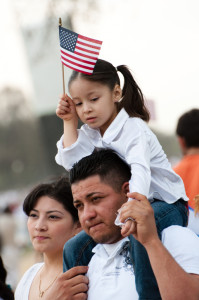
In early December 2025, multiple outlets reported that immigrants already approved for citizenship were told to step out of line at Faneuil Hall in Boston moments before they would have taken the Oath of Allegiance.
Key local coverage:
The Boston Globe: Citizenship ceremonies canceled at Faneuil Hall
GBH News: Immigrants kept from Faneuil Hall citizenship ceremony as feds crackdown nationwide
WCVB Boston: Immigrants denied naturalization ceremony at last minute in Boston
Advocates describe a chilling pattern following the USCIS oath ceremony cancelled trend:
Notices mailed only days before the ceremony
Some people never saw the notice before they showed up
Officers asking “Where are you from?” at the front of the line, then quietly redirecting those from targeted countries to “step aside”
For context on how oath cancellations and re-interviews fit into a broader 2025 naturalization crackdown, see HLG’s full policy deep dive: N-400 Approved — Oath Ceremony Cancelled? Understanding Delays, Re-Scheduling, and Risk of Re-Interview.
Most applicants assume that once you pass the interview and get an oath notice, citizenship is a done deal. Legally, it isn’t.
Under the USCIS Policy Manual, naturalization is not complete until you take the oath at a valid ceremony:
USCIS Policy Manual — Volume 12: Citizenship and Naturalization
Part J, Chapter 4 — General Considerations for All Oath Ceremonies
Part J, Chapter 5 — Administrative Naturalization Ceremonies
Key legal points:
You are not a citizen until the oath is administered and properly recorded
USCIS must resolve “derogatory information” before administering the oath
If new information appears, USCIS can:
Continue your case and cancel/postpone your ceremony
Re-open your N-400 for further questioning
In extreme cases, move toward denial or even enforcement
For applicants starting earlier in the process, USCIS outlines the standard path in:
HLG’s practical naturalization prep guide adds field-tested advice: How to Prepare for Your Citizenship Interview.

Based on Boston reporting, 2025 policy memos, and patterns immigration lawyers are seeing nationwide, the most likely risk factors include:
Recent policies have quietly tied naturalization holds to country-of-birth lists, not just behavior:
Navigating the Minefield of the USCIS Memo PM-602-0192 National Security Hold
Trapped by the New Travel Ban: Visa & Green Card Blacklist Guide
Media reports suggest nationals of countries such as Haiti, Afghanistan, Iran, Libya, Somalia, Sudan, Yemen, Eritrea, Chad, Cuba, Turkmenistan, Togo, Sierra Leone, Burundi, Venezuela and others are facing sudden holds — even after passing every step.
USCIS has opened a new centralized vetting hub, with heavy use of AI, social-media screening, and bulk rescreening tools:
Inside USCIS’s New Vetting Center: How Atlanta’s AI Hub Will Decide Your Case in 2026
USCIS Vetting Center: High-Risk Countries, Social Media Screening & National Security Holds
If a background check tool flags a new “concern” — even an error — your oath may be frozen while your file is routed through Atlanta.
The Trump administration recently restored “neighborhood and workplace checks” for some citizenship applicants, reviving practices not widely used since the 1990s:
Meanwhile, USCIS has quietly expanded rescreening, even after approval:
This means N-400 approvals are increasingly conditional, pending last-minute checks.
The Boston incident doesn’t exist in a vacuum. Several trends are converging:
USCIS and EOIR backlogs have exploded; data tools like TRAC Immigration show historic case loads
USCIS has cut or restructured naturalization-related spending, including:
Ending reimbursements to New York county clerks for administering oaths, as reported by the Times Union: USCIS stops paying New York clerks for swearing in new citizens
HLG’s policy commentary on fee hikes and bureaucratic obstacles ties this into a broader pattern: Petty Bureaucracy: USCIS 2026 Fee Increases and the New Barrier to Immigration.
For data-driven reporting, HLG also curates public datasets here: 50 Free, Trusted Immigration Data Sources for 2026.
Writers should walk readers through concrete patterns that could trigger a last-minute cancellation:
Country-of-birth on a high-risk list (travel-ban countries, PM-602-0192 list, or similar internal lists)
Recent international travel to conflict zones or countries under sanctions
New information since the N-400 interview:
Arrests, charges, or police reports
New tax liens or unpaid child support
Updated intelligence or watchlist matches
Social media or speech flagged as “national security” concern, potentially via the Atlanta vetting center or expanded screening rules
Discrepancies between what you stated at the interview and new data pulled from other databases
For deeper context on continuous-residence and post-interview risks:
Writers should provide a practical checklist that readers and journalists can screenshot and share.
If you are pulled aside or told to go home:
Stay calm and polite – anything you say can be written into your file
Ask:
“Is my N-400 denied or is my case continued?”
“Is this because of new information or a general policy affecting a group?”
Ask for written confirmation explaining whether the ceremony is postponed or your case is being reopened
Keep:
Your original oath notice
Any cancellation notice
Names or badge numbers of officers you speak to
Notes of what was said
HLG’s step-by-step post-cancellation guide is here: N-400 Approved — Oath Ceremony Cancelled?.
Consult an experienced naturalization lawyer before contacting USCIS on your own
File FOIA requests if needed:
USCIS A-file via USCIS FOIA / Request Records
Track your case status through myUSCIS and keep copies of every update
Discuss with your lawyer whether to:
Wait for USCIS to issue a formal decision
Proactively request a status inquiry
Prepare for a second interview or re-test
Consider federal court options (e.g., mandamus, § 1447(b) lawsuit) in extreme delay cases
For people worried about post-denial risks to their green card, HLG’s guide is essential: Can I Lose My Green Card if My Citizenship Application Is Denied?.
To make this article shareable on Reddit and in community chats, include plain-language scripts:
“Officer, I understand you have to follow new rules. For my records, could you please tell me whether my case is denied or just postponed, and whether this is because of my country of birth or some new information? May I have something in writing, please?”
Encourage readers to create a “citizenship crisis folder” with:
N-400 receipt and approval notices
Oath ceremony notice and any cancellation or rescheduling notices
Copy of N-400 application
Interview notes and decision letter
Any criminal records, police reports, or resolved issues
Tax transcripts and proof of filing
Travel history (passports, boarding passes, I-94s)
Proof of community ties (employment, school, mortgages, volunteer records)
HLG often uses similar checklists in complex naturalization cases: Best Attorneys for Naturalization Cases with Criminal History & Complications.

Yanked Out of Line: Naturalization Ceremony Cancellations & PM-602-0192 Holds (2026 Update)
The reasons fall into four categories:
New derogatory information, real or mistaken
Country-of-birth or travel-related security screening
AI or vetting-center flag, especially tied to the Atlanta hub
Administrative backlog or procedural error
Under USCIS rules, you are not a citizen until the oath is administered. USCIS can postpone a ceremony if any new information—even a vague “security flag”—appears.
USCIS’s legal authority is outlined in USCIS Policy Manual — Volume 12 and Volume 12, Part J — Oath of Allegiance.
For a deeper breakdown of why this happens, including new 2025 policies, see: N-400 Approved — Oath Ceremony Cancelled?.
Yes. “Recommended for approval” is not final approval. USCIS may:
Continue your case
Reopen your N-400
Order a second interview
Issue a NOID (Notice of Intent to Deny)
Or, rarely, deny outright
The Policy Manual makes clear that approval does not occur until the oath is administered.
Independent reporting and attorney observations suggest that many of the people yanked out of line are from:
Travel-ban or “heightened-risk” countries
Countries connected to 2024–2025 conflict zones
Countries under new DHS “enhanced review” instructions
Countries on the USCIS PM-602-0192 national security hold list
HLG’s deep dive on this memo explains how nationality profiling works in practice: How the USCIS Memo PM-602-0192 National Security Hold Affects You.
And nationality-based scrutiny here: Trapped by the New Travel Ban: Visa & Green Card Blacklist Guide.
The USCIS Atlanta Vetting Center (2025–2026 rollout) is a centralized, AI-integrated hub designed to:
Re-screen applicants before major immigration milestones
Check travel patterns, social media activity, and biometrics
Coordinate with DHS intelligence units
Identify “risk indicators” that trigger holds
This center is believed to be responsible for many “extra review” flags leading to day-of-oath cancellations.
HLG’s investigative explainer: Inside USCIS’s New Vetting Center: How Atlanta’s AI Hub Will Decide Your Case in 2026.
It is rare, but legally possible. ICE sometimes executes arrests at USCIS checkpoints in certain fact patterns.
HLG’s widely cited analysis: Why ICE Is Now Waiting at USCIS Interviews.
In many cases, yes — especially if you suspect a watchlist or name-match problem.
Start with an A-file request through USCIS FOIA / Request Records.
Mandamus is appropriate when USCIS refuses to act within a reasonable time.
HLG’s strategy guide: Mandamus Lawsuit Guide.
Useful angles and data sources:
Track where oath cancellations are happening using TRAC Immigration
Cross-reference policy authority via USCIS Policy Manual — Volume 12
Use HLG’s curated sources list: 50 Free, Trusted Immigration Data Sources for 2026
Writers should highlight the psychological trauma of being told “go home” at the very moment you expect to become a U.S. citizen.
HLG has explored the mental-health impact of immigration limbo in other contexts: The Psychological Effects of Immigration Waiting.
The most widely reported incident occurred here. See coverage from The Boston Globe, Boston.com, and GBH News.
If your ceremony was canceled: N-400 Approved — Oath Ceremony Cancelled?.
Ohio has not seen one single widely publicized mass-cancellation event like Boston, but quiet, individual delays are becoming more common — especially among applicants impacted by PM-602-0192 nationality screening and vetting-center referrals.
If you’re in Ohio and worried about risk: Book a consultation with Herman Legal Group.
Related enforcement context: Trump’s 2025 Deportation Surge.
Funding shifts and administrative changes are affecting ceremony logistics and timelines.
Coverage: Times Union — USCIS ends naturalization reimbursement for New York clerks.
Texas applicants report increasing “additional review” holds tied to centralized screening patterns.
Context: USCIS Vetting Center: High-Risk Countries, Social Media Screening & National Security Holds.
California’s volume magnifies the impact of even modest increases in rescreening and ceremony postponements.
While oath-day crackdowns are a national phenomenon, local context can influence how they play out. In Ohio, removal proceedings run through the Cleveland Immigration Court, and USCIS naturalization processing involves field offices in Cleveland, Columbus, and a sub-office presence in Cincinnati. Herman Legal Group is headquartered in Cleveland and has an office in Columbus — and that Ohio-specific familiarity can matter when the issue is timing, venue practice, and local field-office patterns.
If your ceremony was canceled or you were pulled aside, do not guess. Document what happened, identify what triggered the hold, and get counsel quickly: Schedule a confidential consultation with Herman Legal Group.

Use this directory as a “one-stop hub” for immigrants, families, journalists, and advocates tracking oath ceremony cancellations, last-minute postponements, and national security holds.
USCIS Policy Manual — Volume 12 (Citizenship & Naturalization)
USCIS Policy Manual — Volume 12, Part J (Oath of Allegiance)
Part J, Chapter 4 — General Considerations for All Oath Ceremonies
Part J, Chapter 5 — Administrative Naturalization Ceremonies
USCIS Memo PM-602-0192 National Security Hold — What It Means (HLG)
Inside USCIS’s New Vetting Center (Atlanta AI Hub) — 2026 Impact (HLG)
USCIS Vetting Center: High-Risk Countries + Social Media Screening (HLG)
Trapped by the New Travel Ban: Visa & Green Card “Blacklist” Guide (HLG)
Can I Lose My Green Card if My Citizenship Application Is Denied? (HLG)
N-400 Continuous Residence Absence (Extended Absences & Complex Issues) (HLG)
For journalists and researchers tracking the originating reports:
If you were pulled out of line, your oath ceremony was canceled, or you are from a nationality under heightened screening, you should get a risk review before taking any action.