
What is an Alien Registration Number (A-Number)?
An Alien Registration Number (A-Number) is a unique 7-9 digit number assigned by the U.S. Department of Homeland Security to non-citizens. This number stays with you for life and is used to manage and track your immigration records and status. It appears on all your immigration forms and petitions, linking all your documents together.
Understanding what is an Alien Registration Number (A-Number) is essential for anyone navigating the immigration process.
The term What is an Alien Registration Number (A-Number) refers to this unique identifier that plays a critical role in immigration processes.
Many individuals wonder what is an Alien Registration Number (A-Number) and how it impacts their immigration journey.
Knowing what is an Alien Registration Number (A-Number) is vital for accessing immigration benefits.
How to Write Your A-Number:
Your A-Number is crucial. Hence, understanding what is an Alien Registration Number (A-Number) helps avoid delays.
If your A-Number has less than nine digits, add zeros after the “A” and before the first digit. For example, “12345678” becomes “A012345678.”
Who gets an A-Number?
- Green Card Applicants: Anyone applying for a green card for any reason (family, employment, etc.).
- Asylum Seekers and Refugees: Those seeking asylum or admitted as refugees.
- Individuals in Removal Proceedings: Those placed in removal proceedings.
- Others: When applying for some immigration benefits, USCIS will assign an A Number. This includes the following:
- F-1 international students who obtain an Employment Authorization Document
- Applicant for Temporary Protected Status (TPS)
Note: Nonimmigrant Visitors: U.S.-born citizens and many nonimmigrant visitors (B1/B2 visa holders) do not get A-Numbers. They are considered short-term visitors, not permanent immigrants.
When do I get an A-Number?
If you’re unsure what is an Alien Registration Number (A-Number), this guide clarifies its importance.
Green Card Applicants in the U.S.
If you’re filing a green card from within the U.S., the alien number on green card will also be included on the receipt notice from USCIS after you file your green card application (Form I-485).
The A-Number is linked to your immigration status, making it vital to understand what is an Alien Registration Number (A-Number).
- Spouses of U.S. Citizens: Receive an A-Number about 30 days after starting the process.
- Spouses of Green Card Holders: Receive an A-Number after the I-130 petition approval and when an immigrant visa is available, roughly a year into the process.
Green Card Applicants Outside the U.S.
When applying for a green card, knowing what is an Alien Registration Number (A-Number) is crucial.
Receive an A-Number during your consular interview. It will be on your immigrant visa stamp and immigrant data summary.
When Placed in Removal Proceedings
An A-Number is assigned by USCIS, ICE, or CBP if one wasn’t already provided.
Understanding what is an Alien Registration Number (A-Number) can simplify your immigration journey.
Where is My A-Number?
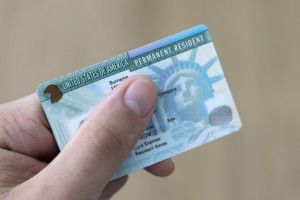
Green Card (Permanent Resident Card): Alien Registration Receipt Card, also known as a green card, is an identification card given to lawful permanent residents of the U.S. It’s proof of status and has the Alien Registration Number.
Your green card includes what is an Alien Registration Number (A-Number) as proof of your status.
- New Green Card:
- On the front of the card, under “USCIS#”.
- On the back of the card.
[show picture with red around the A number]
- Old Green Card (2004-2010):
- Under “A#” next to A-Number on the front of the card.
[show picture with red around the A number]
Employment Authorization Document (EAD)
- On the front of the card.
[show picture with red around the A number]
Immigrant Visa
- As the “Registration Number” in the top right of the visa stamp in your passport.
[show picture with red around the A number]
Notice of Action (Form I-797C): A Notice of Action (Form I-797C) is a form sent by USCIS to inform you of the status of your immigration application or petition. It can be a receipt notice, appointment notice, approval notice, or request for evidence. Not all Notices of Action have an A-Number. When they do, it’s usually labeled as “USCIS#” and in the top right corner.
[show picture with red around the A number]
Immigrant Data Summary: is a form given to applicants who have applied for their immigrant visa or green card, through consular processing. This document is usually stapled to the top of the immigrant visa package. The A-Number is at the top of the summary, under “A-Number”.
During your application, know what is an Alien Registration Number (A-Number) for future reference.
[show picture with red around the A number]
Immigrant Fee Handout: The USCIS Immigrant Fee Handout is given to you at your consular interview and has instructions on how to pay the USCIS immigrant fee. This document has your A-Number at the top right, under “Alien Registration Number”.
Make sure you retain documents that show what is an Alien Registration Number (A-Number).
[show picture with red around the A number]
Summary
- Unique Identifier: Your A-Number is your unique ID in the immigration system.
- Multiple Documents: Found on work permits, visas, green cards, approval notices, etc.
- Noncitizens: All noncitizens applying for or receiving immigration benefits get an A-Number.
- Consistent Usage: Used throughout the immigration process.

What do I use my A-Number for?
For immigration benefits, it’s essential to know what is an Alien Registration Number (A-Number).
- Immigration Benefits: Whenever you apply for immigration benefits like a green card or asylum, you will include your A-Number on the application forms.
- Check the Status of Your Case: Whether you’re waiting to hear back from USCIS or tracking your immigration journey, your Alien Registration Number allows you to access your case information.
- Other Services and Benefits: Your A-Number is also needed when you are dealing with other government agencies or accessing certain services and benefits. Think of it as your official proof of being in the U.S. It may be required when you’re getting things like a driver’s license, social security number or any other important documents to handle your business here smoothly.
- Identifying and Tracking Purposes: Your A-Number is used for identification, tracking immigration records, and monitoring illegal activities or criminal records.
Note: The A-Number does not change even if you change status or switch to a different type of immigrant visa. It has no expiration date and will remain valid regardless of your immigration status.
Even after a status change, your A-Number remains the same, showcasing what is an Alien Registration Number (A-Number).
Lost Your Alien Registration Number?
Don’t worry if you lost your Alien Registration Number! Here’s what you can do to get it:
If you lose your number, remember what is an Alien Registration Number (A-Number) and how to recover it.
- Check Your Documents: First, go through all your immigration related documents. Your A-Number might be on your green card, Employment Authorization Document (EAD) or previous USCIS notices.
- Contact USCIS:
-
- Customer Service: Call USCIS at 1-800-375-5283 and follow the prompts to speak with a representative. They may be able to help you locate your A-Number if you provide your personal information and case details.
Understand what is an Alien Registration Number (A-Number) to streamline your requests.
- Infopass Appointment: Schedule an appointment at your local USCIS office through InfoPass. Bring any documents you have and be prepared to verify your identity.
- Freedom of Information Act (FOIA) Request: If other methods fail, you can file a FOIA request to obtain your A-Number. Instructions for filing a FOIA request can be found on the USCIS website.
-
A-Number vs. Other Identifiers
Distinguish what is an Alien Registration Number (A-Number) from other identifiers.

Common Questions About A-Numbers
Common questions often revolve around what is an Alien Registration Number (A-Number).

What is an A-File?
Understanding what is an Alien Registration Number (A-Number) can alleviate confusion.
An A-File (Alien File) is a comprehensive record maintained by immigration authorities containing all documentation related to a noncitizen’s interactions with immigration services. This includes applications, petitions, records of interactions with USCIS, visas, photographs, and correspondence. The system was introduced by the Immigration and Naturalization Service (INS) starting April 1, 1944.
History of A-Files and Genealogy Research
Researching what is an Alien Registration Number (A-Number) can provide clarity.
The Alien Registration Act of 1940: In response to World War II, Congress mandated that all noncitizens aged 14 and older who planned to stay in the U.S. for more than 30 days register with the INS. Registration involved filling out a form, providing fingerprints, and was later used to issue a registration number, initially known as the Alien Registration Number or A-Number.
Issuance of Registration Numbers
Knowing what is an Alien Registration Number (A-Number) can assist in document retrieval.
-
- Initial Registration: Each registration form was stamped with a number.
- Proof of Registration: Noncitizens received a registration card that served as proof and included their registration number, which evolved into the A-Number.
It’s important to track what is an Alien Registration Number (A-Number) as it evolves through your journey.
Historical Alien Registration Card Receipt
Noncitizens received a receipt card displaying their registration number, now known as the A-Number. This card was an early version of today’s Green Card (Form I-551)
The First A-Number
The A-Number sequence began at 1,000,000. Anna Lapidus, a 48-year-old immigrant from Russia, was the first to receive this number in 1940, though her A-File was not created until 1944 when the INS implemented the system.
Post-War Records Management
- Need for System Reorganization: After World War II, INS faced the challenge of managing over 300,000 cubic feet of files spread across multiple systems.
- Transition to Individual-Based System: To improve efficiency, the INS microfilmed older records, transferred some to the National Archives, and adopted a system where each immigrant had a single file containing all their documents, starting April 1, 1944.
A-Files Evolution
Learn what is an Alien Registration Number (A-Number) for a smoother application process.
- Introduction of A-Files: New immigrants received an A-File for their records, and existing immigrants were assigned A-Files when they next interacted with the INS. Earlier files were often consolidated into the new A-File.
- Modernization: USCIS continues to evolve the system with electronic records, enhancing security, cost-effectiveness, and case processing efficiency.
Who Had an A-File Below 8 Million?
A-Files below eight million were opened for:
- Immigrants arriving between April 1, 1944, and May 1, 1951.
- Reopened cases of immigrants registered through the Alien Registration Program.
- Other purposes, including criminal investigations.
A-Files Today
Handle your A-Files correctly by understanding what is an Alien Registration Number (A-Number).
-
- Current Holdings: A-Files below 8 million are a small fraction of the over 60 million A-Files held by USCIS. Inactive files are stored in various locations, with many held by USCIS.
- Retention and Access: Since 2009, A-Files are designated for permanent retention, and over 350,000 have been transferred to the National Archives (NARA). Researchers can access these files via the National Archives Online Public Access (OPA) Catalog.
Remember what is an Alien Registration Number (A-Number) for ongoing accessibility.
A-Files Research
-
- Content: A-Files offer a wealth of biographical information and modern immigration documents, including visas, photographs, applications, affidavits, and correspondence.
Research the implications of what is an Alien Registration Number (A-Number) for your future.
- Indexing: Files are indexed by name, date of birth, place of birth, and sometimes port and date of arrival, INS district, and other details.

Avoiding Common Issues with A-Files
As you navigate your A-Files, grasp what is an Alien Registration Number (A-Number) for efficient management.
Common Issues with A-Files
-
- Index Search Issues: Indexes may not always capture all relevant details.
For any issues, reflect on what is an Alien Registration Number (A-Number) to assist in solutions.
- Record Request Issues:
-
- A-Files below eight million can be requested through a Genealogy Record Request.
Clarifying what is an Alien Registration Number (A-Number) helps in legal matters.
-
- A-Files above 8 million require a request through the USCIS Freedom of Information/Privacy Act Program.
- Processing Times: Retrieval can take longer due to off-site storage.
Consult experts on what is an Alien Registration Number (A-Number) for guidance.
- Privacy Restrictions: Files may contain sensitive information about third parties, which may be redacted.
-
Finding an A-File Number
Finally, understanding what is an Alien Registration Number (A-Number) empowers you in your immigration process.
Researchers might find A-Numbers in an immigrant’s personal papers or court naturalization records. A-Numbers for deceased individuals below eight million can be obtained by submitting an Index Search Request using Form G-1041.
A-Files Image Gallery
In summary, knowing what is an Alien Registration Number (A-Number) is crucial.
The A-Files Image Gallery provides examples of the contents of an A-File. Some information may be redacted for privacy.
Anna Lapidus and A-File 1000000
Ensure you comprehend what is an Alien Registration Number (A-Number) for accurate documentation.
Anna Lapidus’s A-File, created as A-File 1000000, was consolidated in 1951. Despite being the first number in sequence, her file was established seven years after the first A-Files.
Not much is known about Anna beyond her registration record. Census records show she and her husband Samuel lived in Elizabeth where she continued to work in the garment industry. She did not naturalize and passed away in 1974. In USCIS history she is the first A-File.
Engaging with what is an Alien Registration Number (A-Number) supports your application.
Note: USCIS no longer uses the term “alien” for noncitizens in the U.S. This term is used here in a historical context referring to specific laws, forms and events.
Sample of Historic AR Form for Anna Lapidus
As you explore immigration options, keep in mind what is an Alien Registration Number (A-Number).
The Alien Registration Form A-1000000 for Anna Lapidus is the “first” A-File in the sequence.’
[if we can find this image, let’s use it=]
Ultimately, understanding what is an Alien Registration Number (A-Number) is necessary for your journey.
NARA Holdings (as of November 2023)
Lastly, reflect on what is an Alien Registration Number (A-Number) as it is a significant identifier.
-
- Kansas City: Over 1,300,000 A-Files for individuals born in 1920 and prior.
In conclusion, what is an Alien Registration Number (A-Number) is pivotal in navigating immigration processes.
-
- San Francisco: Over 300,000 A-Files for similar cases, primarily from the INS-Honolulu and INS-San Francisco District Offices.
Commit to learning what is an Alien Registration Number (A-Number) for future immigration interactions.
Research and Access
Always refer back to what is an Alien Registration Number (A-Number) for clarity.
-
- Online Catalog: Researchers can search the National Archives Catalog to locate A-Files.
Finally, stay informed about what is an Alien Registration Number (A-Number) as part of your immigration journey.
-
- Viewing Files: Files can be viewed in person at the National Archives in Kansas City or San Francisco by appointment. Copies can be ordered for a fee.
Understanding what is an Alien Registration Number (A-Number) is vital for compliance.
Information Required: To request an A-File, you need the individual’s complete name, National Archives Identifier, and Alien Registration number. Optional details such as date and place of birth and date of entry into the U.S. can help confirm the correct file.
Each step in your process should consider what is an Alien Registration Number (A-Number).
Requesting Copies
Be proactive in learning what is an Alien Registration Number (A-Number) for your case.
- Kansas City:
-
- Email: Afiles.KansasCity@nara.gov
Be aware that what is an Alien Registration Number (A-Number) is essential for your immigration success.
-
- Mail: National Archives at Kansas City, Attn: A-Files Request, 400 W. Pershing Road, Kansas City, MO 64108
Ultimately, knowing what is an Alien Registration Number (A-Number) streamlines your immigration experience.
-
- Fax: (816) 268-8038
Familiarize yourself with what is an Alien Registration Number (A-Number) for a transparent process.
-
- San Francisco:
-
- Email: sanbruno.archives@nara.gov
Knowledge about what is an Alien Registration Number (A-Number) enhances your application effort.
-
- Mail: National Archives at San Francisco, Attn: A-Files Request, Leo J. Ryan Federal Building, 1000 Commodore Drive, San Bruno, CA 94066
Finally, prioritize understanding what is an Alien Registration Number (A-Number) to avoid complications.
- Fax: (650) 238-3510
-
Fees:
- Mail Order Services:
- A-Files with a date of birth prior to 1890: $27.00
- A-Files with a date of birth 1890 or after: $40.00
- On-Site Service:
- Self-service paper copies: $0.25 per copy
Public Information Status
A-Files become public records and available through NARA 100 years after the immigrant’s year of birth. Until then, they are restricted and accessible only by the individual or authorized parties.
Research Value of A-Files
- Comprehensive Data: A-Files provide extensive biographical and historical data, including documents and details from birth through final immigration actions.
- Unique Information: A-Files may offer exclusive information not found elsewhere, such as employer addresses, photographs, and foreign birth certificates.
How to Request an A-File
To request an A-File, provide:
- Required Information: Full name, National Archives Identifier, Alien Registration Number.
- Optional Information: Date and place of birth, date of entry into the U.S.
Requests can be made via email, postal mail, or fax to the appropriate National Archives field office.
Frequently Asked Questions About Alien Registration Numbers (A-Numbers)
What is an Alien Registration Number (A-Number)?
An Alien Registration Number (A-Number) is a unique 7–9 digit identifier assigned by U.S. immigration authorities to track a noncitizen’s immigration records. It stays with you for life, does not expire, and is used across all immigration filings and government systems.
Is an A-Number the same as a USCIS receipt number?
No.
An A-Number identifies the person, while a USCIS receipt number identifies a specific case or application. You can have many receipt numbers, but only one A-Number.
Who gets an A-Number?
You typically receive an A-Number if you:
-
Apply for a green card
-
Apply for asylum or refugee status
-
Are placed in removal (deportation) proceedings
-
Receive certain benefits such as:
-
Employment Authorization (EAD)
-
Temporary Protected Status (TPS)
-
VAWA self-petition (I-360)
-
U visa (I-918)
-
Many short-term visitors (B-1/B-2) do not receive an A-Number.
When do you get an A-Number?
It depends on the process:
-
Adjustment of status (I-485): Shortly after filing
-
Spouses of U.S. citizens: Often within ~30 days
-
Spouses of green card holders: Usually after I-130 approval and visa availability
-
Consular processing: At the immigrant visa interview
-
Removal proceedings: When the case is initiated
Where can I find my A-Number?
Your A-Number may appear on:
-
Green Card (I-551) – labeled “USCIS#” or “A#”
-
Employment Authorization Document (EAD)
-
Immigrant visa stamp (as “Registration Number”)
-
USCIS Notices (Form I-797) – when applicable
-
Immigrant Data Summary
-
USCIS Immigrant Fee Handout
How do I write my A-Number correctly?
Always include the letter “A” followed by nine digits.
If your number has fewer digits, add leading zeros.
Example:
12345678 → A012345678
What is my A-Number used for?
Your A-Number is used to:
-
File immigration applications and petitions
-
Track your case status with USCIS
-
Access benefits with other agencies (DMV, SSA, etc.)
-
Identify your immigration history and records
-
Link all documents in your permanent immigration file
Does my A-Number change if my status changes?
No.
Your A-Number never changes, even if you change status, adjust status, or become a lawful permanent resident.
What if I lost my A-Number?
You can recover it by:
-
Checking past immigration documents
-
Contacting USCIS customer service
-
Scheduling an InfoPass appointment
-
Filing a FOIA request with USCIS (most reliable backup method)
What is the difference between an A-Number and an A-File?
-
A-Number: The identification number
-
A-File: The physical or electronic file containing all your immigration records
Each A-File is indexed by the person’s A-Number.
What is an A-File?
An A-File (Alien File) is the complete immigration record for a noncitizen. It may include:
-
Applications and petitions
-
Visas and photographs
-
Immigration decisions
-
Correspondence with immigration agencies
A-Files have existed since April 1, 1944.
Do U.S. citizens have A-Numbers?
No.
Only noncitizens receive A-Numbers. U.S. citizens are not assigned A-Numbers, even if they previously had immigration records before naturalization.
Do international students have A-Numbers?
Not automatically.
F-1 students usually receive an A-Number only if they:
-
Apply for an EAD
-
Apply for adjustment of status
-
Enter certain humanitarian or immigration processes
Is an A-Number public information?
No.
A-Numbers are protected personal identifiers. A-Files become public only 100 years after the person’s birth year, and only through the National Archives.
Can two people have the same A-Number?
No.
Each A-Number is unique and permanent to one individual.
Does USCIS still use the word “alien”?
USCIS now generally uses “noncitizen”, but the term “Alien Registration Number” remains in use for historical, legal, and system-based reasons.
Why is the A-Number important?
Because it is the backbone identifier of the U.S. immigration system. Errors involving an A-Number can delay cases, cause misfiled records, or trigger enforcement problems.
Need Help Navigating Your A-Number or Immigration Process?
Understanding and managing your Alien Registration Number (A-Number) is crucial for a smooth immigration journey. If you have questions or need assistance with your immigration status, our experienced team at Herman Legal Group is here to help. Contact us today at 1-216-696-6170 to schedule a consultation and get expert guidance tailored to your unique situation.

Need Help Navigating Your A-Number or Immigration Process?
Understanding and managing your Alien Registration Number (A-Number) is crucial for a smooth immigration journey. If you have questions or need assistance with your immigration status, our experienced team at Herman Legal Group is here to help.
Contact us today at 1-216-696-6170 to schedule a consultation and get expert guidance tailored to your unique situation.
Expert Legal Help At Herman Legal Group, LLC
24/7 Support, Just A Call Away!
I-130, Petition for Alien Relative
If you or your foreign relative wants permanent residence (green card), you need to meet specific requirements to file your petition. Some may find that petition requirements for spouses are more exhaustive than any other relationship, but with the proper preparation, we promise this one can go smoothly as well.
The receipt for your approval of USCIS Form I-130, Petition for Alien Relative, that will lead you to the green card is to submit relevant supporting documents to evidence your relationship with the sponsor or beneficiary.
This is why we found it helpful to create an I-130 checklist to lead you through this process and submit clear evidence simply by following the checklist while preparing your petition.
As we already mentioned, the relationship between you and your spouse may have an additional layer of scrutiny by immigration officials because the U.S. Department of State and U.S. Citizenship and Immigration Services (USCIS) will pay extra attention.
The reason is that fraudulent marriages are often used to commit green card fraud. So be ready to file firm evidence because immigration officials will want to make sure your spouse obtains a green card based on a bona fide marriage and not for immigration purposes only.
This I-130 checklist will primarily show you how to fill USCIS the I-130 petition for spouses, but we will also provide you with some instructions on how to petition form I-130 for your parents.
As the process may be overwhelming, an immigration attorney can be an excellent choice to avoid some common mistakes that people make, which can cost them the lost opportunity to obtain a green card immigrant visa.
Herman Legal Group is a law firm with over 25 years of experience in immigration matters. You can call us for any immigration questions and have a consultation. In addition, to our clients, we are available 24/7 and offer you Zoom or Skype consultations.
I-130 Checklist for a U.S. Citizen Spouse- Review
Let’s have a short overlook of the I-130 checklist before the beginning of your I-130 petition.
We prepared this quick I-130 checklist of items that you’ll need to gain insight into how to fill out certain parts of the form.
Form I-130 contains nine parts and lots of questions, so let’s see what information you should prepare.
Petitioner’s Information
The petitioner of the I-130 form can have a status as a U.S. citizen or lawful permanent resident, and this person needs to file the petition, and depending on the reason, the proof of status will differ. A person who intends to become a permanent resident in the U.S. is called a beneficiary.
Form I-130 asks the petitioner to provide details about:
- Address history for the last five years
- Whether you were married before? (if applicable)
- Employment history for the past five years
- Whether you previously filed a petition for the beneficiary or any other foreigner?
Beneficiary’s Information
The beneficiary is the immigrant that wants to live in the United States and intends to apply for a green card.
In form I-130, the beneficiary will provide the following information:
- Address history for the last five years
- Whether you were previously married? (if applicable)
- Employment history for the past five years
- I-94 information (if he or she is currently present in the U.S.)
- Any previous immigration proceedings if there were some
As we mentioned earlier, when filing Form I-130 for your spouse, it’s essential to make a petition package complete with all of the supporting documents.
If the supporting documents attached to your petition don’t provide enough information, the USCIS may send you a Request for Evidence (RFE) which can take additional time and impact the processing time to approve your I-130 petition.
Form I-130, Petition for Alien Relative
Make sure to complete all of the required sections, and if you have any concerns or need any help with completing form I-130, don’t hesitate to contact us at +1-216-696-6170 for your consultation or request one through our online form. Don’t forget to sign the form.
Form I-130A, Supplemental Information for Spouse Beneficiary
Form I-130A is required only if the beneficiary is a spouse and not for parents. If your spouse is currently outside the United States at the moment of submitting the form, his or her signature is not obligatory.
Supporting Documents
When preparing supporting documents, you need to submit, ensure to include copies along with your I-130 petition, and keep original examples for yourself.
Then, follow the list to make sure you didn’t miss anything.
Passport Photos
Your petition will require two passport-style color photos of your and two passport-style color photos of your spouse. Do not attach to the petition package old photos since those shall be taken within 30 days of filing the petition.
If your spouse lives outside the United States, photos can be older, but it’s also highly advisable to provide the most recent ones.
Proof of U.S. Citizen Status or U.S. Permanent Residence
U.S. citizens can prove their citizenship by submitting a photocopy of a birth certificate (for U.S. citizens by birth), passport, naturalization certificate or certificate of citizenship, or consular report of birth abroad.
If you are a lawful permanent resident, you have to provide a photocopy of your green card (both sides of it) or other proof of permanent residence to prove your status.
Proof of Marriage
Your marriage certificate will prove that there is a relationship between you and your spouse. As stated earlier, submit a copy of your marriage certificate and keep the original since USCIS may keep provided papers
Evidence of a bona fide marriage
We cannot stress enough how much it is important to include supporting evidence to prove that you are married because you love each other, intend to live and stay together, and not evade U.S. immigration laws.
The bonafide relationship can be proven by submitting copies of documents that you have shared financial liabilities, assets, insurance, birth certificates of your children born into the marriage, or any other documents you think might demonstrate that your relationship is genuine.
Proof that any prior marriages are terminated
If either you or your spouse was previously married, just state ‘not applicable.’ Otherwise, make sure to submit a photocopy of documents showing that any prior marriage was legally terminated.
For this purpose, you can submit a photocopy of a divorce decree or death certificate, depending on why it was terminated.
If any of these documents are in a foreign language, provide translations. It doesn’t have to be certified, but the translator needs to be competent.
Name Changes
If applicable, provide a legally valid record of any name changes issued by the government.
Proxy Marriage
If you submitted a Proxy Marriage Certificate, you would have to prove that you both were physically present and together after the wedding ceremony. To prove this, use any hotel receipts, photographs, passport stamps, etc.
Form G-28
USCIS Form G-28, Notice of Entry of Appearance of Attorney or Representative, provides information about the eligibility of an attorney or other accredited representative to represent a client in an immigration matter before the U.S. Department of Homeland Security (DHS).
Cover Letter (optional)
U.S. Citizenship and Immigration Services (USCIS) does not require a cover letter along with Form I-130. However, a cover letter can help you explain and clarify the evidence that you are submitting.
Now, when you have your I-130 petition package complete, you need to submit your visa application at the proper USCIS lockbox facility. It will depend on whether your spouse lives outside the United States and whether you are filing Form I-485, or Application for Adjustment of Status, at the same time.
How to Complete the I-130 Form for Parents
If you want to bring your parents to the United States as green card holders, you must be a U.S. citizen and at least 21 years old. As you can see, as a lawful permanent resident, you cannot use this opportunity for your parents.
We won’t go through each question in the form applicable for parents and make the specific checklist, but if any questions arise, we remind you that you can book your consultations with Herman Legal Group.
However, we will note what essential documents to submit with Form I-130 for parents are.
Required Documents for Submission With Form I-130
- Proof of status– that you are a U.S. citizen who sponsors your parents. Make a copy of your birth certificate, naturalization certificate, passport, Form FS-20 (Report of Birth Abroad of a United States Citizen), or citizenship certificate.
- Proof that beneficiaries are your parents: Submit a copy of your birth certificate where your parents are listed. If you were adopted, make sure to include the adoption certificate. If you have step-parents, then file for marriage and birth certificate.
USCIS Filing Fee
A filing fee for the USCIS form I-130 is $535, no matter if you sponsor your spouse or your parents. You can pay via check or credit card at the U.S. consulate or Embassy.
Do I need an Immigration Lawyer to Get a green card?
While you can start the visa journey on your own following this checklist, an immigration attorney can be helpful from the very first beginning. Our immigration attorneys aim to get to know each client and be by their side at the beginning, middle, and end of the process.
You can call us for a consultation at +1-216-696-6170 or use our online form to request one, so we can discuss the best strategy to bring your spouse or your parents to the United States.
Expert Legal Help At Herman Legal Group, LLC
24/7 Support, Just A Call Away!